

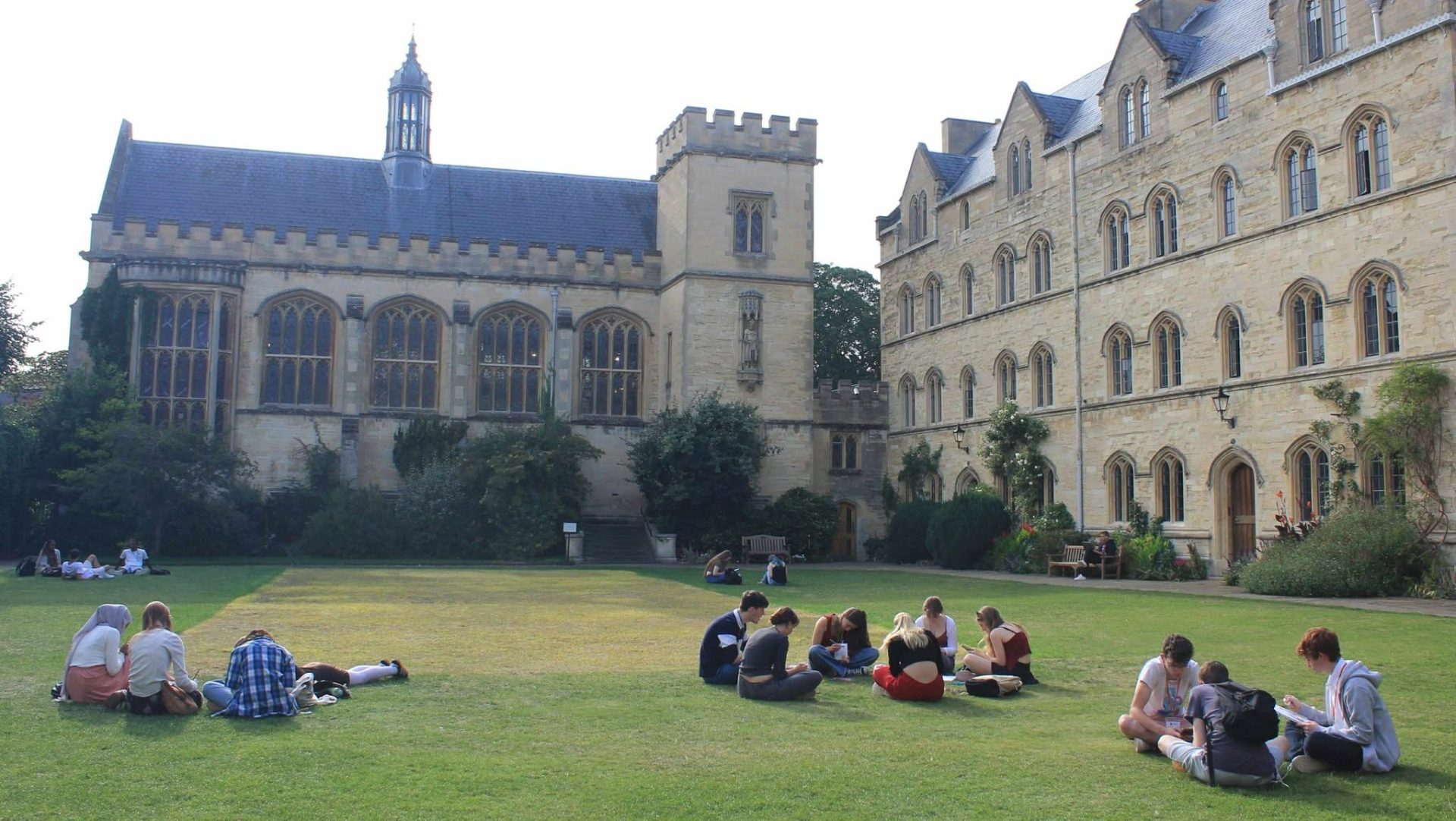
Welcome to Oxford, the place where ambition goes to drink, cry, and write 3,000 words on “liminality” at 3am, where people say “I’m just popping to the Bod” and genuinely mean it.
You’re here because you were clever once. Now you’re mostly tired. Oxford isn’t about academic glory. It’s about surviving a term system designed by someone who clearly hated joy. You’ll arrive bright-eyed and quoting Virginia Woolf. By Week Five, you’ll be negotiating with your tutorial essay like it’s a hostage situation.
Oxford isn’t so much a university as a social experiment in exhaustion, ego, and caffeine. Still, it’s beautiful, in that dysfunctional, emotionally unavailable way. Like a cathedral with commitment issues. So before you drown in deadlines, societies, and the creeping suspicion that everyone else has figured it out, here’s a guide. Not to thriving, that’s ambitious, but to surviving, politely.
1. Sign up for everything, then panic elegantly.
You’ll join rowing, choir, debate, and a society that earnestly discusses “the ontology of soup”. You’ll be elected treasurer of a committee you didn’t know existed. At some point, you’ll realise you spend more time in committee rooms than your own room. That’s fine. Burnout is just enthusiasm without manners.
2. Nobody actually cares about your grades.
Yes, even the person who claims they “didn’t revise for Mods.” Everyone’s bluffing. Everyone.
Your tutors won’t remember your mark by next term, and your friends certainly won’t care. Do the work, then let it go. There’s a life beyond the footnotes.
3. Beware the loud intellects.
Some people treat every corridor conversation as an audition for BBC Question Time. They quote Foucault for fun and sigh over a misused semicolon. You don’t need to keep up. Let them exhaust themselves on the Rad Cam staircase while you quietly enjoy the chaos from a safe distance.
4. Burnout is inevitable; honesty helps.
Oxford will chew you up politely and spit you out, often in sub fusc. Talk to your tutors before your stress manifests as involuntary eye twitching. Talk to friends before you start “experimenting with isolation” as performance art. Don’t romanticise the ruinous effects of overworking. Transparency is underrated. Suffering alone is overhyped.
5. Flirt like your life depends on it.
If you like someone, tell them. Oxford runs on repression; any genuine emotion counts as rebellion. People disappear fast here, into dissertations, internships, or mild existential dread. Say what you mean to your library crush before they vanish into the untraceable depths of the Bodleian. Be brave. Worst case, you get a story. Best case, someone you can split Hassan’s chips with at 2am.
6. Alcohol is a tactical hazard.
One blackout is character-building. Two is reckless optimism. Beyond that, you’re in moral territory best left unexplored.
Hydrate. Snack. And remember, nothing good happens after the words “formal dinner afters”.
7. Criticism is mostly noise.
You’ll get essays back that read like crime scene reports. Take what’s useful, ignore the theatrics. Everyone’s improvising, even the people who look like they were born quoting Weber. Most tutors have seen worse. Logic abandoned mid-sentence and replaced with sheer audacity. You’ll be fine.
8. Fun is its own scholarship.
The 2am conversations, the delirious walks home from Bridge, the friendships held together by shared panic and overpriced coffee. That’s the real degree. In the end, Oxford isn’t about mastering knowledge. It’s about surviving brilliance and insanity in equal measure. It’s an extended tutorial not in academia, but in being human, flawed, curious, and occasionally spectacular.
9. Tell stories, not just essays.
In ten years, no one will care about your footnotes. They’ll care about the night you danced on the college lawns, argued with a Classics tutor about the morality of pigeons, or survived the Keble panto as an unconvincing shrub.
Your degree will fade. The absurdity and the people will remain. That’s the Oxford curriculum you can’t fail.

