

A brief disclaimer before I begin: I’m not on the first team for any sport, so don’t assume the details below are representative for a majority – or even any – of Oxford’s sportspeople.
That being said, my time at Oxford has been the most physically active of my life. I was never a particularly focused child during sports at school. I was decent at rugby because I was – for lack of a better phrase – big as a wall, but I had two left feet when it came to football. To the great shame of my Indian ancestors, any hopes of cricketing skills met an abrupt death when I ran straight into my fellow batsman, taking us both out and losing the match. A prospective Kolkata Knight Rider I was not.
My arrival in OX1 brought with it some sizable changes, particularly as the prospect of whiling away the few free hours in my week hunched over my laptop became unattractive, given that was what most of my working hours consisted of. Amidst the chaos of the university and college fresher’s fairs, I, like many, signed up for too many societies, most of which I remain on the mailing list for. What did it matter that I’d shown no sporting ability in my previous eighteen years – surely, with less sleep, a worse diet and a questionable fitness regimen, I could turn myself into God’s gift to sport.
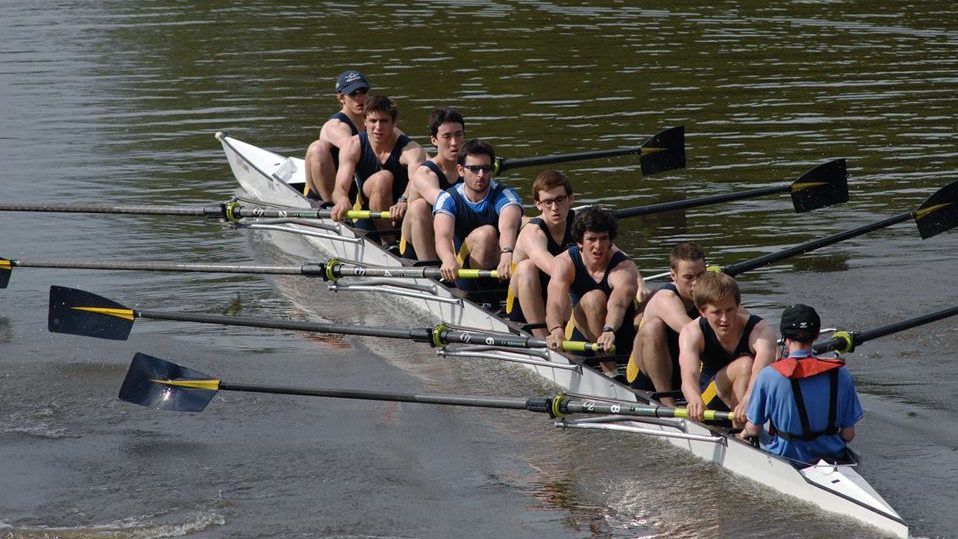
One of the sports which survived my post-Michaelmas week one cull of commitments was college rowing. It’s a quintessentially Oxonian endeavour: undertrained, overly confident students making a complete pig’s ear out of what can be a beautiful sport. But once you’ve spent the better part of a year attempting to make sure your technique isn’t a complete disgrace (still a work in progress for me), comes the harder, less exciting and glamorous part: actually training, via the equally unappealing weights rack or the erg.
Erging represents the less fun part of training: you sweat like an oaf and move up and down a slide staring at a wall, cumulatively, for hours. The only validation you receive is a slightly improved split on your screen. Whilst lifting might look and feel significantly better if your form is correct, the consequence of a half-decent workout is that you’re left immobilised for the next few days, bed-bound. Whereas the day before you could easily cycle around Oxford, a challenging leg day makes even a flight of stairs daunting.
Getting out onto the water is a rare experience for Michaelmas and Hilary. The Thames has a proclivity for bursting its banks at the slightest indication of rain, and unless you make a top-two boat, you’re unlikely to be rowing elsewhere. But to experience an evening outing in Trinity is to live well. The sun glimmers off the Isis as the boat moves in rhythm; the hull cuts through the water as Oakleys and unisuits dot the banks of the river. College rowing is an exercise in delayed gratification; the suffering of winter morphs into blades come Trinity.
Are most college crews of the standard to challenge a British university crew, let alone those from the multi-million dollar programmes in the US? Unlikely – though as Balliol M3’s shunt into a houseboat in last year’s Eights demonstrates, anything is possible on the water. But rowing’s influence spreads beyond Boathouses Island. Due to the unforgiving and awkward obligations of academia, outings have to be scheduled unseasonably early in the morning. This, in abstract, sounds fine: early to wake, early to rise, makes a man healthy, wealthy, and wise, etc. A good start to a productive day of work.
If you got a good night’s sleep before. And regardless of where you live in Oxford, a good 8-9 hours of rest is as hard to come by as a first. This means what could be an otherwise pleasurable start to the day morphs into a Sisyphean challenge of endurance, an unremitting cycle of early wake-ups and late evenings that easily transforms a college rower into a zombie. Despite the valiant efforts of welfare reps to protect the physical, emotional, and psychological wellbeing of the rowers with trips to hotpot restaurants and crewdates, there’s only so much early morning coaching and waiting for hungover friends on the water that a rower can handle before they fall asleep at the oar.
Despite all these highly unappealing assets of rowing, it is a truly fantastic activity, and one that improves as Oxford’s terms move on. Unlike my other sport, rugby, the chance of picking up a serious injury in a rowing boat is slim-to-none if you operate with even the bare minimum of common sense. It’s a fantastic way to avoid the post-tutorial snacks getting to your waistline and a brilliant social activity. Befriending STEM students is a hard task for humanities “students”: our lax schedules and their demanding labs don’t align often, but there is no better source of camaraderie in student life than the bonds forged by a 6am alarm, a frantic cycle to the boathouse and a choppy outing followed by college breakfast.
From the pain of rowing in a poorly set boat on early winter mornings to the euphoria of racing down the Thames in Trinity, bonds of incomparable strength are forged. Rowing might be demanding. But for Oxford, it’s perfect.


