

“I’ve made my New Year’s resolution”, says my friend Millie. “You’re going to love this”.
“Go on then”, her dad replies, raising an eyebrow.
“I’m going to run a half-marathon in 2026.”
He clears his throat. “Oh really?” He pauses. “Maybe you should tackle some lighter commitments first, love… like, clearing out your inbox?”
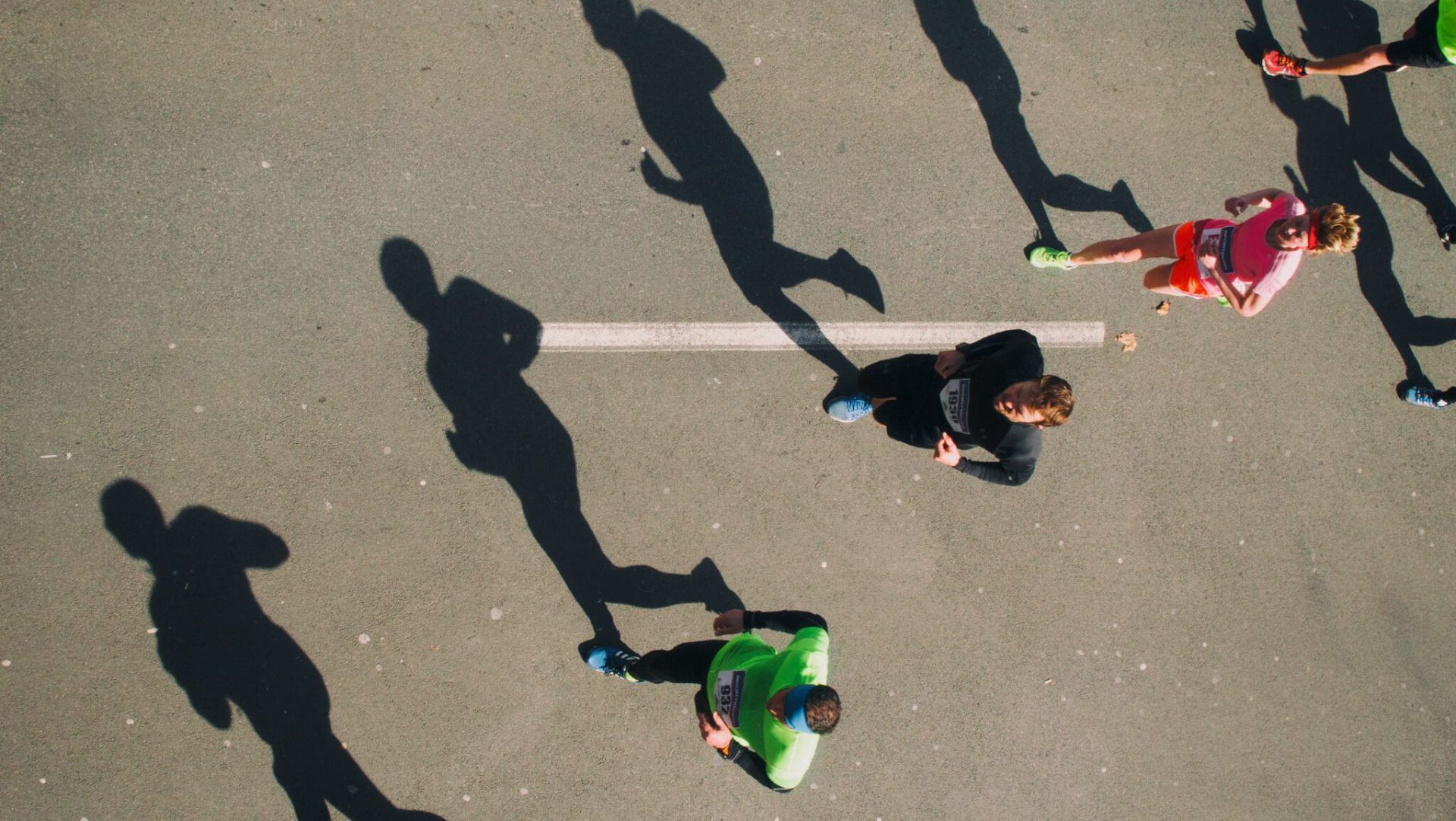
The running boom. Park Run, protein bars, carbon plates, garmins, gels. A craze we’ve all seen: “Run a 5k with me” or “Follow me on my running journey”. Matching sets, 6am run clubs, and 9pm bedtimes. Besides a ‘For You’ page full of neon clad run-fluencers finishing their 5ks in bohemian coffee shops, though, it feels like there is something deeper to unearth behind this craze – or, dare I say, zeitgeist. Running has undergone a paradigm shift; no longer a punishment in PE class or your parents’ Sunday morning escape, running is a lifestyle: a personal brand.
As far as marketing feats go, then, I want to ask how sustainable this lifestyle truly is. Are we all suddenly enjoying running? The voices of my friends bemoaning the umpteenth time I’ve begged them to join me on an early Sunday morning run resound. Or are we buying into a brand – worse, an unattainable self-image – something we want to be? Surely there is more to this than a change of heart: we’re reaching for something to structure our lives. To solve all our problems.
Unfortunately, mapping out your route on Strava is probably not going to dissolve the listlessness that sits in your stomach on your weekly Tesco shop. Running is no quick fix. Yet it is marketed to us lately like a full coverage concealer – not for your under-eyes, but for your life.
So: you’ve started running. You wonder how far that loop around the block is. You innocently download that app… what’s it called? Strava. You’re in. Collecting trophies, being crowned a local legend on every corner. But wait, stop! You’ve fallen into the stats trap. The subscription conscription. The kudos compulsion. Before you know it, you’re running up and down your street trying to turn your total distance into a whole number – less of a local legend than the local lunatic.
I did it too. Most runners have been there. And I’ll recruit you now to the movement against it. Anti-stats, anti-watch, rawdogging runners know where it’s at. With sky-rocketing numbers taking up the hobby, it feels all the more important that what we consume online – and every part of the running culture that surrounds us – puts us on the right track. Whilst running can work wonders for your physical and mental health, create a sense of community as you plod around suburbs, and forge new friendships, there are also so many ways for a simple sport to become a product for consumption. What has been a sport that springs you from your desk into the middle of the woods on a random weekday now spams the very screens we’re running away from. I’m no scientist, but I’d rather trigger that flight or fight mode as I race the imminent sunset than through another Instagram reel.
Not only are more people running than ever before; more people are entering races. The number of entries for the 2025 London Marathon reached a record-breaking high of 840, 318 that has already been shattered by those for the impending 2026 London Marathon: 1,133,813 people from the UK and across the globe applied in the public ballot for an entry to this year’s edition.
Furthermore, the average marathon time has increased in recent years, meaning that, on the whole, runners are getting slower – or rather that more and more recreational runners are choosing to take up the challenge of entering official races. Calling yourself a runner no longer means running for a university or being part of an official club, but simply lacing up your shoes and getting out the door.
More people are running. But why? And what kind of running culture is this creating?
Perhaps the answer is quite simple: running is an accessible sport. It’s a cheap, flexible hobby requiring no membership, excessive equipment, or particular terrain. Running is free – and in this economy, priceless. Anyone can be a runner. All you need are some trainers and a dream.
Part of this boom lends itself to a post-pandemic health focus. In fact, many people started running during lockdown only to fall in love, sticking with it ever since. And that need to take control back over our own lives – to install that regime and routine that was ripped out from under us (for most readers, some of our most formative teenage years) – is very real. The Global Institute of Sport places students right at the heart of the expanding demographic of long distance runners. Certainly, my lockdown running routine was something I clung to for structure. The motions and rhythms of running: repetitive, grounding, reassuring. For me, running has also been a means of proving something to myself. Yes, I can definitely do hard things. Conquer a hill, train after work, and wake up early when my running friends are intent on dragging me out of bed at 7am (even if they then sleep in).
It’s been seven years. I’ve made promises and stuck to them. I’ve committed and I’ve followed through. But the truth hits cold and hard: the longest relationship I’ve ever had has been with running. The input:output ratio in this field is, sadly, not transferable.
I’ve said this, (gently) to Millie, and I’ll say it again. Running a half-marathon will probably not fix your commitment issues, romantic or otherwise. Running will be there for you when no one else will. It’s the answer to your essay crisis, your heartbreak – any kind of sleepless night. Avoidant attachment styles won’t get you anywhere.
This is not to say that a New Year’s resolution involving big goals like training for a half-marathon won’t teach you some valuable lessons about yourself. We should simply be wary of turning running into another passing trend, or relying on it as a quick solution to problems that really run much deeper.
When the neon trainers fade, will running turn out to be something people are picking up, only to put down again?