

Conor Niland returns Serena Williams’ serve. He’s sweating. She’s unruffled. He’s desperately trying to play his best tennis. She’s having a casual hit. She crunches a forehand into the corner. He reaches for it but just misses. Then the practice is over, and they both depart the court. A fleeting encounter with stardom.
With his characteristic wry humour, Niland interrupts this moment with an interjection from reality. “When I was practicing with Serena at 16, she was already top 20 in the world”, he tells me, “whereas I was still at school in England and I had no clue whether I was going to be 1,000 in the world or 200”.
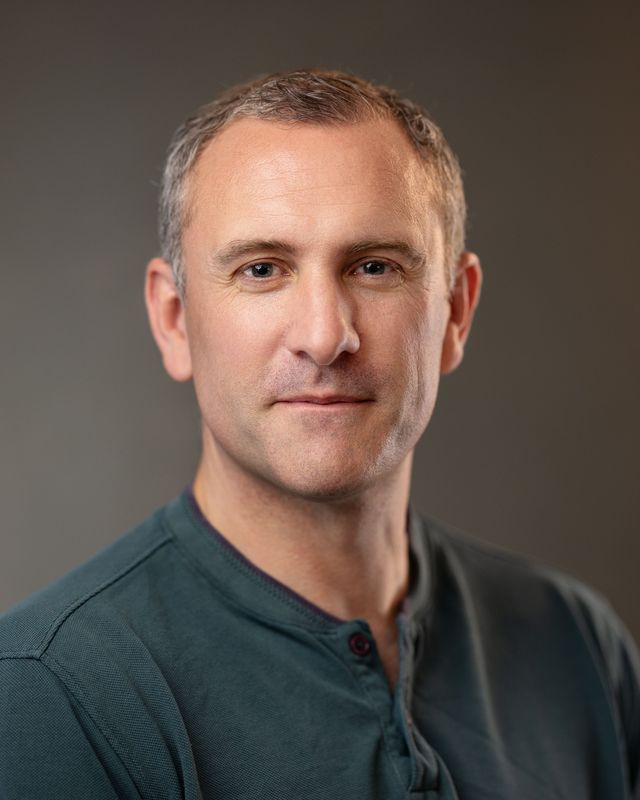
Conor Niland is a former tennis player and author of the book The Racket: On Tour with Tennis’ Golden Generation and the other 99%, which tells the story of his professional tennis career. It is unlike other sports biographies in that its subject was not a generational star or a multi-Grand Slam winner. That’s the point. Niland’s book fills a gap in the genre, telling the story of those who don’t quite reach the very top. The book isn’t a study in failure; it’s an exploration of the psychological reality of competing in elite sport. No other book quite captures the relentless, monotonous grind of being a lower ranked tennis player; that sense of stretching for dreams that are tantalisingly close but just out of reach. An extra ten miles per hour on his serve, groundstrokes landing mere centimetres deeper in the court, a deftly disguised drop shot – small margins – and perhaps Niland’s dreams might have been realised.
I open my discussion with Niland with a discussion of the book itself. It wasn’t ghostwritten, as most sports biographies are – it was a literary collaboration with writer Gavin Clooney. Niland wrote large parts of the book himself. “That’s the key part of it”, Niland emphasised, “I have a degree in English from Berkeley. I think it lends an interiority and an immediacy to the writing, the fact that I’m able to express myself”. His book has a literary ambition, something that’s clear from just leafing through it. Niland himself wrote one of the most poignant passages of the book, which describes him and his dad leaving Kyoto after the final match of his career. It was “before the cherry blossom began to bloom. It seemed fitting: the Challenger Tour always felt a little out of season; the show happened somewhere else”.
I ask Niland why there is such a dearth of biographical writing from those who were not stars. I bring up the public misconceptions about the tennis rankings and he quickly concurs. “It’s something that’s frustrated me my whole life, people’s lack of understanding of the ranking system in tennis”, he says. “If you hear somebody’s 150 in the world, you’ll have people who almost think that they are a part-time player.” An expression of incredulity crosses his face, and one can’t blame him – it must be difficult to have worked your whole life at something only to be underestimated. “Hopefully the book has played a small role in educating people”, he adds.
Our conversation turns towards Niland’s early years. When did tennis become more than a hobby? When did it become a professional endeavour? “It was always the number one thing in my life, tennis, even more than school”, Niland says, his passion for the sport evident. Tennis ran in his family – Niland’s sister Gina remains the best female tennis player Ireland ever had, playing at Junior Wimbledon when he was eight. His father also constructed a tennis court in the backyard. With intensive practice, Niland soon became one of the best players in Ireland.
It was at the 1994 Winter Cup that Niland played a twelve year old Roger Federer. I ask Niland if he noticed anything different about Federer, any transcendent quality that earmarked him for success. Niland explains that, earlier in the tournament, he had played the Swiss number one, Jun Kato: “I really felt like I was totally outclassed.” Playing Federer was different – and not because it was harder. Precisely the opposite. “All of a sudden, I was like, okay, this guy’s more my level”, Niland says, breaking into laughter. “Which is really funny, obviously, because nobody’s heard of lots of guys who were at the junior level.” Few have heard of Jun Kato – a quick Google search reveals that his career peaked at a world ranking of 367 in 2003. Niland far surpassed his former junior vanquisher. Yet Kato is far from an anomaly: countless prodigious juniors find that early promise proves stubbornly difficult to convert into sustained success.
It was playing on the big stages of junior tennis that truly eroded Niland’s confidence. When he was eight, he dreamed of winning Wimbledon. By the time he was twelve, crashing out in the first round of tournaments to juniors who were levels ahead, his mindset had radically changed, as Niland writes he now simply “dreamed of one day playing at Wimbledon”. I ask Niland if he believes this realism freed or limited him. He takes me aback with the immediacy and conviction of his answer. “It limited me”, he asserts emphatically, “I think I even downgraded my ambition from that, to accepting that I wasn’t going to play in Wimbledon. I probably lacked a bit of belief”.
Niland’s honesty is a refreshing break from the norm of sport biographies, which are often exercises in reputation management: rigidly PR-controlled and overly cautious. His bluntness is also a reminder that the inspirational stories of stratospheric success are, unfortunately, divorced from reality. For every Serena Williams there are thousands of unknowns who never realise their youthful aspirations.
If Niland thought junior competition was hard, he was about to find out how much more challenging senior tennis would be. After studying English Literature at the University of Berkeley in California, where he was a star of college tennis, it was time to try out the professional ranks. Travelling week after week to far-flung places. No coach. Jetlag. Exhaustion. New conditions. All whilst trying to produce your best tennis. “A very, very unusual kind of way of life”, Niland describes it, with the look of a man momentarily bewildered by the life he once lived.
Starting out in the professional ranks, Niland competed in the Futures Tour, the lowest rung of the ladder. In the book, he describes the tour as a “vast netherworld of more than 2,000 true prospects and hopeless dreamers”. Could he tell if his opponent had what it takes to ascend the rankings hierarchy? “You could usually tell from three courts away”, Niland replies quickly. “You didn’t even need to play them.”. The weight of shot, the athleticism, the technique – all was evident from afar.
Chronicling the struggles of life on tour, desperate to break through, Niland demonstrates an almost unsettling level of self-awareness about his role within the tennis hierarchy. “I think the strongest parts of the book are where I’m kind of the fly on the wall”, he says, “nobody even sees that I’m there, but I’m sort of showing you that world”. Niland points to a key part from his book as an example of this. At an Association of Tennis Professionals (ATP) tournament in San Jose, Andre Agassi, a multiple Grand Slam champion, was the big name. Sitting in the player’s lounge, Niland watched as Agassi walked past, “surrounded by a gaggle of tournament organisers”, each of them earnestly asking if they could assist him at all. Agassi asked for some water, which was quickly provided, even though he was standing next to a fridge full of bottled water. That sight of Agassi “besieged by help” stayed with Niland. The brief moment seemed to him to be emblematic of the divergent lives lived by the stars and the strivers of the sport: the former travel with an entourage, their every need indulged; the latter travel alone, grappling with the isolation of the itinerant lifestyle.
Niland’s book builds to a climax towards the end, when he finally reaches the destination of his dreams: Wimbledon. A slew of impressive results – including a rare tournament victory – had put him at a career high ranking of 129 in the world, meaning he could enter the qualifying rounds of the most prestigious event in tennis. After winning two qualifying rounds, Niland was one win away from his first grand slam main draw. All that stood between him and his dreams was Nikola Mektic, from Croatia. Niland cruised to a dominant lead, staving off a bout of nerves in the closing stages to seal the victory. Then he fell to his knees, the magnitude of the moment sinking in. How did it feel to qualify for Wimbledon for the first time? Niland smiles. It almost feels as if he is reimagining that moment as we speak. “Yeah, it was the highlight of my career. Just qualifying for the tournament, I celebrated like… like I’d won it. It’s such an instant release of tension.”
Niland’s first round match at Wimbledon pitted him against Adrian Mannarino, then a top 50 player. The winner of the contest would face Roger Federer on Centre Court, a tantalising prospect for Niland, who had never played on such a big stage. Niland won the first set, before Mannarino came back to win the next two. Niland snatched the fourth. Serving at 4-1 up in the fifth, victory was within his grasp. He cast his mind towards the match that awaited him. The magnitude of the moment overwhelmed him and minutes later it was Mannarino’s match point. A missed backhand volley. A match against Federer was off the cards. In the book, Niland vividly described his emotions in the aftermath of the loss: “He screams. I stand motionless…I can almost feel the shadow of Centre Court weighing on my back.”
A couple of months later Niland tasted grand slam success again, this time in the sultry heat and vibrant festivity of the US Open. For his first round match, he would be on the biggest stage of his career: Arthur Ashe Stadium, which could seat over 20,000 spectators, playing against World No. One Novak Djokovic. The match that was supposed to be the realisation of all he’d worked towards ended up being one of the most painful. Walking onto court for the match, Niland wondered whether he would even be able to finish it, as he was suffering from food poisoning. A cruel turn of fate. Surprisingly, Niland is sunnier when reminiscing about this match than I would have expected. “It’s made for a slightly funnier, more interesting story than just going out healthy”, he points out. “It’s yet another element for the reader.”
Retirement came the year after his food poisoning misfortune. “That’s why I finished playing six months later. I’d done Wimbledon and the US Open…. It definitely helped me move on”, Niland tells me. “I felt like I’d done the thing that I was chasing.” As he says this, I’m reminded again of the realism of a twelve year old who knew that he would not win Wimbledon.
Looking back on his time on tour, Niland remarks that “a career can get condensed into four or five matches, and that’s what you take with you through the rest of your life”. He picks out the matches at Wimbledon and the US Open, as well as his tournament wins, as the ones that stay with him. All the rest – the first round losses in Canada and India and Japan and Ireland – would fade from memory, surviving only as scorelines online.
“Did you win Wimbledon, or how’d you do in Wimbledon? Did you play a famous player? Did you beat a famous player?” These are the questions Niland is asked time and time again. Yet his story is more than the highlights, the fleeting encounters with fame and glory. His is a story of ambition tempered by realism, confidence inhibited by insecurity, and talent constrained by circumstance. Above all, Niland’s book has a radical honesty which humanises elite athletes, who are too often seen as impenetrable, soullessly and endlessly dedicated to their craft.
Reading Niland’s book, I felt that I was being transported into the mind of a man in between two worlds. With a career high ranking of 129 in the world, Niland neither gained admittance to the elite class of the Top 100 singles players, nor languished in the lower ranks of the hopeless strivers who would never even compete at a Grand Slam. No longer is Niland trapped in that liminal space between worlds: he’s entered the literary realm.

