

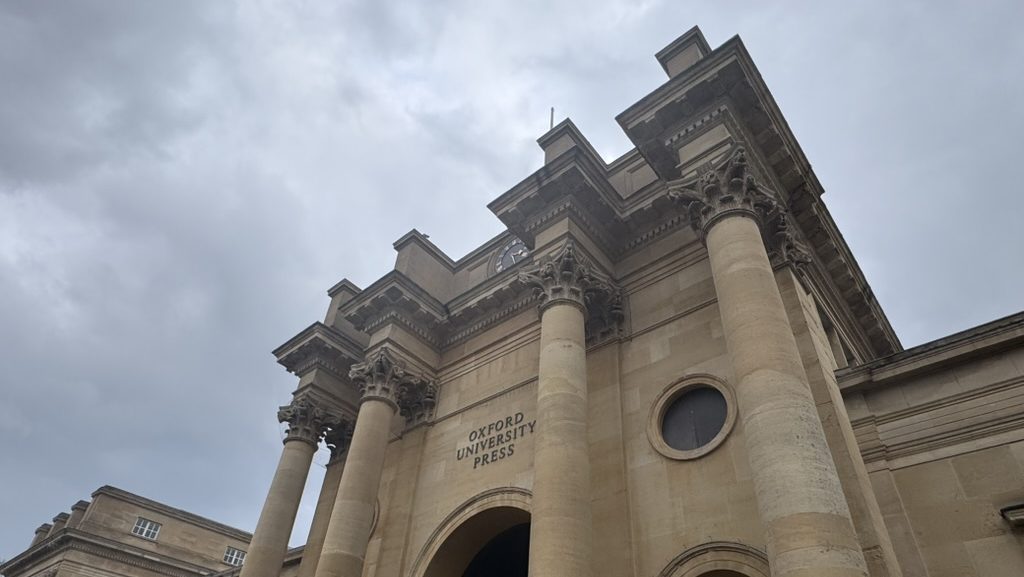
The Indian division of Oxford University Press (OUP) has apologised for statements made in the book Shivaji: Hindu King in Islamic India, published in 2003. The work, written by American historian James Laine, examined the history of Shivaji Shahaji Bhosale, a 17th century regional sovereign whose legacy has particular cultural and political significance in the state of Maharashtra and is widely celebrated by Hindu nationalists.
Udayanraje Bhosale, an Indian politician from the Bharatiya Janata Party (BJP), and descendant of Shivaji, filed a complaint in 2005 against Sayeed Manzar Khan, the then Managing Director of OUP India, over the book’s misrepresentation of his ancestor. The criminal defamation proceedings against the latter and three others were quashed by the High Court’s Kolhapur bench last December in favour of a public apology.
This apology, issued 6th January in two Indian newspapers on Khan’s behalf, “acknowledged that some statements regarding Shri Chhatrapati Shivaji Maharaj at page nos. 31, 33, 34 and 93 of the book were unverified”. “We sincerely regret publishing those statements”, it continued, apologising to “Shrimant Chhatrapati Udayanraje Bohsale and the public at large, for any distress and anguish caused to him”.
Shivaji: Hindu King in Islamic India was subject to widespread criticism upon publication, with a passage on page 93 that alluded to Shivaji’s parentage seen as having disrespected the memory of his mother Jijabai. The book was banned by Maharashtra in 2004, and withdrawn from circulation later that year. The same year, officials from the state sought to arrest Laine, and more than 150 protestors from the Sambhaji Brigade, a Maratha activist group, targeted the Bhandarkar Oriental Research Institute in Pune for what they saw as its complicity in his research.
The ban on the book was lifted by the Bombay High Court in 2007, and this decision confirmed by the Supreme Court in 2010. But this is not the first time that Shivaji’s legacy has caused controversy in the context of mounting Hindu-Muslim tensions in India: in 1993 there were calls for the author of an article printed in the Illustrated Weekly of India to be publicly flogged for misrepresenting the ruler.
An OUP spokesperson told Cherwell: “The title in question was published for a brief period more than two decades ago in India. In response to concerns about the title’s content which were raised at the time, we took prompt steps to recall the title and withdraw it from circulation.
“Our products and services support education and research across the world. We always seek to consider cultural sensitivities and context carefully to ensure that our products can be read and enjoyed by as many people worldwide as possible.”
James Laine was contacted for comment.

 has apologised for statements made in the book Shivaji: Hindu King in Islamic India.)