

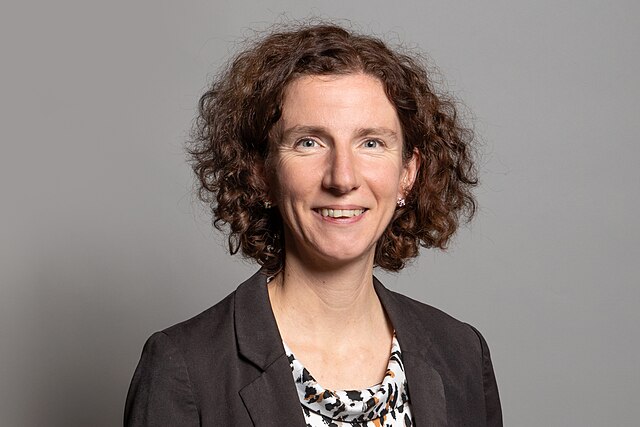
Dodds spoke to Cherwell a few days after appearing in the New Year’s Honours list. Receiving her Damehood, she said, left her feeling “really delighted and very surprised”. What stood out to her most was not the Damehood itself, but rather being recognised alongside “so many incredible people” from Oxford, something which she describes as “very humbling”.
Appropriately for an MP representing Oxford, Dodds’ career has bridged academia and politics. Before her election as an MP in 2017, she worked as a university lecturer, researching social policy and higher education. This background clearly shapes her view of universities – she sees them not simply as engines of economic growth, but as cultural institutions. As Minister for International Development, Dodds travelled widely, and she warmly recalls memories of repeatedly encountering people whose lives had intersected with British higher education: “Just about everywhere that I went I would find somebody with a link to a UK university.”
Internationalism is central to Dodds’ politics and international students feature prominently in her defence of the current UK higher education system. Dodds observes that there has been a shift away from the Commonwealth towards countries like China, but frames this as a positive development. She pays tribute to “international students [who] support the educational experience of domestic students”. With many UK universities now “cross-subsidised” by overseas fees, she suggests this income helps keep “opportunities open to people” who might otherwise be excluded from higher education altogether.
Dodds’s view of the University of Oxford itself is more complex. She’s clear that she is “so proud” of the “world changing” discoveries that are made at the University. Yet she thinks that the benefits of these discoveries fail to reach the city that hosts them: “Local people aren’t able to see that benefit as much as I would hope…. One of the things I’m really passionate about is trying to make sure that there is more of a connection, and that the opportunities associated with research and science are more open to local people.”
To me, this seems unfair to the University. As well as being economically central to Oxford, there are many examples of the outreach initiatives that the University undertakes in order to benefit young people in Oxford. In 2014 the Oxford Learning Centre opened in Blackbird Leys, a part of Dodds’s Oxford East constituency. The Centre helps to educate students from age 7 to 18 and in the last decade has supported 5,000 local children. Personally, I grew up in Oxford, and I remember my own interest in academic study being kindled at primary school by the free after-school science club run by volunteer PhD students. The utter joy of making ice cream using frozen nitrogen convinced me that science was something fun and interesting, although I eventually chose to study history.
From universities, our conversation moves to local politics. I begin by asking whether the government’s high taxation of pubs would continue. Dodds said that the tax burden on pubs was “something that is being looked at”. Later the same day, the government announced its latest U-turn, reducing tax rates on pubs.
On wider ideological questions, Dodds is resistant to claims that the Starmer government had moved too far to the right. Indeed, she pushes back at my description of her as a “soft-left politician”. She says she has “never been a big fan of labels”. Instead, Dodds cites the workers’ rights legislation the Labour government has passed. She sticks closely to the Labour Party line that Starmer’s government should be judged “not just on what they say but on what they do”.
Trying to move her away from the party line, I move onto tackling climate change at a local level, an issue that has sharply divided Oxford over the past few years. Dodds is unequivocal in her criticism of recent measures, particularly the congestion charge. She argues that it had no mandate from the electorate, since it did not appear in the election leaflets of the Liberal Democrat councillors behind the scheme. For her, the most important thing is balancing the climate crisis with local needs, ensuring fairness throughout. She attacked the way in which the congestion charge was introduced, as well as how its profits are used to make the Park and Ride service free – benefiting those commuting from rural Oxfordshire at the expense of those in the city, who the congestion charge affects the most.
For Dodds, it all comes back to fairness. For her, it’s the principle that must anchor any attempt to reconcile climate policy with everyday life, but is also how she frames her broader political aim to unite the people of Oxford East. On the need to tackle climate change, Dodds insists on consensus: “we are all on the same page.”