

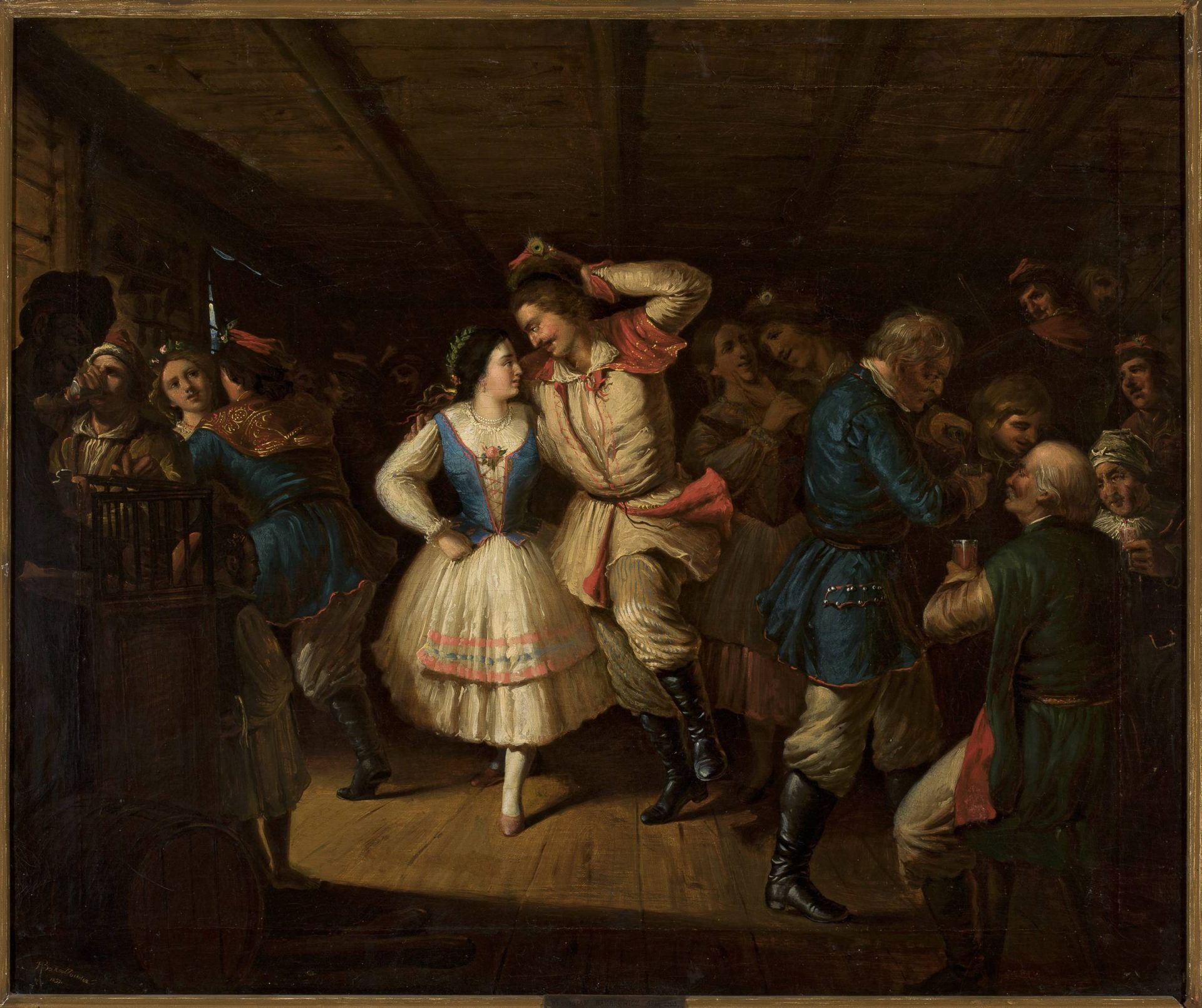
It’s Thursday night in New College’s Long Room, and several dozen students are desperately trying to master ‘Speed the Plough’, which, for the uninitiated, is a mind boggling routine of side-steps, spins and shuffles. With its roughly hewn stone walls and exposed beams, the Long Room has a certain Braveheart charm to it, which feels entirely appropriate for the evening. It resounds with confused chattering and laughter until, as the opening notes of the melody crackle from a speaker, the dancers together gather into their lines, and take each other by the hand.
If this sounds a far cry from your Thursday evenings, then you’ve probably never come across Oxford University’s Caledonian Society, who are responsible for Oxford’s termly Highland Ball, the main event of which – as you might have guessed – is Reeling.
Popularised in the 18th century by Scottish Lairds, Reeling is somewhere between English country and French line dancing, except set to Highland music (think fiddles, pipes and accordions). With a core repertoire of around eleven different dances, it is a more formal, rehearsed cousin of the Ceilidh.
Not that any of this is on my mind as I’m whirled around the Long Room. With all the counting beats and desperately trying to recall the next steps, Reeling doesn’t leave a lot of time for contemplation. This, my partner for the evening tells me, is partly why he comes. He’s five hundred words into an essay and hopes that the endorphins from all this dancing will power him through to the end of it. He then steps on my toes, but I’ll forgive him that.
By the end of the rehearsal, I’m absolutely knackered and, judging by the red-cheeked, sweat-sheened faces around me, I’m not alone in this. Yet even the absolute beginners – those who had never stepped foot near a ceilidh before tonight – seem exhilarated, some of them staying behind to finesse the steps, while the more veteran dancers practice flinging each other in the air. As I look around, essay deadlines, tutorials and the Damoclean sword of marked collections feel like they’re a world away.
If this is starting to sound a little cultish, I can promise you it isn’t. Addictive might be the better word. When I ask how they started Ceilidh dancing, a few of the students I chat to mention the Burns Nights held by their colleges – chaotic practices in the JCR, the bizarre sight of a college chaplain blessing the haggis, and some very tipsy Reeling. This makes a lot of sense to me, because there’s something a little Bridgerton in the magic of whirling around a grand, old Hall, with dance cards and flouncy dresses to boot.
Yet this glamour is a long way from my first encounters with Scottish country dancing, which took place in an unbelievably stuffy basement in South London. By the end of the night, the room would reach almost tropical levels of humidity, so that, for my nine year old self, Ceilidh meant descending into a hellish, slightly pagan underworld.
But regardless of whether it takes place in a stained-glass hall or a cellar, in black tie or trainers, the magic of this dancing remains the same to me. To clarify, I have a non-existent sense of rhythm, two left feet, and a mortal fear of dancing in public (that is, unless copious amounts of alcohol have been consumed). But at a Reel, none of this matters. For one, because no one is looking at you, or at least at you as an individual; the beauty of the dances comes from the unison, the synchronicity, the efforts of the collective.
Unlike so much at this university, this is a place where mediocrity can flourish. If the steps are right, and the enthusiasm is there, then your actual competence is somewhat secondary (or at least, that’s what I’ve been telling myself). If you are willing to spin, or be spun, then you’re welcomed in, taught how to perform a figure of eight, and thrown straight into a dance. Although I can’t stress enough how much fun it is, and how pleasant a change from the library, I think that it is this acceptance of amateurism that I’ve come to value most. In Oxford, after all, it can often feel like your best is never good enough, that you are striving for an ideal of perfection – not only in your academics, but also in your social life, and in the balance between the two – which is just not humanely possible (especially if you ever want to sleep). And while it is wonderful to be surrounded by so many passionate, talented people, it is also nice to be reminded that you can pursue something not because you want to play for the Blues, or add it to your LinkedIn, or devote your life to it, but because you simply enjoy it. Add to that some endorphins, a lot of exercise, and the promise of a ball at the end, and your Thursday evening is sorted.