

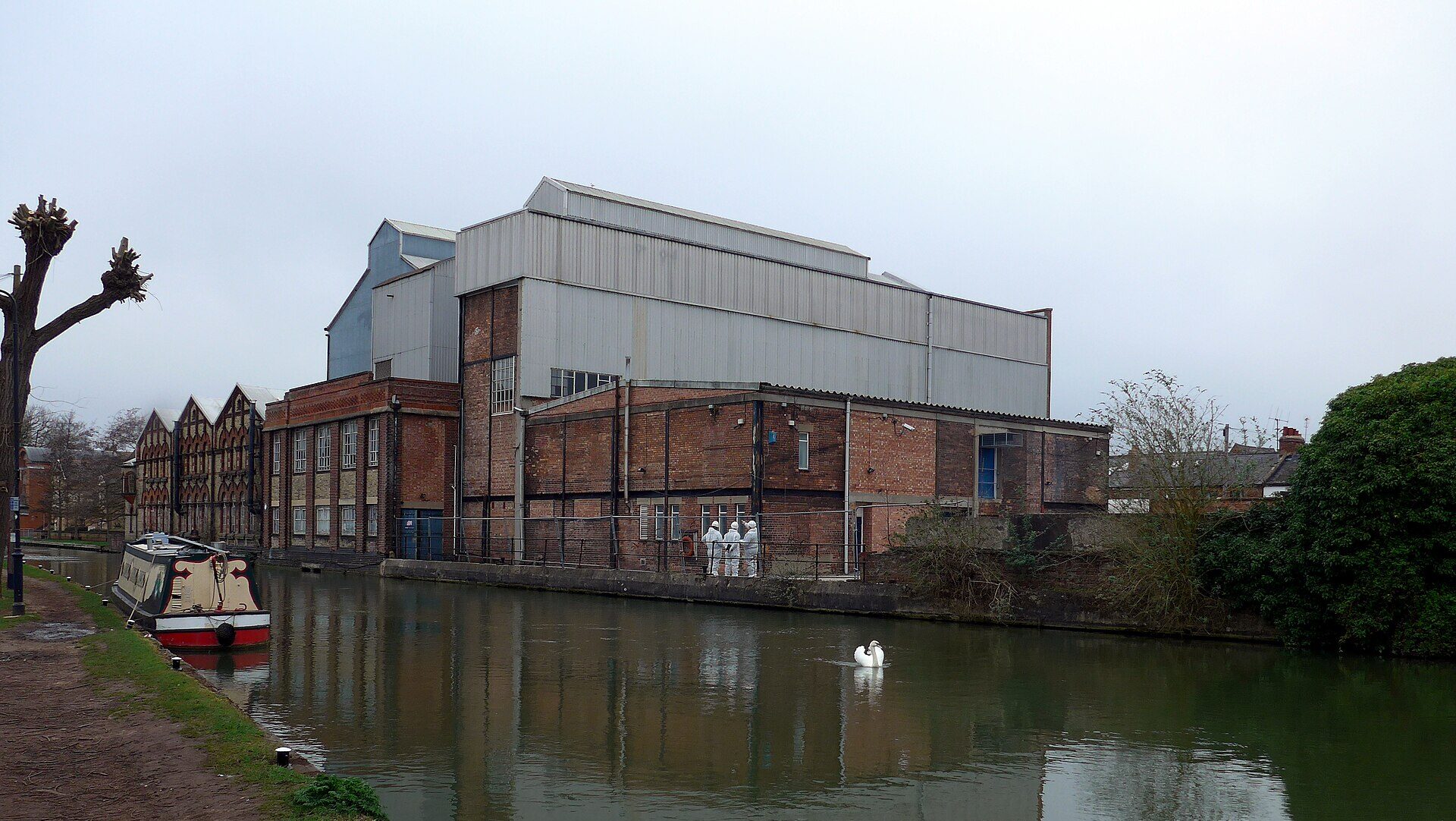
The Saïd Business School’s new Global Leadership Centre (GLC), located at the Osney Power Station, is set to open this summer after significant delays. The project was first mooted in May 2015, discussions with local residents took place in 2018, and the project was approved by Oxford City Council in 2019.
Plans resulting from the 2018 meetings set a target timeline for construction starting in spring 2019 and finishing in spring 2021. However, construction only began in 2021, with the opening successively pushed to 2024, spring 2026, and summer 2026.
At a price tag of £60 million, the GLC has cost twice the amount Wafid Saïd donated to establish the business school in 1996. According to construction company GRAHAM, the GLC is intended as a “mini campus”, cultivating “close links between business and management research and practice”. Complete with more than 120 ‘hotel-style’ bedrooms, various teaching rooms, leisure facilities and a gym, the building will house “short-stay residential courses for company executives”.
GRAHAM explained how the business school’s existing residential facility “no longer reflects its ambition”. They claim the new site would “inspire the next generation of global leaders through a space that blends heritage, innovation and sustainability”.
Roger Goodman, Warden of St Anthony’s College, asserts that the GLC will provide a model for the development of executive education programmes across other University departments.
The Osney Power Station, which opened in 1892, is a Local Heritage Asset and powered the first electric lightbulb in Oxford. Located around a five-minute walk from the train station, the power station closed in 1968 and has since been used sporadically by the University’s engineering department and for museum storage.
The GLC is among a series of new built additions to the University, some of which have attracted criticism. A proposed three-storey lab in Headington was decried by Headington Heritage and the Highfield Residents Association, who pointed to potential decreased “quality of residential living” due to flood concerns and light spillage.
Perhaps anticipating these criticisms, Environmental consultancy firm RIDGE has claimed that the development of the GLC will “form part of the regeneration of the west end of the city of Oxford, creating jobs and opportunities for the local community.” Based on meetings with residents in 2018 and the Considerate Constructors Scheme codes of practice, no works, deliveries or waste removal are to be undertaken during the early mornings, evenings or weekends. In addition, the GLC will not allow for car parking, instead encouraging visitors to use public transit or walk.
The University has argued that bringing a historic building back into active use “will be securing its long-term future for the benefit of the city”.

, located at the Osney Power Station, is set to open this summer.)