

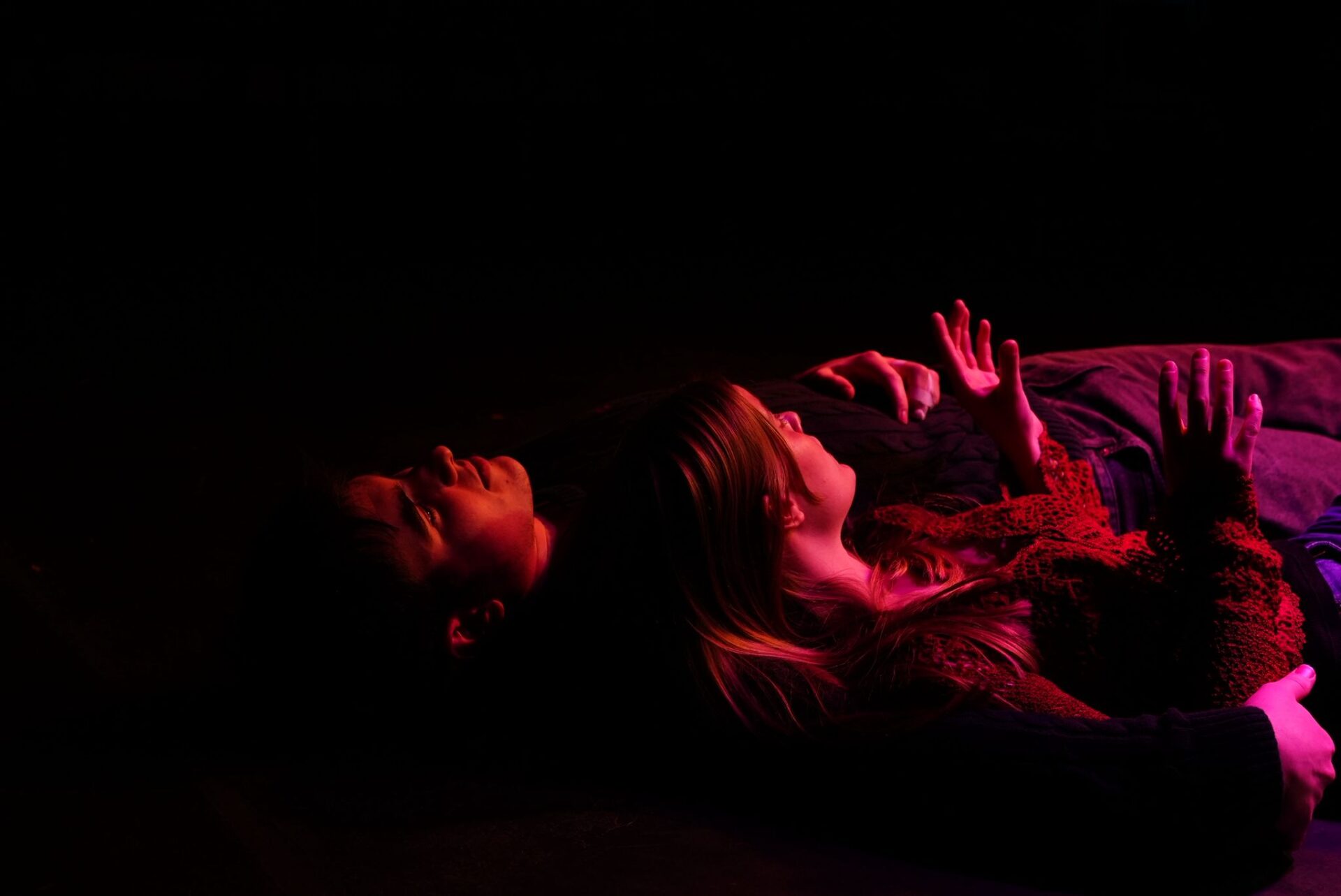
Dreams is a piece of brand-new writing by Peter Hardisty and Charlotte Macari, produced by Crazy Child Productions. According to its promotional material, it ‘follows James and Emma as they grow closer together’. This is not a peaceful romantic journey: in one word, the show is ‘messy’. My conversation with Hardisty revealed there is a lot more going on under the surface.
Sitting in the busy atmosphere of the high street Caffé Nero, we quickly delved into how the play relates to familiar themes in student life. Hardisty’s inspiration came from “noticing that [he] and a lot of his male friends had a tendency to get crushes on girls without having any idea as to what they were like as a person.” The resulting relationships invariably reached problems. Underlying incompatibilities are masked with grand romantic gestures. A strong element of the script is the feelings of the woman caught in this scenario. Hardisty told Cherwell: “its kind of expanded into a wider thing about the character of Emma and how she grapples with agency”.
We laughed that these kind of relationships are strangely common. This led me to question whether he believed it was men specifically that see relationships this way. His reply: “I think gender does play a role in that dynamic.” The potential relevancy of the patriarchy to how the audience interpret the play meant that they chose not to cast gender-blind, although they did discuss having two female leads, given that a lot of OUDS plays are male-centred.
The play’s final result wouldn’t have been possible without Macari and Hardisty’s friendship. The two met at college: Macari takes English and Hardisty takes music. They had the idea in Trinity of their first year and “instead of doing exams, thought about the play a lot.” His writing process started from his Notes app. He’d write scenes there, then send them to Macari to spark discussion. There was lots of “piecing together what we wanted the audience to feel and what we wanted the audience to think.”
The plot centres on a growing tension which builds to a crescendo. Hardisty described the final versions of the characters: Emma is “too cool…she’s very passionate about stuff. She is an English student, a bit eccentric, wants to seem like she doesn’t care about much.” James, in contrast, is more impulsive, a “quick romantic” who “doesn’t really think things through.”
Hardisty and Macari were thrilled to cast Rachel Wade as Emma and Will Hamp as James. Hardisty expressed feeling “lucky to have two freshers who are both very talented”, with a sense that he’d “caught them before they were famous.” In the casting process, he and producers Magdalena Lacey-Hughes and Prity Laloux were looking for “whether they could bring an emotional reaction” as well as appreciating that the leads needed to have chemistry. Now, in rehearsals, the actors are given freedom to take their characters in new directions: Hardisty told Cherwell that while letting go of an original vision can be hard, he “wants to hear their opinions too” and thinks these opinions are “just as valid.” This openness has led to some exciting changes to his first thoughts; he mentions moments where he felt “this wasn’t what I wanted, but it works much better!”
One challenge Hardisty faced was transferring his imagined notion of how the set should look to the space constraints of the BT. He praises helpful innovations made by Sarah Webb on set design. The BT provides an ideal space because it is “great for experimental stuff.”
Hardisty passed the script to several of his friends, each of whom read it differently. He is therefore careful not to predict exactly how audiences will react, but assumes they’ll leave “a little sad.” Most importantly, he wants the play to create discussions about why relationships do or don’t work. He hopes “no one will break up because of it.”
Dreams runs at the BT, 17th-21st February.