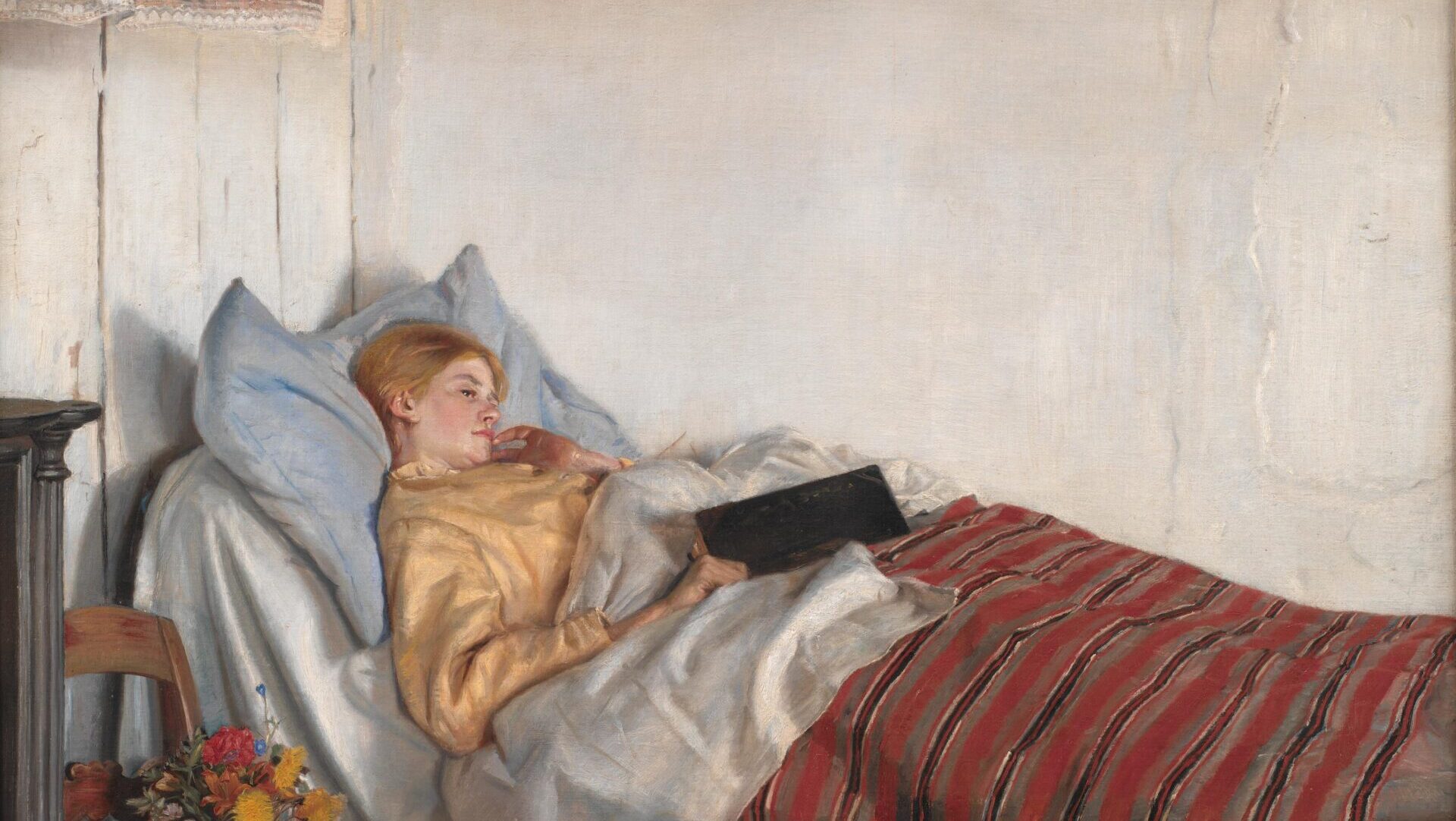
Recently, I found myself marooned in that most demoralising of places, the NHS waiting list. I was soon falling down the rabbit hole of catastrophisation, after succumbing to the inevitable temptation of googling my symptoms (it wasn’t looking good). This isn’t a unique experience: I have been misled by the internet more times than I’d be willing to admit, whether by WebMD, bloggers, or even influencers.
Our level of access to medical knowledge is unprecedented, and yet we have such little confidence in what to do with it. Magazines, TV shows, and social media are flooded with medical factoids, tips and tricks to cure this or improve that, all, of course, backed by the indisputable authority of unnamed ‘experts’. In an age of information surplus, when our medical resources are at their most developed, we have been plunged into yet more ignorance, and, as a result, have become paradoxically estranged from our own anatomy. Despite the abundance of resources, control feels ever more out of reach. This inundation of medical information is, in part, a hangover from the COVID pandemic, a period where individual health turned into public data, and our bodies were regarded as political property. It’s convenient to flatten the contours of collective suffering into clarity, so we accepted absolutes and read medical statistics like weather reports. In the search for transparency, we have come to treat our own bodies like detached entities, something to observe, find fault with, and upgrade accordingly.
Social media has, in turn, inaugurated an age of obsessive self-monitoring. It is no longer enough to feel healthy: What about your amino acid levels? Have you tried biohacking, nootropics, proteinmaxxing? Yet the algorithm privileges narrative value over factual accuracy: private experiences are marketed as universal truths, bolstered by the unshakeable testimony of personal opinion. Everything is sensationalised, then distilled into a digestible, purchasable pill, a spoonful of sugar to help the misinformation go down. This is only exacerbated by pop culture. Shows like Grey’s Anatomy have, for years, conditioned us to expect narrative clarity from medical issues; mysteries are solved within the run-time of an episode, obfuscating the complexity of the human body. In the digital age, the very definition of health has become subject to internal tensions, both public spectacle and private mystery.
Social media turns advice into prescription, information into imperatives, in a new catechism of wellness. Follow my ten-step cleansing programme, my intermittent fasting schedule, my physiotherapy routine, so you too can win at the game of health. Everything is relentlessly categorised as ‘clean’ or ‘toxic’, and ruthlessly moralised as ‘good’ or ‘bad’, transforming the indeterminate into commandments of lifestyle. This facade of moral certainty is fundamentally a marketing tool, a projected ideal of absolute truth that can only be achieved through consumption. We are composed not of any kind of corporeal reality, but of disparate parts imported from a facile Pinterest fantasy that smothers over the texture of life. In this environment, sanitising yourself becomes a sort of aesthetic project.
Women’s health, in particular, has long been a site of epistemic confusion. The murkiness surrounding female reproduction that continues to colour public perception and even legislative policies is just another iteration of that perennial discomfort around the female body: the gendered nucleus of hysteria, the site of the ‘wandering womb’. Transparency around female anatomy still feels unachievable, when public discourse is couched in the language of avoidance. If ignorance is the default, we lose any metric to assess the truth value of any given claim: perhaps the pill will make me infertile, like that one woman on Instagram insisted, or maybe wearing a bra will give me breast cancer.
In this context, everything, from cellulite to menopause, is continuously pathologised, and even demonised. Women’s health, lacking clear definition, is a taboo discussion, so that medical complaints are diminished and disregarded by those who represent themselves as authorities. This, of course, manifests itself most perniciously when it comes to reproductive rights, rooted in a kind of epistemic battle over who gets to dictate anatomical functions. Medical professionals, influencers, and politicians alike take it upon themselves to interpret, and regulate, women’s self-knowledge. The consultant who told me, at 13, to “stop this attention-seeking nonsense”; the ex-boyfriend who, at 17, hid my anti-depressants; and the male GP who, last year, delivered my life-altering test results in a curt 20-second phone call: such men assert an understanding of my body to which I myself could never lay claim. Voicing my own opinion feels like trespassing on restricted property.
I feel that I am ultimately subject to a body I do not understand, an unknowable and impersonal entity. I can’t say if I’ve ever truly experienced a sense of comfortable embodiment, or whether that even has any meaning. In the end, the only thing I can affirm with any certainty is that it is never a good idea to google your symptoms at 3am.