

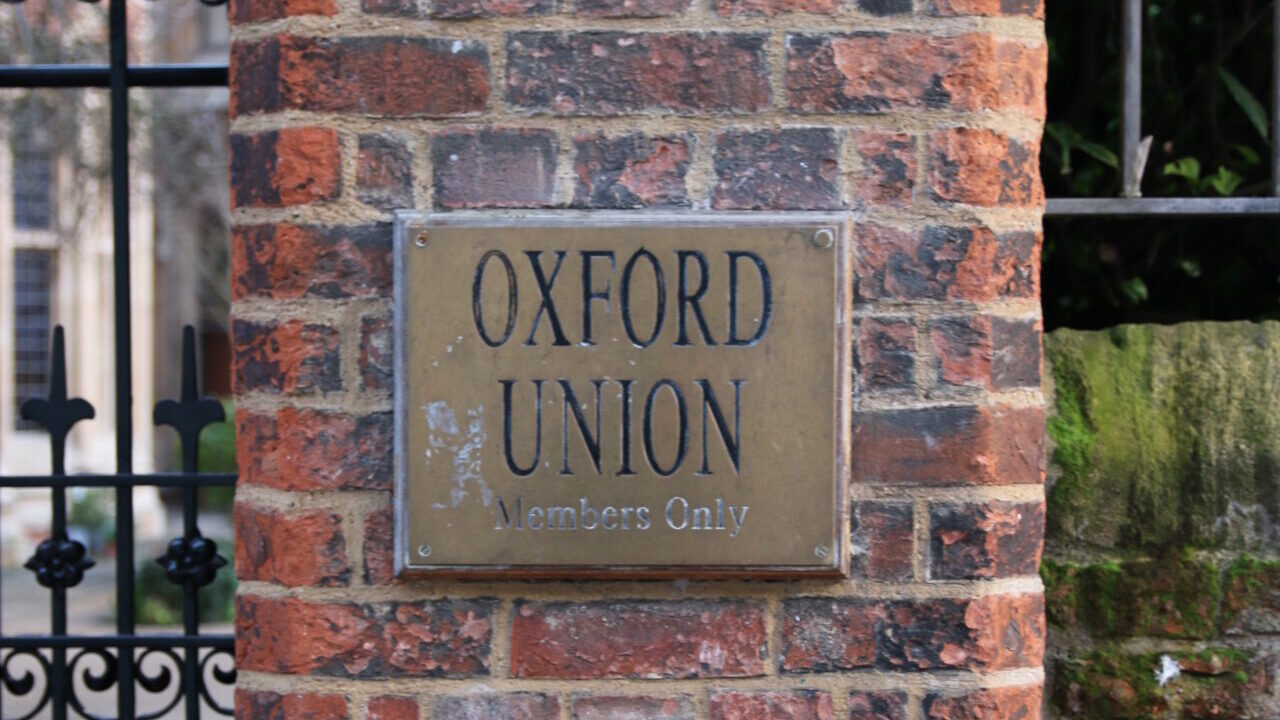
On 1st February, during a tribunal hearing, Samy Medjdoub – the former Secretary of the Oxford Union, who is currently suspended for having fabricated minutes – texted former President Israr Khan: “Donald can hear, so don’t mention… that you know the panel is rigged or that I know him.” Donald Jenkins is one of the three panelists of the Appellate Board, the Union’s highest adjudicatory body, and was hearing two cases involving Medjdoub as a party.
Cherwell has since reviewed exclusive direct communications between Samy Medjdoub and former Union officials – including former Presidents Israr Khan and Moosa Harraj and former Treasurer Rosalie Chapman – discussing Medjdoub receiving direct advice on proceedings and feedback on submissions from Donald Jenkins, who was a member of the Appellate Board hearing cases involving him.
Medjdoub, Khan, and Chapman “categorically and unequivocally” denied the allegations, while Harraj said his denial was “complete and unequivocal”. They deny any claims that they were involved in the “rigging” of the tribunals, and the existence of any private communications suggesting this. Cherwell has seen extensive evidence disproving their claims.
They also deny having benefited from the rulings of the Appellate Board or other Union tribunals as a result of interference. In addition to denying the allegations, Medjdoub told Cherwell “at no stage did I obtain the outcome I was seeking”. Medjdoub remains suspended from the Union, and his political opponent, Arwa Elrayess, was reinstated in her position as President-Elect.
While the Appellate Board did not rule on the two cases involving Medjdoub, it issued a directive temporarily suspending Elrayess, and two binding interpretations that could benefit Medjdoub’s future appeals.
The Oxford Union, founded in 1823, describes itself as the “world’s most prestigious debating society” and as a “bastion of free speech”. Frequently making headlines in the national press over controversies, the institution has been called a “cradle of democracy” for launching the careers of countless British and international politicians.
However, recent revelations have attracted criticism of the Union’s democratic integrity and the transparency of its disciplinary processes. The tribunals have been described by a former Returning Officer who prefers to stay anonymous as “the most unfair thing [they have] seen happen at the institution”.
In reference to Medjdoub stating in public that he had obtained documents from an Appellate Board panelist “illicitly”, a former Returning Officer told Cherwell: “This is the sort of connivery and cheating that cannot be happening.”
The tribunals in question were ruling on a series of cases related to the Trinity term 2026 election, where Arwa Elrayess was elected President with 757 first preferences, by a margin of around 155 votes over Liza Barkova. Subsequently, several allegations of electoral malpractice were raised to the Election Tribunal, some of which were further appealed to the Appellate Board.
The Senior Treasurer
In November 2025, Peter Petkoff, the Senior Treasurer, while not explicitly against the Union rules, acted against standard practice in constituting the Michaelmas 2025 Appellate Board. The Senior Treasurer is “responsible for oversight of the Union’s finances and staff”, and is usually a senior academic at the University.
In an email exchange seen by Cherwell, Petkoff wrote to Chris Mentis Cravaris, the Returning Officer – an elected role with oversight of elections and who also acts as the clerk of the Appellate Board. In the email, Petkoff directly put forward three names to sit on the panel and asked Mentis Cravaris to constitute it. The Returning Officer immediately expressed his concerns in an email response to Petkoff.
Several senior officials familiar with the Union’s rules explained that the standard practice is not for the Senior Treasurer to directly put forward names, but rather for the Returning Officer to constitute a shortlist based on 200-300 initial contacts, before referring them to the Senior Officers. They expressed concerns regarding the irregularity of Petkoff’s conduct, citing worries that it undermined the shared appointment mechanism.
Petkoff responded to Mentis Cravaris’ concerns with what was described to Cherwell as a “conversation ending tone”, first stating that the “composition of the Board is settled and should not require further discussion”, and in a further email “Once again please CONSTITUTE the [Appellate Board]!”.
Mentis Cravaris further raised concerns after speaking with Iftikhar Malik, the Senior Librarian, who indicated that he was unaware of the names Petkoff had put forward. Cherwell understands that, under Rule 33(f)(v), it is standard practice for both “Senior Officers” to approve the composition of the Appellate Board.
In previous correspondence seen by Cherwell, Petkoff had implied Malik’s consent to the proceedings, using formulations such as “The Senior Officers have formally determined the composition [of the AB]”. Petkoff ultimately responded with a four-word email: “Please proceed as requested”.
In response to Cherwell’s request for comment, Petkoff denied any wrongdoing, and claimed that these allegations are “wrong and removed from reality”.
This is not the first time that Petkoff faced accusations of overstepping his authority. Earlier in November, a Disciplinary Committee report had expressed “grave concerns about the Senior Treasurer’s attitude towards the Rules and Standing Orders and the false assertion of his own (non-existent) interpretative power”.
Petkoff is an Associate Professor of Law at Regent’s Park College. Four sources familiar with the situation told Cherwell that Petkoff enjoys a close personal relationship with Israr Khan. Petkoff assumed his role in June 2025, a few months after the end of Khan’s presidency. A current Union officer described Petkoff’s conduct as “wildly unprofessional for someone who is an academic at the University”.
An amendment to the Union’s rules passed in Week 4 means that Petkoff’s term as Senior Treasurer was cut short, and that the appointment process for Senior Officers now involves more scrutiny. A previous motion had expressed concerns of “a clear apparent bias” regarding Petkoff’s candidacy to the Senior Treasurer role given his involvement in Regent’s Park.
The role of Senior Treasurer is open for election on Monday 2nd March, with nominations closing at 4pm. Cherwell understands that Petkoff intends to run again for the position. A member who had previously voted against Petkoff told Cherwell: “If the Union wants to be better, it needs better procedures that prevent institutional corruption of this level from ever happening again.”
An unusual appointment
Of the three names put forward by Petkoff, two were eventually selected to sit on the Appellate Board, one of whom was Donald Jenkins. Several sources close to the matter have raised concerns about the professional backgrounds of the two panel members nominated by Petkoff, and about the fact that neither has previously held elected officer roles in the Oxford Union.
Donald Jenkins’ most senior position at the Union was as a member of the Standing Committee, which a former Returning Officer described as “a bit of a low position in this context”. Cherwell understands that Appellate Board members are usually former elected Presidents, Librarians, Treasurers, or Secretaries.
A former Returning Officer with knowledge of the composition of the Appellate Board told Cherwell that the second person proposed by Petkoff was a “very weird name” given that she was an ordinary Oxford Union member who had never been elected to a formal role, and that she has no professional legal expertise.
In private communications with Harraj, Medjdoub wrote: “If we can only have two people it should be Donald Jenkins [and the second person].” The third name initially proposed by Petkoff was ultimately replaced by Stephen Rubin KC, a senior lawyer. He was privately described by a former Returning Officer as “the most qualified person we’ve ever had [on a panel]”.
Inconsistencies in the email addresses used to contact the panelists proposed by Petkoff were also noted by a senior Union Officer with access to the internal membership database. Indeed, the contact details for Donald Jenkins sent by Petkoff to the Returning Officer appear different to the ones listed in the Union database.
For the second person proposed by Petkoff, the Senior Officer confirmed that her contact details were not listed in the Union database. It is therefore unclear how Petkoff would have been able to contact Jenkins and the second person without having had prior contact through an intermediary and outside of the standard Union procedure.
Cherwell has seen evidence in private communications between the Michaelmas term 2025 President Moosa Harraj, and the Secretary Samy Medjdoub, indicating that they supported Petkoff’s deviation from standard practice.
Harraj described the Senior Librarian Malik as “being useless” for “not letting the names go through”, referring to the people suggested by Petkoff. Medjdoub responded by saying: “These names have to sit. They have all agreed to expel everyone on [the other] side from the society on the most bs [bullshit] grounds.”
In communications with former President Israr Khan, also seen by Cherwell, Medjdoub asked him to confirm that the people Petkoff named for the Appellate Board are “the right ones”.
Medjdoub denies the existence of this correspondence, telling Cherwell that he “did not send this message” and that he had “no such conversation with Israr Khan”. Harraj says these allegations are “completely false”, while Khan denies involvement “categorically and unequivocally”, stating that he was “not aware of [Petkoff’s] conduct”.
A ‘biased’ panelist
Cherwell has seen comprehensive evidence that Donald Jenkins, one of the three ruling members of the Appellate Board, was engaging in direct external communication with Samy Medjdoub, including cases where Medjdoub was a party, without the knowledge of other parties. Several senior Union officers have since privately raised concerns regarding the impartiality of the Appellate Board.
In private communications with Israr Khan, Rosalie Chapman, and Alexander Sproule – then Deputy Returning Officer – seen by Cherwell, Medjdoub makes over 20 references to exchanges between himself and Jenkins over a four-month period during which Appellate Board proceedings were ongoing. These exchanges took the form of phone calls and text messages, at times occurring daily.
A former Returning Officer, who wishes to remain anonymous, told Cherwell that during an “ongoing case”, it would be “entirely inappropriate” for “the panellists [to] be communicating with the complainants”. Medjdoub categorically denies the existence of this communication, and told Cherwell: “I have never had any contact with Donald Jenkins.”
Jenkins told Cherwell: “I strongly dispute the allegations about my conduct and regard them as unproven”. He added: “It is regrettable that criticism has been directed at the first disciplinary body which has tried, in a serious, principled and impartial way, to address the manifest and systemic problems in the Society’s electoral machinery.”
Furthermore, Jenkins did not disclose any conflicts of interests when he sat on the panels with cases concerning Medjdoub. A former Returning Officer told Cherwell that they would have generally expected the panelist to be “very forthcoming about declaring [a conflict of interest] themselves”, and to “offer to recuse” to be “replaced with someone else”.
On 1st February, during an online hearing of an Election Tribunal – a panel below the Appellate Board on which Jenkins did not sit – Jenkins covertly listened in to the Zoom with the help of Medjdoub. Several officials with knowledge of Union rules told Cherwell that they would not expect panelists from higher panels to listen into lower tribunals.
Medjdoub told Harraj that “Donald [is listening] in on call [sic.]”, and also texted former President Israr Khan: “Donald can hear, so don’t mention… that you know the panel is rigged or that I know him.”
Medjdoub said he “was not in contact with Donald Jenkins” on 1st February and denied that Jenkins was listening in. Medjdoub, Khan, and Harraj deny having any such communication.
A former Returning Officer emphasised to Cherwell that the decisions of the Appellate Board “cannot be challenged”. Reflecting on the transparency of the tribunals, they told Cherwell: “Members serving on the board must therefore hold themselves to the highest standard. It is a basic requirement of natural justice that every panellist should be free of bias, actual or apparent.
“The entire process depends on trust. A panellist communicating directly with a party unhappy about the outcome of the election is simply unthinkable. It undermines confidence in the system and puts all candidates at risk of grave injustice.”
‘Feedback’ from the panelist
The communications between Medjdoub and Jenkins also suggest that Jenkins was involved in providing feedback and directly writing submissions to Union tribunals on behalf of Medjdoub. On 15th December, Medjdoub texted Moosa Harraj that he would share his Notice of Appeal with Jenkins “informally” to “get feedback” before submitting. The expectation is that submissions to the tribunal are independently prepared by the parties or their representatives, and are usually not shared with panelists prior to formal submission.
On 22nd January, Medjdoub messaged Alexander Sproule, then Deputy Returning Officer. He forwarded a 700-word long text beginning with “Samy, A few thoughts on your latest Response to the No Case to Answer”. Medjdoub immediately followed up, sending “from jenkins”. Sproule responded: “I love how he gives suggestions and then just writes it for us.”
Jenkins also directly contributed to the drafting of at least seven separate submissions by Medjdoub to the Appellate Board and other tribunals. On 8th January, Jenkins was involved in the preparation of a Notice of Appeal sent to the Appellate Board by Medjdoub and seen by Cherwell. On that day, Sproule sent a first draft of the Notice accompanied by the message “send this to jenkins but tell him it’s really jumbled and we could use his help straightening out the argument”.
Shortly after, Medjdoub sent two links in his chat with Alexander Sproule, followed by the message “from donald jenkins”, to which Sproule responded “Wait I didn’t realize he [Jenkins] wrote it for us”. Jenkins was also involved in the drafting of two additional documents submitted to the Appellate Board that day, as confirmed by a private message sent by Medjdoub and seen by Cherwell: “Donald just needs ideas he said he will write it up for the other two”.
Cherwell has seen evidence that Jenkins also drafted a Submission of No Case to Answer for Medjdoub on 18th January, and that he drafted “most” of a Rebuttal on 20th January after having also provided feedback on the document.
Medjdoub claims that this is “false”, that he “did not send those messages”, and that he “denies entirely” that Jenkins was involved in the drafting of documents that he submitted to the Appellate Board. Sproule also denies this, and stated that he had “no knowledge of or connection to Donald Jenkins”. Donald Jenkins did not respond to Cherwell’s request for comment.
Leaked confidential documents
On at least four occasions, Medjdoub found himself in possession of information or documents that were confidential and that were only supposed to be circulated between the three panelists, including Jenkins, Mentis Cravaris (RO), and Jake Dibden (Deputy RO). This happened while Medjdoub was in frequent communication with Jenkins.
One such instance concerned an internal direction issued by the Appellate Board on February 4th – titled “AB-11” – which was only circulated between the panelists, the RO, and the DRO. Dibden and Mentis Cravaris received reports AB-11 “appears to have been disclosed without authorisation to Samy Medjdoub”.
They shared concerns that there was “indirect or direct contact outside of proper channels”, with information of private conversations between Jenkins and the DRO reaching Medjdoub “within hours.
In a WhatsApp conversation seen by Cherwell, Medjdoub claimed to have “got this in a way that is super illegal” – an apparent colloquial reference to having obtained the document through improper channels. He added that if it was found that he was in possession of this document, “they will expel me over this”.
The RO and DRO immediately informed Jenkins that they believed “AB-11 has been leaked to third parties”. Jenkins offered the explanation that the RO email inbox had been “hacked”, but a check conducted by the Union IT services “confirmed no compromise”, disproving this theory.
On another occasion, on January 25th, Medjdoub sent to Israr Khan an internal deliberation note with the mention “INTERNAL – FOR THE APPELLATE BOARD ONLY” in the header. Medjdoub shared this document with Khan three hours after having sent to Khan “On phone with Donald important”.
A few days later, Medjdoub shared with Khan and Harraj one more document with the same mention “INTERNAL – FOR THE APPELLATE BOARD ONLY” in the header, regarding the same appeal. Medjdoub followed up with the words: “Don’t share.”
Khan and Harraj denied ever being in possession of any such documents or knowing about their existence. Medjdoub denied ever speaking to Jenkins, and he said he “did not share any such document with Israr Khan or with anyone else”.
‘Chapman v Pryce’
On 6th January, Medjdoub sent to Chapman a confidential email by Abaraonye to the Appellate Board, that should not have been circulated beyond the panelists and the clerks of the board. In the email seen by Cherwell, Abaraonye asks to “register as an interested party in the appeal made by Chapman to the Appellate Board”.
Aware of Jenkins’ link to Medjdoub, Chapman asked him to “tell Donald that he [George Abaraonye] can fuck off”, and added that she “was just making a legal point”. In January, Chapman repeatedly solicited updates from Jenkins via Medjdoub on the situation.
The Appellate Board, on which Jenkins was one of the three panelists, ultimately ruled in Chapman’s favour on two separate cases. The Board dismissed Shermar Pryce’s appeal on one case. In the other, the Board granted Chapman another hearing on a case that had previously been dismissed. That case involved alleged electoral malpractice committed by the @Overheard_at_Oxford Instagram page.
Chapman denies any involvement in the matter, and says that the allegations are “categorically untrue”. She told Cherwell that she “never received confidential Appellate Board material via Mr Medjdoub or anyone else”. Medjdoub says that it is “false” that had contact with Chapman on this matter.
Outcome of the cases
In the first case, Medjdoub v Elrayess, the Appellate Board ultimately ruled that it could not hear the appeal because of a case precedent, meaning that Medjdoub lost his case and Elrayess remained in the office of President-Elect. However, while the proceedings were ongoing, the Appellate Board had issued a formal directive seen by Cherwell, instructing that the office of President-Elect should be considered “suspended” and “treated as vacant”.
A statement supporting this was posted on the Oxford Union’s Instagram channel on the Appellate Board’s direction. Cherwell does not understand this to be standard practice, and a source close to the matter described it as an “unusual precedent”.
In the second case, Medjdoub v Abaraonye and First SDC, the Appellate Board ultimately did not rule on the case, meaning that Medjdoub’s suspension was not overruled, and the matter was instead referred to a Disciplinary Appeals Committee (DAC).
The case having initially appeared in front of a Senior Disciplinary Committee (SDC), the standard appeal route should have been to a DAC, not the Appellate Board. A former Returning Officer told Cherwell that the Appellate Board had “acted entirely bizarrely” in hearing this appeal.
Medjdoub told Cherwell that he found himself “compelled to appeal the matter to the Appellate Board” because the Returning Officer “had failed to constitute the body that should have heard my appeal”. He added that he did not consider to have “benefit[ed] from the disciplinary process”, but rather to have been “harmed by it”.
However, the Appellate Board did issue two binding interpretations. A source familiar with the case told Cherwell that these interpretations provided a strong basis for Medjdoub to win his ongoing appeal in the DAC. The Appellate Board also put forward Donald Jenkins’ name to sit as one of the three panelists on the DAC. Cherwell does not understand this to be standard practice.
The Oxford Union and the current President Katherine Yang declined to comment.
This article has been updated to include a response from Donald Jenkins.