

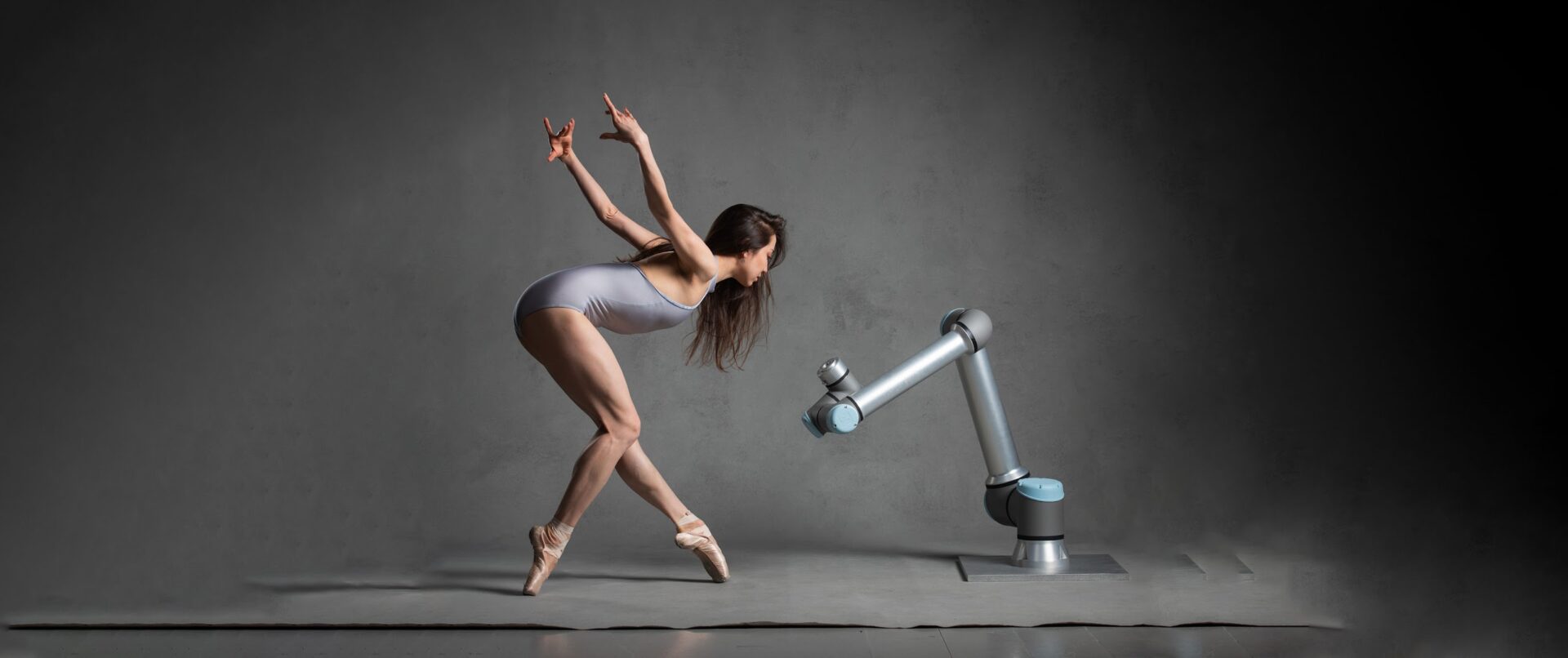
Dr Merritt Moore is a Harvard alumna and Oxford DPhil graduate who has successfully navigated a career as a quantum physicist and robotics specialist, whilst also performing as a professional ballerina with Zurich, Boston, and English National Ballet. Beyond the stage and lab, she is the founder of SASters (Science Art Sisters), an initiative dedicated to helping women find community across STEM and arts careers. Cherwell spoke to Dr Moore about innovation in science, dancing with robots, and juggling your many passions.
There is something fitting about the fact that Dr Merritt Moore turns 38 the day after we speak. She is someone who has already lived several remarkable lives: a professional ballerina with the English National Ballet, a Harvard graduate, an Oxford physicist, a BBC astronaut candidate, a robotics pioneer, and an entrepreneur. Yet, the impression she leaves is not one of someone looking back, but of someone perpetually in motion toward the next thing.
Moore completed her DPhil in Atomic and Laser Physics at Oxford between 2012 and 2017, having arrived on a competitive Harvard-Oxford exchange fellowship after graduating magna cum laude in physics from Harvard. Even then, she was still dancing professionally, glad to find support in her academic peers. “I had a really great physics advisor who was very supportive. Would I say everyone was? No. But I gravitate towards the people who are on the same wavelength”, she recalls.
Her PhD research, explained as creating single photons of light using high-powered lasers and nonlinear crystals, sounds remote from the robotic dance performances that have propelled her into the public eye. Moore is honest about the distance.
“That work has nothing to do with robots”, she says. But then she pauses. “However. During the pandemic, I couldn’t dance with humans. I thought: ‘Robots don’t get Covid. Maybe I can dance with one’. And my experience in the lab gave me the confidence to just think ‘I can figure this out’.
Working with robots lends itself to more external support than physics, which can be an isolating pursuit. With physics, there’s no manual. There’s no help. There’s one guy in all of Europe who can fix your laser. You’re doing stuff that’s never been done before, putting equipment together that’s not meant to be put together. With a robot, there’s a manual. There’s someone you can call. After quantum physics, I thought: I can figure out a robot.”
The performances that followed, at the World Economic Forum in Davos, the Forbes Women’s Summit in Abu Dhabi, and across Germany, France, Mexico, and India, have generated extensive coverage. The blend of an activity as deeply human as art with the programmed mechanisms of a machine creates a stellar image, but Moore pushes back against the idea of robots as mere props.
“During the pandemic, I worked with the robot all day, every day, from seven in the morning. I’m not sure I could have done that without it there. In a weird way, it was a companion, not in the way people might imagine, but it was a presence. This comforting thing on the ride with me, trying to make it dance.”
More than a pandemic-era partnership, Moore finds something unexpected in the blank slate a robot offers. “When I dance with another human, I see them, I hear them, I feel them. I acknowledge their presence, and we dance together. If I dance with another human, it’s very hard for me to imagine them as someone other than who they are. But with the robot, it allowed me to go somewhere very personal and very vulnerable.”
Some of the most affecting performances she has given, she says, have left members of the audience in tears. “It’s always really touching when you feel the audience is vulnerable with you, that they’re on that emotional journey too.”
One standout moment was being selected to dance in India with her technological company. “That was definitely a highlight. The Prime Minister knew my name and came to me, saying he had selected me to perform. I died and went to heaven.”
When I ask whether the rapid rise of AI six years post-pandemic has changed how she thinks about the robots she works with, she is thoughtful. “I still see the limits of it. I still see everything as a tool for humans.”
“Dancing with a robot is a bit like what science fiction is for society, a window into the future that helps us predict and prepare for the moral and societal implications to come. Does it make me concerned about what’s possible in the future? Yes, absolutely. That’s what keeps me up at night. And it’s what keeps me motivated to keep exploring this now, because I think these conversations need to happen.”
One of the projects Moore is most eager to talk about is SASters (Science Art Sisters): an initiative she founded during the pandemic to connect young women passionate about both science and creative fields. What began with a single Instagram post produced 250 sign-ups in a single day. “I was expecting maybe twenty people”, she says, still sounding slightly surprised. “And I thought, okay, this community is way larger than I anticipated.”
Since then, SASters has facilitated international collaborations, with one member even flying from Turkey to Abu Dhabi to work with Moore directly. Nonetheless, she is candid about the challenges of running it largely on her own. “I’m a professional ballet dancer, a professor, I’m starting a company, I’m writing a book. There’s only so much I can do”, she laughs. “The part of SASters that I most wish I could do more of is keeping people consistently engaged, the social media side, the ongoing connection.”Oxford students or recent graduates looking to get involved would, she suggests, be very warmly received. “I think community is only as good as the individuals in it, so it just seems it needs more people involved.”
Away from SASters, Moore’s other ambitions have been no less striking. She was 1 of 12 candidates selected for the BBC’s Astronauts: Do You Have What It Takes?, and was in the final 16 for the dearMoon project.
“I hadn’t realised how much I want to go to the moon”, she says, sounding genuinely surprised. “I think it’s just a human biological desire to adventure and explore and push the limits of what humans can do.”
She also learned something more unexpected: that being an astronaut is, paradoxically, a very low-adrenaline job. “They need someone who is really good at being perfect, consistently, for a very long time, with or without an adrenaline rush.”
Her ever-eclectic list of passions has reached outer space and returned to education. From 2022 until 2024, Moore taught a creative robotics class at NYU Abu Dhabi. “My philosophy is that technology changes so quickly, and I want students to leave with the confidence that they can master whatever technology comes their way.”
Moore wants to inject freedom back into scientific teaching. “I think I have a couple of complaints about the education system, that it processes students as though it’s like a factory, grouped together by a specific age, learning how to answer questions and be obedient.”
In her class, the greatest point of pride is learning to be wrong. “I introduce them to new values, new technologies, every lesson. The main thing is to get them to overcome the fear that they can’t do it. For instance, on the first day, I’ll introduce them to a collaborative robot.” From there, her students have their robots do skits, play the piano, or DJ a set. “I get to learn as well in the class, and they teach me so much.”
We end where many Oxford students privately find themselves: with two passions that feel irreconcilable, and the question of whether it is possible to pursue both.
“I don’t think it’s how much you do that leads to burnout”, she says. “It’s how much emotional baggage you carry with everything you do. Many students open their laptops, feel overwhelmed, and have to close them again. That’s not the volume of work. That’s the emotional weight attached to it.”
“I think I do a lot of high-pressure work, but also my inner voice is very forgiving… A lot of people will look at me and be like, ‘Oh my god, Merritt, you’re doing so much. Like, don’t you reach burnout?’ And I would say I’ve been doing this for a long time, and I haven’t reached burnout. Yes, of course I get tired once in a while, but then I sleep, and then I feel better.”
Her final advice for those trying to juggle the “impossible” is a liberating dose of reality. “Honestly, you’re going to fail a bunch of times. You’re going to fail if you do one thing, and you’re going to fail if you do two things. So, get ready for the emotional roller coaster of failing a lot, because if you want to succeed, it’s going to happen a lot.”


