

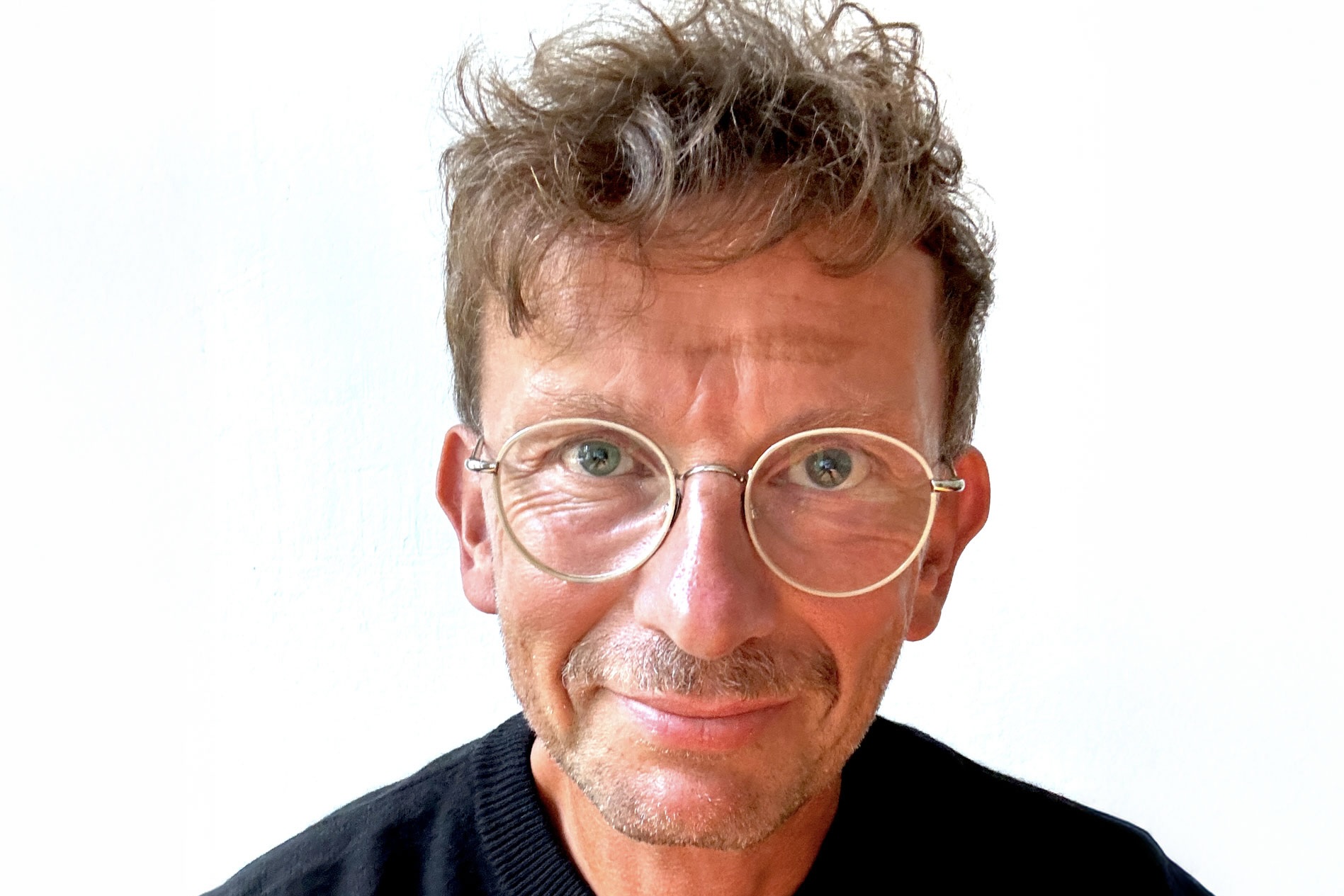
Professor Dan Hicks is a man at odds with his surroundings. Tucked away at the back of the Pitt Rivers Museum, his office is like that of many Oxford academics, stacked with books, several his own. Looking around, you spot the names of the various universities where he has taught: Oxford, Bristol, Freie, Boston, Stanford. Hicks himself, however, is not your typical Oxford don. Whereas other professors might offer you a drink or a look at a rare book, his form of hospitality is to give us two stickers: one displays a kiffeyeh under the words “Stop BP!” and the other reads: “Non una di meno: Fight Patriarchy”.
Hicks is a Professor of Contemporary Archaeology at the University, a curator of World Archaeology at the Pitt Rivers Museum, and a Fellow of St Cross College. He describes his work as an examination of the enduring role of colonialism in the modern world through the framework of the “four As” – archaeology, anthropology, art, and architecture. His book, The Brutish Museums: The Benin Bronzes, Colonial Violence, and Cultural Restitution (2020), brought him international attention for his scathing criticism of British museums and their refusal to return looted artefacts. We speak to him as he’s gearing up for a tour to promote the new paperback of his latest monograph, Every Monument Will Fall: A Story of Remembering and Forgetting (2025), a list of engagements that will take him all around the UK, Ireland, Europe, and as far as Canada.
It’s with this that our conversation starts. Every Monument Will Fall is an intervention into the raging debate about what to do with the statues, buildings, and museums dedicated to colonial figures. It’s a sweeping narrative that is both local and international. “The book uses Oxford as a point of departure for a wider set of conversations that have importance here in Oxford, in the University, in the museums, but actually across Europe and around the world”, Hicks explains. He takes the reader on a kind of walking tour of the physical reminders of the city’s colonial legacies, from the statue of Cecil Rhodes that commands a domineering view from Oriel College to the museum at which he works. But it also examines efforts to reckon with the legacy of the Confederacy in the American South and the toppling of Rhodes’ likeness in Zambia and Zimbabwe in the 1960s and 1980s, respectively, situating the modern debate within the context of a much older, global anti-racist struggle.
“All these movements”, Hicks explains, “whether it’s about objects in museums, whether it’s about statues in the streets – from Edward Colston to the unfallen Cecil Rhodes here in Oxford – whether that is in the seminar rooms and the libraries and the reading lists of the universities where the the call has been to decolonise or to shift the citation practises, are responding to a single historical entity”. He has coined it “militarist realism”: a term he uses to describe a political movement in the arts and culture in the 1870s-1920s which set out to celebrate the “great men” on the imperial project, upholding in pedagogic contrast a supposedly civilised Britain against primitive colonial cultures.
“This isn’t a culture war”, Hicks says. “It’s a war on culture with a very long history. It’s a history of the weaponisation of culture, the taking of objects from the battlefields and the putting of them on to display in museums, or the putting up of images of the colonisers and the enslavers.” Hick argues that, if we recognise that these monuments were erected, not in an effort to accurately document history, but in an attempt to bolster a political agenda which sought to consolidate colonialism, it alters the fundamental nature of the modern debate about what to do with them.
“The book is not called ‘All Monuments Must Fall’”, he points out. “It’s a statement – every monument will fall – of archaeological reality. We hold on to a historic built environment, memory culture, if we choose to maintain it and conserve it. People say: ‘Oh, you’re cancelling history.’ No, this is about the democratic right to choose who is remembered and who isn’t; who is centred and who’s taking up space.”
Every Monument Will Fall is manifestly the product of a career spent participating in the debates around the memorialisation of Britain’s colonial history. After completing his Bachelor’s in Archaeology and Anthropology at St John’s College, Oxford, Hicks studied for a PhD at the University of Bristol, where he would later work as a lecturer. It was here that he witnessed the local campaign for the removal of a statue of Edward Colston, the 17th-century slave-trader. As Hicks tells it, Colston was a case of the unmistakable will of a community to overhaul the monument undermined by bureaucracy and vested interest – particularly by the organisation the Society of Merchant Venturers, the guardians of Colston’s endowment to the city.
So when Hicks moved back to Oxford in 2007, he felt that “it was my generation that failed to remove that image of Edward Colston”. Soon, he witnessed a parallel local struggle: the Rhodes Must Fall Oxford movement, beginning in 2015. Taking its cue from a similar campaign at the University of Cape Town, the initiative sought the removal of the statue of Rhodes on the Oriel facade. In the face of backlash from both the national media and the University, however, Oriel College could not be persuaded to take action.
Then, in 2020, the murder of George Floyd in the United States and the subsequent resurgence of the Black Lives Matter movement reignited the public debate around monuments and the glorification of slave traders. In Bristol, the statue of Edward Colston, immovable during Hicks’ time there, proved fallible when it was toppled and pushed into the harbourside.
As Hicks tells it, it looked like that might be the moment when progress would begin to be made in Oxford: “There were protests… and a vote at Oriel College, who said they were going to relocate the statue in the summer, shortly after Edward Colston’s image had been removed. That decision was reaffirmed a year later in 2021.” He pauses: “And then, very slowly, nothing happened. So it’s the unfallen status of the Rhodes statue that makes the writing of this book possible. How is it still there? Why is it still there? What is the process?”
Moving to Oxford came with a new responsibility, curator at the Pitt Rivers Museum – a job that made abundantly clear to Hicks Oxford’s central role in Britain’s violent colonialism. He explains that, in 2019, he was asked by Worcester College to investigate the origins of a human skull which was regularly used as a chalice at the College’s formals until 2015. Circumstantial evidence suggested the identification of its owner as an enslaved woman from the Caribbean. To Hicks, the disparity between the extremely limited information available about the woman whose skull it was and the celebration of the man who gifted it to Worcester College – George Pitt Rivers, the eugenicist grandson of the museum’s namesake – epitomised everything wrong with how Britain remembers colonialism.
Consequently, in Every Monument Will Fall, Hicks seeks to highlight that, unlike the wealthy perpetrators, those victimised by colonialism “are not memorialised. In fact, their memories, their names, even, are actively redacted. This is a book about holding this unnamed, denamed, abused, posthumously abused woman up alongside the hyper-centred, hypervisible, dead white men in an institution like Oxford”.
“The fact that that tradition, invented by the fascist grandson of Augustus Pitt Rivers in 1946, could carry on as late as 2015, reminds us that, if that can carry on, what else is surviving?”
So what has Hicks done to put his anti-colonial values into practice in his capacity as curator of the Pitt Rivers? The first task, he says, is simply understanding which artefacts museums have and where they came from. “So much of what we’re talking about in our museums is not what you see in the galleries. It’s what’s hidden away in the storerooms.” He points to an estimate that between 35-40% of the items in storage at the British Museum are not even on a public database. The Pitt Rivers has made progress in this respect, for instance, working with the Guardian to figure out the quantity of human remains held in Oxford’s archives.
The second is providing the essential context of how artefacts made their way from their origins to being displayed in a museum. “Walk into any museum and read any label. There are two dates on that label.” One is when the object was made and the other is the date that it came into the museum’s possession. The job of an archaeologist is to understand what happened in between. “These are two different timelines”, he says. “There’s an hour hand and a second hand. And one of those is catching up with the other.”
“Some people would accuse this work of presentism. But, of course, as an archaeologist, I work on what survives in the present. Archaeology is the science of human duration. We work on the most recent layer and we dig downwards. We work with the fragments that survive. The risk isn’t presentism, it’s historicism. It’s that you simply reduce objects in museums to a certain historical narrative that doesn’t talk about ‘actually how did they get here?’”
It’s clear he feels that his role comes with an enormous responsibility. To Hicks, museums do not only shape collective memory, but help to define who that collective is. “There isn’t just something called ‘the public’ out there. You make publics.” He argues that museums are particularly influential in creating this sense of community “because they’re always making choices about who they speak to and who they don’t”.
The moment, as well, could not be more important. “We’re having this conversation at a time when cultural studies is under attack, in the form of cuts across Europe and North America. The humanities are being salami-sliced as we watch, but we’ve never needed these disciplines more”. Hicks worries that, if we lose our ability to discern the agendas that motivated the creation of many of our monuments and museums, we risk uncritically accepting them as unbiased accounts of history.
“There’s so much memory culture that at the moment is imposed upon cities, imposed from the past, rather than remade in the present. So we need to take this seriously, and we need to care for art and culture in ways, which sometimes, I’m afraid, means refusing to inherit what is here.”
As if to more directly communicate these ideas, Hicks makes use of the second person in his book: addressing the reader as if they are walking around Oxford with him. This goes beyond direct address, however. At times, Hicks puts words into the mouth of the reader, as if he is recalling an actual conversation and casting us in the role of interlocutor. He explains, when asked, that much of the book is based on the conversations he had with Professor Mary C. Beaudry, a “dear friend who died over lockdown” with whom Hicks collaborated on several books.
In fact, Hicks tells us that the arc of writing his book was framed by instances of personal loss. “My father died right at the beginning, and then my mother died in the middle, and then my sister died right at the process of the final edit. So I lost, over the course of writing, the whole family that I grew up with.” The second-person voice, therefore, was only fitting for a book about the ways in which we memorialise those who lived before us. “The vocative is a voice we use when saying a prayer or for addressing the dead”, he explains. Every Monument Will Fall, then, is a book written to pay tribute not only to Professor Beaudry, but also Hicks’ family, and the unnamed, forgotten victims of British colonialism – all those who have not been afforded the same memorialisation as such glorified figures as Rhodes and Pitt Rivers.
There is another reason for this stylistic choice. “I don’t just want to give a lecture with this book”, he says. “I want it to be a conversation.” With the upcoming tour, he wants to “build a community”. “There’s a transformational potential here on the page that’s maybe relevant for the whole world. That’s the hope.”
After the conversation wraps up, we exit Professor Hicks’ office into the grand, colonnaded hall of the Pitt Rivers Museum. It’s difficult to ignore the contradiction – the dedicated anti-racist curator at the heart of a museum whose very displays are still organised by the legacies of 19th-century racism. Heading along Parks Road, the Rhodes House draws our attention from the side, and then the figure of Cecil Rhodes himself as we turn right and head up the High Street. Any Oxford student knows about Rhodes’ crimes, and the controversy his memorialisation continues to cause. But Every Monument Will Fall asks you to see these buildings and statues in a new light, not only as evidence of Oxford’s colonial past, but as a continued exercise in myth-making that aggrandises deplorable men. After a conversation with Dan Hicks, one does not look at Oxford in quite the same way again.


