

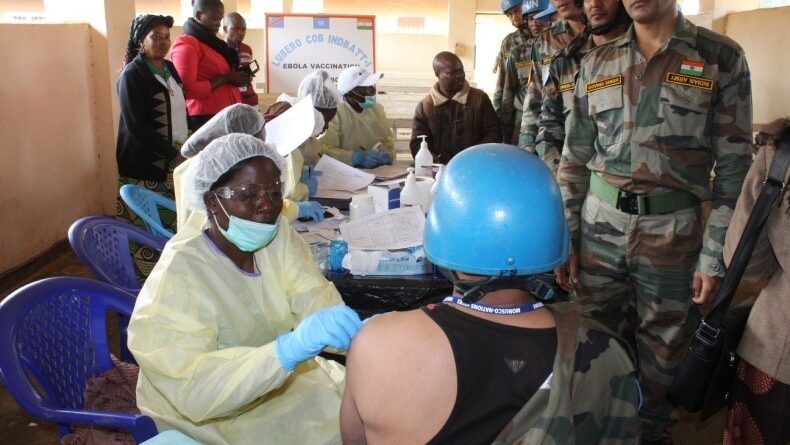
The University’s Oxford Vaccine Group (OVG) is leading the development and trialling of a vaccine in response to the recent Ebola outbreak in the Democratic Republic of Congo (DR Congo).
The team, led by the Head of Vaccine Immunology and the OVG and Pandemic Sciences Institute, Professor Teresa Lambe OBE, is working alongside the University’s Clinical BioManufacturing Facility and the Serum Institute Pvt. Ltd, to research, create, and trial the viral-vector vaccine. Estimates suggest a workable vaccine could be available within two to three months.
Depending on its performance at animal trials, a World Health Organisation (WHO) spokesperson said it could be “a promising candidate research vaccine” for the Bundibugyo Ebola strain responsible for the outbreak.
Lambe told Cherwell: “OVG has more than 30 years of experience in the development and testing of vaccines, which allows us, alongside our partners, to pivot and apply our expertise in times of outbreak…The ability to move rapidly in situations like this has been built on many years of vaccine research and close collaboration with our global partners.”
The May 2026 Bundibugyo Ebola outbreak, originating in the DR Congo, has been rated a “very high” public health risk by the WHO. Though the risk is low internationally, the WHO declared it a Public Health Emergency of International Concern (PHEIC), a status that encourages cross-continent co-operation. At the time of publication, there have been an estimated 220 deaths and 900 cases, with 11 countries understood to be at risk.
The specific strain of Ebola, Bundibugyo, is rare and has not been seen for over a decade, with the last two outbreaks occurring in 2007 (in Uganda) and 2012 (in the DR Congo). Naturally occurring in animals and fruit bats, the disease spreads among humans through infected bodily fluids, with research suggesting a mortality rate of between 30 – 50%.
Initial symptoms are similar to the flu, with illness often beginning with a fever and a headache. Symptoms rapidly progress to vomiting, diarrhoea, and, later, internal bleeding and organ failure. At present, there are no approved vaccines for this particular Ebola species.
Treatment for the virus has been hindered by violent conflict in the DR Congo between the Congolese military and the M23 rebel group, which has displaced a quarter of a million people.
Having previously worked on the Oxford/AstraZeneca COVID-19 vaccine, as well as vaccines for Sudan Ebolavirus and Marburg Virus, the OVG has utilised the same vector platform (ChAdOx1) used in the COVID-19 vaccine, and adapted it to the Bundibugyo Ebola strain. By altering the genetic code, the vector platform can be tailored to different filoviruses.
The vaccine base relies on a common cold virus, typically found amongst chimpanzees. By altering the viral makeup to ensure it is safe for human beings, the virus can travel around the body, delivering information to cells to target and kill the Bundibugypo virus. However, before trials are completed, the scientists involved cannot guarantee that the vaccine will be effective.
Once the vaccine has been effectively trialled and approved, it will be sent to the Serum Institute of India to be mass-produced. Lambe said in a statement: “Once we get starting [sic] material to them, they can go fast and they can go big”.
Lambe told Cherwell: “Right now, the focus is on generating the data needed to support development, scaling manufacturing with the Serum Institute of India (SII) Pvt. Ltd, and preparing for clinical trials should they become necessary… My hope is that this outbreak can be brought under control quickly and that vaccines are ultimately not needed.”


 is leading the development and trialling of a vaccine in response to the recent Ebola outbreak in the Democratic Republic of Congo (DR Congo). )