

This Christmas vac, I made up my mind to get out of my reading slump. I find that the best way to do this is to choose a book that isn’t necessarily about a topic I know I’ll be interested in, but is a book recommended by critical consensus.
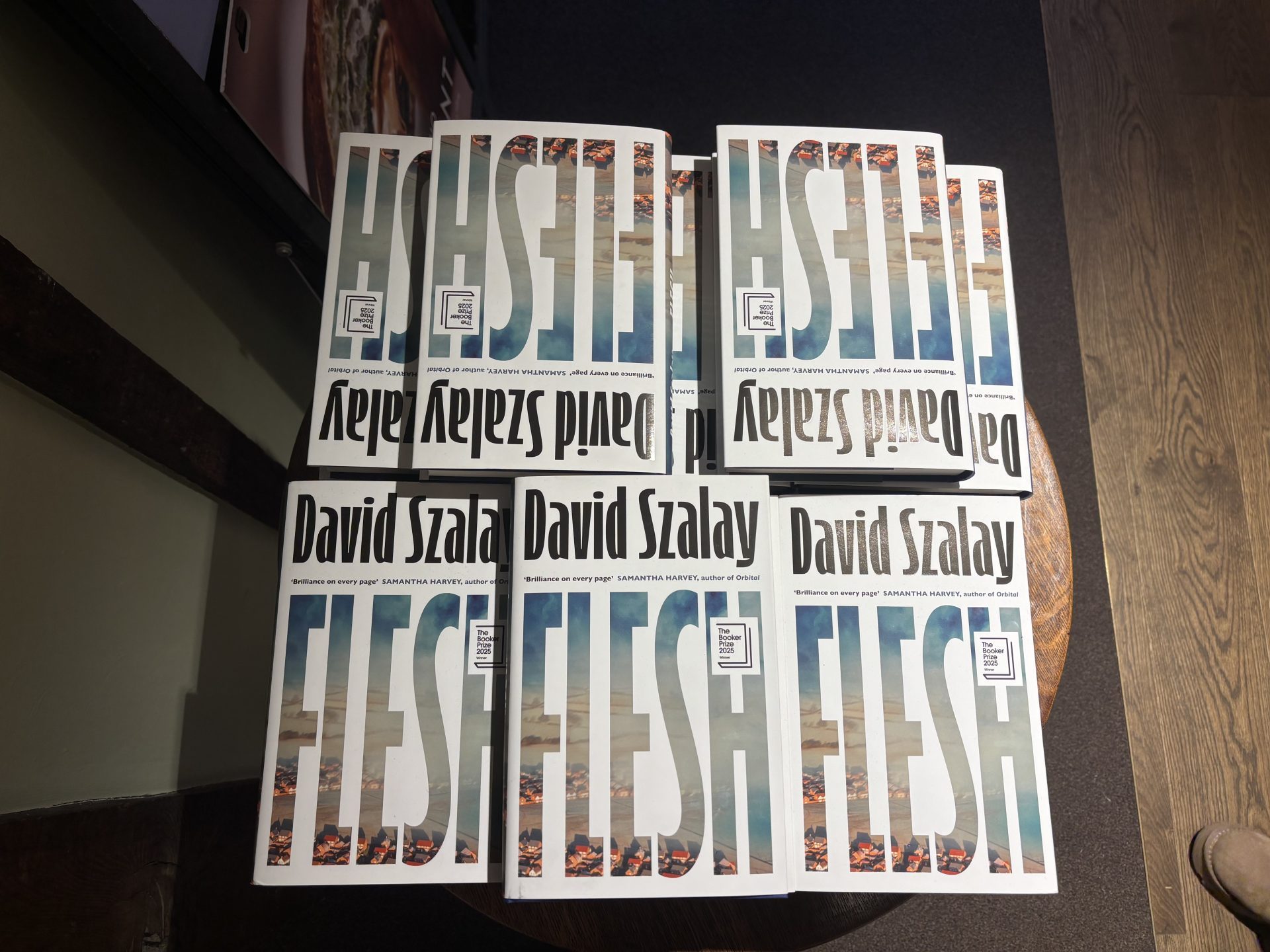
As a result, I turned to the shortlist for the Booker Prize. I went into this without preconceptions, normally choosing books outside of my degree for their ‘easy reading’ value (Emily Henry is talented in her own way). I picked the winner, Flesh by David Szalay, and then randomly chose The Rest of Our Lives by Benjamin Markovitz.
This randomness turned out to reveal a much-observed theme across the Booker Prize shortlist: toxic masculinity. This reflects the rise in discourse around issues specific to men, partly due to the need to create positive role models to counteract those preaching the messages of the manosphere.
The books weaved this theme into their narratives in different ways: the key moments in the life of Ivstán, Slazay’s protagonist, are framed as his sexual experiences. They seem to define him. In his teenage years, a twisted relationship with an older woman leads to him spending time in prison, and a whole chapter records him taking a friend to a hotel, where he tries and fails to sleep with her. Later, he begins a relationship with Helen, a married woman bored with her life with her older, wealthy husband, marrying her himself after her husband’s death from cancer. Towards the end of the book, he begins to perpetrate sexual violence against his housekeeper, whom he sleeps with after his wife’s death.
In The Rest of Our Lives, the theme is directly described, as the main character Tom Layward is placed on leave after refusing to add his pronouns at the end of emails, and supporting the case of an NBA player accused of racist and sexist comments. His situation is in many ways a reversal of Ivstán’s – twelve years ago, his wife Amy cheated on him, and he had vowed to leave her once his teenage daughter Miri leaves for college.
Both books started in a way that was pretty alienating – I’m not sure I would have persevered if it wasn’t for their critical acclaim. The blurb of Flesh markets the book as a story about the aftershocks of a warped relationship the protagonist experiences with an older woman when he is a teenager. This doesn’t mitigate the difficulty of reading the sections in which she repeatedly beckons him to her house, and coaxes him into destroying his innocence. The Rest of Our Lives opened with a different kind of tough read, the voice of a middle-aged man moaning about the state of his marriage. In his words, his marriage is locked at the status of ‘C-minus’ ever since his wife’s affair. He has a vague intent to leave her, which, as the novel progresses, the reader realises he will never act upon.
I put each book down unsettled. Both main characters crumbled. Ivstán lost his money and marriage, arguably the only two assets he had, and Tom is diagnosed with a tumour that will likely kill him, trapped in hospital with his wife, any talk of leaving her now irrelevant.
What frustrated me the most was the lack of emotional depth that either of the men experienced. They were not particularly likeable characters. This is of course, not a new idea in literature – I recently had a conversation with a friend about how a good book should put you inside the head of a character whose decisions you disagree with. As you’re forced to live their reality, you find yourself, through understanding their psychology, endorsing their decisions in a concerning way. That works if there’s an explanation of the characters’ own rationale for their actions, however twisted. The unsatisfying aspect of these novels for me was that it felt like the characters had no idea what they were doing.
The strongest parallel between the books that stuck out for me was the men’s complete detachment from the circumstances of their own lives. They both seem to know that they were unsatisfied, and getting things wrong. It was like shouting at a screen because a character in a movie can’t see what’s right in front of them. In the midst of his relationship with his housekeeper towards the end of the novel, Ivstán vaguely considers if he is a bad person, then leaves the thought alone. I disagreed with some reviewers’ suggestion that the reader’s empathy towards him increases as the novel goes on – bluntly, he disgusted me throughout. Any sense of affection towards his relationships manifested in a delayed way – only after his wife Helen’s death does he acknowledge the impact she made on him, the fact that he thinks in certain ways only because of her presence in his life.
Markovitz’s character Tom was likewise frustrating because of his total lack of direction. This was literalised in the road trip that he embarked upon to avoid his own life. He displayed a chronic inability to act on his thoughts. Naturally, leaving one’s partner is a difficult choice, but one that he had been harbouring for twelve years, remaining bitter without making a decision as to whether he could proceed with Amy. This was made more jarring when he encountered an old girlfriend, met all of her friends, and left her behind as if nothing had occurred. All the while, lurking in the background was his deteriorating health condition which, in typical fashion, he ignored, refusing every single offer of support from his family members. He, too, looked at his past life in a detached way: he describes his former relationships without much fanfare, in a long internal monologue about how he reached his unsatisfied state. He makes unqualified grumbles about ‘woke youth’ without describing his political stance in detail.
The frustration induced by both narratives was of course engineered by the authors. These were descriptions of two men, whether intentionally or not, refusing to examine their emotions. The result was chaos, emotionally and literally, for those around them. Initially, I questioned whether the minds of ‘the worst men ever’ are the ones readers have an appetite for entering, but on reflection, these are exactly the psychologies that demand exploration. I had the sense that the men would have stood a chance at solving their problems – for Ivstán, his former trauma, and for Tom, the decision about his marriage – if they had felt capable of facing them head on.


