

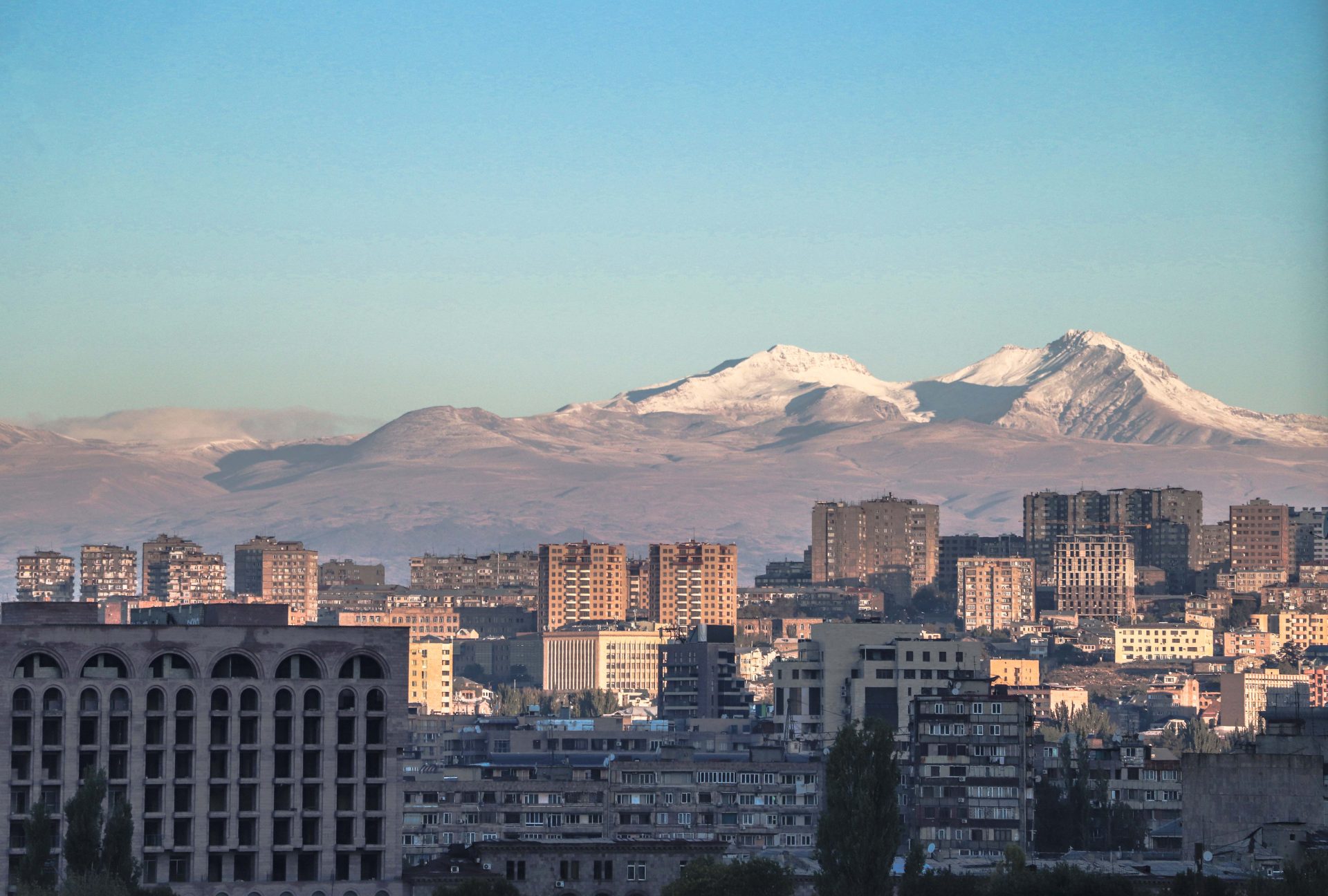
I’ve moved cities enough times to know that leaving is never just about packing boxes. After spending eighteen years in London, I found myself applying to universities in a number of different cities, including Oxford. All my London friends were shocked at the thought of anyone willingly leaving the capital, especially with the countless high-ranking universities already at our doorstep. After a year at Oxford, I shocked them again by packing my bags for Yerevan, Armenia, for the first part of my year abroad. Four months later, I am awaiting my visa for Dushanbe, Tajikistan.
For me, the hardest part about moving has never been adapting to somewhere new, but figuring out how to leave the place I was already calling home. When I first arrived at the Lodge in Wadham College, the porter said something along the lines of, ‘Westgate is like your “Westfield” in London.’ That sentence alone made me feel at ease. I realise now that I was searching for pieces of home. I hesitated before cancelling my subscriptions and memberships to clubs, galleries and museums in London. I’d still read through all their event emails, refusing to tell myself that I wouldn’t be able to attend. My face would light up if I ever heard a distinct London accent or when anyone mentioned they were also from London. Without realising it, I was continuously searching for London in Oxford’s smaller, quieter streets.
London doesn’t just have a place in my heart; I’d say it is my heart. With constant changes in the landscape through gentrification, shifting communities and evolving social life, I wouldn’t say I grew up in London, but rather I grew up with London. There are words, sounds and smells that only a Londoner can understand: a pace of life and a hectic routine that only we are accustomed to.
Every weekend, I forced myself to stay in Oxford, trying to navigate my new city and build a community in a place I would call home for the next four years. Oxford seemed gentler and orderly compared to London and people were often much friendlier. When I spoke to my friends who were still back in London, they complained about the high cost of living and their chaotic daily commutes on the Tube, yet my heart still ached to step in their shoes and experience their university routine, even if just for a day.
But then something changed. After my second term, I returned home for the holidays and, for more than a split second, I truly missed my dorm room. Even though I reminisced as I passed by my old school, watching all the school children leaving to catch the bus, the tube, or to walk home together, just as I once did, and found comfort in London’s multicultural streets, I was still counting the days until I could pack up and move back to Oxford.
I added words and phrases like college mum, plodge and subfusc to my vernacular: vocabulary which I now needed to explain to my non-Oxford friends, just as there had once been references only fellow Londoners could understand. These new words summoned a feeling of deep nostalgia for the place I now was able to call home. I finally accepted Oxford as my second home, without feeling as though I had to leave London behind.
So when I moved to Armenia, I had to figure out how to leave yet another city behind. At first, moving beyond UK borders didn’t exactly feel exciting or adventurous. Not speaking Armenian meant I couldn’t effectively communicate with locals, or at times even with my own landlord; I couldn’t read addresses or ingredients, which were usually in Armenian script.
I quickly learned that all fruit and vegetables were organic so expired quickly and that my usual walking pace was considered ‘rushing’ to Armenians. To my surprise, the metro only had one line, and the local Asda down our road in London was much larger than supermarkets in central Yerevan. Neighbours always greeted one another, and social etiquettes and daily rhythms of life differed from anything I had previously known. Except for the fact that, like in Oxford, it was also deemed unacceptable to walk on grass, which took me embarrassingly long to realise.
The pace of life was even slower than in Oxford, and while I appreciated the opportunity to ‘breathe’, it also felt boring at times. Instead, I sought comfort in small, familiar things, such as ordering English Breakfast Tea at coffee shops. The sound of rain instantly transported me back, and having classmates from London gave me a sense of belonging – although hearing us say ‘Come off it’ or ‘Are you having a laugh?’ was met with a great deal of confusion by my American classmate. I experienced similar confusion when my American classmate said ‘crosswalk’ instead of ‘zebra crossing’ and ‘truck’ and ‘trunk’ instead of ‘lorry’ and ‘boot’.
Our cities and their influence on our character live within us, expressed through the pace of our walk, our mannerisms and how we speak. Regardless of where we are in the world, our cities show up in our accents, mannerisms, and conversations.
When I look back on my initial days in Oxford and Yerevan, I realise I had not yet experienced these cities beyond their tourist attractions, and most interactions with locals were surface level conversations. Yet as I prepared to leave, I felt as though I was leaving behind a part of me – a part that I wanted to hold on to, even if it was time for me to move on.
If there’s anything I’ve learnt from adapting to different cities and building homes in once-unrecognisable landscapes, it is that our time spent in different cities is not separate chapters to be left behind. Instead, these experiences can be thought of as sedimentary layers. My London layer shaped my Oxford layer, and both influenced my Yerevan layer. In turn, each of them will shape whatever comes next in Dushanbe. There is no need to store cities elsewhere or file them away. Cities are identities that follow us, evolve with us, and take root within us.