

Sub fusc, college marriages, BOPs, sconcing, Prelims, the Bod: Oxford boasts a unique catalogue of words and phrases. Some would critique them as elitist and exclusionary. Doing so sadly misdirects such critiques, and fails to see the important role that Oxford’s language plays. It’s a uniquely complex, ever-changing system that we should be proud to call our own.
The eclectic vocabulary referred to as Oxford’s ‘language’ is a sociolect. This is a distinctive way in which language is used by members of a particular group, which necessarily reflects the social soil from which it sprouts. To use the linguist Ferdinand de Saussure’s terms, what we have in Oxford’s slang is a series of signs referring to various signifieds. The signs are arbitrary, and no amount of criticism of the sign will do anything to affect what is signified. Even if I manage to weed out the term “sub fusc”, so long as academic dress exists there will always be a new word to spring up and take its place, because the signified concept is still present. If I wanted to eradicate Oxford’s slang, I would have to render it obsolete, by removing what it refers to. We can’t direct our anger at the words themselves. But I don’t think we should be burning sub fusc in any case, because from such traditions comes our Oxford sociolect, and sociolects serve important social functions.
The most important thing to realise about sociolects is their ubiquity. Oxford has a sociolect; Durham has a sociolect; Southampton has a sociolect; your town and your school have sociolects. Whenever a new social group is formed, a unique sociolect won’t be far behind. We can even see sociolects within sociolects, like college slang. An example from my college, St Peter’s, is the words used to refer to parts of the library. The college library itself is the plib (Peter’s + lib-rary). This pl- prefix appears to have then been used to create plungeon, which is the very bottom level, and pleaven, which is the very top. Sociolects aren’t necessarily elitist or exclusionary, and that we all speak many of them.
What is unique about Oxford’s sociolect, however, is that it was once spoken exclusively by the upper, ruling classes who were educated here. This is no longer the case. It’s not to say that Oxford no longer produces the ‘ruling classes’ – 75% of judges, 66% of private secretaries, and 54% of MPs were educated here or Cambridge. However, the process that produces this ‘ruling class’ is far more meritocratic today than it ever has been. Oxford is no longer a feudalistically gated university, with over 60% of its UK-domiciled students coming from state-educated backgrounds, and with active efforts made year on year to increase the proportion of underrepresented groups that make up its student body. The memory of Oxford having been exclusionary still persists, but the diversity of people who now speak its sociolect demonstrates that it no longer is.
Sociolects promote social cohesion and foster a sense of group identity. Oxford’s is no different in this respect. In fact, Oxford’s sociolect is much better equipped to achieve this purpose than others because its greater age and vocabulary size gives us more in common with each other, leading to closer feelings of camaraderie and connection. The unpaired uniqueness of Oxford, rooted in its history and its traditions, is completely capable of existing without classism or elitism. Its language is a sign of not just of those traditions, but also of its proud and enthusiastic student community today. We should feel proud to be Oxford students without descending into some kind of superiority complex. To assume that Oxford’s language is forever going to be exclusionary suggests that we aren’t capable of re-evaluating what it means to be an Oxford student. But we are.
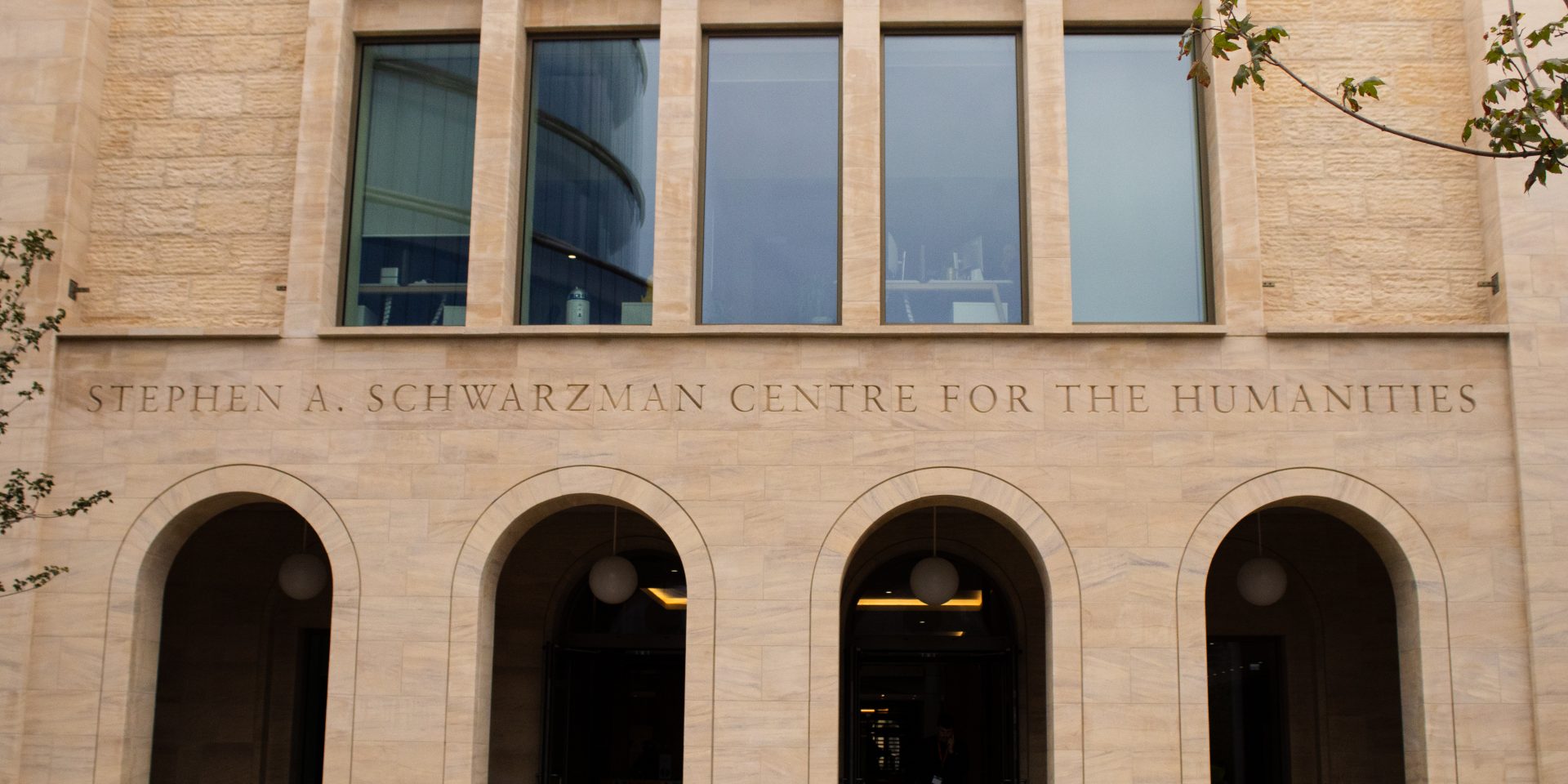
Sociolects are always changing. This means that new members of Oxford’s social community, be they freshers or international students, are as much capable of influencing its development as anybody else. As Oxford has become more open and representative, those new members have been able to leave their mark in its language when opportunities for new coinages arise: for example, the opening of the new Schwarzman Centre this year. Already it’s been shortened to the Schwarzman, the Schwarz, and even (perhaps rather tongue-in-cheek) the Schwozzy C. As a fresher myself, from a state school, mostly non-university-going background, I do not feel excluded by Oxford’s language. I feel intrigued, and proud that I get to be a player (and rulemaker) in this idiosyncratic language game.
To conclude, to call Oxford’s language ‘exclusionary’ is to misread its place today. It is to allow yourself to be haunted by top-hat wearing, moustache-twiddling, RP-talking ghosts who no longer swarm its streets. When we strip away its antique garbs, we find a sociolect like any other. And, thanks to, not in spite of, those antique garbs, Oxford’s sociolect is uniquely adept at creating a shared group identity, reminding everyone who speaks it that they belong to this University, in which we should all be able to take pride.


