

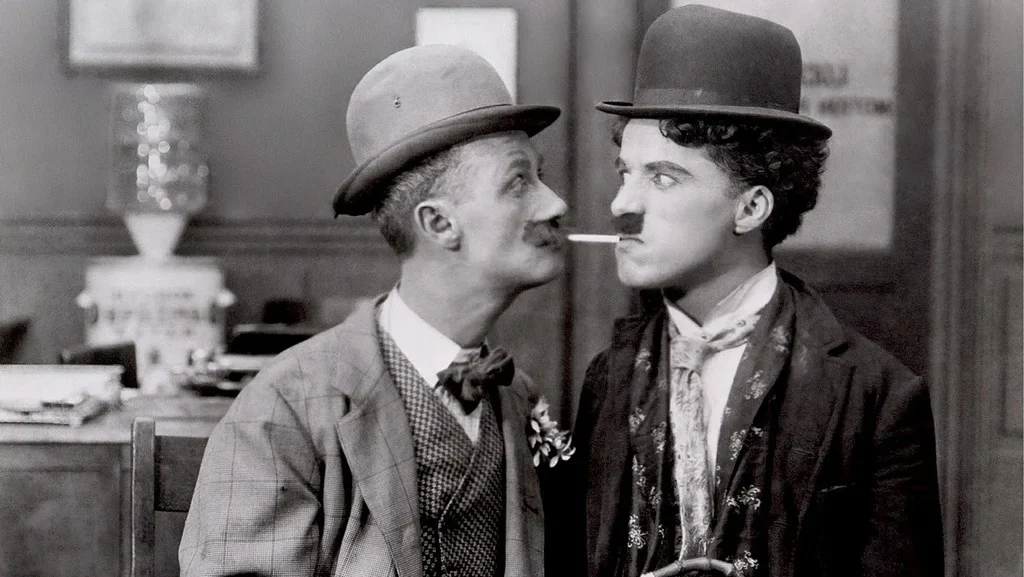
Not speaking does not necessarily mean having nothing to say. As much can be said with an image, movement, or glance as with a word. Since film is an inherently visual medium, the concept of ‘show, don’t tell’ is precisely what differentiates it from literature, which relies on the memory and the intrinsic and ineffaceable meaning to be found in language. Words are clumsy; they carry in them presupposed connotations and histories, and can allude to what is not present, while film images belong to a concrete ‘now’. The ‘silent’ film (a film which uses silence as a filmmaking tool), then, can be seen as film in its purest form, and the form which requires the most attention, intuition, and interpretation from its audience.
Silent images do not explain themselves. We do not hear what Chow Mo-wan whispers into the wall at the end of In the Mood for Love, or what Bob Harris whispers to Charlotte at the end of Lost in Translation. Nor do we need to – images speak only for themselves. Silence allows for anything to be said; it contains infinite meaning. It is when the film trusts its audience to come to their own conclusion, and to feel things without being told what to feel. Silence is therefore an act of restraint and respect – the refusal to translate feeling into language, when language would only limit it. It expresses the inexpressible, and acknowledges that language is sometimes inadequate. The final shot of Call Me by Your Name depicts emotion expressed without articulation, and while In the Mood for Love or Lost in Translation could tell us anything, this shot tells us everything. In silence, the concepts of joy, loss, and memory can coexist – concepts which existed before words and which can exist without them.
Silence makes you aware of what is usually silenced, or what we have subconsciously tuned out. The bomb detonation in Oppenheimer is silent in a way which makes you realise that your heart is racing, and the silence and isolation of space in Gravity reminds you of your own breathing, and your presence sat wordlessly in a cinema surrounded by people. Through silence, cinema stops addressing the mind and instead speaks directly to the body. It is a tool that makes the spectator aware of their own presence, disrupting passive immersion. It also makes them aware of what is absent, what they have taken for granted: music, company, life.
As a result, the elements which were once silenced by the speaker – expression, gesture, costume, set, music – gain a new expressive power. They now are equals with the speaker, sharing in silence. It is in the traditional silent film in which this idea finds its most concentrated expression. The Last Laugh, an underrated gem from the German Expressionist movement, and a true ‘silent’ film because of its lack of intertitles, communicates everything to its audience through body language, emotional and evocative facial expressions, camera movement, and framing. It is able to transcend language barriers and we can engage with it on a purely visual and instinctive level, as film is boiled down to its essence – images which create meaning through their construction and arrangement in sequence.
Because ‘silent’ images rely on their filmic construction to create meaning, they demand our constant attention. Movies in recent years have been criticised for the ‘dumbing down’ of scripts, such as through dialogue which overexplains, with the assumption that films are being watched by people who are also scrolling on their phones. Silence allows for dedicated attentiveness, or even scrutiny, towards what is being shown to you, rather than passively accepting what you are being told. Films may therefore feel harder to understand, but it is the role of the filmmaker to risk being misunderstood in order to preserve the integrity of the image.
“Feelings are intense, words are trivial”, as the Depeche Mode song goes. Choosing silence, then, is to preserve the emotional complexity that language so often flattens. If silence redistributes responsibility from film to spectator, it also demands a different mode of viewing. Appreciate the pleasures, emotions, and pains which films can bring without words. Take back responsibility as a viewer, allow yourself to come to your own conclusions, engage emotionally with what you see. The world is noisy enough; people are ceaselessly telling us how we should be thinking and feeling. In times like this, the most meaningful form of escapism is to put on a film, and enjoy the silence.