

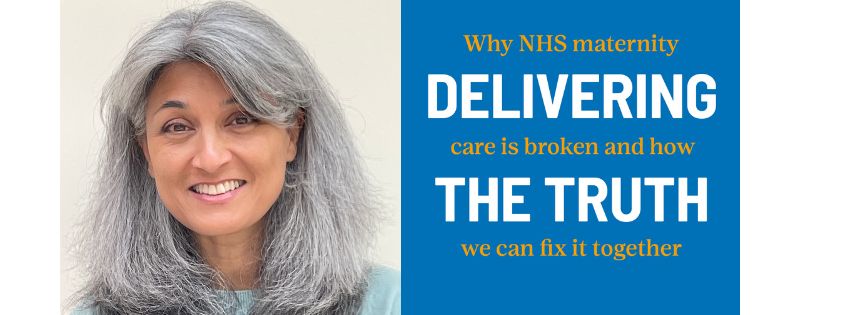
Maternity care in the NHS has become a site of crisis. A series of high-profile reviews into unsafe care, rising maternal mortality rates, and persistent staff shortages has exposed a system under strain, one that disproportionately harms women from minority ethnic backgrounds and deprived areas. Most recently, the government has commissioned a national investigation into maternity care to be led by Oxford’s own Baroness Amos, Master of University College. Reports accumulate, inquiries are launched, failures are identified, recommendations follow – and yet the pattern repeats. The question is no longer whether there is a problem, but why it has proven so resistant to change.
For Dr Lorin Lakasing, a consultant obstetrician who has spent more than three decades working in NHS maternity care, the answer is not especially mysterious. “This is not a system that’s working for anyone at the moment”, she says, describing a service that is failing both patients and the staff tasked with caring for them. Speaking to me from her clinic whilst still in her scrubs, it is clear that Lakasing’s life revolves around her profession. What is equally clear, however, is that she finds the job she loves increasingly untenable.
What is striking, when speaking to Lakasing, is the sheer difference between the current system and the one she entered. Obstetrics was not a long-held ambition: she had initially been drawn to renal medicine, working with young patients on a dialysis unit, but found herself pulled in a different direction during a placement on a labour ward. It was, she recalls, “pandemonium”, with every room full – but also energising. “I just like this buzz. I like the adrenaline. I like all of this.” The appeal wasn’t just in the pace, but also the immediacy of the work – that decisions had to be made quickly but that their consequences were visible. It was possible, as she puts it, to “shift the dial”. The work was hard, but it was also clear in its purpose and grounded in shared responsibility.
That clarity, Lakasing argues, has eroded over time, not through a single reform but what she describes as a “perfect storm” of smaller changes. These shifts have accumulated slowly, reshaping both the structure of care and the experience for patients. “The minute-to-minute care [has become] less rewarding”, she reflects, describing a system that has become “less human, more process driven”. Care delivered by a team from a wide range of specialities, now central to how maternity services are organised, often manifests as a fragmented model in practice, with decisions made in meetings or on screens by clinicians who may never actually meet the patient. At the same time, the demands placed on doctors’ time have also changed significantly. Junior staff, she notes, are increasingly preoccupied with documentation and compliance, to the point that “they’re not actually interacting with the woman and explaining to her what’s going on”. What was once a patient-focused environment has become layered with bureaucracy.
The consequences of this shift have been profound for clinicians. Where Lakasing once remembers camaraderie and a shared sense of purpose, she now describes “a culture of fear and worry and blame”. The pressures of the job haven’t diminished but they have been redirected, demanding a “constant sort of firefighting… just being able to survive to the next shift.” In this context, rising levels of burnout are understandably inevitable. This is compounded by the changes to the broader experience of those entering the profession: “I think now you guys are all qualifying with debt, with all sorts of uncertainties about job prospects… I see how the mentality changes.” The result is a workforce navigating not only the demands of clinical care, but also a far more precarious professional landscape.
For patients, these changes have made a significant difference in terms of how they experience maternity care and care across the NHS. Consultations become shorter and interactions more impersonal. It is in this context that Lakasing understands the growing turn towards online sources of information: “If you get some five minutes of very bland midwifery interaction where they’re looking at the screen more than they are at you and you have a list of questions and you don’t feel like they’re answered, then you will look elsewhere.”
What concerns her isn’t this instinct to seek the information, but the nature of what is found. She describes the rise of “harmful birthing narratives” – belief systems that present particular approaches to pregnancy and childbirth as inherently superior, often tied to moralised ideas of what it means to be a “good” mother. These narratives can often be difficult to challenge, particularly since they resonate with patients who already feel unheard or ignored by the system.
In extreme cases, the consequences can be devastating. Lakasing points to a recent case involving the deaths of both mother and baby, shaped in part by decisions influenced by online advice following a traumatic first birth. But her emphasis isn’t on the advice itself, but what preceded it: a failure of care that left the patient unwilling to return to the system. The problem, in other words, isn’t simply the misinformation available online, but the absence of relationships within healthcare that feel trustworthy enough to counter it. “The biggest victims are of course the patients”, she says, though she is equally clear that staff are also caught within the same failing structures.
A significant part of the issue, in Lakasing’s view, lies in how success is defined and measured within the NHS. Targets and regulatory frameworks have come to dominate the assessment of maternity services, often in ways that distort rather than support good care. “They are the crux of the problem.” The emphasis on measuring the service, she argues, has led to a system in which “we’re so process driven that we’re pretty much treating patient outcomes as an incidental byproduct of a great process we have”.
The problem is not inherently the metrics, but that they frequently fail to capture what actually matters. The widely cited case of the Shrewsbury and Telford Hospital NHS Trust clearly illustrates this. The trust was praised for its low caesarean rate yet, just months later, became the focus of an inquiry that exposed significant failures in care, which may have led to the deaths of more than 200 infants and 9 mothers, and left other babies with life-changing injuries. “When we have metrics that don’t make sense, we get really bad behaviours”, she notes.
Attempts to address these problems through public inquiries have consistently fallen short. “They’ve all failed”, she says, arguing that earlier investigations have been too shaped by management perspectives that fail to reflect the realities of delivering care “on the shop floor”. More recent inquiries, focused on amplifying the voices of ‘harmed patients’, risk creating a different kind of distortion by implying that all adverse outcomes are preventable. “That’s clearly not true”, she says, explaining how “there are people who have very good outcomes whose care has been pretty ropey”, just as there have equally been “people where all the right things were done, but unfortunately, things didn’t work out as we had hoped”. The danger she suggests is that these approaches also feed a culture of blame without offering meaningful solutions. “What we need is action… proper, sensible, focused action.”
Digital reform, often framed as a solution to many of these challenges, sits uneasily within this picture. Lakasing acknowledges it as an “inevitable consequence of the modern age” but questions its implementation and impact. NHS systems remain inconsistent and under-resourced, with different trusts using incompatible software and “trying to run those ever more sophisticated software programs on pretty archaic hardware”. More fundamentally, digital tools don’t always translate into better care. She describes the example of patients accessing blood test results online, only to have them flagged on the NHS App as abnormal despite being perfectly typical in pregnancy. At the same time, digital innovation also risks exacerbating existing inequalities. “We do have refugees, asylum seekers… women who are homeless, women who are trafficked… I just worry that anything that might add to that would be a problem.” Access to digital healthcare assumes resources and confidence that just aren’t as evenly distributed as the policies imagine.
None of this, Lakasing is clear, lends itself to quick fixes. “This is my problem with politicians”, she says, “they’re always looking for a quick fix”. But the issues she describes are cumulative, and so too must be the solutions. “If you’re playing the long game, you need long-term strategies”. What she returns to, therefore, is something more fundamental: the need for a “unified set of aims” centred on safe outcomes rather than the processes used to demonstrate them. Without that maternity units become “very good at ticking the boxes that we’re being assessed on… that doesn’t mean that our outcomes are good”.
For those entering the profession, her assessment is both candid and cautiously hopeful. “Truthfully, we are in a particularly bad place at the moment, but it’s got to get better. It can’t not get better.” There is, in that, a sense of inevitability: “People are always going to want to have babies”. The future of maternity care, she suggests, will depend less on top-down reform and more on those moving through the system: the next generation of doctors – the medical students that will one day be our obstetricians and gynaecologists – who may be more willing to question its assumptions and reshape its priorities. “I tell the world to be hopeful and to come and see the wards and get stuck in”, she says, emphasising the enduring appeal of the work itself.
Lakasing, for her part, remains deeply committed to that work. And despite everything, her final reflection is unequivocal: “I have not regretted being an obstetrician, not for a singular minute of any day of my life.” It is a striking statement – a reminder that, even within a system under strain, the value of the work itself remains clear.


