

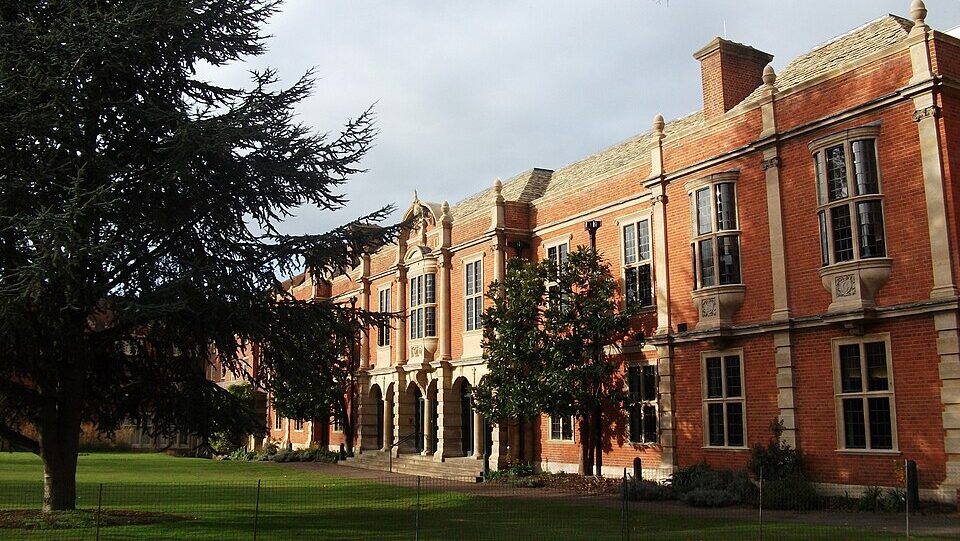
Naturally, I loathe to say that Cambridge does anything better than Oxford, but I can’t deny that there is one thing I will always respect them for: Newnham and Murray Edwards (and, up until 2021, Lucy Cavendish).
In the 1970s, mixed colleges were the way forward. They embodied a progressive attitude. One of the main justifications for mixed colleges was to increase the number of female undergraduates at Oxford. As Florence Smith showed, the admission of women to Hertford, Brasenose, Jesus, St Catherine’s, and Wadham was complex – amidst the progressive ideology, a misogynistic and unequal reality remained. Crucially, the biggest consequence of men-only colleges admitting women in 1974 was that, only five years later, former women’s-only colleges St Anne’s and Lady Margaret Hall admitted men. By 2008, there was not a single women’s-only college left in Oxford.
Mixed colleges are a wonderful thing. Having been at an all-girls school for seven years, I don’t think I would have accepted an undergrad offer from a women’s-only college. We can all agree that it is healthy for men and women to socialise, and for women to understand and participate in environments which aren’t exclusively female. However, single-sex spaces, especially for women, and in particular women’s colleges, are important. Research has concluded that girls do better (academically) at single-sex schools. It would, therefore, be unsurprising for this to continue to be the case at a university level. I’m sure many female readers are able to relate to the experience of being spoken over by a male tute partner at least once in their time at university.
Women’s colleges can also, crucially, provide funding to women. Despite women often outperforming men at an undergraduate level, academia in Western nations has a significant gender gap – particularly within STEM – and a significant barrier to academia is funding. Cambridge colleges like Newnham and Murray Edwards provide not only places for women, but also funding, awards, and prizes. For further study in History at Oxford, an MSt will cost you approximately £17,000, whilst a DPhil will cost you around £14,000 annually (roughly £42,000 – £56,000 for the full degree). Women’s colleges help to address this gap.
Crucially, women’s colleges retain their feminist foundations. I believe that my own college (Somerville) is a progressive place, and I’d argue it has retained its values and principles better than any other former women’s college. Yet I have heard plenty of sexist ‘jokes’ in the college bar. Casual sexism is something almost every woman is forced to confront; a women’s-only college would give women a reprieve. Somerville is the only college to have had only female principals – something I was very aware could change when our principal stepped down in 2025. Female principals are often one of the best examples young women have for a woman in a position of clear authority, particularly in an institution like Oxford, which for so long was associated with only masculinity. Whilst I do not advocate for total feminist separatism, I believe that there is real value in women’s-only spaces. Having spoken to women who attended former women’s colleges in Oxford for my undergraduate thesis, the difference in atmosphere is almost palpable. Women’s-only colleges were often described as peaceful, empowering, calm places of learning and guidance. I love my college, and indeed I love Oxford, but I think that that atmosphere has faded.
When Somerville went mixed (amongst great protest from students), former Principals Catherine Hughes and Daphne Park justified the change by arguing that they had always taught women to be feminists; now they were doing the same for men. If that was the goal, they failed. Men who identify as feminists, and men who fight for women’s rights exist within Oxford, as they do everywhere, but this is not because of any college environment. Women’s colleges were once a place in which women could learn to take on a male-dominated environment; though various environments have remained male-dominated, the safe space for women created by these colleges, a space in which women could exploit every and any opportunity, has been lost.
Women’s colleges don’t appeal to everyone. When the first five colleges went mixed, they admitted 100 women. How many more applied? There was a real demand for a mixed-sex environment – rightfully so. There are real advantages to coeducation – and also to cohabitation between the sexes. There were plenty of women at LMH who were delighted about the arrival of men, and many went on to marry the men they met at college. But others missed out. There are plenty of reasons women might need – not just want – a women’s-only space. I know plenty of women who chose to attend London universities – or not attend university at all – because London universities would allow them to live at home while studying. Some women also preferred this because they did not want to live in mixed dorms with men on campus, due to their religious beliefs. Colleges in Oxford do try to be accommodating for the most part, but a mixed college will never be as good at providing spatial separation as a women’s college.
Fundamentally, it’s not really about whether mixed or single sex colleges are better. It’s about having the ability to choose. Women applying to Cambridge can choose. Women applying to Oxford can’t. Perhaps instead of a new graduate college every five years, Oxford could reintroduce a women’s college. One women’s college would not do the University any harm, but it would be of colossal benefit to its students.