

Though you may not recognise the name, you have almost certainly eaten Gatineau’s pastry. If you have ever grabbed a flaky, buttery croissant at Tree Artisan before a 9am lecture, or rewarded a finished essay with something sumptuous at the Art Café, you have Gatineau to thank. For nearly two decades, this French bakery has quietly supplied many of Oxford’s favourite independents, from Society Café and Colombian Coffee Roasters to Missing Bean, Branca, and Alfonso Gelateria. Its name rarely appears on the label, yet its pastry has probably fuelled more tutorials than any of us would care to admit.
Gatineau is the work of Hervé Gatineau, who began a pastry apprenticeship in Toulouse at 15 years old, honed his craft at Laurent Bakery in Sydney, and spent a decade at Maison Blanc in London, several years of it as Head of Pastry. He opened his Summertown shop in 2007, and the business now balances its wholesale accounts with a loyal following of customers who come straight to the counter. It is a bakery deeply woven into the life of the city.
It is also more accessible than you might think. For students who rarely venture north of the University Parks, Summertown can feel a world away, so Gatineau came to us. Since Trinity, it has run a pop-up café on Radcliffe Square, with garden tables looking out onto the Radcliffe Camera.
Still, it was the Summertown flagship that I was generously invited to visit, and there Gatineau’s delectable desserts and sweet treats were restored to their original purpose: bringing authentically French patisserie to an increasingly diverse Oxford food scene.
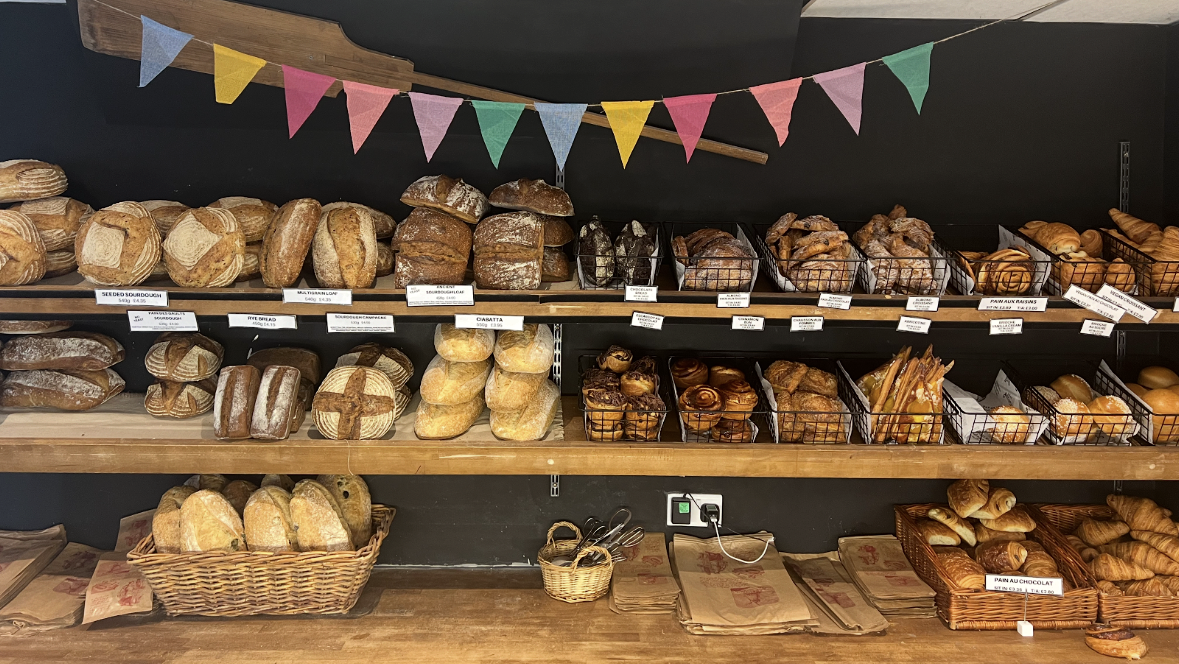
Arriving rather early on a drab Wednesday morning – the kind that usually calls for a meal deal and a library desk – I was greeted by a beautiful spread of pastries and breads, all baked that day. The cakes are made in the kitchen just behind the counter, reassuringly within view, and the whole shop smelled gloriously of baked goods. Warmly welcomed by the Gatineau team, we were soon presented with croissants, patisserie, chocolates, and madeleines: a small fraction of the full Gatineau range.
The croissant (£2.70) came first – the truest test of any French bakery. As someone who typically steers clear of anything quite so indulgent, I was pleasantly surprised by how light and airy it sat on the palate, a testament to the French butter and flour Gatineau imports for exactly this purpose. Director Débora assured me that the vegan version is indistinguishable, which is welcome news for anyone whose college brunch options begin and end with toast.
The highlight of the morning, however, was indubitably the Paris-Brest Pistache (£7.95). Extra-crunchy choux is filled with a fresh pistachio paste made in-house and crowned with pistachio crumbs. The sweetness pairs perfectly with that texture, which leaves a slight savoury aftertaste. Be warned that it is generous: even split between two, it was more than filling, so treat it as a dessert to share rather than a snack to polish off alone.
Gatineau also offered the most undeniably French sweet treat, the madeleine (£1.50). It is the perfect size for a snack before a lecture or during a library break, and it caters to an array of palates: Madagascan vanilla, lemon, and Valrhona-coated. A florentine, with the classic lace of caramelised nuts and candied fruit, added a welcome crunch to the sweeter end of the table. The house chocolates came last, studded with macadamias, cranberries, and pistachios.
The same care extends to what is in your cup. The coffee is Mexican, chosen to complement the food rather than overpower it, and the beans on the shelf come from Missing Bean, one of the cafés at the other end of Gatineau’s delivery round.
What truly sets Gatineau apart, however, is the ethics behind the pastry. As a wholesaler, it thrives on relationships rather than simple supply, and many of them run both ways. Alfonso Gelateria is a good example: its gelato is served at Gatineau’s café on Radcliffe Square, while Gatineau’s pastries sit on the counter of Alfonso’s new shop on Little Clarendon Street. In a city centre increasingly lined with chains, that kind of mutual support between independents matters.
Its ethos extends well beyond Oxford, too. Débora explained that Gatineau sponsors chefs from Indonesia and the Philippines to learn the exacting, and often arduous, tradition of French patisserie, giving them rigorous training and a secure job within the city’s wider community. Closer to home, fruit and vegetables come from local farmers wherever possible, so the patisserie counter shifts with seasonal produce, while the flour, butter, cream, and chocolate are imported from France for the sake of authenticity.
All of this painstaking care is reflected in the price. Gatineau is undeniably on the more expensive side, and few students will be making it a daily habit. But you are paying for skilled people and excellent ingredients rather than a brand, and a 10% student discount softens the blow considerably.
So whether you need a celebration cake for a friend’s birthday, catering for a ball or a survivors’ breakfast, or simply a sweet pick-me-up between the library and your next tutorial, Gatineau is the answer. With its pastry already on so many of our café counters, and its own pop-up a stone’s throw from the Bodleian, there is no excuse not to try the full range at the source.