

The Millennium Prize Problems are a set of seven famous unsolved maths problems collated by the Clay Mathematics Institute, each with a $1 million bounty. They range in respective subfields – for instance, P versus NP asks about computational complexity classes, while the Riemann Hypothesis, perhaps the most famous, seeks to characterise the non-trivial zeroes of a well-studied function on the complex plane.
The very fact that these problems exist contributed in no small part to my desire to become a maths researcher. For me, and I’m sure for many others, the dream of solving one of these ‘unsolvable’ problems carries more significance than just the cash reward. It’s only slightly about the reputation and fame it would bring. To the mathematician, the beauty of the problem and the satisfaction of conquering it are impetus enough. Indeed, when the first (and, until recently, only) one of these problems fell in 2003 at the hands of noted recluse Grigori Perelman, he declined the money and the Fields Medal – the maths version of the Nobel Prize – that came with it.
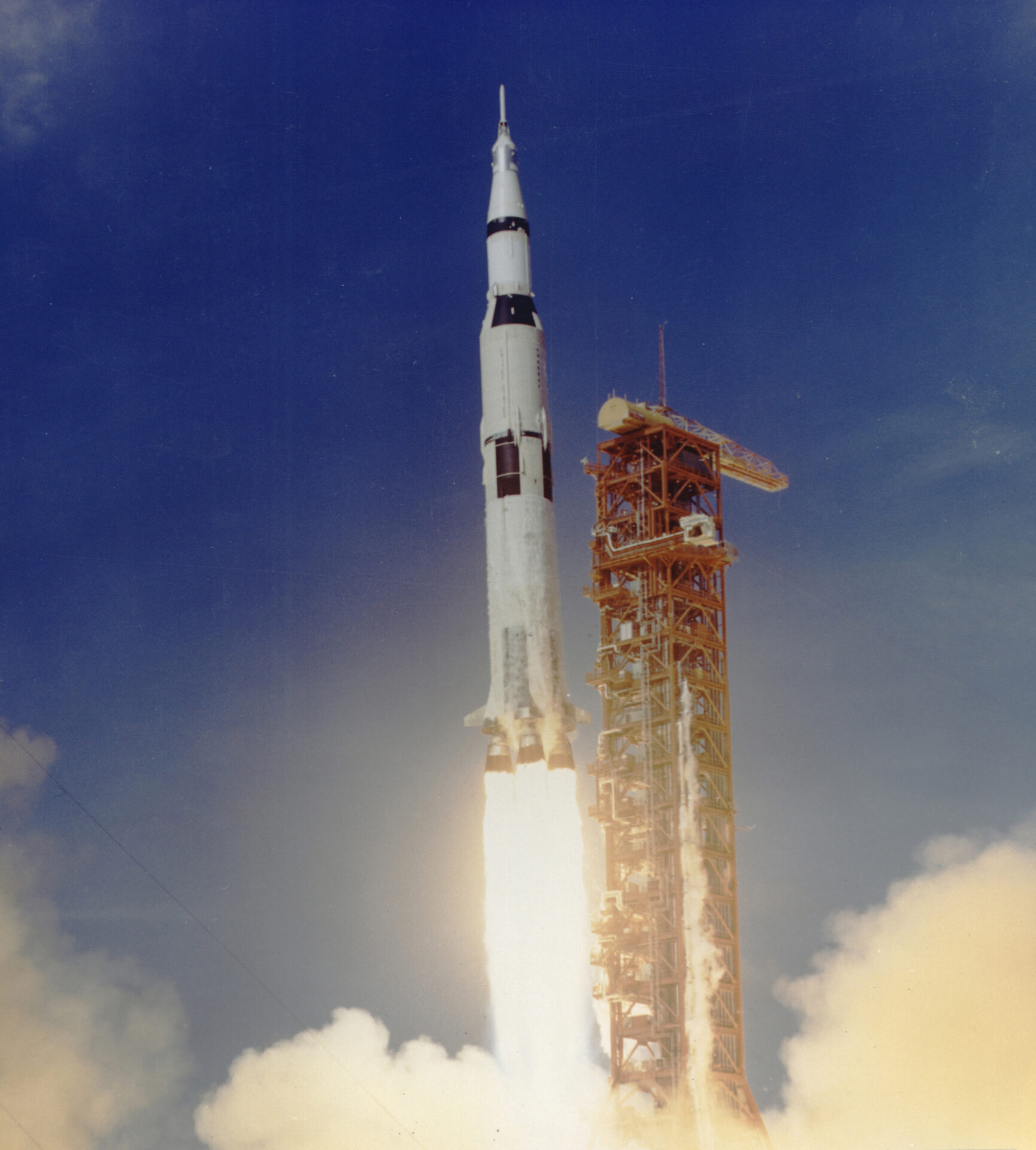
Perelman’s solution to the Poincaré conjecture was to young mathematicians in 2003 what Apollo 11 was to aspiring children playing with toy rockets in 1969. It proved these challenges are not insurmountable – after all, if Neil Armstrong walked on the moon, why shouldn’t I be able to?
The second Millennium Prize problem gave way just this September. The Navier-Stokes problem, a problem of fluid dynamics, was solved.
By OpenAI.
It’s worth acknowledging the ongoing dispute about the publication of this solution. Allegedly, OpenAI (the company behind ChatGPT) gained unauthorised access to research by Australian mathematician Tristan Buckmaster and Anthropic staff member Levent Alpöge, who were independently working on the problem while using advanced models of Anthropic’s own large language model (LLM), Claude. This has understandably opened up a wider conversation about plagiarism and the ethics of using AI in research. But while this is certainly morally dubious, it’s not what concerns me. Regardless of whose solution this was, it was certainly found using heavy AI assistance.
Just last week, OpenAI dropped 372 papers covering various well-known unsolved problems in mathematics and computer science. As someone in the unfortunate position of soon applying for a PhD in maths, it seems to be harder than ever to get one’s foot in the door. How can I, a bright-eyed but inexperienced undergraduate, compete with thousands of machines trawling through the sum of all human knowledge in parallel?
The irony in this situation is not lost on me. Mathematicians and computer scientists have developed tools capable of stealing the jobs of millions of artists and writers worldwide, and now our chickens are coming home to roost. That said, though, while perhaps a generation of future software developers and quant traders may find themselves a few hundred grand shorter each year, the prospective maths researcher will not suffer as much financially. It’s notoriously underpaid, and is out-earned by a large proportion of jobs that don’t even require a degree.
The mathematician doesn’t study maths because it pays well. To quote Poincaré himself, the mind behind the first Millennium problem to be solved, “he studies it because he takes pleasure in it, and he takes pleasure in it because it is beautiful”. Even if it no longer pays, the artist can still paint. The author can still write. The mathematician’s very canvas is stolen from them, and they don’t even have the satisfaction of knowing they could have done a better job – anyone with a semblance of taste is disgusted by AI art and would refuse to read an AI novel. But it is brilliant at maths.
I don’t have a way to spin this in a positive manner. I don’t like being bleak, but I can’t see a future for me in maths anymore. Any unsolved question will soon be munched up and spat out by a computer, and there’ll be nothing left to aspire to.
The stars are going out, and I no longer want to be an astronaut.


