

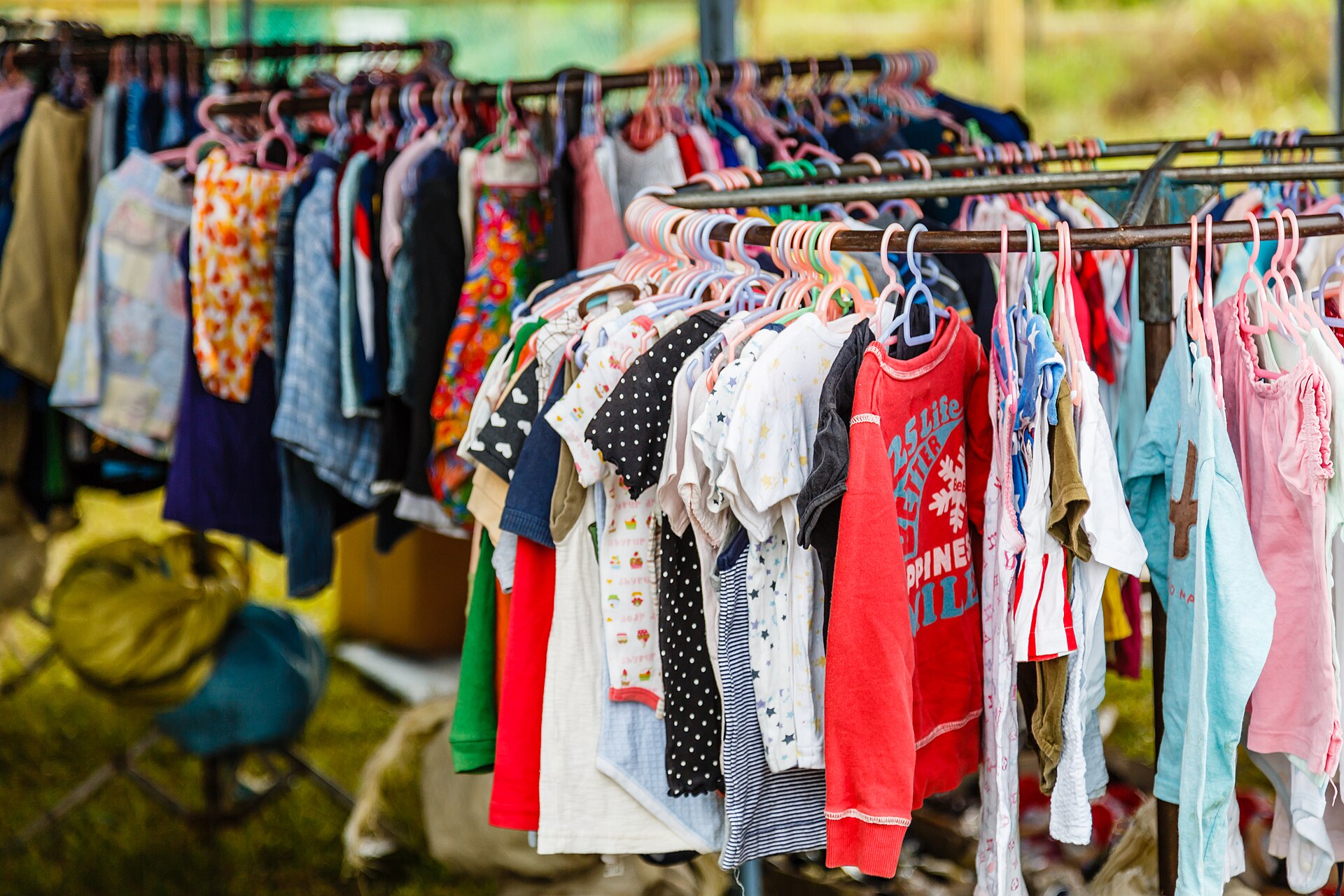
There are few pleasures quite like finding a jumper that sells for £70 new listed for £14, “worn twice” by someone in Leeds. It is cheaper, potentially more individual, and crucially already exists. No new jumper is manufactured on my behalf. I can congratulate myself on my thrift, environmental consciousness, and extraordinary eye for a bargain all at once. The problem is that I rarely close the app there.
Vinted’s innovation may not simply be making fashion circular, but bringing the doomscroll to shopping. Opening the app resembles opening Instagram or Pinterest: an endless stream of images invites the same absent-minded scroll, becoming uncannily attuned to my taste with every search, click, and favourite. Here, however, my For You Page comes with a price tag and a buy button. The infinite feed has entered the wardrobe.
Yet within that apparent abundance is individual scarcity, as each listing offers a single garment, with another buyer potentially hovering over it. Every bargain comes with a countdown: deliberate too long, and someone in Bristol gets your next vintage, one-of-a-kind going-out top. Missing out triggers a push notification that a favourite has sold, followed by an obliging carousel of ‘similar items’ ready to inherit your attention. Scarcity creates urgency, and recommendations ensure the cycle continues. The garment is finite; your scroll, unfortunately, is not.
Vinted’s ecological proposition to circulate existing clothes rather than manufacture new ones is compelling. But circularity describes what happens to clothes, not necessarily what happens to our appetite for them. When I asked four Oxford students whether Vinted had reduced their purchasing, one admitted the opposite: lower prices meant freedom to buy more. Another described that spending on the app felt less like a “real purchase”. Asked whether second-hand status made unnecessary purchases easier to justify, the consensus was striking: “yes, definitely”, “all the time”, and, most revealingly, “it’s fine because it’s Vinted.”
Behavioural economists have names for my amateur theorising. The ‘rebound effect’ describes how cheaper, more efficient consumption can encourage more of it; ‘moral licensing’, how virtuous behaviour makes indulgence easier to justify. Hence three unnecessary second-hand tops somehow feel more defensible than one bought new.
Research suggests this is more than hypothetical. A 2025 Journal of Cleaner Production study identified a ‘circular rebound effect’ on Vinted itself, linking lower prices to increased demand, and time spent on the platform to impulse buying and overconsumption. A separate 2025 Scientific Reports study of 1,009 American consumers found a positive correlation between purchasing second-hand and new clothing. The enthusiastic thrifter need not be the antithesis of the fast-fashion shopper, for the same appetite finds another marketplace.
This is not to collapse the distinction, for I welcome a fashion economy in which second-hand eclipses fast fashion. But Vinted is far removed from meandering through the rails of Mind or Cancer Research. It borrows social media’s algorithm of personalised feeds and frictionless transactions, applying it to consumption already furnished with an ethical halo. It makes our appetite for novelty less destructive without asking us to desire less.
Take the Vinted balance. Sell a dress for £20, spend £18 on another, and somehow I have not spent £18; I have practically conducted a swap. Richard Thaler’s paper on ‘Mental Accounting and Consumer Choice’ offers one explanation: consumers mentally code and budget money differently despite its objective fungibility. £18 remains £18, even when Vinted has helpfully quarantined it from my bank account; psychologically, however, the proceeds of selling clothes can feel remarkably like credit for buying more. Apparently pounds become Monopoly money once they acquire a Vinted balance.
There is an irony here. Co-founder Milda Mitkutė has traced Vinted’s beginnings to her “overflowing wardrobe”, revealing that: “I was surprised at the 100 pieces of clothing that I had worn only once or not at all.” Vinted converted those unused possessions into circulating value, yet its balance system complicates that solution, as sale proceeds remain poised to fund the next purchase unless manually withdrawn. Once an unwanted dress becomes £20 of in-app spending power, decluttering funds re-cluttering.
The prospect of resale also changes our commitment to ownership. A questionable purchase can always be defended with promises that “I’ll sell it again”. My interviewees admitted that potential resale made buying easier to rationalise, while photographing, listing, packaging, and posting the item was quite another matter. Vinted can therefore lengthen a garment’s material lifespan while shortening our psychological commitment to it.
None of this should obscure what Vinted gets right. The Apparel Impact Institute reported in 2026 that fashion industry emissions rose 6.3% between 2023 and 2024, driven principally by growing fibre use, particularly petroleum-based polyester. Against rising material throughput, circulating existing garments is not cosmetic environmentalism. Vinted’s own 2026 Impact Report estimates that 76% of its 2025 orders displaced the purchase of a new item. Even with the caveat of company-commissioned research, this suggests that resale can meaningfully substitute for primary consumption.
But perhaps substitution is not the end of the question. If Vinted successfully changes where we satisfy consumer demand, what happens to the demand itself?
My interviews exposed this tension. Asked how many of their last five Vinted purchases they would have made without the platform, answers ranged from one to two. Though hardly representative, this raises a distinction between the environmental benefits of individual purchases and the consumption habits the platform encourages. Unlike the charity shop, constrained by opening hours, physical stock, and the effort of getting there, Vinted is always open, endlessly replenished, and rarely more than a thumb’s movement away. Clothes become not merely things we acquire, but content we consume; shopping doesn’t always start with wanting something, sometimes boredom is enough.
Yet expecting Vinted to discourage that impulse is perhaps to misunderstand what Vinted is: a marketplace that, in 2025, generated roughly £930 million in revenue and £52 million in net profit. Its business is transactions, even if those transactions are materially preferable to fast fashion. The Vinted paradox is therefore structural rather than hypocritical: a more circular marketplace can prosper within, and perhaps intensify, a culture of perpetual wanting.
My criticism is therefore directed as much at consumers like me as it is at Vinted. When buying second-hand is demonstrably preferable to buying new, ‘better’ can quietly become ‘blameless’. I will continue using Vinted (you would have to pry my £14 cashmere jumper from my hands). But perhaps the most sustainable wardrobe is not simply one that is pre-owned; it is one where, occasionally, the scroll ends without a parcel on its way.