

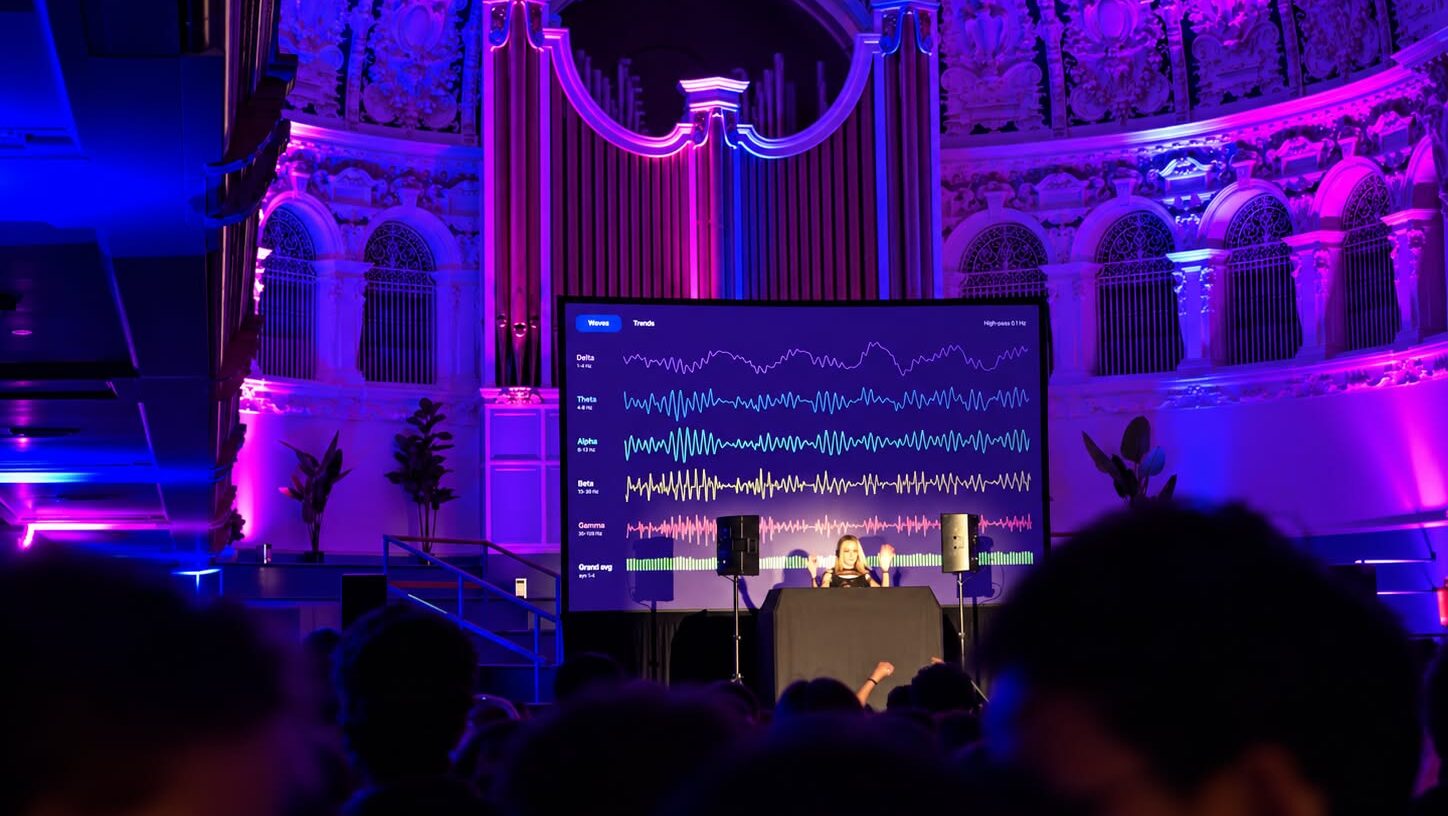
Oxford Town Hall hosted the city’s first “biohacking party” last Friday. The event, organised by Oxford University’s Biohacking Society, aimed to “bring biohacking out of the lecture theatre” and encourage students to “engage with technologies and ideas around human performance and longevity”.
The party included wearable EEGs, usually used to detect epilepsy and brain injury, to show the impact of socialising and dance on brain activity. Wearers could see their brain waves hooked up onscreen above a live DJ booth.
Another activity included a headset ‘game’ that used a headband to track “neurofeedback” and make a ball rise or fall depending on the user’s concentration. Some partygoers sampled “nootropic drinks” to help with concentration and brain power. There was also the opportunity to measure glucose and blood oxygen levels. Following recent ailments sustained at a sports social the evening before the event, Cherwell’s correspondent struggled with more demanding cognitive tests.
Lulu Frisson, a second-year undergraduate at Lincoln College who spoke to Cherwell at the event, dubbed it “the best event I’ll ever go to at Oxford”. She added that she came away with a “genuinely greater interest in the world of biohacking and self-improvement”.
Biohacking Society formed in 2024 with the intention to bring together students and organisations to promote health, longevity, and human performance. This particular event was organised to “experiment with a very different format to combine science and technology with nightlife”.
“Given the growing interest in longevity, wearables, and self-optimisation among students”, the society’s founder, Marie Kruth, told Cherwell that she hopes to “build a community around biohacking”.
The society, which has over 1,000 members, aims to promote “scientifically based information” in the face of “lots of false information” surrounding biohacking. Events focus on practical engagement with biohacking and improving mental well-being, including hypnotherapy. Sponsors include leading biotech businesses UndoAge, an age-reversing coffee producer, and Growing Life, a leading researcher into longevity.
After completing her undergraduate degree in Biotechnology and Business, Kruth now studies digital engineering and focuses her research on regenerative medicine. Upon arriving in Oxford, she felt that the city “was a bit behind” in engaging with biohacking and exploring how we can “optimise ourselves”.
The society is interested in monitoring cognitive performance and improving “healthspan”, the amount of time we are healthy in our lives. Kruth was inspired by conversations with people who suffer from chronic diseases, wondering “what they could have done to avoid it or push it back”.
Previous events include talks led by Oxford professors specialising in psychedelic research, ethics philosophers, and a ‘biohacking on a budget’ series led by health consultants.
Later this term, they are hosting a talk with American endurance runner Hillary Allen and a keynote speech on sleep by neuroscience specialist Professor Russell Foster.
Kruth is interested in approaching health with a “prevention mindset”, particularly optimising sleep. Lifestyle changes, she explains, include using a glucose monitor to track responses to different foods and a red-light panel when ill to help with mitochondria production. Unfortunately for Cherwell’s representative, no red-light panel was on offer during the party.
Listen to the latest episode of Cherwell Spoken to hear the full interview with Kruth.
Additional reporting by Stanley Arlidge.