
Friday 27th March 2026
Blog Page 100

Unhappy feet? Uni on thin ice over welfare penguins

To encourage students to complete the Bodleian Reader Survey this year, a prize was offered to the college from which the most students responded to the survey – a visit from one of: an ice cream van, welfare alpacas, or welfare penguins. This offer generated a buzz, and we saw students expressing their hopes that their college would choose the penguins. Following a letter from ourselves and others in the Biology Department, the Library decided to remove penguins as a prize option and committed to not using wild animals in this capacity again. But what’s the problem with welfare penguins? And where does such an idea come from in the first place?

The concept of welfare animals is not new, with dogs, goats, and alpacas being the staple of many student union events across the UK. Penguins, on the other hand, are a less typical choice of animal for this role. Heythrop Zoological Gardens, however, regularly provide Humboldt penguins for ‘welfare’ visits to sites across England including universities, care homes, hospitals, shopping centres, ice rinks, and to Harris Manchester College in 2024. Three penguins were held on a small, fenced square of astroturf with a tent for cover and a paddling pool for water, while students loomed above them.

A letter from members of the University condemning the action was met with a response from the College stating that Heythrop had the appropriate licences to undertake such activities, and that “these particular penguins are used to human contact”. However, considering the welfare of the penguins, as Zoologists we believe that these reasons are inadequate. Animal welfare is a complicated subject, as most animals cannot express their needs, and we frequently misinterpret their behaviour. Currently, the Five Domains model is the best-established model for assessing animal welfare. The framework accounts for both positive and negative welfare effects, and by assessing the animal’s nutrition, physical environment, health, behavioural interactions and mental state we can assess how well their needs are being met. This means that animals require not only food, water, and shelter but also environmental enrichment and the potential for social interactions with their own species.

The situation at Harris Manchester will likely have resulted in an overall negative impact on the welfare of the penguins for several reasons. Studies have shown that penguins respond slightly more positively to bigger spaces, room to ‘escape’ from humans, and access to larger water bodies but have elevated stress levels when humans get closer than 2m to their enclosures. This is particularly true for Humboldt penguins, who may perceive humans as potential predators. As seen in social media coverage of the event, these conditions were not met for the Heythrop penguins at Harris Manchester.

It could be argued that penguins can become habituated to human contact, and to some extent this is possibly true. Some zoos have designed penguin-visitor interactions, with neutral or even slightly positive responses from the penguins, but these encounters were carefully controlled. Penguins had the option to leave the area with humans at any time, were provided with enrichment such as laser pointers, and the humans sat quietly on a bench, did not interact directly with the penguins and did not take photos. This is a far cry from what the Heythrop penguins experience when they are handled by many unfamiliar people. Furthermore, the penguins must endure the stress of transportation between these locations, with birds known to be very sensitive to noise disturbance.

Heythrop Zoological Gardens, when contacted for comment, stressed that the penguins were trained and used to human company, and have become “gradually desensitised to any possible stress” from these interactions. They said the penguins were in a temporary enclosure for “a maximum of three hours”, that they are familiarised with transport, and that all handling is through experienced penguin trainers. Heythrop argued that such experiences help conservation and “a sense of connection with nature”.

We argue that this exploitation of animals by Heythrop Zoological Gardens is completely inappropriate and results in poor welfare for the animals. Welfare opportunities for humans do not need to come at the expense of animals. Contact with nature provides multiple benefits for human health and wellbeing. This could involve visiting a nature reserve, tree planting, or outdoor meditation, all of which are more immersive than ogling at some fenced-in penguins.

We commend the Bodleian Library’s decision to remove the penguin ‘prize’ as an option. If the wider University and colleges truly care about welfare – both human and animal – then a policy should be developed ensuring that the needless exploitation of animals for student’s entertainment no longer occurs on campus.

Have an opinion on the points raised in this article? Send us a 150-word letter at [email protected] and see your response in our next print or online.

Shakespeare and the ‘Dark Lady’

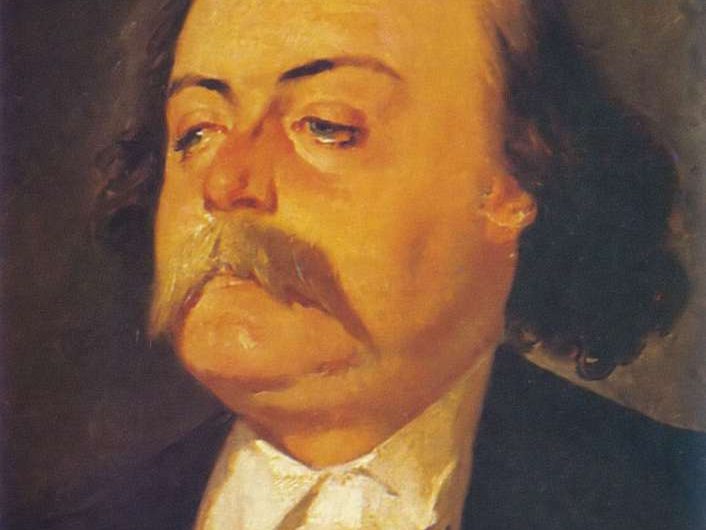
Shakespeare is undoubtedly the most well renowned English playwright. Thus, the chance that the bard might have been strongly influenced by a woman, as early as the 17th century, would mean something truly radical, redefining how scholars read the dramatic canon and place women within its landscape. The influence of Æmelia Lanyer is something that has been debated and discussed, with scholars ranging from identifying her as the ‘Dark Lady’ to thinking her the real Shakespeare. But who was she, and what is the actual evidence?   

But who was Lanyer? Lanyer was a pioneer in women’s writing. She was one of the first women to publish poetry in her own name, designed to attract patronage, and ‘Description of Cookeham’ was even one of the first country house poems.

She was brought up by an Italian-Jewish family of musicians, the Bassanos. After the death of Lanyer’s mother, it is suspected she became mistress to Baron Hunsdon, Lord Chamberlain of Elizabeth I. Her fairly liberal access to education, and musical ability, landed her in the charge of Llady Anne Clifford, daughter of Margaret Clifford, Countness of Cumberland. To enter this domestic sphere was to enter into sympathy with a woman fighting for economic autonomy – Margaret Clifford was in conflict with her husband, who wished to deprive his daughter of inheritance and neglect his financial duties towards his wife. Clifford acted as Lanyer’s patron, and thus ‘Description of Cookeham’ is dedicated to her.  

So why is Lanyer so linked to Shakespeare? Lanyer’s affair with the Lord Chamberlain would likely have put her into contact with the Lord Chamberlain’s men, the most prolific Elizabethan playing company, which Shakespeare was a part of. This is why many suspect that Lanyer and Shakespeare had an affair, or at least met. But is there any textual evidence for such an encounter? Well, many have ascribed Shakespeare’s strikingly modern instances of female characterisation to Lanyer’s influence. Her namesake in Othello, Emilia, argues something very similar to Lanyer’s poem ‘Eves Apologie’: ‘I do think it is their husbands’ faults / If wives do fall’. As Emilia subverts the blame of women for poor behaviour, pinning it on the patriarch of the marriage, Lanyer asserts that Original Sin is not the fault of Eve, but of Adam, who had more agency as a man to exercise judgement, but transgressed anyway. It does seem idiosyncratic for a Renaissance man to write characters who make such radically subversive political statements. Furthermore, Shakespeare’s Bassanio, in The Merchant of Venice, sounds surprisingly similar to ‘Bassano’, Lanyer’s maiden name. This is certainly striking circumstantial evidence, and might suggest that Lanyer had influenced Shakespeare’s works, at least.  

But many scholars identify the potentially negative social implications of attributing Shakespeare’s works to Lanyer. For a start, feminist scholars are concerned today that identifying Lanyer as the ‘Dark Lady’ takes attention from her own merit as a poetess. She becomes not a female pioneer, but merely a propellent of one of English dramatic history’s most famous men. Similarly, many believe that Lanyer was Shakespeare’s real identity because she had a background with courtly education, in fields such as Latin, which the Bard’s plays hold numerous references to. The assumption that Shakespeare could not have written his own plays, due to his yeoman status, has been decried as a fundamentally classist one. Many see Lanyer and Shakespeare as coincidental contemporaries, and argue there is no evidence that they had any close liaison, though they might have met. Has the history of English drama been corrupted by conspiracy theorists, who merely share a love of gossip and scandal?  

Overall, there is certainly circumstantial evidence that Lanyer and Shakespeare are connected. Whether you believe that Lanyer is the Dark Lady, the real Shakespeare, or another figure entirely, what is clear is that she is a forgotten but truly radical poet. As many feminist critics have suggested, to understand more about Shakespeare and this great period of drama and sociopolitical thought, reading Lanyer is an informative and eye-opening experience. What is also clear is that theatre history can be an intensely political topic of conversation, and challenging what we think we know has striking social implications. 

University moves Classics exams due to concerns over OA4P protest

This year’s Classics Moderations exams, which began on Monday 3rd March, have been moved to Ewert House in Summertown from the usual Examination Schools. Two students from different colleges independently told Cherwell that Classics faculty tutors said that the exams have been moved in order to avoid disruption from potential Oxford Action for Palestine (OA4P) protests; however, the University attributed the change to “operational reasons”. 

A spokesperson from Oxford University told Cherwell: “For operational reasons, Ewert House will be used for exams taking place in Weeks 7 and 8 of Hilary term. Further exams will take place in the Examination Schools in March, and Trinity term exams are scheduled in both the Examination Schools and Ewert House, as is standard.” 

The University also emphasised the fact that Ewert House is used routinely for examinations, with just under 5,000 exam sittings taking place there in 2023/24. 

In previous years, Classics Mods were held in Examination Schools. One second year Classics student told Cherwell: “It’s really frustrating that Examination Schools moved our exams with hardly any warning, and on the basis of a supposed protest. It’s made travel to the exam venue much more stressful and expensive than it should have been, especially since I live in Iffley.” 

Another Classics student told Cherwell: “The reason for all this venue change is apparently OA4P…It was told to us by someone high up in the faculty verbally [instead of via email], but my whole class can attest to the information being true.”

When protesters occupied a hall in the East School of Exam Schools on 13th June 2024, some exams scheduled to take place that morning were cancelled, and students were advised to “put tissues in [their] ears” by invigilators. OA4P said on the day of the occupation: “the action was unaffiliated with OA4P and was undertaken without OA4P’s knowledge.”

Following the event, the University said: “The University condemns the actions of the seven protesters who invaded the Examination Schools last Thursday. We are extremely sorry for the disruption to students who had an exam cancelled, who had exams affected by noise and delay, and who had to sit exams at alternative locations.”

BMW freezes investment at Cowley electric vehicle plant

0

German carmaker BMW Group has paused a £600 million investment in its Cowley factory. The project was expected to create 4,000 new jobs and expand the plant’s production capacity for electric MINIs. The factory still remains the largest industrial employer in Oxfordshire. 

BMW said that a reason for this is the “multiple uncertainties facing the automotive industry” as the UK is seeing weaker demand for electric vehicles at a time of rising consumer costs. The site is still earmarked to only produce electric cars by the year 2030, and for now, the production of internal combustion engines will continue. BMW had previously received funding from the UK government to help enhance its electric vehicle production but now will no longer be able to accept a previously announced UK government grant for the project. For now, electric MINIs will continue to be produced in China.

Automobile manufacturers have precise quotas on the amount of non-electric cars they can produce. The UK government plans to prohibit the sale of petrol and diesel cars by 2030. The electric quota increased this year by 6% to hit 28% of total production, with companies fined for non-adherence. 

Business and Trade Minister Sarah Jones also reiterated in the House of Commons that the investment plans had been “delayed, not cancelled”. 

A BMW spokesperson told Cherwell: “Plant Oxford is at the heart of MINI production, manufacturing and exporting a range of models sought after in the UK and around the world,” adding that the company is only “reviewing the timing” of the investment.

“Much of the investment is progressing with construction well underway to make the plant future-ready.” This includes a “state-of-the-art logistics facility.”

In response to BMW’s decision, a spokesperson for the Department for Transport said: “We recognise the global challenges car manufacturers face and have listened to their concerns by consulting on reinstating the 2030 EV deadline whilst also protecting jobs – a decision supported by a majority of manufacturers who have been working towards this date, and are on track to meet their ZEV mandate targets.

“We’re investing over £2.3 billion to support industry and consumers make the switch, tapping into a multi-billion-pound industry that will create high paid jobs for decades to come, make the UK a clean energy superpower and help deliver our Plan for Change.”

Pakistani Government supports six new scholarships at Oxford

0

Pakistan’s Sindh government in collaboration with The Oxford Pakistan Programme (OPP), has announced it will provide six scholarships for students pursuing graduate studies in STEM at Lady Margaret Hall.

The merit-based scholarships will cover tuition and living expenses, with preference given to PhD students. Last year, OPP awarded scholarships to three students: two from Sindh and one from Balochistan.

Three will be awarded to men in honor of Zulfikar Ali Bhutto and three to women in honor of Benazir Bhutto. Benazir Bhutto (LMH, BA PPE 1973) was Pakistan’s first female Prime Minister and her father, Zulfikar Ali Bhutto (Christ Church, BA Law & LLM 1950), also served as Prime Minister and founded the Pakistan People’s Party (PPP).

The scholarship program was announced by Sindh Chief Minister Murad Ali Shah and Bilawal Bhutto-Zardari, son of Benazir Bhutto and current Chairman of the PPP, during a lunch hosted by LMH Principal, Professor Stephen Blyth. At the event, they were briefed on OPP’s initiatives to expand educational access for Pakistani students from disadvantaged backgrounds.

The event was attended by prominent figures, including Dr. Mohammad Faisal, Pakistan’s High Commissioner to the UK; Imran Zarkoon Khan, Secretary of Finance for Balochistan; Sanam Bhutto; historian Victoria Schofield; and senior officials from Sindh and Balochistan.

Speaking at the Benazir Bhutto Memorial Lecture at the Oxford Union, Bhutto-Zardari reflected on his mother’s legacy, emphasized the significance of women’s participation in higher education, and reaffirmed his belief that “democracy is the best revenge”.

Beyond the scholarships at Oxford, the Sindh government has approved 3,157 additional scholarships for the 2023-2024 academic year under the Sindh Education Endowment Fund. These scholarships are intended to support students pursuing higher education, particularly those from disadvantaged backgrounds.

Commenting on this broader initiative, Chief Minister Murad Ali Shah stated: “These scholarships will enable students from Sindh to study at one of the world’s finest institutions. Not only will they benefit from this opportunity, but Sindh as a whole will gain as these scholars return with knowledge and expertise to uplift their communities.”

In an Instagram post, OPP stated: “The establishment of the scholarships was supported by Israr Khan, President of the Oxford Union,” who is a Pakistani scholar from Balochistan. 

The OPP was founded and is led by a team of Oxford professors and alumni. Since its launch, it has provided over £600,000 in financial aid, supporting 48 Pakistani graduate students at Oxford. Funded by donors like the Malala Fund, the British Council, and the Pakistan High Commission, OPP follows a spend-down model, pooling small donations for high-impact initiatives.

The program emphasises the limited representation of Pakistani students at Oxford, noting that in 2021, only about 12 undergraduates and 45 graduate students from Pakistan were enrolled—despite the country’s population exceeding 220 million, with over 60% under the age of 30. Furthermore, British Pakistanis remain the most underrepresented BAME group at the graduate level within the university.

The announcement follows the signing of a Memorandum of Understanding (MoU) between the UK and Pakistan, which highlighted the importance of education and empowerment.

How Oxford celebrates Pancake Day, from races to formals

0

Today is Shrove Tuesday, the last day before Lent, and coincidentally, pancake day! Oxford does a lot to celebrate, and Cherwell is excited to give a rundown of all the pancake-related shenanigans that are going on today. 

Worcester, Christ Church, and Oriel college are each doing their annual pancake day race, running around their quads. At Oriel, for instance, runners dress in sub fusc and substitute frying pans for battons, flipping a pancake as they pass each corner of their front quad. Some races raise money for charity, and some are just part of the tradition! Due to the building works in their quad, Hertford is doing a pancake race with a twist – instead of running, each racer needs to flip their pancake and then pass it to the next person. 

For those who are less athletically inclined, Kellogg is doing a pancake-only formal tonight, while Corpus Christi is hosting a pub quiz – some very Oxford traditions for a very traditional day. 

If you love pancakes but have no kitchen access, George Street Social has a £10 pancake deal, and the Graduate Society is serving Ukrainian pancakes tonight at Ertgun House. For those who like their pancakes a little bit thicker, Fuwa Fuwa in the Golden Cross shopping center makes fluffy Japanese-style pancakes, whereas the Handle Bar and the Oxford Brunch Bar both make some delicious American pancakes. 

One slightly less pancake-related tradition this Shrove Tuesday: Brasenose’s Ale Verses, where students make up and sing parodies of popular songs, centered around aspects of Brasenose life. Pancakes are often for dessert, with ale served in honor of the occasion!

Whether you are eating pancakes straight out of the pan in your kitchen or flipping them on the run, Oxford certainly makes the most of Pancake Day.

Torpids 2025: Bumps, slumps and eleven-spot jumps

0

Torpids: the bringer of cult-collegiate support, un-ironic unitards, and this year: the first blue skies in what has felt like an eon. Torpids sees colleges qualify as many boats as they can in both men’s and women’s divisions and enter them into four days of bumps racing. From the bung lines at Iffley Meadows it’s a mad dash to the finish just before Folly Bridge; battling to bump the boat in front, avoiding being bumped by the boat behind and as was painfully reminded to the St Catherine’s College and St Hilda’s College boats this year, evade swans that should happen to cruise into the racing line!

Torpids 2025 provided a turbulent competition with immediate disappointment for the lower-half divisions who missed out on racing altogether due to the high stream. It was up to the top 37 men’s and women’s crews to carry to competition for their respective colleges.

Crews across the divisions were gunning for blades, an honour only bestowed upon crews who bump every day of Torpids: Hertford College maintained consistently high performances as their W1 and O1 both secured their set, with W1 even jumping up into the top division. Men’s Division III saw blades for four of their twelve crews; St Hilda’s, Oriel College, Wolfson College and Worcester College, rendering it the most fruitful division of the competition, closely followed by Women’s Division II in which three sets of blades were won by Hertford, Exeter College and Somerville College. The college who gained the most places at Torpids was Worcester, with an increase of eleven; six places gained by the men and five by the women. 

But as some colleges soared, others (almost literally) sunk, and we had no shortage of spoons this year. Women’s Division I dished out three sets of spoons to Magdalen College, Trinity College and Lady Margaret Hall, as these three boats had fallen into the division below by the end of Saturday. Linacre College suffered a huge dip in the position of their O1 boat as they dropped eleven places down the ranks. It was only their women’s crew that prevented total annihilation by gaining two places overall. The most catastrophic spoons recipients of this year’s Torpids were St Anne’s College. Starting at a comfortable 20th, the week saw Anne’s only qualified boat, their W1 crew, plummet down to 33rd. Perhaps the lack of lower-half divisions was a blessing in disguise, as it prevented any further spiralling.

Saturday provided a lovely end to the occasion as the smell of cheap prosecco drying on the pontoons filled the air, as the commentator repeatedly reminded crews to hold back from jumping into the river in celebration. Ultimately, it was the Wolfson men and Pembroke women who both solidified the top spot in each Division I, and won their first Torpids Headships. 

As support and excitement built over the week, the Isis welcomed back its state of boat-induced chaos. Bank riders, spectators, umpires, and poorly timed pedestrians lined the banks and, as you made your way down the towpath, Torpids was on every tongue. Now that rowers have wetted their racing appetites, it’s up to the boat clubs to keep up the momentum and use their victory or defeat to fuel their training for Trinity’s Summer VIIIs.

Oxford Feminist Society condemns Oxford Union’s invitation of rapper convicted of assault

0

Oxford Feminist Society have condemned the Oxford Union for their invitation of convicted domestic abuser Dizzee Rascal. The rapper, whose real name is Dylan Mills, is due to appear at the Union on Wednesday for a Hip Hop panel event, followed by a concert later that evening.

Oxford Feminist Society told Cherwell: “The Union’s unwillingness or inability to withdraw its invitation, apologise for extending it in the first place or publicly condemn the actions of Dizzee Rascal contradicts its ability to be the bastion of free speech it claims to be.

“It is an insult to the victims of domestic violence and to women in general. The lack of repercussions faced by these men then resulting in career promoting opportunities minimises the violence that women face, mainly at the hands of men.

“Violence against women is a national and international emergency, and the Union is complicit in perpetuating an environment that supports it.”

Dizzee Rascal was convicted in 2022 of assaulting his former partner, losing an appeal against the judgement a year later. He was given a one-year restraining order and a 24-week curfew, following a trial at which he denied assault by beating.

In an Instagram post on Sunday, Oxford Fem Soc demanded that the Union withdraw the invitation, issue an apology for “normalising such individuals”, and update their guest policy “to ensure no further abusers are invited”.

Fem Soc also told Cherwell that their “contact and discussion with the Union’s Press Team has been transparent and in good faith, helping [them] outline internal and external means of redress.” However, they raised concerns at the “apparent lack of internal ability for individual Union committee members to take action towards either disinvitation, or a statement of recognition or condemnation on behalf of the Union.”

One Union member, Emily, who did not want to give her full name, told Cherwell that she had raised issues with the invitation for some time, but had not received any response to her concerns after contacting the Union on social media. She said to Cherwell: “I was very vocal about my upset over the Union inviting a convicted domestic abuser to speak. I contacted all of the current committee, the Union social media pages and an internal Union group to no reply.

“Inviting Dizzee Rascal is not only invalidating for students who have experienced abuse but it is also upsetting to give him the honour of speaking at the Oxford Union. It is wrong, and the committee has failed to address my concerns as a member at all.”

The panel at the Union on Wednesday evening is set to discuss Hip Hop and its impact on youth, with other guests including Tajai, MC Serch, DJ Yoda, and DJ Bonds.

In regard to action surrounding the event, Feminist Society told Cherwell that they have “not publicly planned any action against the Union, however [they] do call for a boycott of all non-disruptive attendance of the event.”

They further added: “We would like to repeat that both us and the Union have been civil to this point, but there is nothing civil about normalising violent misogyny and cultural acceptance of those that commit it. That in itself is violence and is a violation of the free speech of all those affected.”

Cherwell contacted Oxford Union for comment but did not receive a response.

Cherubs Grow On Trees: Atmospheric student filmmaking

Making short films is hard. You have anything between two and 20 minutes to tell a compelling story. As an audience member, they can often feel unsatisfying. However, for many filmmakers, the format is less about narrative and more about experimentation, less about a cohesive plot, or in-depth characterisation and more about an initial foray into a theme, about raising questions. It is certainly true that looking back on the short films of now-lauded directors – from Bong Joon-Ho to Paul Thomas Anderson – it is precisely the seeds of what later fuelled their feature films which strike us. But if it is hard to make a short film on any budget, it is even harder to do so on the unavoidably limited student budget. 

Comfort Tanie Maseko, director and writer of Cherubs Grow On Trees, which was filmed during their time at Oxford, describes the production as a “zero budget, student short film”. The end result becomes, in the light of this statement, even more admirable. This is not to say that the film is perfect, or that it doesn’t feel like it was made by a group of talented students, rather than seasoned, industry professionals, but that with a runtime of only eight minutes it submerged me in its world and left me wanting more.

The first thing that will strike you about Cherubs Grow On Trees is how beautifully it is shot – particularly its first section. The film – a self-proclaimed gothic, romance drama – follows a girl, played by Avania Costello, who has come back to Earth in the form of an angel and seeks to understand her death. Depicting an afterlife or telling a story from the perspective of the dead on-screen is a challenge. How can you film living, material things and give a sense of detachment from life? As the film aptly puts it: “A mind can only wrap itself around so much nothing”. However, Cherubs Grow on Trees  – through very well-executed shots – is truly convincing in its depiction of Costello’s distance from what we see around her.

The first part of the film is shot entirely in black and white, with Director of Photography and Colourist Aristotelis Chrysos showing a great command of shadows. The streets and corners of Oxford are bathed in darkness, contrasted with unusually bright lamp posts that take on ghostly presences themselves. Costello’s characterisation is also beautiful. She wears a plain white dress, which not only stands out against the darkness that surrounds her, but is accompanied everywhere by a faint white glow. Often she is out of focus when her surroundings are not, which further gives us a sense of her as a non-corporeal being.

This is where Costello’s performance is also of importance. As the voice-over monologue details her feelings of absolute detachment from the material world, her voice is almost emotionless and her face practically expressionless. Costello’s utter indifference shines through the screen. She wanders through the streets with a strange sense of unshakeable purpose, but simultaneously of utter calm. The dance scene is great at building on this feeling. Accompanied by an ethereal soundtrack composed by Can Arisoy, Costello leaps and turns and shakes in ways that make her body seem impossibly light. The editing of this scene – executed by Joshua Luther Recido, who is also the film’s Sound Designer – is very clever. Recido repeatedly fades shots of Costello’s dancing from different angles into each other, so that her movements often seem to extend unnaturally. 

The second part of the film is sadly not as good as the first – although perhaps it is necessary as a conclusion. Although the red cinematography is effective at conveying that this is the scene of an unnecessary death and the reveal of Costello’s dead body is undeniably effective, the introduction of a more conventional narrative in the film’s last two minutes feels rushed. 

Cherubs Grow on Trees is a testament to how a creative, talented set of people working together on a film can create good art regardless of budget. After receiving a Special Mention laurel from the 2025 UK Student Short Film Festival, the team plans on submitting the film to the Oxford University Short Film Festival. Hopefully, this will make it available to Oxford audiences on a big screen later this term. In the meantime, you can follow Sixth Inn Productions on Instagram for more details as well as a trailer.

Oxford research midwife wins King’s award for humanitarian work

0

A research midwife at the University of Oxford, Alessandra Morelli, has received an award from the King in recognition of her humanitarian work in flood-hit Libya. 

Morelli was deployed to Libya by the frontline medical aid charity UK-Med in the aftermath of the Storm Daniel, which hit the country in September 2023 and killed over 3,000 people. There, Morelli trained Libyan midwives in the city of Derna, where the storm had hit particularly hard and caused severe flooding.

Morelli is a researcher at Oxford’s Nuffield Department of Clinical Neurosciences, where she is currently working on a project that aims to reduce complications for women who are pregnant or giving birth. She had previously worked with UK-Med in response to the two earthquakes in southern Turkey in February 2023. 

The new award, which recognises extraordinary service in response to humanitarian emergencies, was presented at Buckingham Palace on 25th February. At this event, Morelli and 13 other frontline medical responders were given Humanitarian Medals in recognition of their work.

Morelli told Cherwell: “Being one of the first recipients of this award came as a huge surprise. It’s truly an honour to receive this recognition, but more than anything, it’s a reminder of the resilience and courage of the people we try to help. I hope that this award will put humanitarian work in the spotlight, drawing more attention to the urgent need for resources, policy changes, and global support for those affected by crises.”

Beyond Libya, UK-Med is also providing critical medical support in Gaza and Ukraine, staffing hospitals, performing surgeries, and training local staff. 

When asked what drives her to pursue such difficult work in extreme conditions, Ms Morelli told Cherwell: “The people we help are my greatest source of inspiration. Seeing their strength and determination, even in the face of crisis, fuels my commitment.” 

David Wightwick, CEO of UK-Med, said: “These dedicated professionals have put their expertise to work in the most extreme conditions imaginable.

“Their commitment to saving lives, often at great personal risk, is a testament to the values of humanitarianism and medical excellence.”

When speaking to Cherwell, Ms Morelli outlined her plans for the future, intending to continue providing emergency healthcare internationally as and when it is needed, stating: “This is not just a job–it’s a lifelong mission.”