Deborah Ogunnoiki explores the fall of ‘Z-Library’, the infamous online library.
It’s 30°C, a rare blazing summer in England. You’re stuck indoors for fear of heatstroke and to escape from the geezers with their beer bellies and sun-burnt tomato skin. You’ve read all the books on your shelf, and even if you haven’t, you’re in no mood to read your ‘to-read’ list. You’re looking for spontaneity. A book that will answer your needs right now. So as you scroll on TikTok you find the perfect book. Something you can read as you laze around the house slurping up your melted Asda-brand ice lollies. But is it worth spending £4.99? You’re broke. You’ve spent all your money at the beginning of summer and you know if you ask your mum for book money she’s going to kiss her teeth. But how could you be denied such an adventure? Where do you turn to? Z-Library.
That was then. A seemingly past life where you could get any book from the online library and delve into any adventure without the financial barriers holding you back. Until November 2022 when the online library was shut down by authorities. The two Russian nationals connected to the domain were arrested in Argentina on charges of money laundering and fraud. It is alleged that it was a Colleen Hoover fan that caused this mess, but I would argue that Colleen Hoover and her Vacuums (I made up this name for her annoying fanbase) are the sources of all problems in the book community. Nonetheless, this article is not about them, it’s about us, and what online libraries mean to us.
Z-Library was mainly used in emerging countries where access to international literature is restricted due to trade, legal, or economic barriers. It was also used heavily by academics who praised the service for its use in opening up access to academic spaces. It’s true that I myself used Z-Library to download a copy of ‘Four Views on Free Will’ by Robert Kane, John Martin Fischer, and Derk Pereboom. The book was required reading for Theory of Politics and yet I couldn’t find it on SOLO. The other option was to buy the book, but for £30 on Amazon, I’d rather fail philosophy.
Z-Library brought back the spirit of the library. To share a book then was to send a link. Suddenly your friend, who lived on the other side of the country, or even the other side of the world, no longer had to wait 2-5 business days for you to post your favourite book. Now all that was needed was a copy and paste.
One might circle back and point fingers at us online library users. You might accuse us of pirating literature or stealing from authors. And perhaps you’re right, maybe it is stealing. Though some authors themselves don’t think so. Alison Rumfitt, a trans author known for her book of poetry, T(y)ranny, voiced her support for the use of Z-Library in an article for Dazed. In regard to the accusation of stealing, in the article, she writes: “Mostly they’re people trying to get books they want to read for no money. But even then, I’m not sure I can call that stealing – the hunger to read is something to be encouraged, something which, in my opinion, is a societal good; even as publishing grows ever more overtly capitalist and monopolised, reading still thrives, and piracy allows it to take place despite borders and Digital Rights Management. Not everyone has access to a library, and not every library in the world is well-stocked.”
Z-Library opened up doors for people who were barred by too many locked doors. For me, being able to access Z-Library meant that I could access the plethora of books that weren’t available in my tiny village library in the Essex countryside. Am I, then, a thief? Perhaps. But to call me a thief for the crime of stealing literature, stealing words and phrases from the minds of others, is poetic at best, uninspiring at worst.
I have not been able to find Z-Library anymore. According to Wikipedia, it has been diminished to the deepest, darkest part of the internet: the dark web. That doesn’t mean we weren’t inspired by the Z-Library message. There are dozens of Z-Library alternatives out there on the web if you know where to look. And trust me, from one bookworm to another, we always know where to look.
In this modern day and age, it is easy to be optimistic about the future of gender equality; the Western world especially has made great strides in promoting women’s rights and interests. However, the fight for female empowerment is far from over. The structures of Western society are still tainted with the unwashed stains of patriarchal oppression, while other countries display proudly repressive regimes.
The creators of Women Behind The Wheel—Cat and Hannah—looked to explore stories of women in Central Asia, taking a 3,000km drive along the Panir Highway across the southern Uzbek deserts, through Tajikistan’s Pamir mountain range, and into Kyrgyzstan capital of Bishkek. Through their grueling journey, Cat and Hannah were able to converse with women from all walks of life, from women’s rights activists against domestic abuse to a 78-year-old gynecologist who lived under the Soviet regime. The editors of Cherwell had the opportunity to interview the creators of the documentary, which screens at the Ultimate Picture Palace, Oxford on Sunday, 5th of March at 3 PM.
Firstly, what motivated you to focus on the lives of women from Central Asia in this documentary?
Cat: Initially, Hannah and I were really curious about wanting to visit [Central Asia]; it’s not a region that many people travel to, and it’s not talked about often or in the press that much. When we started to do research into the region, we came across stories on Instagram and social media about women who were doing quite cool things to empower themselves. We also read about how this region used to be a part of the Soviet Union—how women had relatively good rights for that time period—but with the collapse of the Soviet Union, a lot of these countries have reclaimed quite a firm grip on Islam, which also greatly impacts the role of women. So we felt this was quite interesting: the dynamics of these two forces of Islam and the Soviet Union.
That’s where the idea was born. Then we discovered this road—the Panir highway—that goes across the region, so we wanted to combine the idea of us as two women traveling along this road, getting behind the wheel and getting behind the camera, while using our journey as a vehicle or an opportunity to meet local women and gain access to their stories.
So the motivation definitely evolved over time.
It’s clear that Social Media plays a large role in your documentary—both in your motivation and how it allowed people to reach out to you with their stories. While many other documentary makers are also adopting social media to communicate with people in repressive regimes, do you personally feel that social media provided an adequate channel for individuals to disseminate their stories in these regions?
Hannah: Social media played a huge role; we expected most young women to have Instagram. So while social media didn’t certainly open access to older women, younger women we would meet on the road, would end up connecting us to older people. And therefore, Instagram ended up being one of the best avenues for finding people in the initial stages of our journey.
Cat: But that being said, there were very rural pockets, especially in Tajisktan in the Wakan Corridor, where a lot of the women in the communities we came across we didn’t find on social media. They were actually just women we picked up hitchhiking on the side of the road, and it was very organic how we found these women. There was a lot more disconnect with the internet in these regions, so I would say it was fifty-fifty. We mostly had great success, and I think maybe we assumed wrongly that social media wouldn’t be so important, but it was hugely important to meet people, and allowing us to stay in touch with a lot of the women even now.
There was certainly a wide range of people and stories present in the documentary; were there any particular shocking or unexpected stories for you?
Hannah: We kind of read about before, but when we were actually having conversations we were shocked still about stories of bride kidnapping. We had a conversation with a young woman who features in the film, but she talks about [kidnapping] in such a matter-of-fact way as if this is a cultural practice that has been going on for so long it’s not surprising to her, that her sister had been bride kidnapped and forced to marry, essentially, her rapist. The whole story was pretty shocking, talking to someone so young, who was nineteen at time as if that’s just part of life.
How comfortable were women opening up their stories to you?
Hannah: We were quite taken aback. A lot of women really did open up. We were two 22-year-old women with a small camera and no crew, and that meant that a lot of the conversations that we had ended up feeling quite intimate and frank. We were quite overwhelmed at how brave people were talking about quite difficult experiences. That being said, there were definitely instances when we were told, “This isn’t a zoo. Put the camera down”, and I think that was quite an important learning curve for us—to not make any assumptions and to not put any pressure to share quite traumatizing stories.
Cat: There was real importance to build trust before we started filming, or before we started asking questions. I think when we built that trust people really opened up to us. A lot of people were like “why are you asking these questions? Nobody asked these questions before”, and really enjoyed answering our questions.
Thank you so much for your time! Finally, what is the main message that you would want Oxford students to take away from the documentary?
Cat: We went on the trip expecting a grandiose, big story—big picture feminism—but when we reflected on the footage and the interview it was really women doing potentially small things in their local communities that moved us. When we take a step back and examine the little actions these women are taking, it’s clear that while they might be small in isolation, they can form an almost a mini-revolution when we put them together. These small changes are what are causing a gradual empowerment of women in the region. These small gestures mean a lot.
Also, we found that these stories resonate with women all around the world. There is solidarity—a connection between women, between people irrespective of culture and language. There’s always more common ground to be found rather than differences. Especially in the world and the UK, where there is a lot of xenophobia and anti-foreigner sentiment, we hope that this is a nice opportunity for the audience to open their eyes and look at other cultures and look at what we have in common with others.
Onyeka Nwelue, a Nigerian author, has had his Academic Visitor status at Oxford University terminated after misusing University logos and premises for commercial purposes, an investigation by Cherwell has found. Nwelue is also facing complaints of misogyny towards students and the spread of racist, classist, and sexist content online.
The Fake Professor
Nwelue, a self-published author and filmmaker, held Academic Visitor status at Oxford’s African Studies Centre from Michaelmas 2021, until its removal in early February this year. During this time, he represented himself as a professor at both the University of Oxford and the University of Cambridge, but has been unable to provide Cherwell with evidence of an academic PhD. He was not credited as a professor by either institution in the course of his associations with them, and Oxford confirmed to Cherwell that he has never been a professor at the university. This week, the University of Cambridge also told Cherwell that Nwelue’s connections with Cambridge have been terminated following investigations into his conduct.
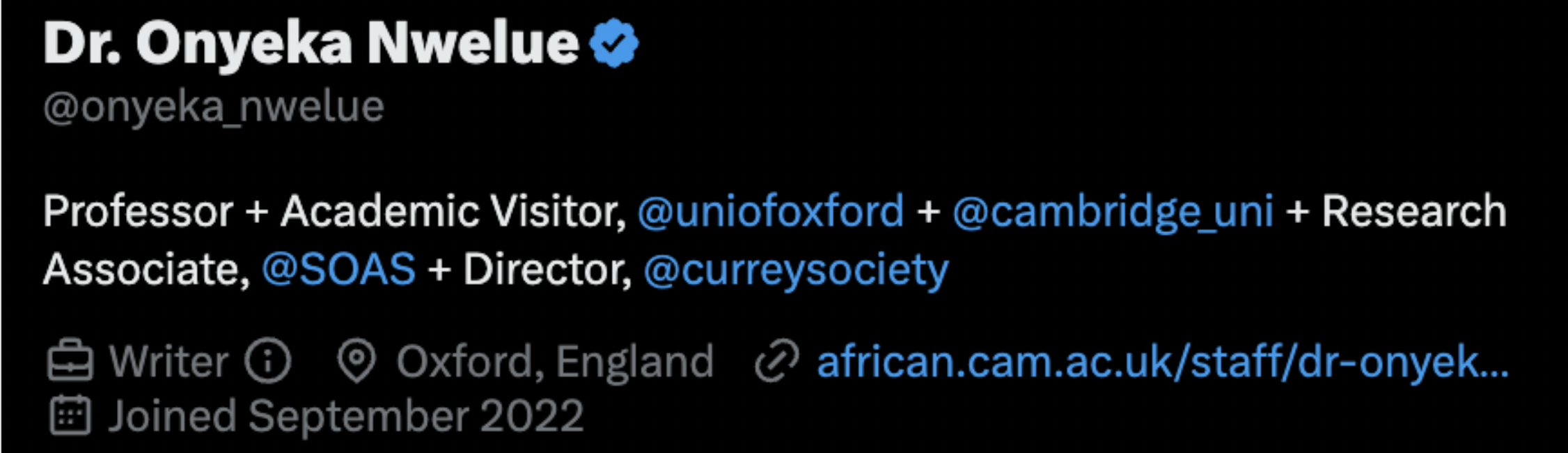
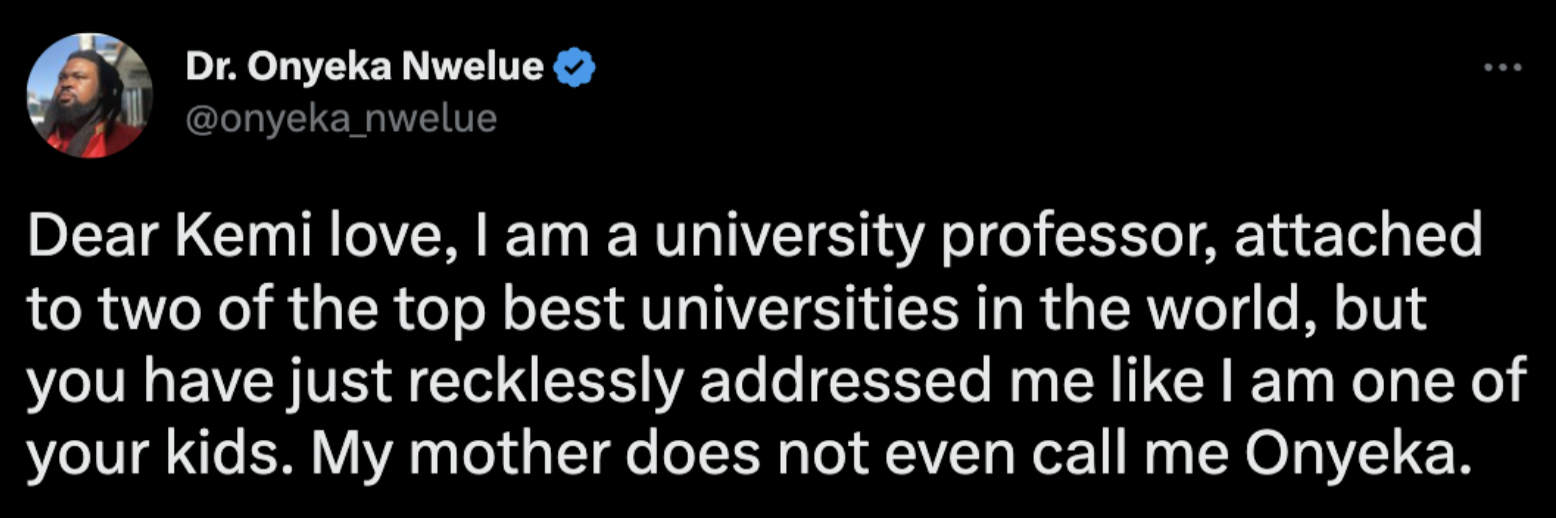
On 31st January 2023, Nwelue’s Instagram bio described him as “Prof of African Studies & Academic Visitor at University of Oxford & University of Cambridge” and on 1st February 2023, his Twitter bio said “Professor + Academic Visitor”, tagging the accounts of both universities. He also tweeted: “I am a university professor, attached to two of the top best universities in the world”, along with many other tweets where he referred to himself as a professor.
However, when asked to clarify his academic affiliations in light of this, Nwelue told Cherwell: “I have never ever posed as a professor at Oxford and Cambridge. My card says I am an Academic Visitor and that is exactly what I tell people. The accusation that I say I am a professor at Oxford is baseless.”
At Oxford, Academic Visitorship is set up on terms agreed between an individual and the University. The University confirmed that it does not employ Academic Visitors – they do not get paid, and are not expected to undertake duties for the University.
In his social media bios, Nwelue has also described himself as a Research Associate at the School of Oriental and African Studies (SOAS) in London, but SOAS confirmed to Cherwell that he is not listed as one of its Research Associates.
When asked by Cherwell to provide further details of his academic certifications, Nwelue said: “I have the equivalent of Master’s as a filmmaker. I also have an Honorary Doctorate. I have been Visiting / Research Fellow in other universities. Prior to Oxford, I made award-winning films and published a lot of books. [sic]”
At least twenty-two books have been published in Onyeka Nwelue’s name. Twenty of his books were either self-published or published by companies owned by Nwelue. Nine of these have been published since 2021, and of the seventeen listed on Amazon, thirteen have no consumer reviews.
The Tweets
During his time as an Academic Visitor at Oxford, Nwelue posted content on Twitter which was racist, classist, and misogynistic. These include Tweets where he stated: “being raised in a poor family chains you mentally to be stupid.”; “no poor person has any value”; “African women look like masquerades when they wear wigs and make up”; “Arabs are known to relish slavery and servitude”; China “is poor, filthy (smells a lot!) and overpopulated”; “Eastern Europeans…only produce pick-pockets and scammers”.
When asked about these tweets, Nwelue told Cherwell: “It was a social experiment to get feedback for a book I was working on. Apologies that they came off wrongly.” He denied being racist, misogynist, or classist.
The University of Oxford has not confirmed whether any background checks were carried out on Nwelue before he gained status as an Academic Visitor.
The James Currey Society
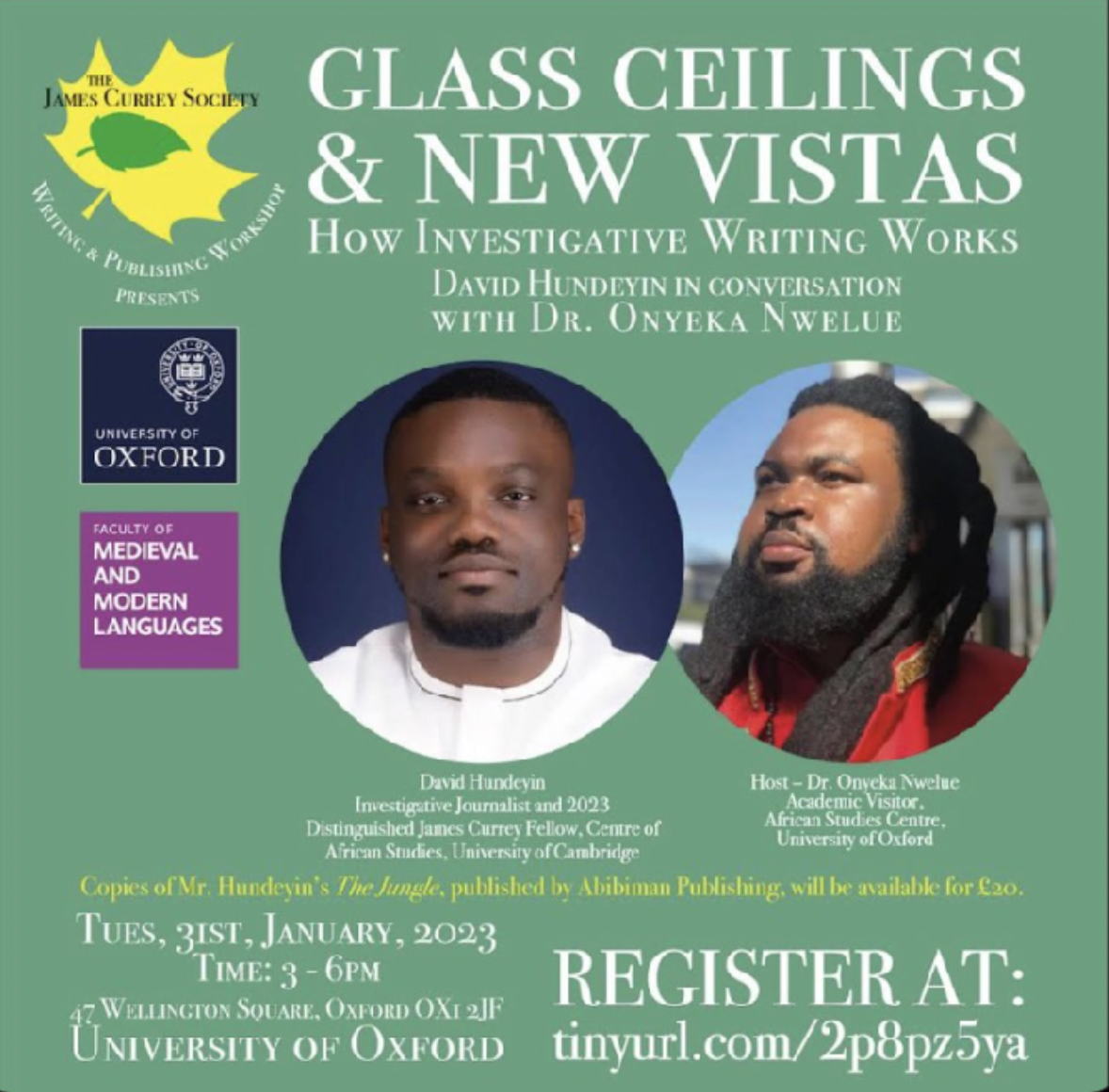
The event leading to the termination of Nwelue’s association with Oxford University was a book launch, which he hosted for the Nigerian blogger and author David Hundeyin in affiliation with the James Currey Society.
The James Currey Society was founded by Nwelue and incorporated as a for-profit company in May 2022, under the name of James Currey International. It is named after the South African book publisher James Currey and has sponsored African authors to attend both Oxford and Cambridge, through awards of the James Currey Fellowship. Nwelue told Cherwell that “[the Society] was established in partnership with the University of Oxford”. However, Oxford clarified: “The James Currey Fellowships are not awarded, funded, or run by the University”.
The current holder of the James Currey Fellowship at Oxford is Mitterand Okorie, who in 2022 authored a hagiographic account of Nwelue’s life titled, Onyeka Nwelue: A Troubled Life, published by Nwelue’s own publishing house Abibiman Publishers.
Meanwhile, the 2023 holder of the James Currey Fellowship at Cambridge was David Hundeyin, who maintains a controversial social media presence and has been a significant supporter of populist politician Peter Obi in this week’s Nigerian elections.
Cambridge told Cherwell: “Onyeka Nwelue and David Hundeyin are no longer associated with the University of Cambridge. Their connections were terminated following an investigation into their conduct”. They added: “The James Currey Fellowship is not administered, awarded, or funded by the University of Cambridge.”
The book launch
On 31st January, Nwelue and Hundeyin ran a book launch together on Oxford University premises for Hundeyin’s most recent book, also published with Abibiman Publishers. This was marketed through the James Currey Society and tickets were priced at £20 for Oxford students. One attendee told Cherwell: “I signed up to attend the event, and was surprised I had to pay £20 to attend. Events run by the African Studies Centre are usually free as they are catering towards students.” In addition to charging £20 for entry, copies of Hundeyin’s book were also on sale for a further £20 at the event.
The book launch was originally advertised as taking place in the African Studies Centre, but the location was changed at short notice to a room in the Faculty of Modern and Medieval Languages at Wellington Square.
Attendees of the event told Cherwell that misogynistic remarks made by its organisers and other audience members made them feel “incredibly uncomfortable”. One student said: “Explicitly sexist comments were made throughout by the speaker and audience which were not challenged and were in fact encouraged. … Comments made suggested that women slept their way to the top, which oppressed men, and that marrying a woman held you back in life”.
Another student added: “A key point of concern occurred when a question was asked by an attendee to Hundeyin concerning the issue of sexism and sexual harassment that African female journalists endure. Hundeyin replied with the implication that women who were of a fair complexion, tall and had long legs would not face hurdles to their career advancement in journalism.”
A third student said: “Nwelue laughed and agreed with [an audience member’s] comment about women being controlling. This made me feel angry and upset.”
When asked about the event, Nwelue told Cherwell: “I am very sorry if the students felt uncomfortable. About sexism and misogyny, I will never condone that. I am apologetic if that happened. Really sorry.”
In the marketing of the event, Nwelue used the Oxford University logo, the African Studies Centre logo and the MML logo without permission. Oxford told Cherwell: “The [Modern Languages] Faculty logo was used on the event publicity without authorisation. Once it was brought to the Faculty’s attention, the Faculty contacted the organiser to request removal of the Faculty’s logo from the publicity.”
What next?
On 20th February, Nwelue stepped down as Director of the James Currey Society, announcing his replacement as the Zimbabwean actor Charmaine Mujeri. He confirmed that he resigned following the termination of his Academic Visitorship, “so that [his] personal affiliation with the University of Oxford can end there”. It is unclear if the James Currey Fellowships at Oxford and Cambridge will continue or be awarded again in future.
Nwelue has also written a letter to Oxford’s Vice Chancellor Professor Irene Tracy, seen by Cherwell, in which he unsuccessfully appealed the termination of his Academic Visitorship.
Yesterday, Nwelue locked his Twitter account after tweeting: “I am leaving social media this evening. It will be for long. [sic]. I might delete all my accounts as well. Bless you all!”
Investigations into Nwelue’s conduct during his time at Oxford University are ongoing.
Libraries: at university, they suggest study spaces and endless repositories of knowledge. They are “gates to the future“, in Neil Gaiman’s words, though lately, they have also been warm havens for visitors seeking shelter.
What with dissertation season, I have retreated to these familiar rooms more often than ever. My favourites in Oxford are complete opposites. There is Duke Humpfrey’s in the Bodleian, which preserves its atmosphere of studied mystery even though it famously doubled as the Hogwarts library in the Harry Potter films. The other is the Oxfordshire County Library near Westgate – modern, glass-fronted, recklessly reaching outwards.
A term and a little more left, then perhaps I shall never see them again. It’s funny how in this city of libraries, it does not feel like enough. This is not about the libraries of Oxford, but the trail that leads to them.
The first library I lived in and loved looked huge and never-ending then, and so it remains, for I have not gone back. Torridon Library in Lewisham with its red brick, high ceilings, and stained-glass windows gave one the confused sense of a church. When I was small, I assumed all libraries were like that – cosy yet imposing, treasured but free. There were fancy columns by its smart wooden door and a dome giving way to the sky. Gaston Bachelard, that old philosophising romantic, writes of the ‘compact centre of daydreams’ in the childhood home, which informs one’s later experiences of space; I think there is something similar to be said for the first library, in its harbouring of dreams.
Libraries provoke you to reach further. Bachelard was right about the details that “have engraved in our memories a slight difference of level” in the childhood home, where a room “was not only a door, but a door plus three steps”. In the first library too, memories of spaces and paths are heightened – though there was but a single step into my childhood library, though a vivid one. It was the library, you raced to get there first, you leapt up and waited, knowing you were there. Inside, the proud triumph of having read all the Rainbow Fairy books on that second shelf in all their sparkling colours, the dull dismay when a friend passes airily by and says, ‘Oh yes, I read those ages ago’. For words are tricky, slippery things, and I took longer then – having reading sessions while others were at Assembly, and language support classes where one learnt perplexing words like ‘tadpole’.
You learn greed at the library. They aid and abet you, those librarians: Take what you want, they say, with genial smiles that know very well what they are doing.
To make you love books – they take up the goal with relish. “This, a brilliant book, and have you read…?” Summer reading challenges where, for whatever reason, you end up with a pack of monsters: Top Trumps cards with round teeth and too many eyes. Racing through Tintin comics and Jacqueline Wilson paperbacks, while Dad disappears into one of those clunky computers at the side. Freedom of obsession is allowed and to be cherished.
School libraries were in on the plot, and I remember the library in junior school, which you were allowed to enter with a laminated orange pass – like a Golden Ticket but mostly for skiving off class under the guise of virtuous literary quests. You can’t help discovering things even so, and near the door is the exciting ‘New Books’ shelf where once, rashly taking up the first book I saw, its cover deep red with a green jewel, I found Eva Ibbotson.
Birds sometimes flew into my secondary school library – a pair of doves, beady-eyed and perpetually confused, hopping along the books. They were not meant to be there, of course. “Should shoot them”, a teacher grumbled once, but the librarian always managed to coax them out. A storybook librarian, cosy and kindly with an endless supply of chocolate biscuits which she called, with a touch of delicious eeriness, ‘brain food’. The shelves were placed so the light fell unevenly between them. I like libraries where one’s allowed to hide.
Mrs Dalloway was there, concealed in a worn blue book without its cover. Woolf pointed slyly to Dostoevsky on a high shelf, a line of Jane Austen, those heavy red volumes of War and Peace peering challengingly down at you from all the way up there. Read. Memorising page numbers so you could finish the book next time, before the bell.
The local library at home, after we moved, is incredibly tiny but still manages to have an endless supply of Agatha Christie novels. The Central Library in town feels labyrinthine, a huge box of mystery sweets, daring you to try them all.
You learn greed and stay hungry.
Here we are in a city of libraries, and it is never enough. But I owe so much to those old libraries; I would not have made it to Oxford without them.
Each term, the end of 7th week heralds Oxford Union elections. Cherwell sat down with this term’s candidates for the presidency to learn more about them, their reasons for running, and visions for the Union.
Disha Hegde, St John’s College, 2nd year History
What’s your main motivation to run for President of the Oxford Union?
I got my Union membership after watching its debate videos on YouTube and thought it would be a great opportunity to meet inspirational people. I decided not to get involved for the first few weeks at Oxford because the Union reputation is not great. But, I gave it a go and it’s given me access to amazing opportunities: I’ve debated alongside Stephen Fry, met Anthony Joshua, and questioned Matt Hancock. So I saw the problems in the Union but I also saw the things the Union does really well. Now I want to improve outreach and inclusion, the quality of our events (we rarely hold controversial speakers to account adequately), and our financial stability. As well, I’m the only candidate who serves as an officer and I’m from a “non-traditional” background.
What commitments and experience do you have outside the Union and how do you think that would impact your role as President?
I served as Co-Chair of the Women*’s Campaign, where I’ve lobbied colleges to improve their policies regarding women and gender minorities. This has given me a really good insight into the institutional problems women* face. The same problems exist in the Union; we do need policy change. I’m also a trustee of the mental health charity, The Mix which has helped understand how to tackle mental health from an institutional perspective.
Every president has a manifesto, but lots of voters won’t read them. If you could highlight two manifesto points that you think every Oxford student should hear, what would they be?
I want to improve the experience of the Union for the ordinary member. I’ve done that partly through introducing Member Question submissions and changing the way the interview process works. I want to do it further by introducing suggestions, open surgeries so the people who decide how the Union works aren’t restricted to the friends of the committee.
I also want to make the Union less of an exclusive society and integrate it more with Oxford life. So I want to work with more societies and run ‘how to get involved’ workshops to help reach under-represented groups. I want to help more people to get access to the incredible opportunities I’ve had access to.
If you could invite any three speakers to the Union, who would they be?
Rihanna
Alexandria Ocasio-Cortez
Emma Raducanu
Juan Dávila, St John’s College, 4th year Engineering
What’s your main motivation to run for President of the Oxford Union?
I like fixing things and I think the Union is broken. I’m running under #Come, funny as it is – and I do think it’s hilarious. The Union used to be more at the centre of Oxford life, so we should continue to drive membership to make it the case again.
Every president has a manifesto, but lots of voters won’t read them. If you could highlight one manifesto point that you think every Oxford student should hear, what would they be?
I have entered the Union building more than any other candidate. I like that pledge because I had to prove it; it shows something. I’ve got 905 more proven instances of entering the Union than any other candidate. It demonstrates how much I want this.
What commitments and experience do you have outside the Union and how do you think that would impact your role as President?
I’ve been alive more than any other candidate so, in some sense, I’ve got more experience than any of them. I’ve been a member longer than anyone else as well. I’ve seen good and bad presidents; I’ve seen it all.
I do have one claim in my manifesto which literally says “INSERT CLAIM HERE”. Hilarious, but what does it mean? It means that I want to listen. I won’t be a complete candidate until you tell me what you guys want. It is a commitment to have an open-door policy. My manifesto is built around as many people as possible.
If you could invite any three speakers to the Union, who would they be?
The Pope
Lee Mack (he is the fastest brain I’ve ever seen)
The MythBusters (they’re the reason I’m an engineer)
Chloe Glynn, St Anne’s College, final year Geography
What’s your main motivation to run for President of the Oxford Union?
I got involved in the Union after Hilary in my first year, after a term went by when I wasn’t going to get involved at all because the society didn’t have a good reputation. But I would rather change the Union from the inside, I’d rather see it be more representative of people, and uphold free speech in a way where we have a right to free speech and others the right to be offended. The best way to do that now would be to have better relationships with people outside and be able to collaborate with people and other societies. I got involved in Committee because I wanted to find a way to uphold free speech where everyone could feel comfortable with it. And play my own part in making free speech for everyone. Not just the one side.
Every president has a manifesto, but lots of voters won’t read them. If you could highlight two manifesto points that you think every Oxford student should hear, what would they be?
Anyone can write a manifesto. I think the difference between me and the other candidate is the fact that I’ve run the daily operations. My slate, it’s not a slate of hacks, which we have seen time and time again, it’s myself, who has run the operations and knows the events inside and out, and the staff and committee management. This is a slate of competence, and that experience is useful. I hope there’s an appeal in trying to find a different way of running the union with members first, because you’re voting for somebody who has been around the members and had those one-on-one conversations with them everyday.
Also, I’m really excited to pledge more alumni networking events and mentorship, to make a formal mentor program to aid social mobility and the perks of being a members club.
What commitments and experience do you have outside the Union and how do you think that would impact your role as President?
I think that I have had certain personal experiences and my background is quite interesting. My Mum is Indian, but I’m very white presenting. I came out as gay and it was a sort of thing where overnight you’re suddenly viewed differently, and you get different comments. Debates should go ahread, we should have those conversations, but in a way that’s respectful to everyone. My background was not a background where you would think she’s going to come out and get into Oxford. But, I don’t want that to be the reason that people vote for me. It’s about competence. I think those experiences lend themselves to an immense desire to want to do more for the members, to do more for people from non-traditional backgrounds. I think when you have more members from diverse backgrounds that only helps free speech, because it’s free speech for everyone.
If you could invite any three speakers to the Union, who would they be?
Boris Johnson
Taylor Swift
The English Lionesses
(Maybe also Jean Whitehorse, a Native American anti-sterilisation activist if I can slip in a 4th!)
Voting will take place in the Union on Friday, March 3rd.
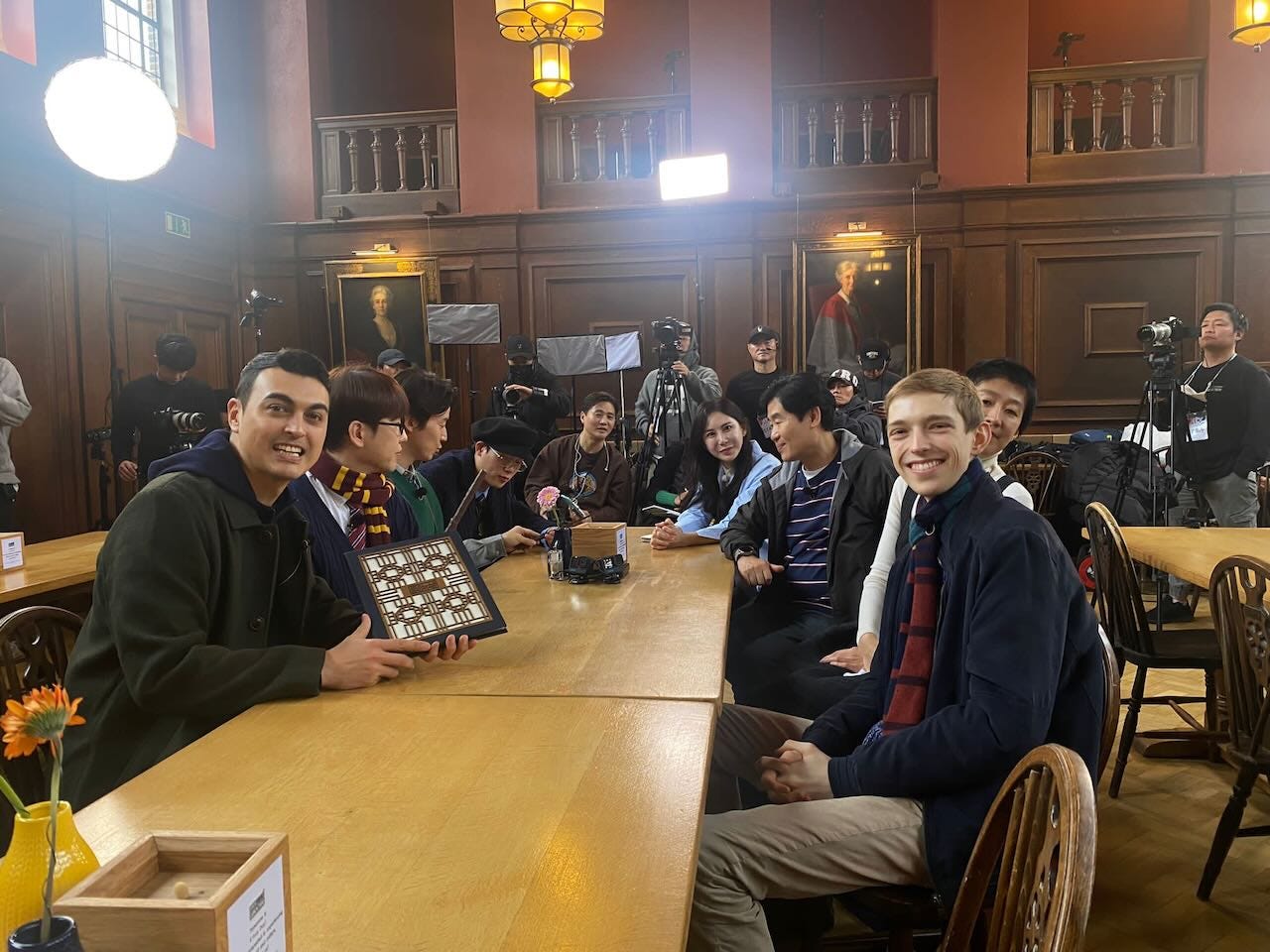
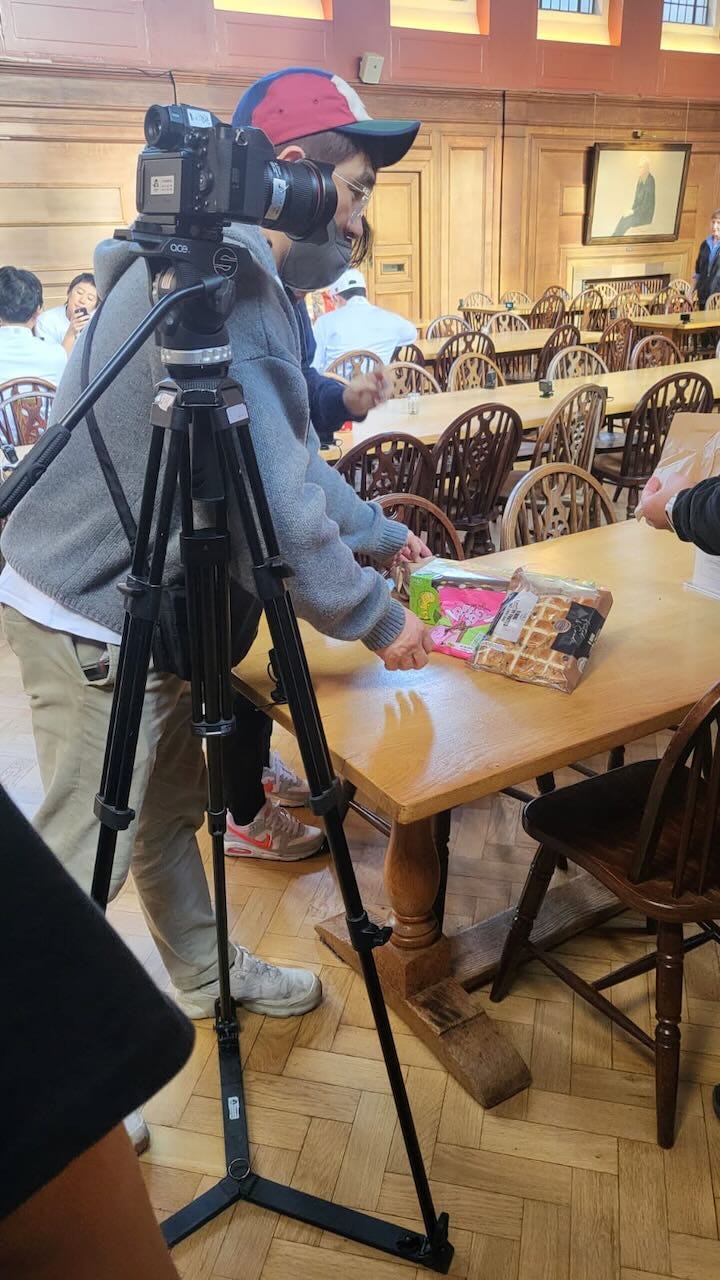
South Korean TV channel JTBC made the trip to Oxford earlier this month to film their new show, ‘Korean Lunch Tray’. Accompanied by star chef Lee Yeon Bok, comedians, actresses, and K-pop stars from the group Monsta X, I got a chance to sit down with the stars and chat all things food. And that was before they cooked for hundreds at Lady Margaret Hall the next day…
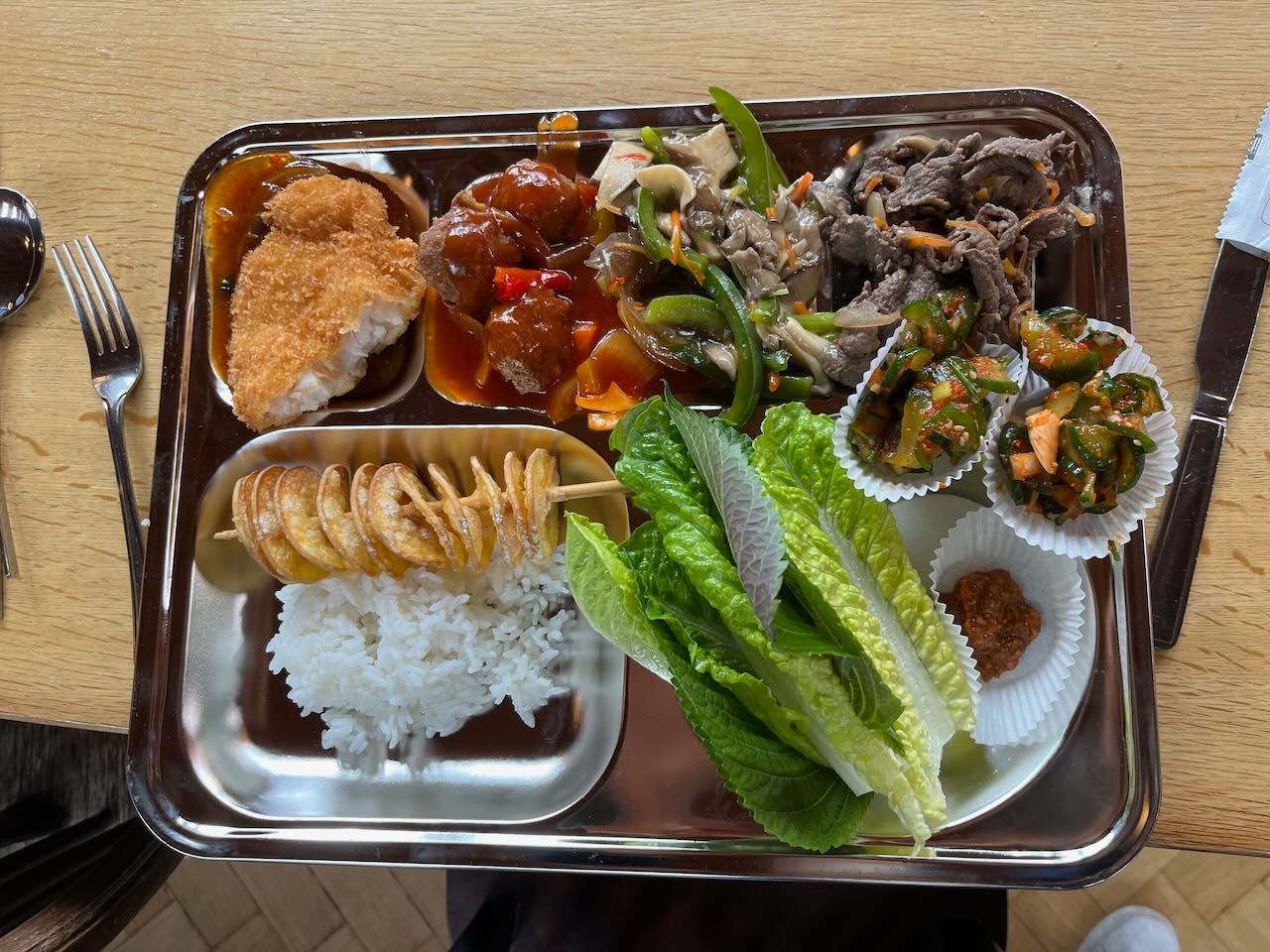
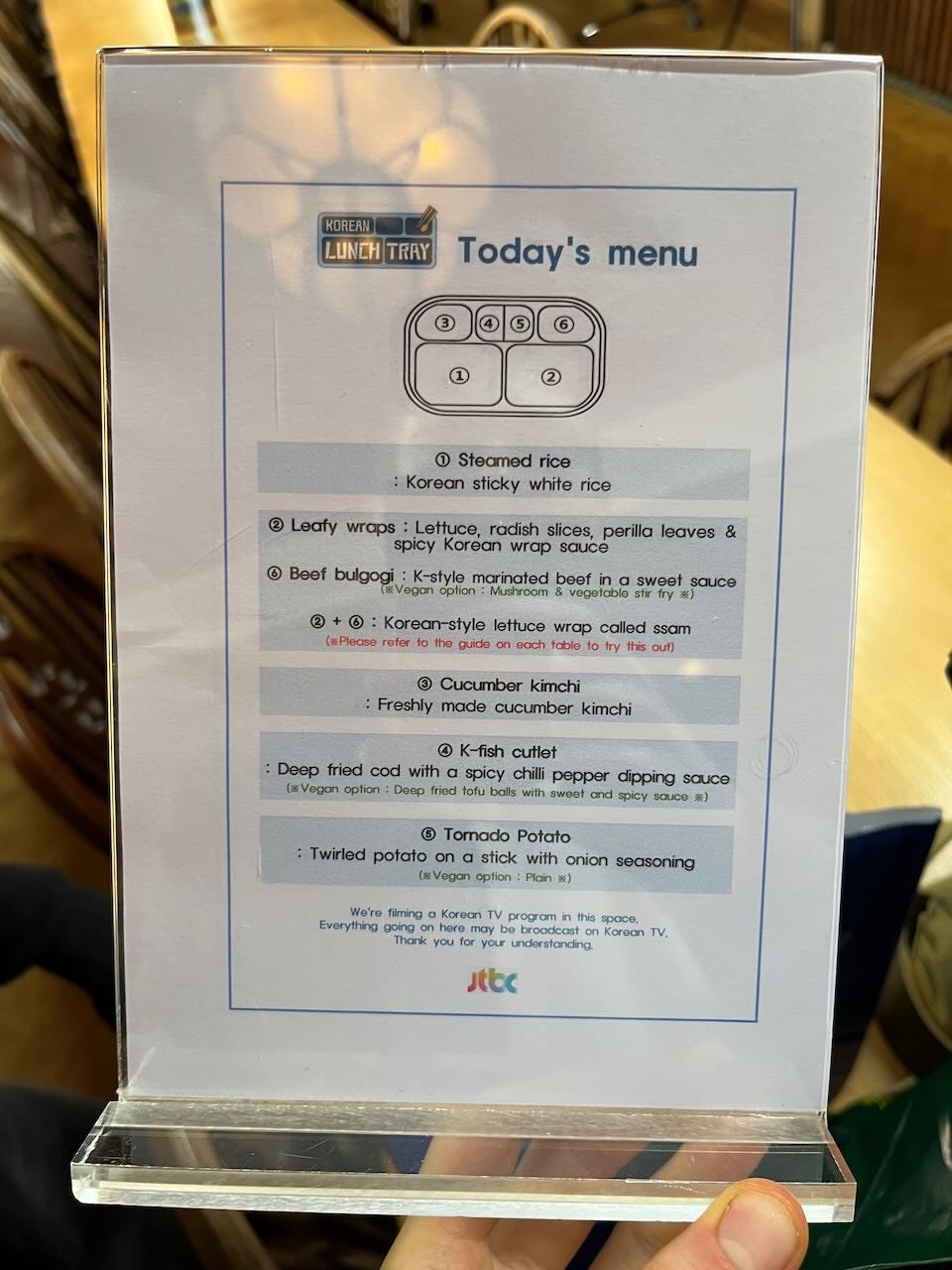
The programme has a fascinating concept. Celebrity chef Lee Yeon Bok, Monsta X singer Joo Heon, supermodel and comedian Hong Jin Kyeong, comic duo Nam Chang Hee and Heo Kyeong Hwan, and YouTuber Peter Bint form the cast. Together, they travel around the world, reproducing Korean food and school lunches (served in the trays pictured) for different people around the world. So, after Wolves FC the day before, the 75-strong crew took over Lady Margaret Hall for three days of planning, interviews, filming, and an Asian lunch extravaganza!
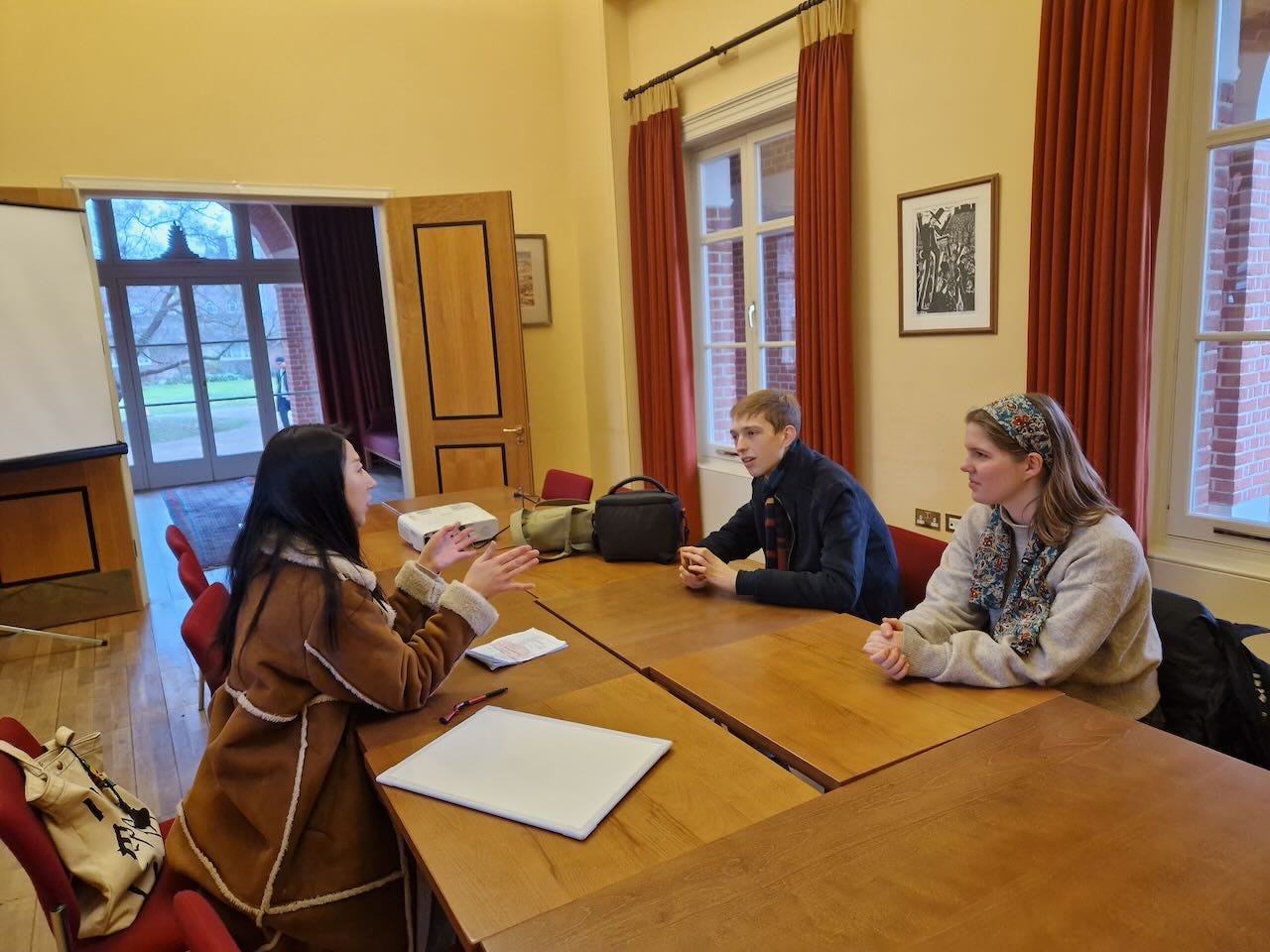
On the first day I was invited to appear on the programme, conducting an interview with the full cast of stars on a huge variety of topics from fish and chips to how Korean food is viewed in the UK. Over the course of 45 minutes, I was struck by the genuine fascination and interest in British food and culture. All of the team are big foodies and they were desperate to try classic British dishes such as fish and chips.
Image courtesy of Sungwon Han
I wasn’t surprised to hear about the perception of British food in South Korea. Descriptions included ‘bland, flavourless, and boring’, and it was hard to disagree! However, I was also able to provide an insight to them into the ‘new British cuisine’ that is currently flourishing across the country. The plethora of farm-to-table sites and the embracing of different cultural influences was something alien and fascinating to them.
In terms of Korean food in the UK, they had been shocked by how receptive people had been. They found students especially were more than keen to sample Korean specialities and the queue at lunch the next day certainly backed that up! In London and Wolverhampton they noted that people were more reluctant. We also got into the nuanced differences between Asian cuisines and how pan-Asian high street chains such as Wagamma’s and Banana Tree have led to the British market often becoming unaware of just how much dishes vary from country to country.
The next day, LMH dining hall played host to the main event — lunch. The crew got in the kitchen and managed to provide a remarkable selection of dishes for the hundreds of students and staff from across the university. On the menu were many of the Korean classics. Korean lettuce wraps and sticky rice formed the base and the perilla leaves and radish alongside the lettuce made them stand out as genuinely unique. The staple of beef bulgogi came with them and tables had guides about how to wrap and eat for the most authentic experience!
The lunch tray
Elsewhere, the handmade kimchi came with cucumber and added a whole different level of flavour and crunch to the normal cabbage. Aside from that was the Korean take on fish and chips — suffice to say I prefer it to the English! Lightly dusted in breadcrumbs the flavour of the fish was allowed to flourish. Tornado potatoes were of course not left out — the new festival food staple crisp and dusted in onion salt, simply perfect.
We did of course reciprocate the favour with a collection of English foods and treats of our own. An obligatory Collin the Caterpillar and a bag of Percy Pigs were far too sweet for the Korean taste buds though! Hot cross buns were slightly better received but the blue cows and goat cheeses from the Oxford Cheese Co. went too far the other way with salt proving a problem.
In all, the few days were a truly surreal experience. It was an absolute pleasure to get so much time interviewing such big stars and I was genuinely impressed by their interest and fascination with food culture in the UK. No doubt the programme will go down well, but in the meantime, the crowd at Lady Margaret Hall certainly enjoyed the show!
Max: Could you please give us a brief description of what Bare is about and why you have decided to stage it now?
Mina: Bare explores a variety of themes, from body image to sexuality to familial relations, all under the inescapable umbrella of religion. It lays bare its characters, their insecurities and their fears, and doesn’t shy away from the moral grey area they all occupy. Following Peter and Jason’s clandestine relationship in their final year of school, the musical takes its time to explore everyone else in their lives as well – there are no two- dimensional characters here, and that’s what makes it so approachable and engaging to almost anyone!
Felix: Bare is about a gay relationship in a religious boarding school and follows the story of the two main protagonists as they fall in love and then ultimately fall apart as they struggle to come to terms with their sexuality and the views of those around them. It’s rare to have a musical where the gay relationship is more than just a subplot and Bare obviously places it at the centre of everything.
How have you found the rehearsal process and what’s been your favourite moment?
Peter: I’ve loved every minute of rehearsals for so many different reasons. The show has such an incredible score and the music is so much fun to sing; the characters have so many layers and such intricate relationships with one another, there’s so much to sink your teeth into and the acting is a really interesting challenge. But mostly, I think it comes down to the group of people working on the show. It feels like such a cohesive group and the directorial team have put in a lot of effort to make sure that we break down the barriers between cast and crew to form a single unit, all pulling in the same direction. And that’s exactly how it feels: everyone supporting each other and creating a space where everyone’s talents can shine. I have two favourite moments. The first was two weeks ago at our first sitzprobe. It was our first time hearing the band live and singing the entire show from start to finish. It just hit so different to all the other rehearsals and I had goosebumps the whole way through; everyone sounds insane. Then, tonight, we had our first run in the O’Reilly. It’s an emotional show—I won’t spoil the second act, don’t worry—but we finished, several of us in tears, and just held each other for a few minutes. There was just this collective breath of ‘wow, this show is something special’, feeling so lucky that we all get to do it together, and this simmering excitement at the prospect of sharing our hard work with audiences next week. We can’t wait.
Gianni: I’ve never been in any type of theatre production before, but have always wanted to be in a musical since I was young, so initially I was very nervous to meet everyone else at the first rehearsal. Those nerves thankfully vanished when I met our lovely cast and crew, and how willing everyone was to make sure that no one was left behind, no matter their previous level of experience. Since then, especially as I got to know the musical better, rehearsals have been so enjoyable and are always made better by the cast and crew. My favourite rehearsal moment so far has been the first full run-through of the show. It was incredible to see all the songs finally connect together and form a cohesive storyline, and it just heightened the excitement and level of emotion we all felt.
How similar are you to your character in real life?
Gianni: As a queer person raised in a Catholic family, I certainly relate to some of the challenges my character (Peter) faces. Coming to terms with your identity is scary, and even after that there are sadly still many challenges queer people face. In real life, I’m grateful to have a very accepting and supportive mum, so it has been interesting to explore the nuances of Peter’s relationship with his mother, especially regarding family pressures and the influence of religion.
Peter: Honestly, if I was anyone in the central love story, I would be Peter, not Jason. I’ve always been more introverted, immersed in my own thoughts, overthinking everything and hesitant to express myself, so I really relate to that part of Peter in the show. Jason is always so brash, bold and quick to take action; he never really thinks before he acts—could never be me.
What is your favourite song in the show and why?
Mina: Once Upon a Time brings me to tears every time; but if I need a bit of a pick me up – Confession is probably what I’d go for; that may just be because I’m now just imagining our cast doing their amazing choreo to it!
Felix: Currently really love Absolution as Gianni gets a chance to show off his incredible vocal and emotional acting skills.
Peter: This is such a difficult question because this show is filled with so many absolute bops. You & I is definitely the most fun to perform, it’s so cheeky and it captures the nature of undercover romance so perfectly. One Kiss has no right to sound as sexy as it does, and Are You There just slaps from start to finish. But, I think I might have to say that Bare is my all time favourite. It’s a duet between Peter and Jason at the emotional climax of the show, it’s the first time we see them freely and unabashedly express their love for each other and the music delivers. There’s a reason it’s the titular song, just saying.
Gianni: My favourite song has to be “Warning”, performed by the incredible Eleanor Dunlop (playing Claire, Peter’s mother, in the musical). I genuinely had goosebumps after we ran this song at the sitzprobe. I think the lyrics are very relatable to any parent who is trying to support their child through something which they struggle to understand, and Eleanor’s voice makes it hit even harder.
Why should people come and see the show?
Felix: For the insane hip-hop/street dance (thanks to our amazing choreographer Tiggy!) [Tiggy Jones], incredible pop/rock opera music and a hugely talented cast and crew!
Mina: Simply to feel something. No, really: if you want to laugh, cry, be shocked, scared, and generally in your feelings this is the show to come to. Also some beautiful acting, show-stopping choreography, and mesmerising singing!
Gianni: Though Bare highlights the love story of Peter and Jason (we love queer love), it also explores the lives of numerous other characters, and how the unfolding events affect everyone in different ways. I like to think every audience member will uniquely relate to the show, and that’s the beauty of it. Come see us 1st-4th March at the Keble O’Reilly!
Peter: So few shows put a queer love story in the spotlight, it’s really relatable and it’s so empowering to see it take centre stage. You’ll laugh, you’ll cry, and you’ll sing the whole way home. And you’ll be supporting the amazing work of a wonderful team of student creatives. Plus, it’s gay. Are you really gonna tell me you have better 7th week plans?
Bare opens tomorrow at the Keble O’Reilly until 4th March.
It was impossible to miss the commotion of February 18th. Libertarians, climate-deniers, and conspiracy theorists alike rallied in Broad Street to protest the “globalist agenda” of the Oxfordshire County Council. As I left my room on that morning, the first hint that something unusual was afoot was the police drone being launched out of the front quad of my college. Approaching the porters’ lodge, the sound of Billy Joel’s “We Didn’t Start the Fire” became increasingly audible, along with a buzz of voices. By this time, I had an idea of what I was about to stumble upon. As a native citizen of Oxford, I have been following closely the backlash against the County Council’s Low Traffic Neighbourhoods and traffic filters, which have become controversial issues beyond the city’s borders. They have even attracted criticism from abroad, with right-wing figures such as Jordan Peterson describing the Oxfordshire County Council as “idiot tyrannical bureaucrats”. I was therefore unsurprised, upon leaving college, to see a “don’t tread on me” flag fluttering above the crowd. I was even less surprised to discover that many of the protesters were not even Oxford residents. Most of the opposition to the Council has been external, and typically based on cynical misrepresentations of what the policies are, and what they seek to achieve. I soon found myself debating a man who believed that 15-minute cities are the thin end of the wedge for total global domination by the World Economic Forum. He admitted that he was not a local, but asserted that Oxford’s policies are a global issue. Bewildered, I scuttled off to the Bodleian, where – the noise of the protesters still distractingly audible through the window – I asked myself: how on earth did we get here?
15-Minute cities: “climate lockdown” or local vision?
The first thing that should be noted is the distinction between the policies of the City Council, and the County Council. The idea of 15-minute cities is a key element of the City Council’s “Local Plan 2040”, a broad vision for the development of the city over the next 20 years, covering housing, employment, biodiversity, inequality, and culture. According to the plan, a 15-minute city is one which is “planned in such a way as to optimise the opportunity for people to be able to reach a wide range of facilities that they need to live well and healthily within a 15-minute walk of their home”. Although this concept is tied to the goal of reducing car use, the plan does not include any references to the traffic restriction policies, which are the purview of the County, not City Council. Claims from conspiracy theorists that the County Council’s policies are attempts to “lock citizens in” their 15-minute neighbourhood are completely misguided.
So what exactly are the Council’s policies?
The central issue of the February 18th protests was the County Council’s proposal to introduce six new traffic filters on key connecting roads around the city (see below). It is a part of the Central Oxfordshire Travel Plan, whose goals include the reduction of car journeys, a net-zero transport network, and zero road fatalities. This plan does include references to the concept of a 20-minute city, but does not designate 20-minute zones, as conspiracy theorists claim. Traffic filters are a way of controlling the number and type of vehicles that pass through a certain point on the road, specifically during the hours between 7am and 7pm. These are not physical barriers blocking the road, as can be found in some streets in Cowley. Instead, automatic number plate recognition (ANPR) cameras monitor cars passing through, with a fine of £70 issued to drivers who are not exempt. The primary goal of this scheme is to reduce unnecessary car journeys within the city, so there are numerous exceptions made to give free passage to buses, taxis, business goods vehicles, care workers and blue badge holders. Also, residents of the city are permitted 100 days per year in which they can travel through the filters with no charge. When the trial period of the scheme begins, it will be accompanied by a public consultation to assess the impact and public support.
“You will remain in your 15 minute zone. If your children are lucky enough to be granted the privilege by the elites running your town or city, they too will raise their children in the same property and 15 minute zone that they were raised in.”
This image was created by the community activist group Headington Liveable Streets (an organisation in favour of the County Council’s measures to control traffic), to help visualise the areas which will be mutually inaccessible (directly) by car after the changes. It is still possible to drive indirectly between any of these areas free of charge via the bypass road around the city. But for many of the millions of people who saw the tweet, this detail (along with many other important nuances) was completely lost. As a consequence, these outsiders to the local politics of Oxford have been given evidence for their conspiracy theory of authoritarian government control. Similarly birthed out of the Chinese whispers-like chain of internet misinformation was the claim that 93% of Oxford residents had voted against the proposal. The origins of this idea lie in the first public consultation on the proposal, in which a free-text box was provided to give respondents the opportunity to give their comments on the benefits of the scheme. In this box, 7% of respondents wrote comments categorised as supportive the scheme. Keep in mind, this was by no means a binary poll – by comparison, 8% of the comments were categorised as disagreeing with the scheme. Yet in the mind of the bad-faith anti-traffic filter activist, 100% minus 7% support equals 93% opposition. This becomes a tweet, which becomes a retweet, followed by comments. Soon people are repeating the idea that “93% said no” to the traffic filters. People then read this, and assume that there had been a formal poll on the issue. This morphs into the lie that 93% of Oxford residents had voted against the proposal, the type of lie that drives thousands to take to the streets in protest.
Are there legitimate concerns about traffic filters?
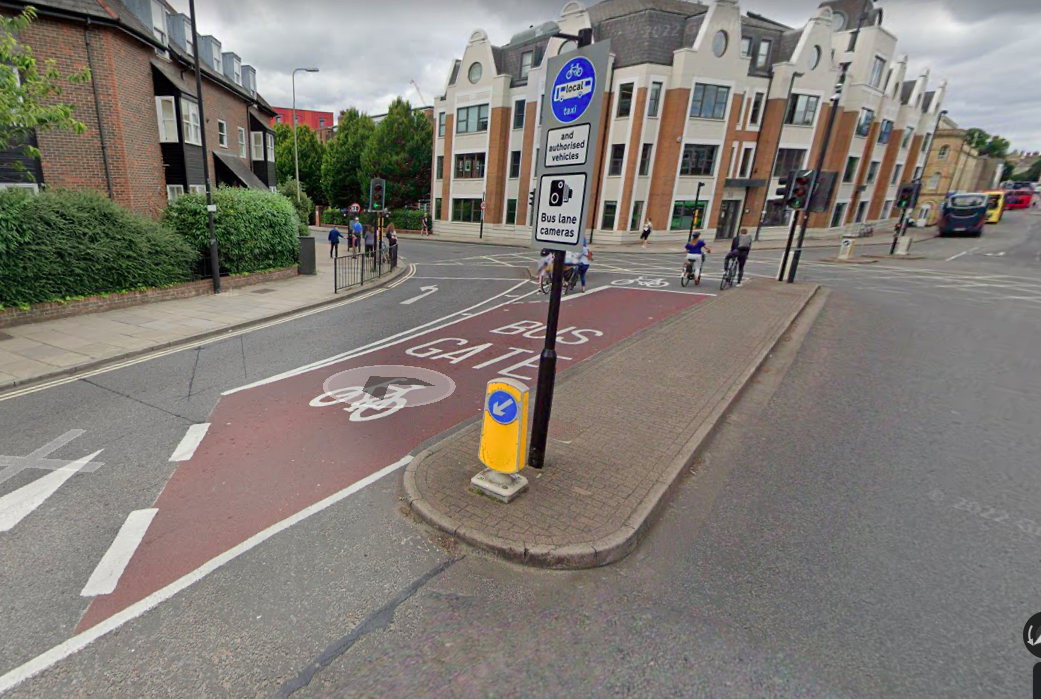
I am personally a strong supporter of the plan, coming from one of the 30% of Oxford households that does not own a car. I believe that the best thing for the city’s future is a move away from driving, and towards public transport, cycling, and walking. For evidence of the effectiveness of traffic filters, look no further than Oxford’s city centre, whose borders are dutifully guarded by bus gates (which function in a similar way, see below). As a consequence, the streets are much safer for pedestrians and cyclists, bus journeys are much faster, and the overall atmosphere of the town is more pleasant. This said, some people have legitimate reasons to be sceptical of the traffic restriction proposals, which are often drowned out by the unhinged whining of conspiracy theorists.
Image Credit: Google Maps/ CC 1.0
The traffic filters will undoubtedly increase journey times for those who choose to travel around the city by car, as many will continue to do, unless bus services are improved in tandem. Of course, for people with mobility issues (many of whom do not qualify for a blue badge), walking, cycling, or taking public transport is much more difficult, and they may still need to travel by car. There have concerns from local businesses that the traffic filters will lead discourage potential customers from driving to their premises, resulting in a loss of revenue. Some have criticised the plan for not including exemptions for electric vehicles, which are quieter and do not pollute the air.
When you cut through the noxious fog of social media hyperbole, a genuine, honest debate is uncovered. As students, we are part-time citizens of Oxford, and have a right to be a part of it. Whether or not you support the traffic filters, remember that (if you are a citizen of Britain, the Commonwealth, Irish Republic or an EU member state) you are able to register to vote in Oxford, and can participate in the City and County Council elections. The next time an rowdy mob comes to distract you from your essay crisis, remember that you have just as much a right to make your voice heard!
Food, or feeding people, is often cited as a “love language”. Getting your loved ones together round a table to serve them a meal, nourish them, and enjoy food together is an act that resonates with a lot of people. Online declarations are frequently made that cooking for others is the ultimate expression of love. Whilst it may be somewhat corny to announce food to be your love language, it is clearly meaningful to many people, and the act of sharing food has even been shown to have a multitude of health benefits.
In 2019, I moved into a house I had found on SpareRoom. I got on well with the other tenants, and soon after, we began taking turns to cook for one another. We were all working full time, so it made sense that we’d each cook one night per week, ensuring that everyone had a good meal every evening. Eating together quickly became a major part of our weekly routine — four or five times a week we would lay the table and sit down to share food. Over time this habit became indispensable. We all agreed that we were eating better than we had previously and we looked forward to unwinding together after a long day of work. Cooking for an audience was a great motivator to experiment with new recipes and different types of food. As well as improving our diets and eating habits, we agreed that eating together generally improved our quality of life.
Studies into social eating have indicated that sharing meals has a number of health benefits, both emotional and physical. Regular social eating has been shown to result in greater satisfaction with life and closer ties to community, which is hardly surprising. With my housemates, evening meals were our time to catch up. Around the table was where our friendship was formed, and where we shared our successes, difficulties and supported one another. As the cliché goes, we were expressing the love and care in our friendship by feeding one another.
Now that I’ve moved into graduate halls in Oxford, I find myself guilty of taking shortcuts with my cooking and rushing my food when eating. These days, I’m only ever cooking for one and I don’t enjoy the process as much as I used to. When I do eat alone at home, I sit at the wood-effect linoleum bar in the kitchen, on a too-high barstool, towering over my food. I watch Netflix on my phone as I shovel rice into my mouth. Many of us are guilty of eating too quickly, and for me, this is never more true than when I eat alone. An hour of cooking concludes with a ten-minute meal that I don’t take time to enjoy. The habits I had with my former housemates are nowhere to be seen.
It has also been shown that social eating has physical health benefits, as it reduces the pace at which we eat. We are distracted by the company and as a result we are more likely to eat a little slower. Eating too quickly can cause increased blood sugar spikes, which are linked to problems with organs such as the heart and the kidneys. Therefore eating slowly, as we do when eating socially, can have a long-term positive impact on your physical health.
Additionally, there are studies linking social eating to better nutritional intake. Whilst this can’t be true in every circumstance, nutrition being dependent on what we put in our food, it makes sense that sharing the cooking in a household might result in more diverse meals and varied food types. In our house, sharing the responsibility for mealtimes gave us the time and space to cook more diverse meals. As each of us only needed to cook once or twice a week, we each made more effort to cook tastier and more varied meals. For us at least, we all noticed that we were eating far more healthily as a result.
Therefore, as well as being an ideal antidote to the “epidemic of loneliness” caused by highly individualised lifestyles, social eating appears to be good for your physical health. But, with very little time on their hands, is it really possible for busy Oxford students to reap the benefits of eating socially? There are a few possible solutions.
For those who usually eat alone at home, it may be better to eat in your college dining hall a few times a week. However, if you don’t enjoy the food in your hall, or if you live too far away for it to be convenient, then lunch breaks with friends are a better option. Maybe sitting on the grass outside the Rad Cam or in University Parks in the summer with a sandwich and coffee, or in one of the food stalls in the Covered Market when it’s cold or raining. And, whilst it isn’t ideal, sharing meals digitally over FaceTime or Zoom has been shown to have some of the benefits of physically eating together. Coordinating meals with faraway partners and friends could make for a cute long-distance date. Lastly… perhaps occasionally, we can find the time to cook a meal for our friends. Come back for part 2 where I find out if it is really possible to cook for and feed my friends in my small graduate accommodation kitchen!
Voting has opened for the referendum on whether Oxford Student Union should remain affiliated with the National Union of Students (NUS). Voting will close at 6pm on 1st March.
The referendum asks students: “Oxford SU is currently affiliated to the National Union of Students (United Kingdom). Should it continue to be affiliated: yes or no?”
The two official campaigns for this referendum are called ‘Vote YES to NUS’ and ‘Say No to NUS’.
‘Vote YES to NUS’ is led by Anas Dayeh, of St John’s College. ‘Say No to NUS’ is co-headed by Ciaron Tobin, of Magdalen College, and Caleb van Ryneveld, of Christ Church College.
For this referendum, a new by-law has been issued that stipulates that at least 4% of SU members must turnout to vote otherwise the referendum’s result, whatever it may be, will be deemed invalid and have no effect. Considering the recent SU elections had only a 10% turnout, failing to hit this threshold seems like a real possibility.
Say No to NUS believes the NUS is “An Institution in Crisis”. According to their press release: “There is currently no President due to the incumbent being fired following an independent investigation into antisemitism. This marks the third of the last five presidents of the NUS to be involved in an antisemitism scandal, reflecting endemic problems within the organisation. The NUS has been found guilty of such serious failings that the national government has suspended all negotiations and discussion with it.”
Regarding Oxford’s role in the NUS, the No Campaign says that “none of the Officers of the NUS are from Oxford University”. Additionally, “no initiatives have been proposed by the Oxford SU and supported at the National Conference in five years”. Therefore, “outside the NUS, Oxford will be able to advocate directly for students, and push for comprehensive reform to strengthen student representation”.
At the centre of the No Campaign’s disaffiliation argument is the fact that “membership of the NUS costs the Oxford SU over £20,000 a year in dues”. The No Campaign believes this could be better spent on student welfare: “Putting Oxford students front and centre, we can fund our SU campaigns, such as the Liberation and Disabilities Campaigns, more effectively and ensure Oxford students are represented effectively.”
The student unions at Reading, Queen Mary and Warwick universities have already voted to disaffiliate from the NUS. According to the No Campaign, “this referendum presents an opportunity to stand with students across the country in rejecting racism and embracing a positive vision for representative, compassionate and effective student activism”.
Caleb van Ryneveld, joint head of the No Campaign alongside Ciaron Tobin, told Cherwell: “In the recent SU election, hundreds of students backed me to be a Delegate to the NUS on a specific manifesto to campaign for disaffiliation. This highlights the real appetite to make the positive decision to cut ties with the toxic and unrepresentative organisation. There is a clear case for disaffiliation, and with my track record and dedication to this cause I am honoured to be leading the campaign.”
Regarding the 4% threshold, van Ryneveld told Cherwell: “Every vote will count, but the groundswell of support across Oxford for the campaign to vote no to continued affiliation and stand up to the NUS shows reaching the threshold for disaffiliation can be achieved.
“We are directly engaging with students across the University to ensure their concerns are put front and centre of the campaign and encourage anyone interested in getting involved in the events we will be running over the duration of the vote to contact the Say No to NUS campaign directly through social media.”
Vote YES to NUS uses the slogan ‘Stay Connected, Stay Powerful, Stay Affiliated!’
According to the Yes Campaign’s press release, “the NUS is a powerful voice for students across the UK, representing more than 7 million students from over 400 institutions”. Remaining affiliated means Oxford students “can join forces with other students to campaign for the issues we care about, such as education, mental health, climate justice, and social equality”.
The Yes Campaign argues that “being a member of the NUS is not only beneficial for us as individuals, but also for our Oxford SU as an organisation”, and emphasises that “the NUS provides us with resources, training, support, and opportunities to collaborate with other student unions”.
The Yes Campaign’s list of NUS-derived ‘Big Wins’ include a £15 million University Student Hardship fund, £800 million in rent wins, forcing a U-turn on A Level grades, ending NDAs for sexual misconduct in 54 insitutions, and freezing the student loan threshold.
The Yes Campaign acknowledges that “the NUS is not perfect, and it has its challenges and limitations”. However, disaffiliation “will isolate [Oxford] from the rest of the student community” and “weaken the student movement as a whole”.
Anas Dayeh, head of the Yes Campaign, told Cherwell: “I have been involved in student activism and advocacy for a long time, and I have seen firsthand the power of collective action and solidarity. I was inspired by the previous successes of the NUS in driving social change and fighting for better education, and I wanted us to continue being part of the movement so that we can work together and push for progress and justice.
“I’m excited to lead this campaign and work towards a better future for our university and students. I’m eager to engage with students and hear their perspectives on the importance of NUS affiliation. Together with other passionate individuals, I’m confident we can make a difference and create a stronger, more united student movement.
“The campaign team is working tirelessly and is confident in their ability to make a strong case for staying affiliated with the NUS. They are optimistic about the potential for their message to resonate with voters and are eager to see the positive impact that staying affiliated with the NUS can have on the university and students across the UK.”