

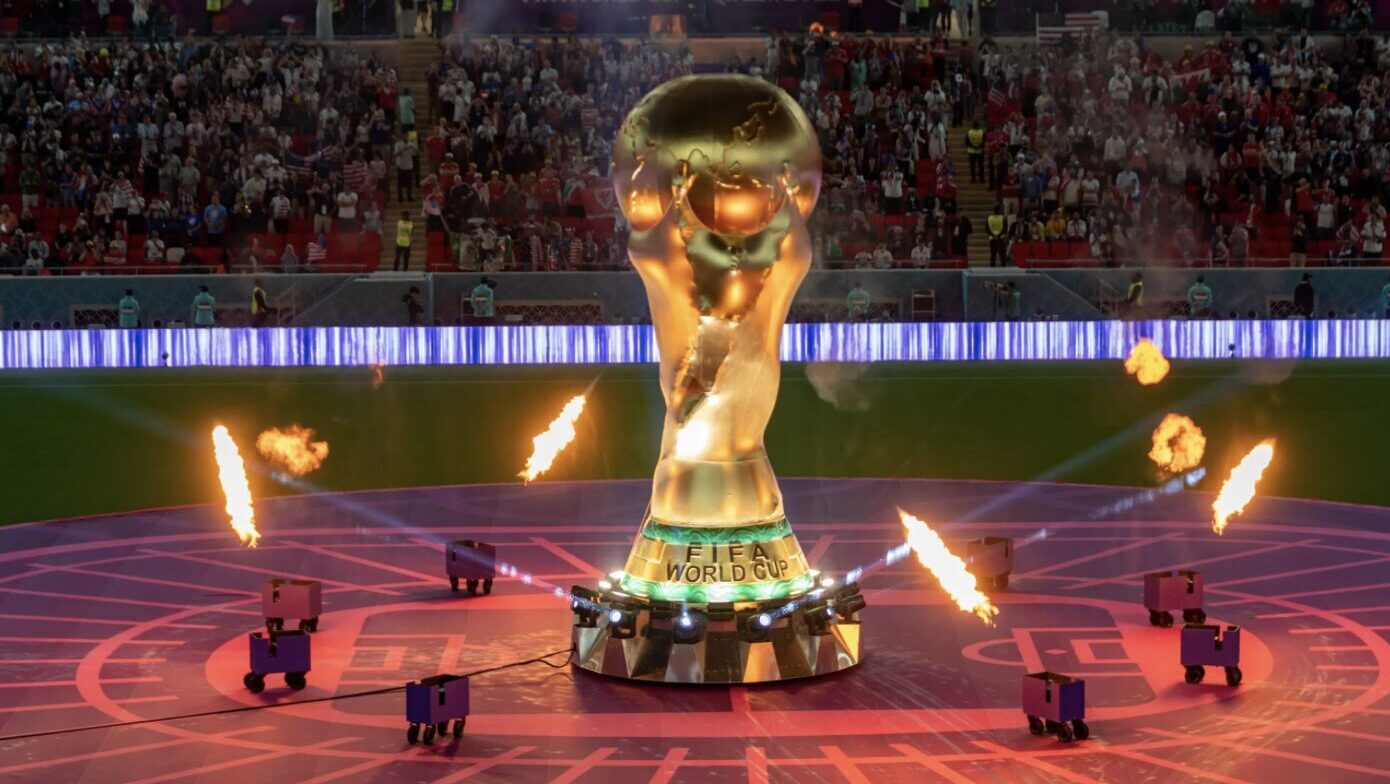
It’s been four years since England men lost to France at the quarter finals in Qatar. Since then, the women have won the Euros twice – in 2021 and 2025 – bringing football home for our success-starved nation: it would be amazing if England could repeat this success in this tournament too.
However, when approaching the 2026 World Cup in North America, my thoughts don’t drift towards football. I’ve barely considered the players in our squad or our chances at success. In fact, the game itself has taken a backseat. Instead, the politics, headlines, and contentious issues that we’ve already seen in the build-up have dominated the discussion. With all these different factors at play, concern trumps any excited anticipation in the build-up to the tournament.
There are plenty of places to start when considering the disarray of this World Cup, but I think a relatively simple place to start would be with the fans. Supporters are the very essence of football. Whilst there can certainly be issues, the majority of fans merely want their team to win. For this reason, the ticket prices for this tournament are completely unfair to these loyal fan bases. Back in December, FIFA (Fédération Internationale de Football Association) announced that the cheapest tickets for the final would still cost over £3000. Naturally, this is completely unrealistic for many football fans, now left with no chance to watch their team play. This doesn’t even consider their devotion in terms of flight, accommodation, and transportation costs. In fact, even the president himself said that he wouldn’t pay to watch the US play Paraguay in the group stage.
The frustration in terms of profit still runs even further. One of the new features in this year’s tournament is ‘Hydration Breaks’. In other tournaments, so that high temperatures don’t have a negative effect on players, time is allocated for athletes to rehydrate. However, these breaks have been introduced as a compulsory requirement for every match in this tournament, regardless of whether they are playing indoors or outdoors, in a conditioned or unconditioned stadium. This means that matches will only be played for 22 minutes before a break, which some have noticed aligns these games more closely with American football.
On the face of it, these breaks may seem beneficial to the players. However, the Guardian has found that this offers FIFA more than 200 guaranteed slots for advertising. Naturally, more advertising allows for only more revenue. This brings into question, then, whether FIFA is truly concerned about the safety of the players, or simply just its own profit boost. Whilst the decision could, of course, be informed by both, it does suggest that FIFA’s goal in this tournament is to severely boost the revenue they receive, despite the rules of the sport and the loyalty of the fans. This is further endorsed when considering the high ticket prices.
Additionally, many stadiums have had to change their names temporarily for the tournament. Some originally had brands as their stadium names, such as the Mercedes-Benz Stadium. However, in order not to hand out free advertising to companies which aren’t sponsoring the tournament, the names have been changed to generic city names. Mercedes-Benz Stadium, for example, is to be known as the Atlanta Stadium for the duration of the World Cup this year. Though this may not have a direct impact on the game itself, it once again highlights that capital is premium in this tournament is decentralising and almost displacing the very essence of the game for wealth-snatching tactics.
Furthermore, the World Cup, for the first time, is taking place across an entire continent. Whilst that may be an exciting part of football history, the sheer size of the continent also provides something of a logistical nightmare. The tournament will take place across four time zones, with some stadiums up to almost 3000 miles apart. Frustrating for fans, who want to see their teams once they’ve passed the group stage, the sheer cost of travel is something that won’t be easily managed – especially alongside the already extortionate ticket prices. Secondly, it’s a long way to go for the players, who will have to travel wide expanses to play their next match. Even if this may affect all players, it does add a degree of difficulty, considering that 104 games will be taking place across 39 days. The excitement of such international hosting is somewhat lessened when visualising the tricky logistics for both fans and teams.
Moreover, there remains an ongoing concern over ICE (Immigration and Customs Enforcement) raids in the USA. Even back in January, the FSE (Football Supporters Europe) fan group expressed concern over such events. There have also been concerns, in light of these raids, over fans’ personal safety when travelling to the US. Supporters have no reason for their fears to be alleviated, as Todd Lyons (director of ICE) expressed that the enforcement group’s presence was a necessary part of the World Cup. With regular stories on the news and social media, it’s no wonder that fans – forced to constantly consider their own safety – are sceptical about the role that ICE will play in the tournament.
Concerns have also been raised over new security checks for fans entering the country. Back in December, President Donald Trump announced security checks that would involve checking tourists’ social media accounts. This affects 42 countries, one of which is the UK, in the interest of the safety of Americans. However, according to the Guardian, the FSE described the new measure as “profoundly unacceptable”. This is just another step in an already difficult journey to the US, possibly compelling fans to hand over access to their social media histories dating back up to five years. This could be seen not only as an invasion of privacy, but also as a policing of private lives – another deterrent to devoted fans.
According to BBC Sport, the American Hotel & Lodging Association (AHLA) has had up to 70% of FIFA-reserved rooms cancelled in major cities like Los Angeles, Boston, Dallas, and more. When considering all these factors, it can’t be a shock that reservations are being cancelled. This tournament no longer focuses on the game itself, removing the very passion of the sport and replacing it with a fear of the political and economic climate. Football is not the focus of this World Cup.
Yet, I hold some hope. Whilst writing this article, the England squads have been announced. This may not be relevant to everyone, but as a Three Lions fan, I was surprised to see some of the changes that have been made to the team. Greats from previous tournaments such as Foden, Maguire, and Alexander-Arnold are all missing out on the chance to bring football home in this World Cup. And whilst that may be a questionable move, it finally brings the discussion back towards football. On top of that, Shakira has released a promising official World Cup song once again, saving the day with ‘Dai Dai’. With her reappearance comes the return of the nostalgia of previous tournaments.
The fate of the World Cup is undecided. The atmosphere around the tournament is certainly focused on everything other than football, with political, economic, and social matters drawing away the attention of fans. However, we’re being gradually tugged towards the game itself, hopefully shifting the atmosphere towards a more positive, football-focused one. Whilst we don’t know what’s to come, I do know that fans will be brought together in the spirit of the game, and that’s what it’s truly about.