

Now, more than ever, British people turn to social media, rather than traditional broadsheets or broadcasters, to access the news. A 2025 Ofcom survey found that 51% of adults used social media for this purpose, with Meta and Google dominating the list of most-used platforms. However, while studying in Canada this summer, I found this trend was unexpectedly much more complicated in the Great White North than in the UK – hoping for a quick scroll through the main Oxford newspapers on Instagram, my access to The Oxford Blue was blocked. In fact, almost all news sources were blocked, instead yielding the result “People in Canada can’t see this content.”
I quickly learned that the vast majority of online news content in Canada had been blocked by both Meta and Google, due to a controversial piece of legislation passed in 2023: Bill C-18. The Bill, also known as the Online News Act, seeks to regulate these platforms, as the Minister of Justice describes it, by introducing a bargaining framework for news businesses to claim fair compensation “when their news content is made available by dominant digital news intermediaries and generates economic gain”.
It seemed straightforward enough – that is, until Meta and Google responded by imposing a blanket ban on news content, a ban that largely remains today. If you are in Canada, whether a resident or tourist, you cannot, in most cases, view the news on Instagram or Facebook. Similarly, Canadian newspapers found their content removed from search results, news pages, and Google Discover.
A similar incident occurred in Australia in 2021, when the introduction of the News Media and Digital Platforms Mandatory Bargaining Code led Meta to ban news from its platforms. A week after the news blackout, restrictions were lifted due to a deal struck between Meta, Google, and the Australian government, but the reason for the different outcomes in Australia and Canada may be due to the nature of the legislation – the Australian law did not necessarily designate the exact platforms to which the rule applied, unlike Bill C-18.
In Canada, larger broadcasters with strong funding models survived the impact of Bill C-18, and Google did eventually reach an agreement with the Canadian government. But Université Laval in Quebec found that a large number of young people changed their news consumption habits in response to Bill C-18, mostly by shifting away from Facebook and Google. Some smaller publications – like student newspapers – suffered, remodelled, and had to find alternative tools for growth.
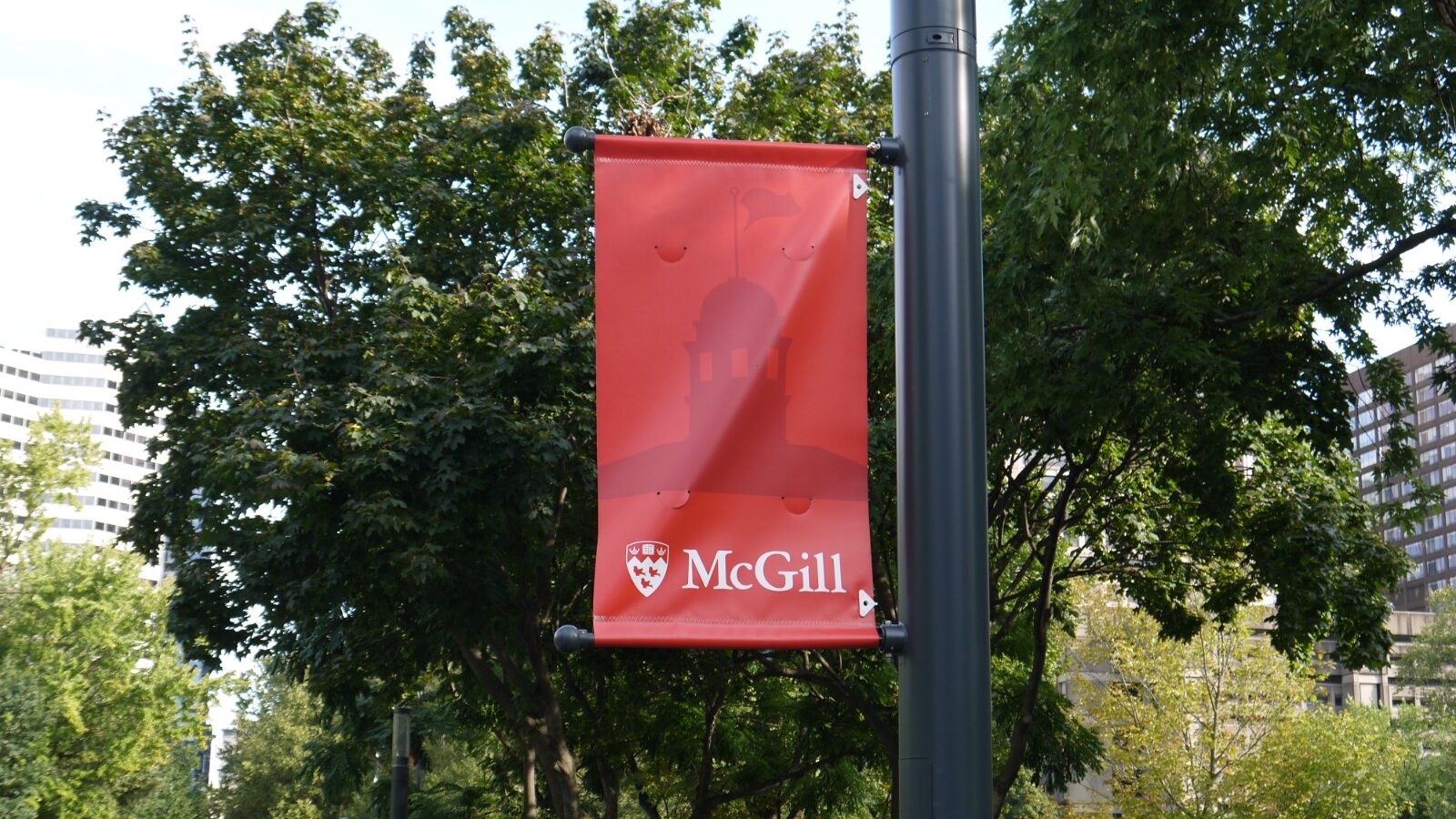
Three years on, I met with student journalists at two of Montreal’s most prestigious universities – Concordia and McGill – to learn just how much impact the Bill has had on their operations. However, enveloped in each interaction was an immense culture shock, and a realisation that North American university systems are vastly different to those in Britain.
I headed to the Concordia University campus on Canada’s Labour Day, expecting an office roughly equivalent to the shared Oxford Student Publications Limited (OSPL) space on Folly Bridge – modest, but functional. Greeted by Tamara, the Creative Director of The Concordian, I was welcomed into a lively office, fit with podcast equipment and working Wi-Fi. The workspace was given to The Concordian team by their university. In fact, the entire street was lined with tall office buildings exclusively used by Concordia student associations. Even more radical was the fact that working for The Concordian was a paid role, offering a huge incentive for involvement. Admittedly, it may not pay the bills, but it was a far cry from British student journalism, where participation is most often completely voluntary.
Sitting in on a pitch meeting, I was struck by the sheer enthusiasm of the team. This is not to say Cherwell is particularly stress-inducing behind the scenes, but it is naturally a side hustle for busy Oxford students, who often balance multiple essays, tutorials, and classes in just one week of a degree which has very little to do with journalism at all. Having a dedicated journalism programme, as at Concordia but not at Oxford, goes a long way to attract competent and passionate student reporters.
This enthusiasm is only fostered by the fundamental optimism that underpins North American culture, in opposition to the UK. Aidan, who spent two terms abroad in London, compares both sides of the Atlantic for me: the UK simply does not have the same funding or attention for its student journalism. The Harvard Crimson, for example, raised $15 million dollars in 2024. The job market for journalism students is also relatively healthier across the pond than back home, with the Canadian Summer Jobs scheme providing businesses with funding to employ young people aged 15 to 30, a programme which Aidan tells me has allowed him to undertake internships with various newspapers across the Canadian provinces. In fact, The Concordian does not print at all in the summer term, precisely because the team hopes that they will be too busy with their internships to publish biweekly. You would be extremely hard-pressed to find such confidence in the UK – media and journalism in particular are, by far, the most competitive sectors for internships at Oxford.
It is this kind of structural support that left The Concordian relatively unscathed in the aftermath of Bill C-18. Their former Instagram account had been blocked by Meta, but thanks to Tamara’s knack for social media, the growth of their new page has been impressive. Nevertheless, the passing of the bill has also meant the introduction of new obstacles to maintaining an online presence. Tamara gives me a whistle-stop tour of Canadian journalism on her phone, showing me the various hoops publications must jump through to avoid being blocked. The Concordian is very careful not to refer to itself as a newspaper on its social media channels, and many regional broadcasters have circumvented the changes by encouraging their reporters to post articles on their personal pages instead.
Despite being blocked, The Concordian is not eligible to negotiate with Meta. Part of the problem, according to City Editor and former Editor-in-Chief Aidan, is that Canada has no official, government-affiliated regulatory body for newspapers. Student publications therefore occupy a grey area – functioning just like ‘real’ newspapers, but not having the same legal expertise or government funding as regional or national outlets. The same is true of the UK’s Online Safety Act, coincidentally passed in the same year as Bill C-18. Journalists are exempt from the “duty of care” imposed on online platforms, but the current criteria for “journalism” do not map neatly onto existing regulatory bodies like IPSO, of which Cherwell is one of the first student-run members.
On the other hand, a lack of institutional support can exacerbate the damage done by Bill C-18. Speaking to the Editor-in-Chief. Mairin and Creative Director, Zoe, of The Tribune at McGill University, I discovered a vastly different situation. The Tribune’s funding model allows them to maintain editorial independence from McGill University – when paying their tuition fees, students contribute a small subscription charge to the various clubs and societies at McGill, including The Tribune. However, it has often been at odds with the central university, a relationship which Mairin and Zoe believe has been problematic in the wake of Bill C-18.
In particular, The Tribune’s political leanings and history of holding McGill accountable have been difficult to reconcile with the university’s own affiliations. Having published stories on the restrictions faced by Palestinian offer holders, the historic use of blackface at McGill, and the lack of diversity among McGill academics, The Tribune often reports stories that may provoke outrage towards the university. While there are many ways to get around the Bill C-18 social media bans, it is also possible for news outlets to be reported to the relevant platform for distributing such news content – an innocuous charge which may seem utterly ridiculous to British journalists, but can be weaponised against Canadian news outlets, especially student-run publications which do not have dedicated legal teams. The Tribune’s editorial board has, time and time again, been subject to such reports, and while the perpetrators cannot be confirmed, it is perhaps a natural conclusion to assume that high-risk stories come with high-risk consequences. Mairin tells me: “We just want to reach students and show them what is really going on at their university, but without a stable social media presence, it is so incredibly difficult to be seen by them.”
Nevertheless, like the hard-working team behind The Concordian, The Tribune has not been discouraged by Bill C-18, perhaps due to the doors that a long-term position on a student newspaper can open. Mairin and Zoe explain to me that internships and society committee positions are seen as absolutely essential at Canadian universities – the expectation is that you commit to them as a path either to “grad school” or a lucrative career. Coasting on the prestige of your university’s name – or the honorific MA (Oxon), in our case – is simply not enough.
When I first reached out to The Concordian and The Tribune, I anticipated a much more dire response to what I deemed an absurd situation. Student papers would be hit hard, I thought, with social media bans being huge obstacles to obtaining readership and funding. In some ways, they were, as several Canadian publications have had to migrate from one blocked account to another. A sense of caution has certainly become part of the newspapers’ operations, for fear of being reported to Instagram for simply publishing the news.
But the most striking difference I discovered in Canada was not the lack of news available to me. Instead, I had never even considered the sheer amount of structural support offered by the government, universities, and other bodies to these ambitious student journalists, support that instilled hope and protected the papers against Bill C-18. The perseverance of The Concordian and The Tribune in the face of Bill C-18 demonstrates just how impactful institutional support can be, not least for allowing these student journalists to believe that their work is worth fighting for.