

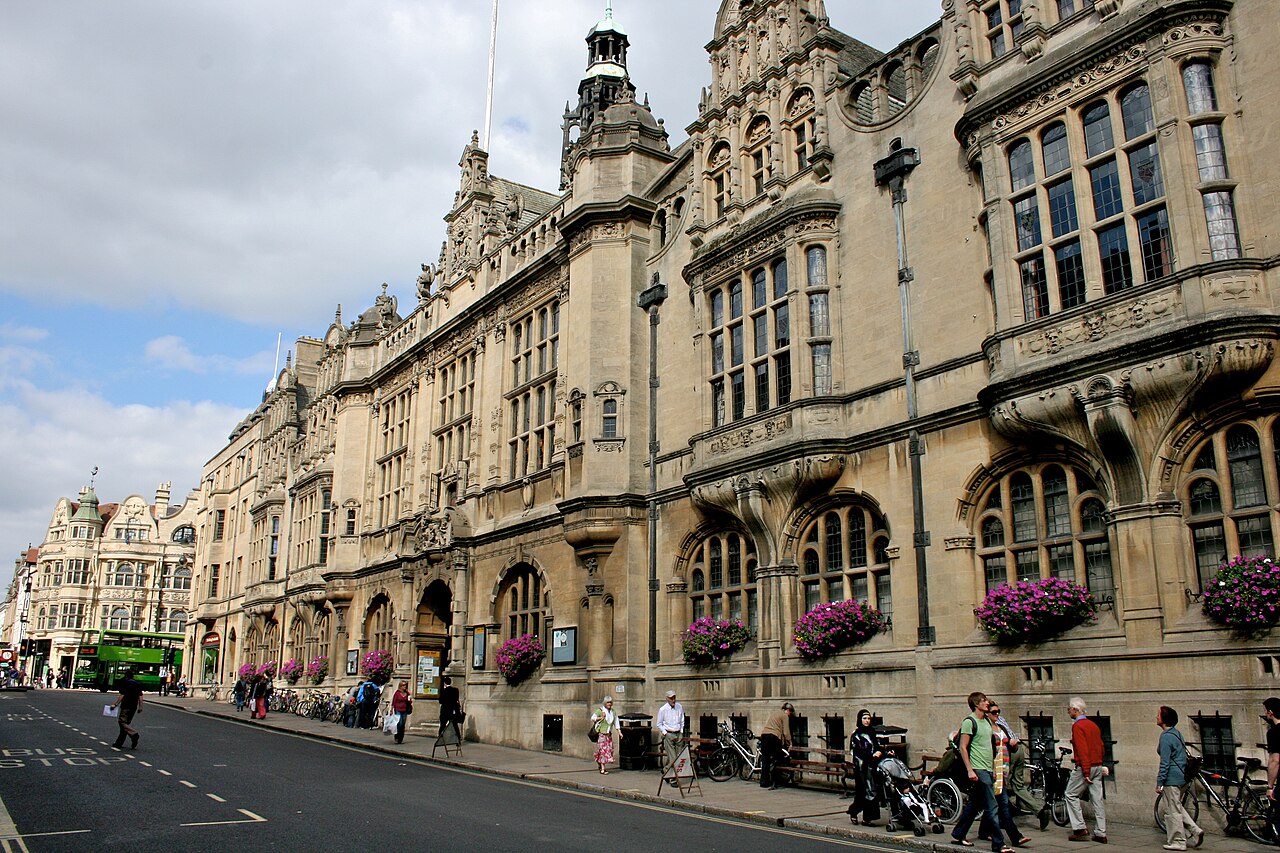
“Join us for a study holiday in Oxford” invites Oxford Lifelong Learning. As anyone who has remained in Oxford over the long vacation knows, thousands take up the offer of a “study holiday” either at one of the University-run summer schools or with a private provider. Lanyards replace puffer jackets as these summer schools make use of university infrastructure to give guests a taste of the Oxford lifestyle. This academic tourism industry has a symbiotic relationship with the University, generating huge amounts of money for the institution and providing hundreds of temporary summer jobs. According to a freedom of information (FOI) request by Cherwell, Lifelong Learning’s three main summer schools had a total income of over £3.1 million last year.
The central question here concerns the University’s access aims. In its Access and Participation Plan, it acknowledges that “our main challenges are that many applicants from disadvantaged backgrounds are unable to achieve the school grades to make a competitive application, and that many perceive Oxford as a remote, very traditional university that is ‘not for them’”. These summer schools are only accessible to the very few. However, the jobs and income they generate for colleges and departments might help fund these access aims.
There is a varied scene. Private summer schools tend to operate along similar models. Hiring different venues from colleges and university departments, they construct a temporary ‘campus’ for the duration of the summer. Students might, for example, be housed in a Corpus Christi annexe before being taken to the Blavatnik School of Government for a class.
Most of the staff are temporary, but there is usually a full-time skeleton team conducting sales and planning for the following year. The temporary staff are often bod-card holders on their long vacation. Graduate students are handsomely rewarded for working as tutors on these summer schools, and undergraduates are employed to entertain and look after the children outside of their lessons. At Oxford Summer Courses, you can earn £577.16 per week as an ‘activity leader’, or if you are on or have finished a Master’s, up to £55 per hour as a ‘subject tutor’.
The names begin to sound slightly familiar: Oxford Summer Courses, Oxford Royale Academy, Oxford Scholastica Academy, Oxford Horizon Academy, Oxbridge Academic Programs, Oxford Scholars, The Oxford Institute, and Campus Oxford to name a handful. These courses are largely aimed at children. Prices at Oxford Summer Courses are typical, ranging from £5,495–£9,995 for two weeks in Oxford. The most expensive fee costs more than a year of home undergraduate tuition.
In the year to September 2024, Oxford Summer Courses had a total profit after taxation of £1,410,570. Oxford Summer Courses is a private company, so the University does not see this profit.
Andy Palmer, CEO of Oxford Royale, was keen to stress the value of private summer schools for the Oxford community. He told Cherwell: “We are a significant seasonal employer, taking on several hundred staff each summer, and over the years we have tried to put something back into Oxford and Oxfordshire.”
On the question of financial inaccessibility, he says that “since we founded in 2004 we have also funded scholarship and bursary places, many for students who could not otherwise have taken part — including free places for children affected by the war in Ukraine”. It is not clear how much these “scholarships and bursaries” are worth but 266 young people have been awarded them between 2008 and 2025. But this is still a tiny minority of their “50,000+ successful alumni” since the summer school began in 2004.
Oxford Scholastica Academy has a similar scheme that it calls OxBright Scholars. It described this to Cherwell as “an ongoing programme of support, which gives Scholars access to an expert subject Mentor, live weekly seminars, ongoing subject-specific mentoring and support, and cutting-edge content. It’s a long-term programme, designed specifically for the needs of students from less advantaged backgrounds in collaboration with our partner access charities like IntoUniversity and The Access Project who select the students. We currently have around 200 scholars on our programme”.
While the private market is huge, some university departments have joined in, running their own summer schools. The Saïd Business School youth programmes are the most striking example. They are explicitly advertised as “Oxford University youth programmes: Official summer schools for high school students (aged 15-18) run by Oxford University”. One of these programmes, The Future of Business Summer School, is two weeks long, and costs £8,995. As a department of the University, the business school can promise that “when you finish the programme, you will receive certification from the University of Oxford, a testament to your learning and achievements”.
Oxford Lifelong Learning (formerly the Department for Continuing Education) is another department of the University. This department’s mission is to “inspire people locally, nationally and globally by extending access to Oxford’s world-class teaching and resources through flexible and inclusive opportunities for study and research”. They claim their summer schools are part of this mission.
It sells two introductory-level summer schools: Inspiring Oxford (starting price over £1,800) and The Oxford Experience (starting price over £1,600). It also runs the undergraduate-level Oxford University Summer School for Adults (starting price over £1,300). These summer schools offer 1-week courses and accept only guests over 18.
For catering, accommodation, and teaching venues, Lifelong Learning hires Brasenose for Inspiring Oxford and Christ Church for The Oxford Experience. They use Rewley House, the department’s home on Wellington Square, as the venue for Oxford University Summer School for Adults.
The fact that all of Lifelong Learning’s summer schools are adult-only sets them apart from most other summer schools. This is, of course, much less problematic when it comes to the University’s access goals, as it is highly unlikely that adults on these courses will be prospective undergraduate applicants.
Dr Charles Boyle, Director for Professional and Open Access Courses, told Cherwell that profits from these summer schools “are regularly drawn upon to fund concessionary fees on hundreds of our open access and award-bearing courses and events”. In its 2023-24 Financial Statement, the University reported that “the Department’s turnover in 2023/24 was £25.5m, an increase of £4.2m compared to the previous year. This growth reflects continued expansion of Open Access courses, including summer schools”.
This industry is also exceptionally lucrative for colleges who house private or university summer schools. In 2024-25, Balliol’s total income from its conference business (“which welcomes summer schools and conferences”) was £2.9 million. This accounted for 6.6% of its income that year. Similarly, Lady Margaret Hall’s Conference and Short Academic Programmes had a turnover of £2.93m, 6.9% of its total income.
These summer schools also provide many current students with temporary summer jobs that conveniently coincide with vacation dates. According to a FOI request, Oxford Lifelong Learning employed 15 temporary staff members to work on its introductory and undergraduate-level summer schools. Each private summer school will likely be employing at least the same number.
When approached for comment, Oxford Scholastica Academy told Cherwell: “We hire undergraduates and graduates to help run our programme and to teach our students each summer, including a number from Oxford and Oxford Brookes. We also hire facilities like colleges for accommodation and classrooms, and work with lots of local suppliers, so most of our expenditure each summer goes back into the local community.”
However, the relationship between the summer schools and the University is not necessarily an easy one. In 2023, the University filed a case against Oxford Royale for trademark infringement, unhappy with the way the company was making money from the Oxford name. Although the case concluded by consent in 2024, surely the fact that Oxford Royale is competing with the University’s own summer schools must have played a part in the University’s concern.
A more pressing question follows: are these summer schools falsely selling an ‘Oxford experience’? The University’s reputation is, of course, central to the success of these companies. Visit any of their websites, and you will be greeted with sun-soaked pictures of the Radcliffe Camera, and book-laden students having fun against college backdrops.
Similarly, the logos of Campus Oxford, Oxford Royale, Oxford Horizon Academy, and The Oxford Institute all include the Radcliffe Camera as the central image. The latter three also use a colour very close to Oxford blue, and Oxford Royale’s even features a scroll at the centre with a motto (they have at least saved us the job of Google translating back from Latin): “Learn to Travel: Travel to Learn”. Perhaps it is no wonder the University filed for trademark infringement.
Most of these summer schools feel like strange, distorted echoes of Oxford life. Depending on the company, students might enjoy classes in an Oxford faculty building or an Oxford college, with teachers given the title ‘tutor’. At weekends, activities might range from a dress-up ‘ball’ on a Salter Steamers to a Ceilidh in a city venue; from strictly supervised punting to brunch in an Oxford college. Many summer schools then hold a ‘graduation’ and some, including Oxford Summer Courses, Oxford Scholastica Academy, and Oxford Horizon Academy, give students a ‘letter of recommendation’.
These letters of recommendation raise difficult ethical questions. If the summer schools do help students gain admissions into the University, they would sit uncomfortably with Oxford’s aims of widening socio-economic access. If they do not, then do these families truly understand what they are paying for?
The private summer schools cater to an exceptionally wealthy, often international market, and some, including Oxford Horizon Academy and Oxford Scholastica Academy, run university admissions talks to help their customers make strong university applications.
Oxford Scholastica Academy told Cherwell: “We are independent of Oxford University … From the start, we’ve always been keen that no student could think we are affiliated with the university.” A disclaimer on their website clarifies that “Oxford Scholastica is not formally connected with or endorsed by the University, and it’s important to understand that we don’t offer university preparation courses”.
Similarly, Oxford Horizon Academy published an article on Saturday 3rd April, ‘Does a Summer School Help Your University Application?’. They are honest with the issue: “A summer school on its own is not a magic credential.” But they continue that “a well-chosen summer school gives you material. If you spend two weeks studying law at Oxford, engaging with real cases, arguing in moot courts, and grappling with questions about justice and rights, you have something specific to write about”. While the promise of “studying law at Oxford” is technically true, that little preposition is undeniably cheeky. In Oxford would surely be more apt for this situation; “at Oxford” certainly seems to imply the University.
But perhaps the content is more alarming. If you attend this summer school, they seem to say, you will have the material to make a stronger Oxford application. I am sure this is true. Surely, a student who has been given access to Oxford students, which the summer schools are employing, and access to valuable, well-curated information and advice will find it significantly easier to make a competitive application.
The article goes on: “The letter of recommendation matters too. At Oxford Horizon Academy, students receive a letter of recommendation from their academic instructor. A letter from someone who taught you in a rigorous academic setting, who can speak specifically to your intellectual curiosity and potential, carries genuine value.”
Who does this matter to? One would hope that a reference from an actual schoolteacher who has known you for more than two weeks would carry more weight. Yet this suggests it is the Oxford Horizon Academy name which is carrying the real weight. As wonderful as the latter two words sound individually, it does seem that “Oxford” is doing the heavy lifting. Is it more problematic to think that families at this summer school are being mis-sold an experience or that they are genuinely managing to buy access – access either to the use of the Oxford name, or into the University itself? Indeed, there is also a concern that some prospective applicants who cannot afford to attend a summer school might, from a cursory glance at advertising like this, get the sense that experience like this is necessary to make a competitive application.
Certainly, scholarships like those run by Oxford Royale and Oxford Scholastica widen this opportunity to a lucky few who could not otherwise afford it. Indeed, some would argue that with private schools and private admissions tutoring, there is plenty of opportunity for those who can pay to get a leg up. But unlike private schools or private tutoring, these summer schools could not run without the cooperation of Oxford colleges and departments.
While in the case of private summer schools the line is blurry, with the Saïd Business School youth programmes it is made starkly clear. The business school promises young people aged 15-18 certification from the university if they pay to attend. It is unclear what the status of this certification is, but what is undeniable is that the University of Oxford name is being used to give young children who can pay for it a step up. It could be argued that if all of the private summer schools are profiting off the University’s reputation, departments might as well engage in the industry directly. But it is rather remarkable that it is a University department that is the most explicit in selling young students – potential applicants – certification from the University.
This hugely profitable industry is a crucial part of many colleges’ funding models. But the access and participation aims of the University seem to run counter to an education industry where access can be bought. But at the same time, this academic tourism industry might help fund these very access aims. As the students move out, and customers move in this summer, we need an honest conversation about how this academic tourism industry underpins and affects the University’s aims.
When approached for comment, a spokesperson for the University told Cherwell: “Oxford is committed to widening access and attracting and admitting students with the highest academic potential from all backgrounds to undergraduate and graduate study. The University invests significantly in outreach and access initiatives for students from backgrounds that are under-represented at Oxford. Our Access and Participation Plan, approved by the Office for Students, sets out how we will build on this work at undergraduate level, and last year Oxford approved its first University-wide Graduate Student Access Strategy. A core part of this commitment is UNIQ, the University’s flagship undergraduate outreach programme. Since 2010, UNIQ has provided an opportunity for UK state-school students with high academic potential to explore higher education and learn more about studying at Oxford. The free programme prioritises students from under-represented educational and socioeconomic backgrounds and includes a subject-specific residential experience. Around 3,300 students take part in UNIQ each year. Oxford admissions are based on academic merit and potential; summer programmes are entirely separate to the University’s undergraduate and graduate admissions processes.”
A representative of Oxford Scholastica, when asked about affiliation to the University, told Cherwell: “We make it clear we’re not affiliated with Oxford University, our mission (to help students seize the future) is distinct from the city and our brand is independent from the university. My co-founder and I set up OSA in Oxford because it’s been our home for most of our lives, having lived and attended school in the city.”
Regarding letters of recommendation, they told Cherwell: “Our pupils are typically international teenagers who go on to attend universities outside the UK. Unlike British universities, universities abroad tend to ask for multiple ‘letters of recommendation’ from a range of sources. Our teachers write such letters for students who impress us, which they can upload to, for example, the Common App application process for US universities (the USA is the most common university destination for our students).”
Oxford Horizon Academy, Oxford Summer Courses, and Oxford Royale were also contacted for comment