

Every October, as the days rapidly shorten and the need for layers starts to become a hassle, many of us find consolation in the familiar promise of a ‘cosy autumn film’. Everyone has their favourites, from nostalgic rom-coms like When Harry Met Sally… and heart-wrenching classics such as Dead Poets Society to the spookier feelings of Hocus Pocus. But what do all these autumn specials have in common? Many seasonal rewatches do not actually take place in autumn. For instance, Fantastic Mr. Fox perfectly captures that ‘fall feeling’, but does not mention the season at all, and many consider the Harry Potter franchise quintessential autumn films although they span entire years. So, what is it about these films that makes you want to curl up at home while the leaves fall outside?
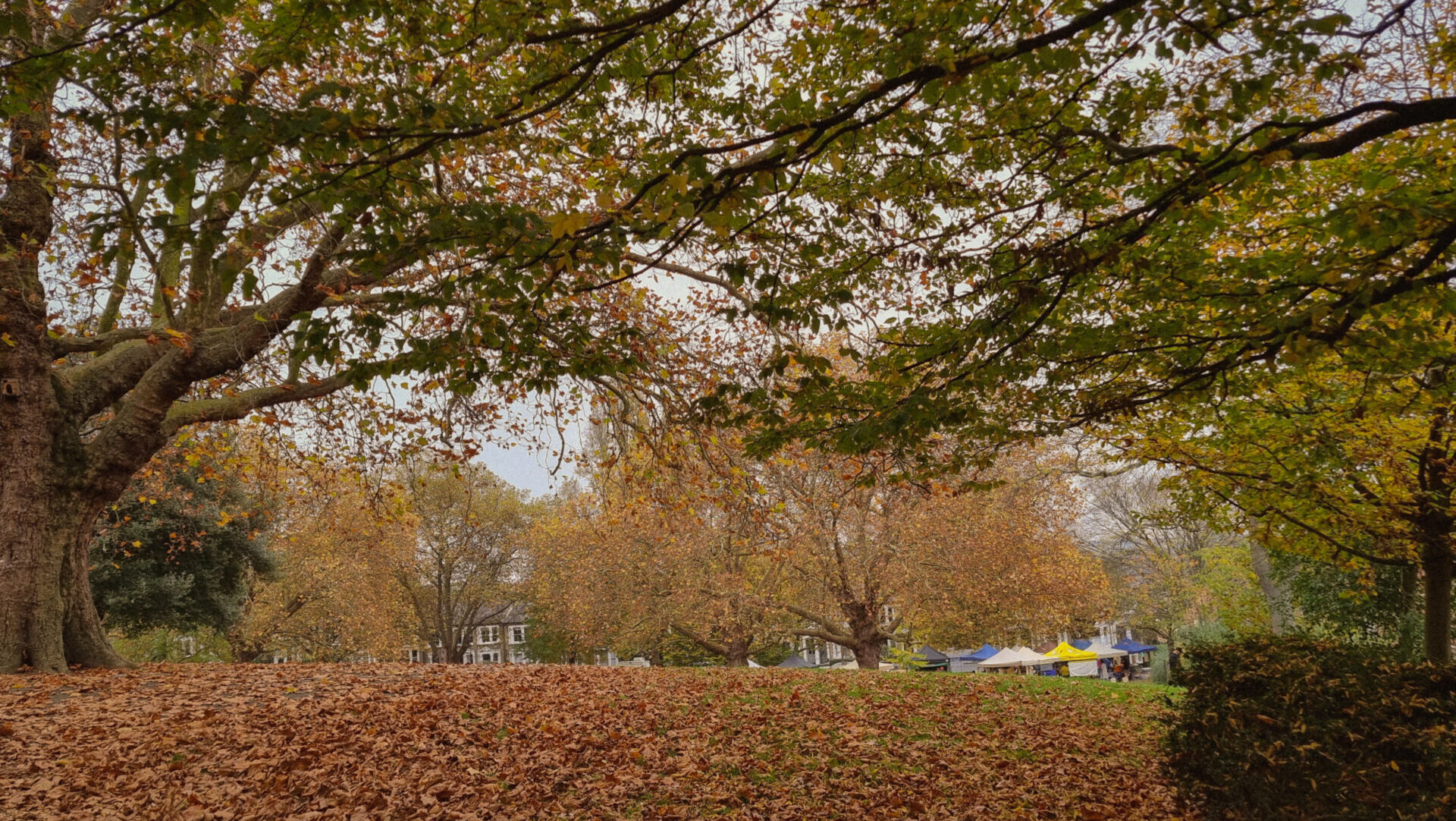
Film has manufactured a recognisable autumn colour palette, perhaps the most obvious tool filmmakers use to signal the season. Burnt orange, deep burgundy, and highlights of gold are integral to autumnal scenes, flashes of warmth as the weather gets colder. Wes Anderson’s adaptation of Fantastic Mr. Fox is bathed almost entirely in these colours, with the greatest ode being the colour of the main character’s fur. Similarly, the most easily remembered scene from When Harry Met Sally… is the iconic Central Park sequence where the characters are surrounded by autumnal oranges and yellows. Autumn in England is often depressingly grey — looking out of my window in Oxford at this time of year is disheartening and a reminder that the time for shorts and flip-flops has well and truly passed. Seeing a dead leaf on the ground, however, somehow has the opposite effect of reminding me that summer is dying, instead bringing me a warm feeling and a desire to eat a pumpkin. This romanticisation of decay lies at the heart of the autumn we see on screen, where the bright colours of a tree’s swan song are saturated to the maximum. This use of colour in film is thus perhaps not a reflection of autumn as it is but rather one of an autumn that is bearable to its viewers.
Texture and lighting play a similar role in creating an autumn feeling. Scenes that convey an autumn feeling are unusually tactile, full of tweed, dusty pages and wood panelling. The costume designers of Dead Poets Society, for instance, leaned into the East-Coast prep school aesthetic with heavy blazers, coats and patterned knitwear, which pair nicely with the woody interiors and old books created by the set team. The low natural light means that much of the film is aglow with candlelight and warm lamps, which push the warm autumn colouring even further. The scene in the cave, lit entirely with candles, is a clear example. This desire to create warmth indoors is perhaps innate to us, and films reminiscent of this season call on this instinct, reminding us to make our homes a respite from the dreary outdoors.
The true warm feeling we get when we watch a beloved autumn film, possibly for the tenth time, cannot, however, be explained by aesthetics alone. There is something inherently nostalgic about this season, which returns us to our familiar routines and environments, while the year comes to a close. This intersection of change and continuity lends itself well to nostalgia, making us conscious of time passing while trying to recreate the experiences of years gone by. Returning to Oxford unsurprisingly makes me want to watch Harry Potter just one more time, a series which reminds me of my childhood and beginning a new school year at my own Hogwarts. Autumn is clearly a time for comfort and reflection, a fact the film industry has learnt very well and pumps into new releases at this time every year. Hollywood understands just how profitable this feeling of nostalgia can be.
The commercialisation of seasons has been growing as a business. Any supermarket at this time of year will have an array of autumn scented candles, knitted throws, and three aisles of Halloween decorations. The palette, texture, and candle-lit glow of autumn films are accessible to your own home with a single shopping trip. These films did not give our society a hankering for warmth in the cold, but they provided the way this warmth should look, and this look can now be sold to us. Hocus Pocus, which has now become a cult autumn classic, was initially a commercial and critical flop upon its release in 1993, losing nearly $17 million. With a poorly timed July release date, a tone watchers found awkward, and poor reviews, there was no way to tell what it would become when it was released. Its status as a fixture of this season was built through repeated TV airings and its presence on streaming sites, demonstrating that the industry can manufacture tradition through pure determination. Similarly, across social media and streaming sites, companies and individual influencers create autumn watchlists and vision boards, pushing us to build these films into our seasonal routine. This cycle of creating an on-screen vision of what autumn should be, whether teary, romantic, or spooky, and then providing all the tools to recreate it for ourselves, is perhaps the strongest reason for an endless list of films that fit the ‘autumn genre’, an intangible feeling that filmmakers have managed to manufacture. I’m not immune to this, having my own watchlist for this season and a preference for autumn-flavoured coffees, but it may be worth wondering whether our vision of autumn is our own or one cinema has ingrained in our memories.