

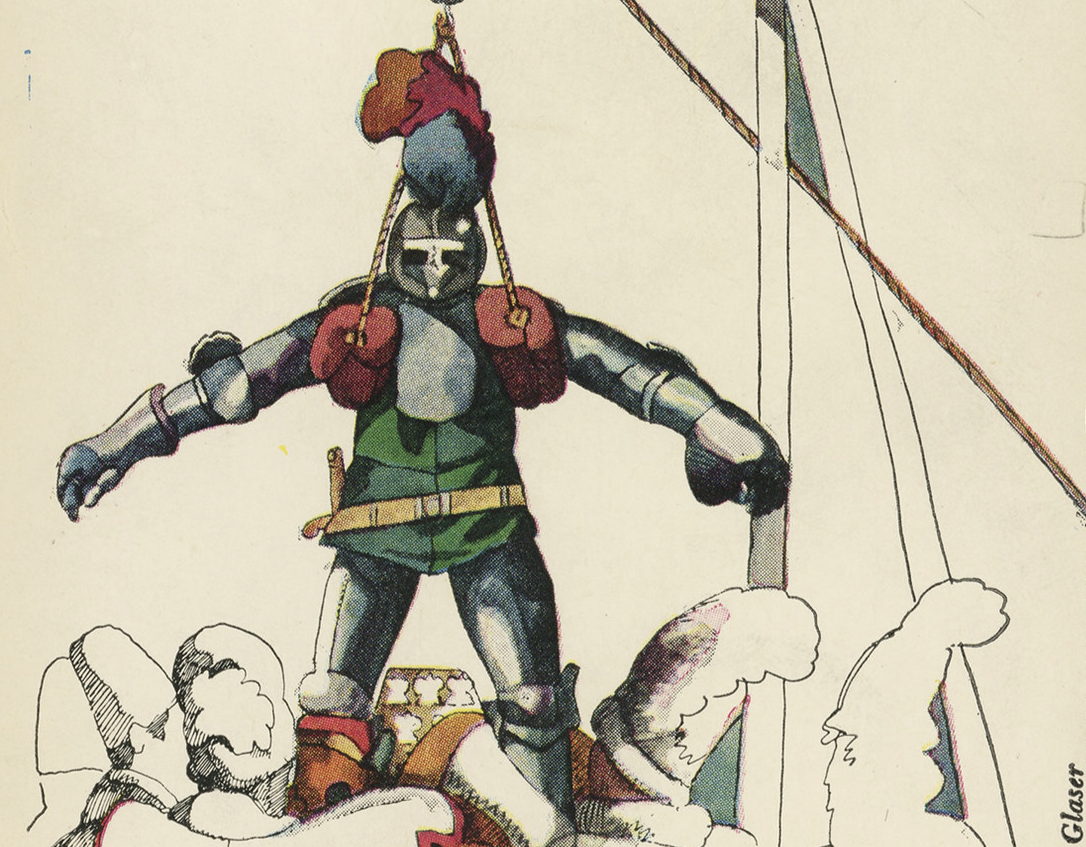
Picture this. It’s 1599 in London. You’re at the new Globe Theatre. Or perhaps at the Curtain Theatre. Historians can’t decide. Let’s say you’re a groundling – it’s more fun that way. You’ve got a bag of peanuts in hand, or the early modern equivalent. It probably smells. Then, the chorus shuffle onto the stage. They’re met with expectant hushes. Out of silence, they emerge into steady verse. The lofty iambs you hear invoke “a Muse of fire”, yet they also ask a crucial question: “Can this cockpit hold the vasty fields of France?” Absorbed, the chap next to you whispers ‘Yes, yes it can’. But you can’t help but think, well no. Not really.
I am aware this is the wrong answer. Shakespeare’s false modesty (“this unworthy scaffold” – come off it!) demands that you think, oh, of course it can. This wooden “O” can in fact cram the very casques that did affright the air at Agincourt. Yes, I will make imaginary puissance so that when you talk of horses, I’ll see their proud hoofs. And generations of lit crit sycophants have given their nodding assent.
But let’s be honest for a moment. Even the most ardent enjoyers of the stage must acknowledge that theatre is, to an extent, always a little dire.
I’m reminded of this in the opening of The Tempest. I always smile to myself as I wonder how theatre-makers will construct a storm onstage. How an actor has to stumble across stage, yell ‘Boatswaaiiiin!’ and stumble back off to the wings, only to hold his head in his hands knowing all too well that this in no way resembles a storm. I love those little arm-flailing dances and staggering sidesteps meant to show the rising and falling of the deck. There’s something of the primary school nativity play. It’s pathetic and tragic, and neither in the literary sense.
Of course I’m being facetious here. Some theatre is remarkably skilful, and some lopsided limb-lurching is more impressive than others. Splendid set pieces and cutting-edge special effects of sound, rain, and wind can create real spectacle. Yet it often remains woefully unconvincing. We can only imagine the Emperor’s new clothes for so long before the public indecency gets a little off-putting. So at times we may wonder: it’s the 21st century. Film can faithfully represent the stories we wish to tell. What need have we for theatre?
If the thought often attributed to Ovid is correct, that art est celare artem (true art is to conceal art), then theatre is pretty poor art. You ain’t fooling me into thinking that’s a storm. A friend of mine makes this point, although strangely never to our director when he’s casting the plays. Yet I have to remind myself that this is a silly question. I have to imagine that a century ago I’ve come out of a particularly awful exhibition at a gallery. What, I ask myself, is the point of painting when we’ve a camera that’s a far more faithful representation?
Perhaps cinema is to theatre what photography was to painting. Whilst more photorealistic forms may tend to conceal their own art – as Ovid would praise – this surely doesn’t entail their superiority. Faithfulness cannot be the metric of good art. A high-definition photograph of flowers is not by definition greater than a Van Gogh. Likewise, a believable cinematic storm is not automatically better than some wacky wobbling and foot-floundering onstage.
There’s a paradox in that the artifice of art is all the more compelling if we have a glimpse of it. This is part of the tantalising appeal of behind-the-scenes footage, and why it’s always so thrilling to glimpse actors’ true personalities and relationships as they take their bows. Think how we’re so captivated by the possibility of Paul Mescal and Daisy Edgar-Jones or Emma Stone and Andrew Garfield.
Two film representations of the prologue to Henry V are particularly delightful in this respect: they tease us with the illusion of theatre. Laurence Olivier’s Technicolour 1944 version begins with an aerial shot of Elizabethan London, which pans across from the Tower to the Globe Theatre, and into a deliciously evocative scene of crammed-in groundlings and the atmospheric accoutrements of a lady selling apples, before trumpets sound and our play begins within the theatre. At the opening of Act II, we shift our scene to Southampton, as the illustrated ocean vista on the theatre’s curtain dissolves into the real thing. The play ends with a zoom in from the opulent palace onto the newlywed royals taking their thrones, and a zoom out onto the Globe itself. Cue riotous applause. Kenneth Branagh’s 1989 take is wonderfully meta too, as Derek Jacobi speaks the prologue whilst wandering through a film set, and the epilogue straight down the lens. Both embrace their medium’s very artifice
We never return to painting and theatre for their nonchalance. The joy is the artifice. In painting, each brushstroke tangibly intimates the brush, the hand that held it, the mind that led it, and the heart behind it. In theatre, it’s to look into a man’s eyes and try to discern where man ends, and Hamlet begins. It’s to see those horse’s proud hoofs when that actor’s feet are firmly planted onstage. It’s to watch the curtain’s waves melt into that furrowed sea itself.
So theatre must draw attention to its own artifice. Hence the perverse appeal of Bertolt Brecht’s desire that the actor “must not go so far as to be wholly transformed” into a character; we’ve got to resist the full ‘method’. This is essential for an art form that’s ironically real, immediate in the physical distance between actor and audience, and immediate in its emotions. The messiness, the unpredictable, the implausible – all happening this very moment – are why we return to the stage. In the age of digital smoothness, we return to the awkward artifice of live performance.
It must be said that embracing grittiness is not unique to theatre. Of course, the Henry V productions above are themselves films, and Richard Ayoade delightfully talks of doubling down on the unreality of cinema, using a handheld camera to draw our attention more to the cameraman. But theatre can’t hide its seams as cinema can. The theatre is unrepeatable and live: we can’t ignore its bizarre unreality. Wood must transmorph into fields, actor into king, and wobbled arm-jerks into a ship in storm.
This is why I ultimately can forgive Shakespeare for the prologue to Henry V (I’m sure he’s relieved by my approval). It’s annoyingly brilliant. It walks a fine line between downplaying and exaggerating the power of theatre. It veers neither into self-indulgence nor disillusionment. I know the stage isn’t much, he seems to say, but join me.
So fine, William. I’ll happily indulge you. If you my humble patience pray, I shall gently hear, kindly judge, your play. Although if you’re doing a storm onstage, tell me now. I might need to grab some mead at the interval.


, then theatre is pretty poor art. You ain't fooling me into thinking that's a storm.)