He was right up in my face, so close I could smell the booze on his breath. “You’re a paedophile lover!” he shouted. “You like rape do you?” The man reeked of violence. They all did, him and the crowd behind him chanting “you ain’t English anymore!” at the four of us, defiantly stood, thumbs down as the hate march passed.
This is my defining memory of the day the English Defence League (EDL) came to Oxford. They were scheduled to march from the train station at 2:00pm, up past the council offices, behind the Westgate centre and on to the St Aldate’s police station where they would rally and listen to their speakers.
The counter-demo had been organised by UAF and the SWP on Bonn Square. Most of the demonstrators were middle-aged, probably seasoned veterans of protests. They were interspersed with perhaps 20 young people dressed in black, their faces obscured by hoods and scarves, with the odd anarchist flag on display. A few students were present. I have no doubt that had this rally been in term time, there would have been thousands.
Unfortunately the EDL are not that stupid. Easter weekend was the ideal time to stage a visit to Oxford, outside the term times of both universities, with the revision-swamped finalists home for Easter. The clearest presence (helped by the high-vis jackets, horses and riot gear) were the police who had flooded into Oxford from as far afield as Kent to ‘keep the peace’. The old lefties muttered that when they marched the police never seemed to have peace on their minds.
Their prophecies were proved right as we drew closer to the march. We were separated from the route by 25 meters of ‘no-man’s-land’ between two walls of helmet clad officers, and a barricade of riot vans. How was our message of condemnation going to hit home if only the police were there to witness it? I hadn’t come all the way from Catz to watch the tops of flag poles march past!
Me and my friends had checked out the march route on the EDL Facebook page, and slipped away to work our way round. We made our way down St Ebbes Street and cut back up behind the Westgate centre towards Castle Street. It seemed the police had not done their homework on Oxford’s back alleys, as we quickly slipped under the cordon. By the demolished multi-storey carpark we were stopped by some workmen. “Only members of the public can go further, no protestors allowed,” we were told by a workman gesturing to our placards. We put them down, and with that we found ourselves on the march route.
We hurried up the road quickly, passing EDL members waiting outside of Baby Love, and placed ourselves in front of some bleary-eyed daytime drinkers who had spilled out of the Swan and Castle to watch. The EDL (the association of English Drinkers of Lager by the looks of them) came down the street. Muffled shouting could be heard from the hidden demonstrators but, apart from noise, the protest was obscured.
It seemed we would have to do it for them. The first rows had passed us when one of my mates’ friends raised her hands thumbs down. Seconds later the rest of our hands rose showing the marchers what we thought of them. Abuse came our way, the march faltered as demonstrators slowed to scream idiotic remarks at us. We stayed silent; with no wall of police in front of us, a silent protest was as far as we could go. The EDL quickly surrounded us and made their feelings very clear. The police reacted just in time, pushing between us. Within seconds 20 officers and a horse separated us and the march. We stepped back, our hands still, firmly raised and staring down the enemy. It was terrifying.
After the confrontation we followed the march and joined up with the rest of the demo. The remainder of the afternoon was spent marching and chanting, playing cat-and-mouse with the police as we tried to get as close to the EDL as possible. One memorable moment came when a lone EDL man appeared from round the corner shouting “EDL, EDL!” The scarf-clad crowd from earlier saw him and, to shouts of “get him!”, charged with a roar of support from the rest of us.
At the end of the protest I felt relieved. Relief that that was all the EDL had. A ‘national demonstration’, but maybe only 100-strong and most incapable of stringing a coherent sentence together. If that is all the fascists have got we have nothing to fear. There were no brains, no numbers, only self-isolating violence. If only UKIP were so toothless.
Three arrests were made and a policeman was injured during the English Defence League (EDL) march through Oxford city centre on Saturday afternoon.
Two men, a 24-year old from Bristol and a 49-year old from Kidlington, were detained on suspicion of affray, whilst a third man, a 44-year old from Summertown, was arrested on suspicion of a public order offence. 

The police officer sustained minor head injuries as a result of a bottle being thrown. Five hundred policemen, including officers from five neighbouring forces and a mounted unit, assisted Thames Valley Police in policing the demonstrations.
About 150 people marched as part of the EDL demonstration, whilst around 300 people took part in a Unite Against Fascism (UAF) counter-demonstration in Bonn Square. Before the march began minor scuffles were reported between the different groups.
The EDL said that they were “protesting against the appalling revelations of another case of Muslim Grooming Gangs prying [sic] on vulnerable English children and the lack of protection given to them by those intrusted [sic] to do so; the local council and Police.”
A UAF open letter said, “We condemn the decision by the EDL to come to Oxford on Saturday 4th April to exploit the suffering of Oxfordshire victims of child sexual exploitation to further its own selfish ends. This is not the first time that the EDL have tried to take advantage of the suffering of exploited children.”


Superintendent Christian Bunt, LPA Commander for Oxford, commented, “Disruption was kept to a minimum and we are grateful for the support we received from local businesses and communities.
The success of the operation is, in no small part, down to the excellent work before and during the event between the police, our partner agencies, representatives of our communities and the protest organisers.

“There were a few arrests made over the course of the day, however, the majority of those taking part were well behaved. I would like to take this opportunity to thank our communities, some of whom understandably had concerns about the demonstrations, for their tolerance, cooperation and patience today.
”
In the Oxford City Council’s statement on the Protests, Councillor Bob Price said, “The EDL is a racist organisation, and is not welcome in our city. We regret that the Thames Valley Police declined to ban this march and that it will cause substantial disruption for visitors, shoppers and bus travellers on a popular and busy holiday weekend.
“We also regret the massive cost that it will impose on the budget of the Thames Valley Police which is already under severe strain because of the cuts imposed by the Government.
“We strongly endorse the right to demonstrate and to assembly, but these rights must be qualified in respect of organisations which explicitly seek to promote the criminal offence of racial hatred or to instil division in our communities.
“Oxford is a diverse city with excellent relations between people of widely varied national and ethnic backgrounds. This is a crude attempt to attack the good name of a whole community on the basis of crimes committed by a group of vile individuals, from a variety of backgrounds.”
OUSU condemned the march in a statement realeased earlier in the week stating, “OUSU condemns the EDL and its views. Muslims are a valued part of our community and the lies and violence with which the EDL target them and their faith are unacceptable. We stand in solidarity with Muslim students and residents of Oxford who may be adversely affected by the march.
“We recognise the risk posed by the march to the welfare of students who are in Oxford. People of all faiths and ethnicities should be welcome in Oxford, and the presence of the EDL is a barrier to this. As far as OUSU is concerned, the EDL is not welcome in Oxford.”
The Oxford Islamic Society likewise condemned the march in their statement, commenting, “Islam is the faith of almost three million Britons and the EDL’s rhetoric of hate and division flies in the face of Islam as understood by the almost three million Britons.
“There are up to 500 people who are expected to attend the March so we would just like to ask anyone who will be in Oxford on Saturday to be cautious, sensible and try to stay away from the town centre if possible. Most importantly, remember to place your trust in Allah (SWT) and seek His protection. A perfect Muslim is one from whose tongue and hands mankind is safe, and a true emigrant is one who flees from what God has forbidden.
“For those who want to take a more active stance, there will be an interfaith circle organized as a counter to the EDL. This will be at midday, outside the shop ‘Lush’ on Saturday.”
The EDL march began at Oxford train station at about 2pm on Saturday and ended up outside St. Aldate’s police station.
 Police temporarily closed Queen’s Street and St. Aldate’s as the march passed through, causing some traffic problems. The EDL demonstrators left the city at about 5pm.
The sweat drips from the low ceiling of the O2 Academy Oxford. Somehow on a damp March evening, the Oxonian audience find themselves in a humid atmosphere of discomfort unknown this side of the equator. In the midst of the increasing mist of evaporating perspiration, enter The Stranglers- pursued by an impressive setlist spanning forty years of creativity.
Emerging onto the musical scene through the supposed anarchy of the punk movement, the band describe themselves as being “punk plus and then some”- a musical genre made clear within the first two songs. Walking in on their traditional entrance music, ‘Waltzinblack’, the audience is worked into a frenzy of sinister fairground accordions. The sound brings leering clowns to the forefront of the mind: as well refreshing childhood memories of my dad playing the song as we drove down the equalling chilling sight of Southend seafront to my own. As the instrumental comes to a close, the plodding bass and whizzing synth of 1979’s ‘The Raven’ welcomes them to the main body of the band’s live performance. The transition is seamless, the band’s playing seemingly flawless.
The only drawback? The lack of looming founding member Jet Black behind the drums. At seventy-six, the crashing presence has had to reduce his live performances to limited and fleeting glimpses. Don’t get me wrong, Replacement drummer Jim MacAulay does an impressive job. But no one can truly replace such a charismatic figure as Jet casting his eye out across the crowd from his stool/throne behind the drums.
A brief look around reveals a motley crew of a crowd. Like eclectic surroundings of the fairground that their accordion sounds emerge from, their gig is a “come one, come all!” affair. Aging punks stand alongside youths in a mass of sweat and dreadlocks. Both groups are eagerly jumping along to the thudding bass of ‘Peaches’ or the infectious synth of ‘Baroque Bordello’ in strangely beautiful unison. Parents do not seem to have dragged their kids to this event. They seem to have come of their own accord to experience the same youthful joy their parents must have felt before them.
Playing a near two and a half hour set, said audience is treated to hits galore. The bizarre timing of ‘Golden Brown’ sets heads of all ages bopping along. As ever, keyboardist Dave Greenfield’s fingers seem to move effortlessly. They glide over the keys as the audience is welcomed to ‘planet Greenfield’, as lead singer Baz Warne jokes as he plays a particularly surreal note more home in the voice-box of a dalek . Controversy is skimmed with the inclusion of the anti-racist and clearly ironic ‘I Feel Like A Wog’: whilst ‘Duchess’ reminds a somewhat heart-wrenching lament to the disillusioned lower middle classes day-dreaming of riches sat in desolation of a run-down terrace.
But the height light of the night is by far the extended closing track ‘No More Heroes’. Bassist Jean-Jaques Burnel begins by teasing the crowd. Thwacking the fretboard to letting out almighty cracks, he launches into the infamous introductory solo to a mesmerised crowd. Playing in beautiful union, the band remain tight and unified to the final notes. In 2014, Jet Black said of the band that “This is the best band in the world — and we’ll carry on until we can’t any more. Though we are not thinking about that”. And after tonight, his statement is proved right.
For a number of Oxbridge students Hilary Term was rounded off with a weekend in Amsterdam. Hoards of Oxford’s worn out and overworked students, hungover from essay and/or alcohol-induced all-nighters, piled into coaches bound for the Netherlands, enticed by the quirky architecture, the world-class museums…the drugs, the sex, the debauchery – because out in Dam all that’s legal.
From the demographic on the trip, it’s fairly likely that plenty were in search of the latter; a weekend of intoxicated hedonism, a reward for surviving Hilary. And fair enough, who isn’t partial to relaxation and enjoyment, in whatever form it comes? I myself was looking forward to passing my weekend in such a way. However, the reality of Amsterdam did not quite meet my expectations.
Everything was far too overt, far too crude and out in the open. I wanted some impropriety that was, in fact, illegal. That’s not to say I have a predilection for breaking the law – far from it – but isn’t part of the thrill the possibility of getting caught? Maybe I am just painfully British, the stiff upper lip unwilling to loosen up a bit, but all that legalized debauchery just felt too seedy. Is there a place for taboo in our society?
The convenience of having soft drugs legalized is undeniable. You can walk into a coffee shop knowing that the next however many hours of haziness won’t get you a criminal record. Cannabis is easy to buy and you can ask for advice – people are there to make sure everything is safe. So far, so good. You’ve gone from sneaking around the streets to lounging in a legal, licensed establishment. Simple, convenient, safe. But didn’t you quite like the thrill of keeping it clandestine? And if you’re game for that, who needs Amsterdam?
This leads me onto the subject of prostitution. While exploring the Red Light District I got a strong sense that some things really should be kept behind closed doors. Out in the open it makes for a very uncomfortable evening stroll. Am I a prude? Sexually ‘vanilla’? No – I just have some respect for the female body. Passing by the empty windows, curtains drawn a few metres back from the glass, it really hit home what those women are there for. Even if the women are there by choice, it made me feel that no society should condone women objectifying themselves as an acceptable means of employment. Yes, models, actresses, in fact most celebrities – male and female – are selling themselves. But actually selling your body for sex? This seemed a step too far. Whatever sex means to you, it remains one of the most intimate and personal acts. Intercourse should never cross the line from intimacy to commodity.
However, one cannot deny that it is a human right of these women to do with their body what they will. While much of it is about the earning potential, money is not the exclusive motivation for sex workers. There are many women who work in the industry because they enjoy having sex. Hell, if everyone had a job they actually enjoyed the world would be a merrier place! Yet these women still suffer from the stigma of prostitution. Even with its legalized status in one of the most tolerant cities in the world, some people who walk past and watch project lewd and misguided ideas onto the women in the windows.
Those passersby cannot comprehend what would compel someone to make a conscious choice to earn a living through prostitution. I for one find it difficult. Yet most of these women are there through their own will. There’s a call for more respect. The stigma comes from a misunderstanding; for sex workers are actually in control of what they do. They are by no means obligated to open the door to anyone, and they more or less decide which sexual favours to impart and at what price.
All in all, I came away from Amsterdam disillusioned with the idea of legalizing sex work and drugs. It may be safer over there, but I did not feel at ease with everything being so shamelessly public. Some taboos are there for a reason: to deter people from engaging in sordid and degrading behavior. In my view, something is either illegal for a good reason (i.e. prostitution) or, lacking that reason, its illegality just makes for a more thrilling high.
The Free the Nipple movement looms large across social media. Their bawdy Instagram account and their combative Twitter feed, both proudly present, or at least try to present, the female nipple. The movement has benefitted from the support of many big names, like Rihanna, Miley Cyrus and Rita Ora and all but one of the April 2015 Vogue cover girls using their own Instagram accounts to support the movement, with Suki posting a picture of her infamous ‘tata top’ and Cara a topless picture accompanied with the simple hashtag #freethenipple. Even their co-star Georgia May Jagger walked in Karl Lagerfeld’s Spring ’15 catwalk protest, when models used placards and megaphones to transform feminism into a fashion accessory.
The movement argues that female nipples are sexualised in a way that their male equivalents are not and, on a wider level, that women are shamed for their bodies and bodily functions. Instagram, whilst acting as a platform for the movement, is also a hindrance to it, illustrating perfectly why the movement is necessary. Artists such as Rupi Kaur and Petra Collins have previously found their work deleted by the website and branded as inappropriate for exhibiting period stains and female pubic hair. While highly sexual photos of women with their nipples visible are appropriate, photos of women breastfeeding are deemed vulgar by the website. Clearly, we have a problem. The movement seeks to give women the same freedom over their bodies as men and illustrate that women’s bodies don’t have to be commercially consumable to be acceptable.
Nipples are back. And what’s more, thanks to the help of models and designers, they’re also in vogue, à la mode – whatever else you want to call it. The days of Friends, where Rachel and Monica walk around with their nipples proudly visible through their crop tops, are no longer a distant memory. The recent Autumn Winter 15 shows featured topless models in Paris at the Jacquemus show, leather breast-shaped bags at Lemaire and ‘orgy dresses’ at Christopher Kane’s show in London. Indeed, model Lida Fox was reported by style.com as saying that now was the ‘perfect time’ for her so-called ‘mono boob dress’ at the Saint Laurent show, because of the increasing influence and acceptance of the feminist movement in mass media and culture.
However, the movement is simultaneously undeniably problematic. The nipple may not be becoming ‘free’, it is just being packaged and sold in a different way. The breasts that we see exposed in the name of the Free the Nipple movement are all too often perky, small and white. Though the recent exposure of the Feminist society at the Commercial College of Iceland showed us breasts all of shapes and sizes, they, again, were all decidedly white. Indeed, we must now consider that not all women have breasts and vaginas as the concept of gender becomes looser and looser and people begin to explore all the facets of their gender.
But is the exposure of white nipples really so revolutionary for women across the world? Perhaps not. As aesthetically pleasing and jealousy inducing as Cara’s nipples are, we need more than that. We need to see the nipples of ordinary women. Yes, the fashion industry is giving feminism the exposure it deserves, but I’m afraid that instead of liberating women, it’s just beginning to constrain them in a different way. Though freedom of women is becoming greater with this movement, it is freedom only for the girls and women whose nipples fit into the criterion the fashion industry is laying down – pert and tiny. Rosa Luxemburg said, though perhaps in a slightly different context, “Freedom is always the freedom of dissenters.” If those women with nipples that apparently aren’t sexy and fashionable don’t have the freedom to bare all, then not much progress has been made.
I may seem pessimistic. Feminism is receiving the most attention it has for decades, and women everywhere are proclaiming their belief and faith in the movement. Exposure of the Free the Nipple movement from an industry as controversial as the fashion industry can only raise its profile even more. But we must be mindful. By excluding women who aren’t white and skinny from the movement, it’s credibility and efficacy is reduced. The Icelandic women who hit back are to be admired. I wish all women felt brave enough to do that. It has to be all women; not just those of us who are white. Celebrity support is unassailably a massive advantage, but they should not become the face of a movement that should be aimed at helping women regardless of size or race.
Few films have had as tumultuous a history as Blade Runner, Ridley Scott’s seminal 1982 sci-fi thriller. After a nightmare shoot on which Scott made enemies of many of his collaborators, the film opened to indifference from U.S. audiences and outright hostility from critics, garnering accusations of thin plot, glacial pacing and over-reliance on spectacle. Time and re-edits, however, have seen a dramatic reappraisal on par with Kubrick’s most infamous, and the film is now deservedly hailed as a masterwork, as well as one of the most singularly influential sci-fi movies of all time. Now, with a sequel on the horizon, the British Film Institute are re-releasing the film in cinemas throughout the country, and there’s never been a better time to get onboard. Blade Runner is a film that demands to be seen in as immersive an environment as possible.
The film is an adaptation of Philip K. Dick’s 1968 novel Do Androids Dream of Electric Sheep, though rather loosely. Neither Scott nor screenwriter David Peoples read the novel during production, and the film (with its title borrowed from a totally unrelated book) was informed more on a thematic level than by the intricacies of the plot.
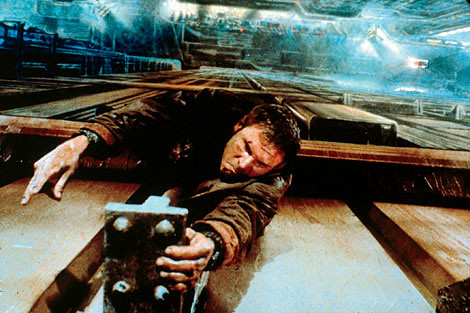
Set in a neon-lit, shadowy Los Angeles of 2019, the film stars Harrison Ford as Rick Deckard, an ex-cop (the titular “Blade Runner”) who gets pulled out of retirement to track down and kill a group of replicants (human-created android worker-slaves, designed to look indistinguishable from adult humans) who have escaped from an off-world colony. There’s also a woman. If this is sounding very similar to another specific genre then you’re not far off the mark. Film Noir is a heavy influence on both the structure and mood, from Ford’s morally dubious anti-hero to the pervasive first-person narration that frames proceedings in the original edit.
Doubtless this voiceover contributed in no small way to the film’s initial negative reaction. It was imposed (along with a contrived “happy ending”) by the producers when they seized artistic control in post-production and after preview screenings in which the audience complained the film was hard to understand. Both of the original screenwriters hated it, as did Ford (who remarked that it was written by “clowns”), so much so that a rumour even begun among fans that he had purposely delivered the dialogue inadequately, hoping it would have to be cut from the film. These aspects of the film were widely condemned by critics, along with the not-quite-coherent story and the greatest barrier of all, the slow pace. So when did audiences and critics alike have such a change of heart?
For one thing, Blade Runner‘s ascension to cult status was a slow process. There is a sense that audiences were ill-prepared for the film in 1982, coming as it did off the back of Harrison Ford’s Star Wars/Indiana Jones one-two punch of the previous years. Ford was keen for a role which offered more depth than those he was quickly becoming trapped in, but viewers were not to know what was in store, especially given the misguided advertising (the film was labelled an action-adventure; each of these terms is woefully inappropriate).
But over the following years, and beginning overseas where it was more favourably received upon release, people were growing aware that the more time you spent with the film, the more rewarding it became. Yes, the film is slow, but it is far from vacuous. Rather it is deeply contemplative, and the deliberate pacing combines with visual and thematic richness to create an experience which truly gets under your skin.
Foremost among the film’s heady considerations is what it means to be human. The woman – our femme fatale that Deckard encounters early on – is introduced to him as a replicant who believes she is human, and this calls into question all he thought he knew about the nature of humanity and the clear-cut line between man and machine. Though technically only a few years old, she has been designed with artificial memories going all the way back to childhood, a terrifying idea which recalls a segment of the recent Black Mirror Christmas special.
Blade Runner is rife with symbolism, chiefly the image of the eye. In this world where humans and replicants look exactly alike, seeing is no longer believing, and even our own memories cannot be trusted. Eyes both human and man-made are the focus of shots and dialogue throughout the film, and it’s no coincidence that the leader of the replicant splinter cell, Roy Batty (played by Rutger Hauer) pays a visit to the scientist who designed his. “If you could only see what I’ve seen with your eyes”, Batty tells the man, in a line which he echoes later during a famous soliloquy (perhaps the film’s most enduring and iconic scene).
Hauer gives the performance of a lifetime as Roy Batty, one of cinema’s most engaging and poetic villains. Scott cast the role without even having met him, so impressed was he by Hauer’s previous work, and Philip K. Dick was delighted by the choice, calling him “the perfect Batty – cold, Aryan, flawless”. Batty spends the film trying to find a way to expand his replicant model’s four-year lifespan (an intentionally built-in safety measure), coming as he is to the end of the cycle. It’s Batty’s actions that prompt us to question our notions of man and machine; while Deckard follows orders, carrying out his task with machine-like thoughtlessness, Batty wishes deeply to be in control of his own fate. He is cold and violent, but also fuelled by deeply human desires (“I want more life, father”, he tells the man who designed him). Batty is passionate, thoughtful and loyal to his friends – human qualities which Deckard lacks, and this subversion of man/machine roles is central to the film.
Rutger Hauer
Clearly then, even in its original cut, Blade Runner was an ambitious meditation on humanity, with themes and imagery which I have only begun to touch upon. The presentation, however, left a lot to be desired. The most dramatic improvement came in 1992 with the release of the Director’s Cut. Though limited by time constraints, this retooling was done under Ridley Scott’s supervision – it did away with Ford’s voiceover and the studio-mandated ending (leaving the film on a much more fittingly ambiguous note) and overhauled the film’s editing, presenting a more coherent narrative. But Scott’s final say on the matter didn’t come until 2007’s aptly titled Final Cut. Released for the film’s 25th anniversary, this definitive version was similar to the Director’s Cut but featured digitally remastered visuals, among other small changes, and was presented alongside an enlightening 200-minute ‘Making Of’ documentary.
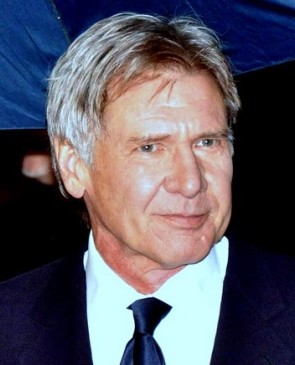
Harrison Ford
The Final Cut is unquestionably the definitive edition of the film, and it is this version that will be playing across cinemas nationwide for the next few weeks. The removal of the on-the-nose narration reveals the subtlety of the rest of the script; the characters are written with a degree of nuance unmatched in the genre, and much of the dialogue (Batty’s in particular) is breathtakingly lyrical. Blade Runner also looks better than ever before. Scott’s neon Tokyo-influenced L.A. is astounding in both its scope and intricacy, and the omnipresent police overwatch, as well as the searchlights which invade every last claustrophobic interior, suffuse the film with an oppressive atmosphere of inhumanity and paranoia. Vangelis’s electronic soundtrack perfects the film’s synthesis, a flawless blend of sci-fi and noir replete with mournful saxophone-centric love theme.
Reports have recently surfaced regarding the film’s planned sequel, though details of the project are few and far between. Scott is involved in a producing capacity, and has indicated that shooting will begin in 2015, based on an initial screenplay draft by Scott and Hampton Fancher, co-writer on the original film. Ford is also slated to return in a supporting role, and in terms of plot details Scott has offered only that the film will feature a female protagonist, and involves a search for Ford’s character.
Denis Villeneuve is attached as director, an interesting choice with a strong track record, but fans of the original remain apprehensive – though he has two stone cold classics to his name in Blade Runner and 1979’s Alien, Ridley Scott is notoriously inconsistent, especially in recent years (his most recent film, Exodus: Gods and Kings, was lampooned by critics). It remains to be seen how any sequel will be able to justify its own existence, being as it is that the original stood so well on its own and offered no clear avenues for potential follow-ups. Other involvements remain up in the air – will Vangelis return to score the sequel? For me, as for many fans, his music is so inexorably linked to Scott’s vision that it’s difficult to imagine the one working without the other.
However this project turns out, it won’t affect Blade Runner‘s mighty reputation. This visionary neo-noir masterfully blends a beautiful, awesomely immersive world and profound thematic content. It is essential viewing for film fans and sci-fi fans of all predilections, and has had a dramatic impact on all that followed, from Ghost in the Shell, the seminal cyberpunk anime, to informing the look of Gotham City in Chris Nolan’s The Dark Knight Trilogy. But through these decades of influence, Blade Runner remains a unique viewing experience, one which may never be equalled in the genre. You owe it to yourself to get to your nearest cinema, and watch this one up on the big screen.
Last week the Greek prime minister, Alexis Tsipras, met with Angela Merkel to discuss the looming debt repayments that his country will be unable to meet without urgent funding from its creditors. Greece’s majority left-wing coalition government is on the verge of resorting to ransacking the funds for the country’s pensions and public salaries in order to meet the payments due on 9th April.
Whether Greece should be granted an extension on its payment schedule seems like a question of morals to many, but Germany is looking very hard at the maths.
We often hear of the figures Greece owes the Eurozone. People have asked why, after such enormous financial intervention, the country remains troubled and uncooperative, unwilling to sell off its assets. Yet, we might care to ask how much of the money was actually received in Greece? How much money went to the poor in Athens? Jubilee Debt Coalition, a London-based group of organisations who campaign for the dismantling of unjust national debt repayments, has revealed troubling figures regarding the Greek bailout sum.
It argues that Greece is well within its right to ask for more lenience from Germany, who will make the ultimate call on extra loans or extensions. The group claims that of the billions the country received in bailout funds since 2010, only a mere 10% of that has found its way into public spending.
In 2010, Greece was in the red just shy of $310bn, lent to the country by reckless bankers and through the ever-deferring financial shuffling of the European finance markets. The ‘troika’ of the IMF, EU Commission and European Central Bank came to the rescue with a €252bn bailout.
However, there were a few matters to be settled before the people of Greece could feel the pinch loosening. Firstly, €34.5bn went straight to softening up the private sector to accept the 2012 debt restructuring. A further €48.2bn was spent bailing out the Greek banks following the restructuring, though even here considerable sums were dealt out to foreign private lenders. Finally a whopping €149.2bn begun the payment of original debts and interest from reckless lenders. Only €20.1bn reached the Greek people.
Today the Greek government remains in debt to the tune of €317bn, substantially more than was owed five years ago. However, now 78% of this debt is owed to the European and international public institutions, the IMF being the most considerable.
[mm-hide-text]%%IMG%%11370%%[/mm-hide-text]
It’s a double blow for Greece. The bailout money it seems was never headed for the Greek people but rather to the European financial sector, making sure that the fragile and rusty cogs were kept oiled for just a little longer. The second blow comes in the translocation of the debt from the private sector to the public sector. Before, a few institutions owed money. Now, the whole population does. Does that seem fair?
It may seem conspiratorial, but that would be to forget the genuine sense of responsibility to rebuild and restructure the European financial system in the wake of the 2008 crash. More cynically, one might say it is the inevitable hitch of being locked in a monetary union.
All the players want, and need, this to work. Yet the unprecedented nature of the scale of the debt has resulted in ample room for human error. The ignorance involved at a political level from all sides is extraordinary, but, as always, it is the people who will pay. The Germans didn’t know that when money was being lent to Greece they were responsible. Alternativ für Deutschland, Germany’s conservative Eurosceptic party, has brought up the issue that every tax payer in Germany is on the hook if the loans aren’t repaid.
If Greece defaults, the German government, as the biggest contributor to the bailout, will have to face a hefty 27% share of that loss. The pain of which will be felt by the German people.
It was almost all the colours of the rainbow, but not quite. Plaid and the SNP will need to migrate to orange and violet if we’re to see the full spectrum. But there was no pot of gold at the end of last night’s first and only leaders’ debate.
Another five years have passed and with them come the next set of party political broadcasts. As a young person, I very much appreciated ITV’s catchy title sequence. It was perhaps more interesting to watch than the beginning of the debate in which the tired party narratives were trotted out once again. Last night’s debate, appropriately set out like an episode of The Weakest Link, pitted seven parties against each other: Labour, the Conservatives, Greens, UKIP, SNP, Lib-Dems and even Plaid Cymru. The inclusion of the Welsh nationalist party perhaps comes as a surprise given that there were no Northern Irish parties present.
Questions focused on the NHS, education, housing, and, of course, immigration, which caused the biggest fracas between Nigel Farage, Leanne Wood and David Cameron (who for the most part hung back: some may regard this as Prime-Ministerial dignity, others as cowardice).
Most of the irritating points of any political debate remained. Very little was added to the discussion over the NHS. All parties have promised small increases in expenditure, but none will address the looming funding gap that the NHS will face in 2030. You can hardly blame them, it would be electoral suicide.
Farage, Miliband and Cameron (in behaviour reminiscent of his ‘Calm down, Dear’ gaff) frequently talked over or ignored the questioner, Julie Etchingham. And in the usual way direct questions were not answered. The guiltiest in this respect was Ed Miliband, who was asked a question about immigration and managed to work the question back to zero-hours contracts. When Cameron lobbed the uncomfortable “what about Mid-Staffs?” at Miliband, his mouth, which had been a major distraction all night (and not in a Tess of the D’Urbervilles kind of way) opened a little wider before he started answering a non-related question that hadn’t been asked. Milliband tended to rubbish the Conservatives rather than put his own policies forwards. That being said, the few ideas of his own he did put forward (raising the minimum wage to £8/hour and cutting the bedroom tax) were sound. And certainly, his concern about these issues came across as preferable to Cameron’s icy dismissal of the exploitation of zero-hours contracts.
Competing figures are another pitfall inevitable in any political debate. Last night’s affair was no exception. Is the NHS undergoing “massive privatisation” or not? Have the government increased or decreased funding in education? It was difficult to know.
Clegg could never hope to replicate the “Cleggmania” of 2010. He is seen by many of the public as damaged goods after raising tuition fees. He had little to lose in this debate, which perhaps gave him a new sense of freedom. It was certainly refreshing to hear a pro-European, pro-immigration stance. Clegg was admirably unafraid to stand up to Farage in a political context where many are too closed-minded or too cowed by UKIP to speak up.
It’s true that the main party leaders, and even Nigel Farrage, had very little to gain from this debate. His deeply immoral political strategies were no longer shocking. UKIP has been given enough airtime now such that their policies lack the novelty they once had. Cameron and Milliband will be pleased that they made no serious gaffs, which was really the best outcome they could hope for. It was Plaid Cymru, the SNP and the Green Party who had the most to gain. Whilst Natalie Bennett seemed more genuine than the other politicians she mostly fell flat, and Leanne Wood only had a few strong moments. Of the three women, it was Nicola Sturgeon who had the gravitas and sound policies that won her many allies among the rest of the Left in the UK, perhaps gaining allies for a Labour-SNP coalition. She is, politically, a big fish.
The seven-way debate marks an incremental but significant change for UK party politics. I am far from agreeing with all the changes that the coalition government has implemented in the last few months, but perhaps one day we will look back at 2010 and the subsequent wider distribution of votes as a positive transition from two-party gridlock to a more pluralistic and healthy democracy.
I was surprised by how little known and averagely-rated The Tale of Princess Kaguya, which netted Studio Ghibli’s first Academy Award nomination since Howl’s Moving Castle, was in the run-up to its release. It received some surprisingly mixed reviews based on what seemed to me fairly shallow criticism: that it was too slow-paced to keep the attention of its younger audience.
There wasn’t a single child watching when I went to see it at the cinema, and the subtlety of its themes was by far suited to a more mature audience. If reviewers were expecting one of Studio Ghibli’s usual charming adventure fantasies, they would obviously be disappointed. The Tale of Princess Kaguya is a troubling mix of dark folk-tale and harsh reality behind incredibly beautiful aesthetics.
The Tale of Princess Kaguya is a fairy tale which unravels fairy tales. Its beginning places magical occurrences in the realm of the possible, whereas later scenes seem to question a simple acceptance of these events. In one of the strongest echoes of folk-tale, the princess’s five suitors each go on a quest to find a seemingly unobtainable object in a bid to win her hand. In the end, they pay craftsmen to create these objects for them or are swindled by traders purporting to sell such things, inventing incredible stories of their quests in the process, to add credibility to their tale. The film allows us not to take these ‘magical’ happenings at face value, so that the events of the film can be interpreted in ways relevant to ordinary human experience.
These interpretations, although gently implied, can lead to conclusions dark enough to not seem out of place in the work of Isao Takahata, creator of Grave of the Fireflies. The contrast between earth’s chaotic cycles of life, of joy alternating with sorrow, are rendered in gorgeous watercolour. This is contrasted against the cold, quiet black-and-white precision of eternal life on the moon, Princess Kaguya’s true home. The effect is to suggest that the ‘life’ she momentarily wants to return to in her deepest anguish can only be death; she forgets all her experiences on earth when she returns.
The film creates other contrasts which are hardly straightforward. The life she lived in the woods as a child was one of companionship and closeness to nature, but also of near-starvation and hard work. Despite her certainty that she could have been happy in that life, and the way in which she is made to deny all emotion when living as a subjugated female aristocrat, I felt as if she was merely telling herself a story which she found comforting from her present perspective.
Her aristocratic life is, distressingly, one which can only be escaped by death or by dreams, and two of the most moving scenes of the film are only revealed as dream-sequences after they have occurred. As she imagines breaking out of her confinement, shedding her stifling layers of luxurious robes to race through a landscape that becomes increasingly abstract with dark scribbles of charcoal, it is as if her mental distress unravels the art of the film.
A flying sequence between her and her only real love interest Sutemaru recalls Chirio and Haku’s flight from Spirited Away and perhaps deliberately so, in a film that is suited to self-conscious evocations of other films and other stories. Or perhaps it’s merely drawing on Studio Ghibli’s general use of flight as representative of thwarted love.
Its radical difference to Takahata’s other films suggests his great flexibility as a director who bravely but rightly trusted in the suggestive power of folk stories and beautiful, cleverly-deployed imagery to carry the film.
In the introductory video to National Theatre Live’s screening of A View from the Bridge, the artistic director of the Young Vic, David Lan, makes a cogent point. We already think we know how this play should be performed, and he’s right. Arthur Miller’s 1956 story about a Brooklyn docker family on the verge of tragedy is one with which many theatre goers (and English Literature GCSE students) will already be familiar.
But it soon becomes clear that Belgian director Ivo Van Hove’s take on A View from the Bridge is no conventional production. Van Hove condenses the play to its essence, defamiliarises it, and presents it to us in a way which is both refreshing and arresting. The resulting production has proven so popular that it is now enjoying a run in the West End, and is being broadcast in cinemas across the country as part of the National Theatre Live programming.
National Theatre Live is having a bit of a moment. The initiative, which records performances in London and then screens them across the world, now forms a staple part of many independent and chain cinemas’ output. It launched in summer 2009, and is now well into its stride with over 3.5 million viewers in more than 1,100 venues.
But with the ticket prices usually higher than normal film screenings (an eye-watering £17.50 for an adult at the Phoenix Picturehouse), do they really offer enough for the money? For £17.50, I admit I’d be reluctant. NTLive is hardly a feasible audience outreach strategy at such a prohibitive cost. But for the more tolerable sum of £8.00 (which I paid at the Odeon in Manchester), A View from the Bridge offered an evening of fantastic theatre at great value.
Van Hove’s avant-garde influence on the production is felt immediately. The set is minimalist in the extreme – blank walls, no furnishings, largely drab costumes. The stripped-back surroundings put pressure on the actors to nail Miller’s complex web of character motivations. A challenge to which the cast rise admirably.
Mark Strong is utterly magnetic as Eddie Carbone; the longshoreman with a consuming love for his niece, Catherine. When two relatives from Italy begin to encroach on his territory and threaten his honour, Eddie’s paranoia drives him to destruction. Strong strikes the delicate balance between emasculated vulnerability and dominant aggression, as Eddie is slowly stifled by his jealousy.
Emun Elliott brings a quiet, menacing gravitas to industrious immigrant Marco. The moment when he holds a chair aloft in an assertion of strength is dramatised to biblical proportions by Van Hove’s choice of near-celestial lighting and choral crescendo. This quasi-religious tone is echoed by the striking physical composition of the scenes. At times, the way the characters position themselves to emphasise the power dynamics at play feels as carefully calculated as an Italian Renaissance painting.
Breezy ingénue Catherine is portrayed competently by Phoebe Fox, and the scenes with her sidelined aunt Beatrice, played by the excellent Nicola Walker, betray her slightly sinister acuity in a way which never feels heavy-handed. Similarly, the niggling sexual undertone to Eddie and Catherine’s relationship is accentuated from the start, though Strong and Fox keep it at a controlled simmer rather than over-emphasising its sordid quality. Still, Fox is most convincing in her comic interludes with flamboyant upstart Rodolpho (Luke Norris) – even if her Italian-American accent is less than perfect. Rodolpho himself is sweet and eager without being saccharine. His exclamation of “My little girl!” to Catherine in their moment of passion is downplayed, but still wonderfully jarring.
The whole cast deserve to be lauded for the superb, seething tension they maintain throughout. Van Hove’s decision to do away with an interval pays off. By the time the play nears its emotional climax, the intensity has reached electrifying, almost unbearable levels. Van Hove’s avant-garde leanings also find expression in his decision to have the stage directions vocalised by lawyer/narrator Alfieri in the heat of conflict. Far from being irritating, this bold move was reminiscent of a court record being relayed, and gave a delicious sense of fatalism to the rapidly evolving action.
So can the intensity of the theatre experience be effectively transmitted across a cinema screen? For the most part, yes. I was certainly gripped by the unfolding action, and the filming is unobtrusive enough to make the experience feel immersive. It is remarkably easy to forget you’re in a cinema auditorium and I doubt I was the only person fighting the compulsion to applaud at the end. That said, the surprising (and slightly gimmicky) nature of the final scene elicited a couple of sniggers from the cinema audience – a reaction it is hard to imagine would have happened in a theatre environment.
A cinema screening is never going to match the raw presence of a performance seen in-the-flesh. But if the aim is to deliver a feel of the play, and, as Ivo Van Hove professed in his video interview, to “reach an audience as big as possible” in the process, then NTLive hasn’t done a bad job at all. A standardised, lower ticket cost would strengthen the initiative, but this production of A View from the Bridge certainly deserves to be seen.