Monday 1st June 2026
Blog Page 2

Physics teaching to relocate amid asbestos concerns

0

The University of Oxford is relocating its undergraduate physics practical teaching from the Denys Wilkinson Building amid concerns about the presence of asbestos at the ageing site.

From Michaelmas this year, some practical teaching labs will move to the former Biochemistry and Biological Sciences Teaching Centre, with the remainder moving by Michaelmas 2027. The Biochemistry and Biological Sciences Teaching Centre will be adapted for physics practical teaching. Around 600 undergraduates currently take part in compulsory practical coursework in the Denys Wilkinson Building across the first three years of Oxford’s physics degrees. 

A University spokesperson told Cherwell that the decision to relocate had been taken proactively “to avoid the risk of a sudden building failure causing disruption later”. The spokesperson added that the Denys Wilkinson Building, built in 1967,  “is being carefully managed through the later years of its usable life”, adding that the building “has some legacy issues, including asbestos”.  

‘Asbestos’ refers to several naturally occurring fibrous minerals that are resistant to heat, water, and chemicals and have been widely used in construction in the past. Asbestos is classified as carcinogenic by the World Health Organisation and has been banned in the UK since 1999.

A 2025 investigation by Confront Powers revealed that the University of Oxford breached asbestos management regulations, failing to audit buildings or complete asbestos management plans. The investigation found that the University identified 4,609 asbestos-containing materials across its buildings, with 21 buildings classified as “high risk”. 

The University spokesperson told Cherwell that the asbestos “is being managed safely, in line with regulations, and we are confident this means no building users have been put at any risk”, with regular air monitoring providing “an ongoing assurance” to the University. The spokesperson added that the relocation from the Denys Wilkinson Building “will allow teaching to continue without disruption while we address the building’s longer-term issues”. 

Oxford and Ohio Universities receive £9.24 million in funding for research into rare blood cancers

0

The Oxford-Harrington Rare Disease Centre has received a share of a £9.24 million investment for their research into chronic lymphocytic leukaemia (CLL). The donation, split with the University of Ohio’s Seidman Cancer Centre, was given by philanthropists Susan ‘Dee’ Haslam, who was diagnosed with CLL in 2021, and her husband, Jimmy Haslam. 

The Oxford-Harrington Rare Disease Centre functions as a transatlantic collaboration between the University of Oxford and the Harrington Disease Institute, one of the University of Ohio’s teaching and research hospitals. The centre focuses on formulating treatments and cures for rare diseases, and has devised 214 medicines since 2012. 

In a statement, Ms Haslam said, “We hope to increase knowledge of CLL, generate new treatments and give others the confidence and information they need to navigate the disease”. 

David Cameron, former British Prime Minister and Chair of the Oxford-Harrington Rare Disease Centre Advisory Council, said in a statement: “I am delighted to see this generous support, which can help unlock meaningful advances in areas long overlooked and urgently in need of attention. This investment highlights the importance of international collaboration in accelerating progress for people affected by rare conditions.” 

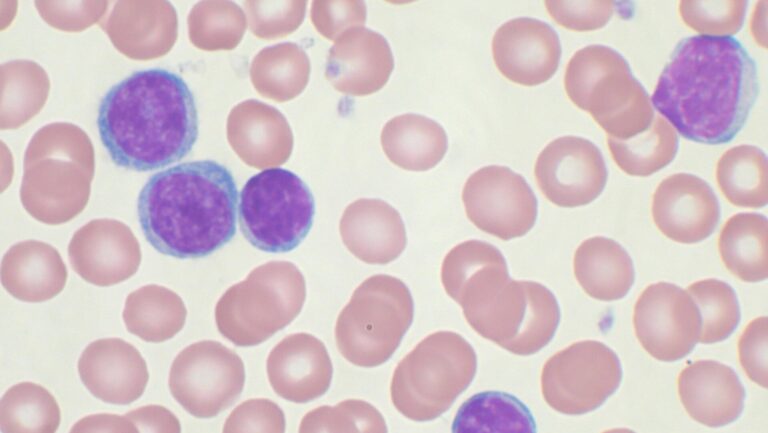
A rare type of blood cancer, CLL is a slow-moving disease that typically impacts blood and bone marrow. Abnormal white blood cells develop within the marrow, impacting its ability to make healthy blood cells. Often these abnormal cells move into the blood stream, and build up in the lymph nodes and spleen. 

There are around 10 cases of CLL diagnosed in the UK every day, and around 60 a day in the US. 

Scientists are uncertain as to the cause of the cancer, but many have theorised that there is some hereditary element. Whilst there is currently no cure, symptoms can be managed through treatments such as chemotherapy, targeted medicines, radiotherapy, and sometimes surgery.  The donation will provide the funding to push new therapeutics into clinical trials. 

Sexual harassment more widespread at selective universities

0

Research recently published as part of the 2025 Office for Students (OFS) sexual misconduct survey has found that sexual harassment is nearly twice as common at more selective universities. The survey found that sexual harassment was reported by 35% of students at ‘high tariff’ universities, in comparison to 17% at ‘low tariff’ universities.‘Tariffs’ are measures of how selective a university’s admissions process is, with Russell Group universities making up most of the ‘high tariff’ institutions – including Oxford and Cambridge. 

The study found that, across all universities, nearly a quarter of students have experienced sexual harassment, with sexually suggestive staring and unwanted sexual comments being the most commonly reported. Female students also reported substantially higher levels of sexual harassment and sexual violence than male students across all universities. LGBTQIA+ students also reported a higher prevalence of sexual harassment and violence, along with less confidence in the reporting and support systems available. 

Over 42% of students with a mental health condition also reported having experienced harassment. Students studying certain subjects were also found to have experienced harassment at a level disproportionate to the average, with 42.4% of language and area students reporting some form of sexual harassment, along with 41.3% of veterinary studies and 40.3% of medicine and dentistry students. 

The survey also found that 14.1% of the overall student body had experienced sexual assault. Patterns within different sub-sections of the student population found in sexual harassment data generally replicated into sexual assault data, with the most affected group being students with a mental health condition. 

The University of Oxford has been accused of systemically mishandling sexual misconduct cases, and has previously faced controversy for using anonymity orders to stop the media reporting on cases of sexual harassment – specifically in the case of Professor Soumittra Dutta, the former Dean of the Saïd Business School. Dutta was found by an inquiry to have sexually harassed a female academic and stepped down from his position. The University of Oxford used and later withdrew a request for anonymity in the employment tribunal. 

A recent Bloomberg investigation also examined the mishandling of sexual harassment complaints at the University of Oxford. The investigation alleged that the University continually mishandled sexual harassment complaints about senior male academics, taking place over 9 months of research and interviewing over 50 people. The report described the University of Oxford as an environment in which sexual harassment allegations were dealt with slowly and ineffectively, with University staff stating that the public status of academics appeared to be prioritised over student welfare. The report also touched on individual colleges, where people from New College told reporters that several academics had a reputation for predatory behaviour towards more junior women. 

In 2023, the ongoing project ‘OUR SPACE’ (Oxford Understanding Relationships, Sex, Power, Abuse, and Consent Experiences) found that 50% of students have experienced sexual harassment during their time at Oxford, of which 18% who had experienced sexual violence.

A spokesperson for the University told Cherwell: “The University is developing a bespoke, in-house online training programme to strengthen how Oxford prevents and responds to harassment and sexual misconduct. This will replace the existing Consent for Students course and complement the in-person healthy relationships and consent training delivered by student facilitators. 

“There has been a significant expansion of prevention and training activity across the collegiate university, including an almost 80% increase in the number of college staff trained in 2024/25, which has supported greater awareness, including of the routes through which students can seek support, as well as proactive referrals. The Sexual Harassment and Violence Support Service continues to expand the in-person Healthy Relationships and Consent Workshop programme, delivering the programme across 18 colleges this academic year (up from 15 colleges in 2024/25), with 118 student facilitators, and trained around 2,000 students.”

The OFS sexual misconduct survey strongly emphasised that finding the causes of these variations in the data was beyond the scope of the present analysis”, calling for “additional qualitative or longitudinal evidence”. The OFS also published condition E6 of the regulations for institutions of higher education on 1st August 2025, which “‘sets out requirements for universities and colleges to have a comprehensive source of information setting out its policies and procedures on incidents of harassment and sexual misconduct”’. 

The OFS told Cherwell that they “would encourage all institutions to learn from their own data”, and that they would “publish institutional level data from the 2025 and 2027 surveys together, to support transparency and strengthen the evidence base across the sector”.

The OFS used a direct survey system to generate prevalence estimates independent of institutional reporting systems”. They also separately researched students’ experiences of their respective universities’ reporting and support systems, publishing the analysis. It was found that out of those affected by sexual harassment and violence, only 12% had made a formal report to their university. 

Summer VIIIs roundup: day two

0

Early divisions started strong, with many boats that bumped yesterday continuing on the same trajectory towards ‘blades’ at the end of the week, for which they need to bump each day. 

One of the day’s biggest wins was for Queens M2, who bumped up to first in Division V, becoming the ‘sandwich boat’. This means that they would row in Division IV as well on the same day to allow promotion and relegation between the divisions. To secure a place in Division IV for Friday, they needed to bump again. This was not an easy task, having just raced in the previous division. Incredibly, Queen’s M2 was able to achieve an overbump, as crews in front of them had already bumped and stopped racing. They now sit tenth in Division IV, but will be looking to continue improving throughout the week. To add a cherry on top of an already large cake, Division IV is the lowest fixed division, meaning that, if Queen’s stay there for the rest of the week, they will automatically qualify for Summer Eights next year. 

On the women’s side, there were fewer overbumps than yesterday, as nerves began to settle and matchups got slightly more even. However, Oriel W3 demanded attention as they were able to achieve an overbump on Mansfield W2. 

It’s always impressive when a second boat can bump a first boat; Univ W2 did exactly that, bumping Trinity W1 and evidencing the sheer strength of their programme. This was also shown through the sheer number of Univ crews taking to the water this week. 

In the higher men’s divisions, St Anne’s, St Hilda’s, Exeter, and Worcester’s first boats continued an upwards trajectory, all bumping for the second day in a row. They will all hope to climb further this week, aiming for blades – an impressive feat from any college’s top boat. 

On the women’s side, the top boats from St Hugh’s, St Catz, Somerville, and St Anne’s all bumped again. These crews are all on course for blades, and ones to watch on Friday and Saturday. 

Crews in Division I on the men’s and women’s side were eager to show what they could do after yesterday’s racing was cancelled.

The men’s top division was a site of much change as only two out of the thirteen boats rowed over. One of the most notable bumps was from Oriel on Wolfson. This happened just as the crews were coming out of ‘The Gut’ – the narrow and curved part of the river, between Donnington Bridge and Longbridges. This meant spectators on Boathouse Island got a nice view of the events. The two top-dogs on the river, a bump on Wolfson means that Oriel now sits in headship position. Oriel, hungry for headship this year, will be thrilled to have taken it on the first day of Division I racing. They will be hoping to hold Wolfson off, who will undoubtedly come out all guns blazing over the next two days.

On the women’s side, in the top division only 4 of 13 boats rowed over. One of these boats was Pembroke, which remained in the top spot. Univ will be looking to challenge them tomorrow, as they were able to bump up into second place on the river today.

Nerves in the top divisions were definitely still a factor, especially after yesterday’s cancellation. After another significant rejig today, crews in the top division will need to keep their composure for the races over the coming days. 

The racing action all builds towards an inevitable crescendo: Saturday, the final day of racing. As crews get more used to the course, competition and the racing format, races may become tighter, and faster. With the weather set to remain positive over the next two days, there is rarely a better time to row.

Oxford on-screen: Historical atmosphere and fantasy worlds

0

There are many questions you inevitably get asked when you tell someone you go to Oxford, ranging from the extent of the workload, the quality of the nightlife, and whether everyone you’ve met actually went to private school.

“Is it just like Hogwarts?” is a more outlandish query, and yet I’ve found it to be one that is just as common. On more than one occasion, I have been asked how much Oxford really resembles this fictional setting of the Harry Potter movies. Although much of the childhood nostalgia for this series has been soured by its author’s political output on social media, it remains widely popular, and many of its fans associate its magical school with the city and the University of Oxford.

The fact that parts of the Harry Potter movies were filmed in Oxford is a fun piece of trivia that has become common knowledge, and is frankly difficult to ignore when the city centre is replete with tourist shops full of merchandise – including a rather off-putting sculpture of Dobby in the window of one on Broad Street – not to mention the tourists themselves, often decked out head-to-toe in the Hogwarts uniform, sporting cloaks, ties, and wands.

Even my own college, Wadham, which makes no appearance in the Harry Potter films and sports architecture probably too Jacobean to truly embody Hogwarts’ medieval allure, is frequently bombarded with tourists in such elaborate fancy dress.

A range of locations in Oxford appear in these movies, and in slightly different ways. While the Divinity School and the Duke Humfrey’s Library provided actual filming locations for the Hogwarts Infirmary and Library, respectively, Christ Church’s Hall acted as the main inspiration for the Great Hall seen on-screen. Moreover, Christ Church was not the only college to make it into the films; a scene in the fourth instalment in the franchise was famously filmed in New College’s courtyard.

Aspects of a film, such as the script, the acting, or the music, are more conventional areas of focus for analysis than filming location, and yet the latter contributes much to a film’s atmosphere, especially when the setting is fictional. In the case of the Harry Potter series, Oxford’s medieval architecture affords the fantastical Hogwarts with a sense of mystery and romance that enhances the magical atmosphere. The authenticity of these historic buildings makes the setting more immersive; you really get the sense that this is an ancient castle with years of history and many secrets to explore.

And yet old buildings do not only evoke feelings of magic and excitement, a fact shown by another movie that makes use of Oxford as a filming location.

Another Country (1984) centres around Guy Bennett – based on Guy Burgess, a member of the Cambridge Five – a Soviet double agent whose experience at a British public school in the 1930s, as a young gay man dealing with romance, conflict, and persecution, lays the groundwork for his eventual defection.

Here, the filming location does something slightly different. The medieval architecture confers a sense of prestige associated with a long history, imbuing the public-school setting with institutional power and reinforcing Bennett’s lack of belonging. Confronted with a set that harks back to medieval days, the audience is reminded of the historic and traditional nature of the world Bennett inhabits, highlighting even more how he does not fit into it.

One of the film’s opening scenes perfectly captures the importance of the filming location; at a Remembrance Day service, the schoolboys stand in orderly formation, chorusing out a hymn with expressionless faces. While Bennett sings along, he stares longingly at another student, eventually stopping singing completely as they engage in prolonged eye contact. The romantic undertones of such an interaction hint at same-sex affection; that it is romantic is seemingly confirmed by the frequent cuts to another scene, in which a teacher discovers two other students engaged in clandestine same-sex relations.

The quadrangle in front of the Bodleian Library acts as a backdrop to all of this, only amplifying the sense of transgression in the face of custom and convention. An expression of same-sex attraction, already subversive, becomes even more significant when juxtaposed with a background that carries with it all these implications of history and tradition and conservatism.

The prestige of Oxford as a backdrop also emphasises the power of the public-school institution, adding to the picture of an illustrious educational establishment possessing significant authority. As the narrative unfolds, it becomes clear that Bennett’s sexuality cannot be reconciled with the world he lives in unless it is concealed or repressed. The powerful institution suppresses his attempts to carve out a space for himself as a gay man, and he is left with no choice but to look for belonging elsewhere, which he does by defecting to the Soviet Union.

The relationship between film and filming location does not only work one way. If the prevalence of Hogwarts comparisons and wand-brandishing tourists tells us anything, it is that popular perceptions of both the city and the university have been powerfully influenced by the Harry Potter franchise.

While Oxford as a filming location generally improves a movie – it helps to build atmosphere, establish an immersive setting, and enrich the narrative – the impact that movies have on attitudes towards Oxford can be less positive. In one sense, the association with a fantasy setting evokes a sense of magic, which makes Oxford feel even more charming. Nonetheless, constant references to a children’s franchise can feel a little juvenile and out of touch.

After all, these associations contribute to a view of Oxford that is more fantasy than reality, and it is important not to put Oxford on a pedestal, and lose sight of the fact that it is a university like any other. Ideally, we should strike a balance; an awareness of the reality of life at Oxford can co-exist with an appreciation of its grand architecture and historical atmosphere.

Still, in spite of my reservations about grown adults’ fanaticism for a story meant for children, I’m inclined to think that these associations are largely harmless. If students choose to apply to a university because it reminds them of a nostalgic film favourite, or if tourists want to pose in front of the Radcliffe Camera dressed in full wizarding gear, it simply reflects how the influence of film means Oxford has become something different for some.

Oxford reviews policies following EHRC transgender guidance changes

0

The Equality and Human Rights Commission (EHRC) published its updated draft Code of Practice on Thursday, 21st May, prompting responses from across the University over the potential impact on transgender students and staff. The EHRC is a national public body established by the 2006 Equality Act, which acts as the independent equality and human rights regulator.

The 340-page document follows last year’s Supreme Court ruling in For Women Scotland Ltd v The Scottish Ministers, which ruled that the terms “sex”, “woman”, and “man” in the Equality Act 2010 refer to “biological sex”. The draft guidance states that “a trans man with a GRC [Gender Recognition Certificate] is a woman and a trans woman with a GRC is a man”. 

The updated Code also states that if a service provider “allows trans people to use the service intended for the opposite sex, the service will no longer be a separate or single-sex service under the Equality Act 2010”. The guidance adds that organisations should consider whether “women’s safety, privacy and/or dignity would be at risk” from allowing trans men into “single-sex” spaces.

The publication of the Code has raised questions for universities over how facilities such as accommodation, toilets, and changing rooms may be managed once the guidance is formally approved. In a statement shared online, the University of Oxford confirmed it was reviewing its policies and practices in light of both the Supreme Court ruling and the EHRC’s updated guidance. The University added that the review includes “existing facilities across our estate”.

In a statement to Cherwell, a University spokesperson said: “The University is reviewing the updated Code carefully to ensure we conduct our activities within the parameters of the law, and in accordance with our values. We also note that a Code of Practice for employment is still to be released.

“Oxford remains committed to being an inclusive university where everyone belongs and is supported to succeed. We will continue to work to maintain an environment in which the rights, dignity, and wellbeing of all members of our community are respected, including all members of our LGBTQ+ community.”

The Oxford Student Union (SU) also shared a statement online, saying the updated guidance had “significant implications for LGBTI+ people, particularly those who are TNBI+”. Reaffirming commitments made in its recently updated Trans, Non-Binary, Gender Diverse and Intersex Inclusion policy, the SU stated that it remains committed to “protecting the rights, safety, dignity, and health and wellbeing” of TNBI+ students across the University.

The SU added that it was reviewing the guidance “to better understand how this may impact TNBI+ students” and would provide updates on any actions it planned to take. When approached for comment by Cherwell, the SU referred back to its existing public statement.

Somerville College has also published its own independent statement – the only college to have currently done so – titled “Including the Excluded”. In the statement, it said that “trans rights and women’s rights [are] not in opposition to each other, but as part of the same struggle for dignity, equality and human rights”. The college added that it would “never tolerate harassment, bullying or discriminatory behaviour towards anyone”, noting that discrimination against transgender people remains prohibited under the Equality Act 2010.

The President of Oxford University’s LGBTQ+ Society told Cherwell that the updated Code reflected “the product of years of hateful campaigning from anti-trans organisations”, and cautioned against over-reliance on legal reform, writing that “our current Government does not care about trans people beyond our use as a distraction from other issues”. She added that “liberation is the goal, and legal changes can only ever be a part of that”, concluding that “having a vibrant and thriving trans community… in spite of current national politics – will always be more important to me”.

The publication of the Code comes shortly after controversy surrounding a change to Oxford University Rowing Clubs’ (OURCs) Rules of Racing, which now state that only athletes assigned female at birth may compete in women’s boats. The rule change has prompted backlash from across student boat clubs, with concerns raised over both privacy and enforcement. LGBTQ+ Soc President made clear to Cherwell that they do not view these changes and the updated Code of Practice as “unrelated events”.

Oxford for Trans Rights has arranged a “March for Trans Rights” for Saturday, 30th May at Bonn Square in response to the EHRC guidance.

The rise of Stats.fm: Music as a signal of identity

0

It used to be hard to tell what music someone listened to. There were no public Spotify playlists, no Stats.fm top tracks to brag about, and no songs attached to your termly Instagram dump. Today, however, music taste can become an inextricable part of how your identity is perceived. With unprecedented access to data on our own habits, and those of others, we can tie our music consumption ever more tightly to our own personal brand. This has led to an experience of music-listening which is mediated by the public perception of precisely what music one listens to and what it says about them, in ways which have arisen alongside an individualistic shift in the personal branding zeitgeist.  

It is easier than ever to track your listening. With the advent of automatic tracking software such as Stats.fm and its more manual predecessor Last.fm, we no longer have to painstakingly keep a spreadsheet to know exactly what we listen to at every hour of the day. In fact, streaming platforms such as Spotify have even started handing us generalisations of what we listen to per hour, with ‘Daylists’. These consist of the music you most frequently turn to at that specific time each week, updated every few hours and accompanied by a few handy adjectives. My personal favourite title has been ‘Instrumental ballroom dancing this Thursday afternoon’, but, crucially, in Spanish. Daylists, notably, are made using AI to gauge these preferences, perhaps making them the epitome of this algorithm-led listening, creating pseudo-echo chambers of taste.   

This monitoring ability also comes hand in hand with an ease of discovery which would have previously been unthinkable. Rather than reliance on local record/CD shops – which would stock new releases, the well-known classics, and some local talent – or even the radio, offering similar coverage, with streaming, algorithmic listening is now in full swing. This means that consuming an artist’s entire discography is no longer something which requires effort, simply hit play on their artist page on the streaming platform of your choice. Additionally, once an algorithm works out that you’re enjoying a certain song, it can feed you more just like it with precisely zero labour on your part. The time between encountering a genre for the very first time and being a relative expert on it can now be cut down to a matter of hours, and you can now have statistical proof of your endeavours, too. 

Simultaneously, sharing your listening habits is now a very commonplace activity, largely through social media. Without even touching on the recent controversy over artists hiring marketing agencies to – allegedly – fabricate online fandoms for themselves, music is a core part of most social platforms today. Scrolling through somebody’s Instagram page, or their story highlights, now serves as a run-down of what they want you to know about their music taste (as well as obviously what they want you to know about their life). A real on-the-nose example is the annual swathes of Spotify Wrapped graphics – a full year of your listening neatly packaged for exhibition. Personal consumption has never been so public. This is in stark contrast to a time when one had to go out of their way to share these things: band merch, badges, physical copies of music all required active effort to acquire and show off. Today, the equivalent is three taps on a screen and a 30-second listen-through of the clip to make sure it’s communicating the right vibe. 

This has all come together to produce a world in which your music consumption is a core part of your personal branding, your aesthetic, what would be on a Pinterest mood-board titled [your name]-core. In other words, music has become another consumable good mediating your personal identity. It’s another element used to express Who You Are™, insofar as this is your publicly available self, visible by others. There is now a break between authentic self-expression and one’s ‘music taste’: we are all pretending to not know that when we’re listening there’s a non-zero chance that this particular song-rotation will be made public in some form or another. While I’m sure some people do manage to marry the two, and are wholly unashamed of every song they’ve ever streamed, or who simply do not partake in the stat-posting and musical accompaniment to photo dumps, I think it is worth acknowledging that our relationship with music is changing. It is far harder to maintain a separation between your taste, your identity, and how you are thought of by others.  

Never before has it been this easy, or quick, to completely change your go-to music selection with the help of streaming platform discovery functions, nor have we ever had the tools to see and share our habits at the level of detail we do now. This has contributed to everyone knowing far more about each other’s tastes than they used to, and the culture of sharing your interests to be cool online has reinforced this. In essence, choosing what to listen to at any given time is, for many, no longer a decision based purely on the feelings of the moment, but is instead mediated by the knowledge that they are not alone in witnessing this choice.

Summer VIIIs roundup: day one

0

It’s one of the hottest Mays in recorded history. Crews are wearing layers of factor 50, racedesk is wilting under the heat, and the greatest danger to passersby on the towpath isn’t bankriders, but dehydration: Summer Eights has begun.

Compared to the late Torpheads, the weather for this Summer Eights promises an entirely different setting. With the Isis down to steady green flag levels – where it’s safe to navigate for all crews – and with sun predicted for the entire week, rowers and viewers need not fear unexpected downpours. A drop in the heat from 29 degrees average on Thursday to 23 degrees on Friday and Saturday, students can be pleased to know that conditions will be significantly cooler, bringing an easier watching and racing experience, especially for the more popular days. 

In the men’s divisions, there were relatively few dramatic changes from the starting to the finishing order, with the vast majority of crews either rowing over or managing to bump the crew ahead/be bumped from the crew behind. However, two particularly radical results are of note: New College M3 deserves plaudits for achieving an overbump on Jesus College, knocking them down into division VI and leapfrogging St Edmund Hall M3 and Green Templeton’s M2. New M3 up three places, overbumping on Jesus College’s M2 to send them down into Div VI. Somerville M2 overbumping on Pembroke M3 to place them at the bottom of Div VI. Given this was the first day of VIII’s, we can expect many of the lower crews, particularly the Beer Boats, to improve in form over the course of the racing week.

In the women’s divisions, there were some more dramatic changes in the finishing order. With Green Templeton College W3 catching Magdalen W4, Worcester W4 overbumped on Anne’s W3 to take 82nd place from them, consigning them to the bottom of the running order. 

Two of University College women’s lower boats also had some exceptional results, with W4 achieving a handy 4 crew overbump to demote Pembroke W3 down to division VI and to sit in the same division as the college’s third crew – for the time being. Univ’s W3 managed to overbump Lady Margaret Hall, Mansfield, St Catz, Queens and Peters W2 to jump all the way to the top of division VI, becoming the sandwich boat for division V. A later bump which would have placed them into division V was reversed after it was revealed that Balliol W2’s cox had conceded unusually early out of fear of being actually bumped by St Hilda’s W2, leaving Univ to chase them down but receiving no bump. More impressively, in two of the higher divisions, division IV and III, there were overbumps and large leaps in position here, too, where the contest is likely to be more even and such dramatic results thus unlikely. Brasenose W2 overbumped Regents W1, Lincoln W2 and Worcester W2 to haul themselves towards the middle of Division IV, leaving St John’s W2 facing a lonely row to the coxing stone. Moreover, Catz’ W1 pulled off an audacious bump into division III, leapfrogging Queens and Peters W1. 


Considering the proliferation of gambling and betting apps, it’d be folly to round off today’s account without consideration of Bump’s trader, which every good Oxford rower should have. The most bought crews – i.e. those expected to advance the most over eights – on the men’s side were Hilda’s, Hertford, and Worcester M1’s, and on the women’s side St Catz and Balliol’s W1, and also Univ W3. Speaking of Univ, they have entered the most crews this year at a whopping 9 – 5 men’s boats, and 4 women’s crews – only two short of the all-time record set by Oriel in 1990, when more colleges entered, on average, far more crews.

From sub fusc penguins to college puffer herds: The ‘uniforms’ of Oxford

0

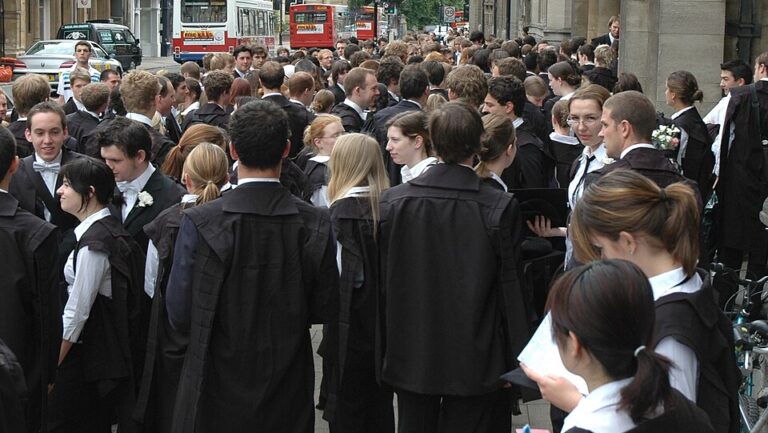
At my matriculation, I remember laughing with my friends about how it seemed that the entirety of Oxford had been “overrun by penguins”. Everywhere you looked, you would see sub fusc, that bizarre getup that the University demands be worn for its official ceremonies and exams. During my first Michaelmas, as the weather got colder, it was impossible to walk about town and not see herds of students in college puffers, and I soon learned to recognise the various college crests embossed on them. Later, on nights out, you could always recognise a group of Oxford students by their (by then, slightly out-of-kilter) black tie. With all these sightings of homogeneous clothing, it seemed to me as though people spent more time in ‘uniform’ at Oxford than they would have done in sixth form or high school beforehand. But does Oxford really have ‘uniforms’? How might we define them? And what purpose might they serve? 

Does Oxford have ‘uniforms’?

When the term first entered English about 1748, according to the Oxford English Dictionary, a uniform was “a distinctive dress of uniform cut, materials, and colour worn by all the members of a particular naval, military, or other force to which it is recognized as properly belonging and peculiar”. Aside from the definition’s militaristic associations, what interests me is the adjective “peculiar”, here meaning “exclusive” or “unique”. While we might think of uniform as simply meaning sartorial homogeneity, lots of uniforms also stand out for their unique oddness and lack of any general practicality: school blazers, to use a well-known example from the UK, are really rather constricting, useful only when you have copious items to store within their many pockets. They are often brightly and strangely coloured too. Nobody would wear them in any other context outside of school. 

There is a second definition of “uniform” in the OED, in use since 1930: “The customary dress or mode of appearance characteristic of persons of a certain age, class, or lifestyle.” This marks a semantic widening: a term that entered English with quite specific reference to the flamboyant military uniforms characteristic of the 18th century, had by the 20th century broadened its meaning to any recognisable mode of dress. 

Where, then, does Oxford fit into this? What might count as uniforms in Oxford? First to mind come sub fusc and academic gowns, black tie (and indeed white tie for those rather fancy balls), and college merchandise. 

Sub fusc, as the oldest of the bunch, seems to fit most closely with the 1748 definition. It certainly is ‘peculiar’, as the joke about the “penguins” illustrates. Both black tie and college merchandise, on the other hand, seem closer to our 1930 definition. They could certainly be said to be ‘characteristic’ of Oxford students. The one factor that legitimates all of these forms of dress, however, which makes their ‘peculiarity’ acceptable, is the context of the University. Sub fusc, black tie, and college merchandise all link to that institutional power and prestige. These can be called ‘uniforms’ in the sense that they are homogenised forms of dress, unique and peculiar to Oxford. 

College puffers

In order to find out how college merchandise is purchased and received by students, Cherwell reached out to JCRs to find out the popularity of merchandise, whether students thought it could be considered a ‘uniform’, and in what ways it was different from the other ‘uniforms’ that we have discussed thus far. 

The Oriel College JCR President told Cherwell: “Oriel JCR donates all the proceeds from stash orders to a charity chosen by students.” This, in comparison to sub fusc or black tie, shows that there is a much more altruistic motive to purchase merchandise. Buying college stash is an act of goodwill as much as it might be a consequence of wanting to be seen belonging to the University. 

At other colleges, proceeds from stash sales may go back into the JCR. The Keble College JCR President told Cherwell that Keble’s stash sales represent about 5% of their annual budget. In Michaelmas and Hilary this year, Keble sold 148 quarter-zip fleeces and 89 puffers, to a cohort of just 124 new undergraduates this year. The quarter-zips were the most popular item – interesting to note, as it shows the idea that college puffers are the most popular choice to be something of a myth. Even accounting for older students, it seems likely that well over half of the freshers bought a puffer, and likely even more bought a quarter-zip. 

It is clear that college stash, as a purchase made by choice, and with proceeds going to JCRs or to charities, is acquired in a very different context to sub fusc or black tie, and so has a very different meaning to students. It is an optional purchase, and not a cheap one at that: in Corpus Christi’s stash drop, a college puffer will set you back £42.99. Nevertheless, the popularity of the college puffer and of college merchandise more generally persists. Why is this? Do students feel obligated to buy one because of their popularity? Or do they simply want to express pride for their college and for Oxford?

Mansfield’s JCR president told Cherwell that the stash is “really helpful for college culture – we’re a small college, and not as well-known, so it’s nice to have branded coats and jumpers you can wear around.” The JCR president also noted: “I’m not sure I would call them uniforms, especially since some people are more self-conscious about wearing them in a group.” Even among students, then, sometimes the puffers and college merchandise aren’t seen as uniforms inspiring pride or evoking distinction; in fact, there is fear of exactly that.

So, college merchandise is not regularly perceived as a ‘uniform’ by those who enjoy wearing it. However, if we consider the puffer sceptics, the fact that some are conscious to avoid being seen in an “Oxford uniform” shows that, in fact, that’s the way they are already perceiving the puffers. This aversion is not trivial: it shows that some people do see college puffers as uniform-like, or that there is a risk of them becoming like uniforms.  

It is also worth considering the significance of the branded puffer outside of Oxford. Many people choose to wear them at home – and many don’t. On the one hand, some people see them simply as practical coats, and others want, maybe if only a little, to show off the fact that they’ve made it to Oxford. On the other hand, for some, the meaning of the college puffer loses its significance a little outside of Oxford; without the context of many others wearing similar attire and the proximity to the University, the puffer once again becomes ‘peculiar’, and feels odd to wear. All of this is to say, while the puffer might for some be a fun way of expressing college pride and camaraderie, for others, there is the slight fear of them being peculiar, and of them feeling too much like uniforms to be worn outside of the context they came from. 

Sub fusc and black tie

The University website describes sub fusc as “solemn and modest, in line with our ceremonies”.

The English student in me jumped at the chance to look into some of the language being used to describe it here. By being linked to ceremony, sub fusc is, by extension, linked to the power and prestige that it represents. Oxford students wear sub fusc as a reminder of the gravity of these shared rituals and the history of the institution. It is not a “characteristic mode of dress” in the sense of the expanded, 1930 definition of uniform, but rather a form of dress associated with specific events: collections, exams, matriculation. Its “peculiarity” and association with ceremony perhaps make it more of a traditional uniform than the college stash. While college puffers have a much more immediate purpose of fostering college community, sub fusc goes straight back to the heart of the University’s traditions and their roots in prestige and solemnity.

Additionally, as part of sub fusc, gowns group students into different categories. Those who have achieved a first in their Prelims or Mods, or those who have attained other scholarships, can wear scholar’s gowns, while the rest of the student population wear commoner’s gowns. While some may feel that it’s an exciting challenge to aim high in order to ‘win’ a fancier gown, it can also certainly be seen as problematic that students’ academic standing can be ‘read’ by anyone simply from what they are wearing. Is this something that we really need to distinguish in dress? 

Related to sub fusc is, of course, black tie. This is a necessity for formal events, and it’s hard to walk around Oxford at night without bumping into a group in formal attire of some kind. While for most people coming to Oxford, having to regularly wear black tie is a novelty, it quickly becomes normalised. Sometimes, it’s easy to forget that, at most other universities, black ties and formal dinners are a rarity– if they happen at all. It’s only stepping out of the ‘Oxford bubble’ that reveals, once more, as with the puffers, the essential idiosyncrasy and peculiarity of wearing black tie on a regular basis. But the fact that this rather expensive kind of dress is effectively mandated in order to attend formal events leads us to a major problem with these ‘uniforms’ of Oxford.

Who is included?

Thinking about the ‘uniforms’ that Oxford has also means thinking about who they include – and who they don’t. First, the ‘uniforms’ mentioned here: college merch, sub fusc, black tie, all lie behind a paywall. While college merch is, strictly speaking, optional, the others aren’t, and so new students find themselves immediately having to fork over money in order to participate in the university community. Good luck going to a formal dinner, for example, without a suit and tie, or a fancy dress. Some students, unaware that these extra purchases are in order, find themselves frantically rushing about trying to buy a hat and gown before matriculation, and having to forgo formals for the simple fact of not having the right clothing. 

And college merchandise isn’t cheap, either. While you don’t need a college puffer or a jumper, the fact that they help to foster a sense of camaraderie within colleges could mean that those who can’t really spare the cash to buy one might feel, to a certain extent, that they are less a part of that community for not having one. 

Fortunately, there have been efforts made to improve accessibility. Oxford Class Act Society, a society “for working class, state comp, low income, first generation, care experienced, estranged, young carer & foundation year students at Oxford”, runs the Free Sub Fusc Scheme, where new students can apply to receive old sub fusc donated by leaving students for free. Not only does this save students from disadvantaged backgrounds from having to give money that they may not have to spare in order to buy academic dress, but it also means that gowns and mortar boards that are bought stay in use for longer, reducing wastage.  

The sub-fusc penguins waddle on

As freshers and exam-goers waddle penguin-like through town in their black gowns, the peculiar sight impresses upon onlookers and participants alike that certain forms of dress can connote and foster seriousness, solemnity, or academic vigour. The “peculiarity” of uniforms, the fact that they are so out of the ordinary, is perhaps part of their strange allure,  and the potential reason that drew some of us to Oxford in the first place. Sub fusc and black tie are peculiar, and have a direct relationship with the University’s systems and traditions. 

While those seem to be “uniforms” in a more traditional sense, college stash, although prevalent enough to be considered a uniform by some, isn’t nearly as institutionally attached, nor traditionally entrenched. Perhaps the key distinction is between the forms of dress the university imposes upon us, and those we choose to participate in. One is “peculiar”, placing us in close proximity to the history and tradition that Oxford has held. The other fosters a feeling of voluntary community. Both might well be “uniforms”, but they serve different purposes and effects.

But uniforms, in whatever their form, place us into groups. They mark us out from others. Sometimes this can be a positive thing. For example, college merchandise serves to foster a sense of community. But the fact that uniforms put us into groups means, inevitably, that some are excluded from those groups. Those with lower income are disadvantaged by having to ‘buy in’ to the uniforms that Oxford demands they wear. For some, black tie, sub fusc, and college merchandise may be a normality, or will easily become one. For others, they are ‘peculiar’, lie behind an uncomfortable paywall, and may come to represent a feeling of alienation, rather than a feeling of pride and inclusion. 

‘Genocide – I want you to use that word’: Nick Maynard on working in Gaza’s healthcare system

0

Professor Nick Maynard is the kind of surgeon that everyone hopes to see before an operation. Talking with me on video call, he shows a warming enthusiasm and friendliness that would reassure any patient, or student interviewer. This gentle humility makes the horror of the stories he has to tell, those from working in hospitals in Gaza, all the more jarring, and impossible to forget. 

Professor Maynard studied Medicine at Exeter College, Oxford, and works now as a consultant gastrointestinal surgeon at Oxford University Hospitals alongside private practice. As a leading specialist in his field, Dr Maynard can expect to get attention from his peers in medical practice and research. It’s his work in Gaza that has given him global reach.

Palestine and Oxford have featured together in Maynard’s life for decades. He first visited the West Bank in 2006, knowing, of his own admission, very little about the history of Palestine, only “what I’d learned in school”. Visiting the streets of Old Jerusalem, Maynard described being “inspired by the people I met, by the beauty of the land”. 

Originally visiting Palestine yearly to teach medical students, he first went to Gaza in 2010, and “never looked back”, taking teams of doctors from Oxford. His trips focused on developing his specialism in oesophageal and stomach surgery, and he began to get involved with Medical Action for Palestinians (MAP), a UK charity of which Maynard is now the chairman.

Even before the Hamas attacks on Israel on 7th October 2023 and the resulting Israeli military action, Maynard says those living in Gaza were “effectively in prison”, with bombings a “way of life” for Gazans. “Even prior to October 7th, Gaza has been a very challenging place to visit, to live in, to provide healthcare. Its economy has been almost completely destroyed for years. I’ve never, ever been to Gaza in all those years without witnessing, every single trip, aerial attacks from the Israeli military.”

Nonetheless, Maynard says that “nothing could have prepared us for the horrors we saw” when returning to the territory on Boxing Day 2023. His gaze strays from the camera slightly as he described his approach to Gaza from Egypt: “We’d stayed a few miles short of Rafah the night before, and it was a beautiful, sunny day, not a cloud in the sky. And as we approached Gaza, you could see this low-lying cloud over the whole of southern Gaza, smoke from the incessant bombing. And you could smell it from about a mile or two away. You could smell Gaza.” 

Graphic videos on social media and messages from Palestinian friends on the ground could do nothing to prepare him for “the sheer devastation of the bombing, the thousands upon thousands upon thousands of displaced refugees…for the volume of injuries”. The hospitals were “completely packed”, not just with the injured, but also with their families and others displaced from across Gaza, with their homes completely destroyed in Israeli bombardments.

Professor Maynard has been to Gaza on three occasions since 7th October 2023. He has been very successful at getting media attention to raise awareness of the plight of the Palestinians – appearing on the BBC, Channel 4, CNN, and contributing to respected newspapers from across the political spectrum, from the Guardian to the Daily Telegraph. Discussing one of the most divisive issues of our time, it’s the precision of a surgeon’s instruction that makes his advocacy particularly effective. His careful analysis of evidence reaches conclusions that cannot be dismissed easily by the Israeli government as misinformation or pro-Hamas propaganda. His diagnosis is clear: Israel’s actions in Gaza constitute a genocide – “and I want you to use that word in this article”, he insists.  

Still, his channelled anger is palpable when I ask him about the accusations of war crimes levelled at the Israeli Defense Forces (IDF) by organisations such as Amnesty International, Médecins Sans Frontières, and a United Nations Commission on Inquiry. He provides copious testimony, as he is accustomed to doing in interviews across mainstream media outlets: “Friends of mine have been abducted, detained, tortured to death,” he says, emphasising every word. Others who survived torture met him after their release, and gave “very detailed audio and video testimonies of how they’ve been tortured, all of which I’ve submitted to the international courts”. 

I ask Maynard explicitly about accusations made by him and countless others, that Israel is deliberately targeting hospitals and medical workers in Gaza. He explains how, when working at Al-Aqsa Hospital in July 2024, his team would communicate every day with the Israeli authorities through COGAT, the liaison service of the IDF, to confirm that it was safe to work in the hospital.  Maynard says they were told: “You will be protected. There will be no military activity.” 

“They lied to us, because clearly they did attack the hospitals. They attacked the house we were in. I’ve witnessed with my own eyes the hospitals being targeted. I’ve witnessed friends being killed. I’ve seen the clearest evidence of the deliberate targeting of hospitals and healthcare workers. These are all war crimes.” 

Maynard has been asked the same thing by journalists on dozens of occasions now. His frustration is most clearly directed at the “utterly ludicrous” defences given by spokespeople for, and supporters of, the Israeli government, who he says are “given substantial airtime by the BBC and other awful media outlets”. The Israeli Government, Maynard claims, has never given any “verifiable or remotely credible evidence” to support their defences to charges of war crimes, or to justify attacks on medical infrastructure. “If it wasn’t so depressing,” Maynard continues, “it’d be laughable”.

Israeli authorities have repeatedly justified attacks on medical infrastructure by claiming such buildings have been used by Hamas as command centres, or to store weaponry. “Hamas may be in the tunnels. I’ve no idea, I’ve never been in them. I don’t know what’s going on in the peripheral outbuildings, 100 metres away from the main clinical buildings, they may be based there”, he acknowledges. However, Maynard is unequivocal that there was “not one shred of evidence” that Hamas were operating in clinical areas of the hospital grounds. “They’re not bombing the outbuildings, they’re bombing the clinical areas, and that is where there are patients, that is where there are healthcare workers, that is where there are medical students. These are the people who are being killed by their bombs.”

Maynard says that the medical students whose workplaces are being targeted are “utterly remarkable”. Working in Al-Nasser hospital in southern Gaza, he was surrounded by students “in the middle of a war zone, desperate to learn and succeeding in learning”. With the medical schools destroyed by bombing, lectures and exams have been held in makeshift tents amid a backdrop of bombing. Maynard recounts invigilating one clinical exam for fourth-year medical students, all living in tents with no running water or electricity: “I think there must be about 20 or 30 students, they all turned up… all of them in freshly pressed, beautifully clean white coats. I was just gobsmacked.”

It’s a far cry from the modern medical training facilities of the Oxford Clinical School, which Maynard is keen to pay tribute to for facilitating the rescue of two Gazan medical students to continue their education. These two students, however, are from a total of only four Gazan medical students who made it to the UK following 7th October 2023, a number which Maynard describes as “shameful”. 

Maynard came back from Gaza most recently in July 2025, after a trip where he sustained injuries to his head whilst working in Al-Nasser Hospital. After giving interviews from the hospital in Gaza, including to the BBC with a bandage still wrapped around his head, he has since devoted his free time back in the UK to activism and advocacy. At the same time, he has returned to his full-time job as a consultant surgeon at Oxford University Hospitals. Returning to normality and the “day job” in Oxford, he says it was impossible to know what to expect after “the profound impact … [of] dealing with atrocities”. 

“I had children, patients of mine die under my hands because we couldn’t stop the bleeding from the gunshot wounds”, Maynard recounts. He tells the story of eleven-year-old Habiba, who was left with a severe oesophageal injury, after a bomb explosion. “I spent the whole night operating on her, reconstructing her oesophagus, but we couldn’t feed her. We had no nutrition to come in, and she died predominantly of malnutrition a few weeks later, despite the fact the surgery had itself been very successful”. Moments like those, he says, “you never forget…they’re imprinted on your memory”. 

The return home came with profound relief and “enormous guilt”, as Maynard’s Palestinian friends and fellow surgeons remained trapped in Gaza. However, for Maynard, it’s after “saying goodbye to friends who you know you may not see again…to patients who may not survive, you feel the most profound anger” towards the West’s politicians and mainstream media outlets. Guilt and anger have left him with an “unbelievable, powerful urge…to tell everyone what I’ve seen, because they’re not hearing it from the media…the clear genocide…the war crimes, the ethnic cleansing”. 

And so Maynard continues to give interviews like this one. It’s a “double-edged sword”, he tells me, because “when you recount all these stories, it brings back all the horrible memories. But the overall benefit is this compulsion to share”.  

When you leave Gaza, he says, “you feel inadequate again. You want to be back out there”.  Despite the “emotional turmoil” he feels after visiting the territory, he is clear that the experience has been “life-changing and life-enhancing”. Spending time in Gaza has been “a wonderful privilege, and the last two years have in many ways changed my life”. As he speaks, I look towards the colourful woven map of Palestine hanging on the door behind him.

He says he’s “desperate” to return, but the chance to volunteer in Gaza again looks highly unlikely with his raised public profile of pro-Palestinian advocacy: “People like me, who have spoken out a lot, are not being allowed in” by the IDF, who continue to control all access to Gaza by medical staff, as well as aid workers, aid delivery drivers and journalists. A law introduced in January now forces all aid organisations to register with the Israeli government and submit the personal details of all their staff to the Israeli authorities, leaving 37 non-compliant aid organisations facing bans from accessing the territory, including Médecins Sans Frontières (MSF).

With it looking unlikely that Professor Maynard will be able to work on the ground in Gaza any time soon, his activism in the UK takes on a heightened importance. He laments how global pro-Palestinian activism has “diminished” in recent months. “The marching has reduced, the vigils have stopped…the media isn’t reporting anything about Gaza.” He blames the reduced coverage on public understanding of the official ceasefire in Gaza, dismissed as “propaganda” by Maynard. “There’s not a ceasefire. There’s been a reduction in the violence, but there are still Gazans being killed by the Israelis every single day. The need for advocacy and activism is as great as ever”. 

Making small talk before and after the interview, Maynard appears immensely calm, composed, affable. It makes his anger towards the UK Government and the University of Oxford all the more profound: “Oxford University is doing nothing like enough… the University authorities, by and large, have been silent, and that’s unacceptable.” 

For Maynard, the “woeful silence” of our political institutions amounts to complicity, whilst the UK Government has been outright dishonest. “Don’t believe the government when they say there’s an arms embargo. There’s not.” He accuses the RAF of “providing military intelligence” for Israel through reconnaissance flights over Gaza, condemns continued UK trade with Israel, and highlights recent cooperation between the UK Government and Palantir, the US data analytics company, which was given a £330 million contract with the NHS in 2023, whom Maynard accuses of having “strong links to the Israeli military”. 

Maynard’s testimony can appear extreme, even desperate, to a sceptical observer. The scale of the horror, the strength of the anger around Gaza, makes every attempt to describe what is happening there immensely polarising. Yet hearing him speak, Maynard’s anger does not come across as that of a partisan, but rather the quiet fury of an expert in their field, giving evidence on one of the greatest atrocities of our time, and feeling ignored by those he sees as complicit. 

So, what students at Oxford University could do to make a difference? For Maynard, the answer is obvious. Students should do “what students have been the best at doing for decades: standing up for those who need support, standing up for the underprivileged, standing up for the victims of genocide.”