

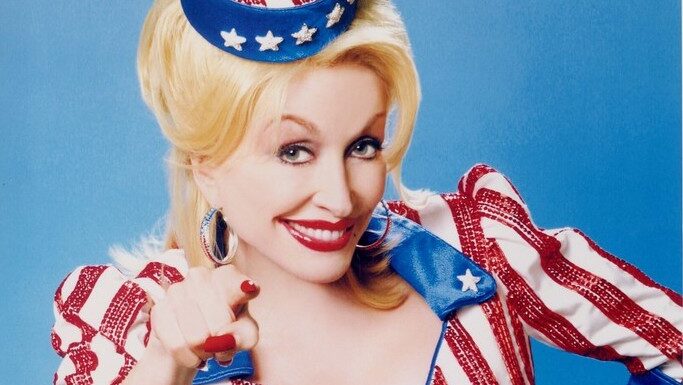
Hollywood has had a tough year so far. That the ‘In Memoriam’ section of the 2026 Academy Awards is going to be a serious tear-jerker was solidified by the passing of Dolly Parton and Tim Curry over two consecutive days. Both legends in their own right, one can scarcely imagine Parton and Curry in the same room, the former a peroxide-blonde, rhinestone-clad country singer and the latter the ultimate black-comedy villain typecast – but their successive deaths have brought to light the many ways in which the two stars embodied the same, distinctive strangeness in the celebrity scene.
The current cultural landscape requires that every celebrity also be an influencer. Since the start of the millennium, stardom has been undergoing a perhaps uncalled-for yet inevitable co-mingling with the rise of social media. It is no longer possible to be celebrated simply for, say, your acting skills – you must also cultivate a persona with which to engage with your fans. This means that ultimately what celebrities profit off most is normalcy. To appeal to the largest group of people, they must appear quirky whilst actually being anything but. The ‘niches’ they sign their names to are of no use if they are not easily applicable to anybody who has an Instagram account. Hence the mass hysteria surrounding what I term ‘nothing aesthetics’: clean girl. Quiet luxury. No-makeup makeup look. The most sought-after manicure? Funny bunny (milky white), or if that is sold out, bubble bath (pinkish white). Pantone’s colour of the year? Cloud dancer (cloudy…white?). Disturbing political implications aside – we are still living in the aftermath of Sydney Sweeney’s American Eagle ad, after all – we are somehow witnessing the death of both individuality and community formed around unique and marginal traits at the hands of inoffensiveness.
One of the biggest perpetrators of the monochrome and monotone-ification of everything is Kylie Jenner. In an effort to keep up her quirky appearances, she has momentarily set the nude lip-kits aside to start a trend of putting gem stickers on everything – including the lip-kits. She’s so crazy, love her! Since Jenner launched the bedazzled editions of her makeup line, every social media platform has been flooded with images of people covering their journals, bedsheets, and pickle jars with gem stickers, no doubt to be removed as soon as the photo has been taken. It’s both devastating and embarrassing, then, to hear Dolly Parton’s nephew Bryan Seaver announce that before her death Parton told him that she wanted “to rest in a beautiful bed of plush cotton because after a life wearing heavy rhinestones, she finally deserves to be comfortable and have some rest”. Not even the most committed “whimsy-maxxer” will ever get to make such a bittersweet statement.
Largely acknowledged as the most universally beloved public figure, dead or alive, Dolly Parton spent much of the first few decades of her 70-year career facing ridicule for the way she presented herself. Infamously modeling her look after the ‘town tramp’, Parton sported blonde wigs piled up to the high heavens, blood-red acrylic nails, and tight, rhinestone-studded clothes that accented her figure all the way until her final public appearance. “I’ve often made the statement that I would never stoop so low as to be fashionable”, she said in a 1977 interview with Barbara Walters, where she also acknowledged that many people’s initial reaction to “the ridiculous way I look” was either shock or mockery. However, she knew that the real joke was always on those who made fun of her: “I know exactly what I’m doing, and I can change it at any time.” Hers was a costume that was designed to be abnormal, and she chose to put it on every day. She reveled in the caricature that she made of herself, and by never once folding under the pressures of those who thought her ‘trashy’, she eventually brought everybody over to her side.
Though even Donald Trump joined in on the national mourning period, Parton lived as a decided non-conformist until the end. She never had children; she never made public appearances with her husband, and often talked about how their relationship thrived because she was often away from home and free to do whatever she wanted; she supported LGBTQ+ causes, and even went on record many times to say that if she were born a man, she would have been a drag queen. Indeed, many of her queer fans think of her as the first cisgender woman to do drag on the global stage on account of her campy, ultra-feminine persona, performance skills, and witty, self-effacing humour. Beyond her branding, her philanthropy was also consistently aimed at enabling social and cultural progress. She supported new artists, both financially and morally; she started one of the biggest and most successful literacy programmes in history with her Imagination Library; she funded COVID-19 vaccine research, and offered herself up for their trial. She used the glitz and glamour which once made her strange, different, and alienated her from her people to foster happiness, mobility, and freedom in communities like her own.
Unlike Parton, Tim Curry revealed little to nothing about his personal life throughout his lengthy career on both screen and stage. He also didn’t have a consistent persona like Parton’s, rather walking through a revolving door of increasingly freakish and subversive characters. Similar to Parton, though, his embrace of the caricature was a force that created community, even in the absence of any discernible shared traits. Best known for his performance as Dr. Frank-N-Furter in The Rocky Horror Picture Show (1975) – described by Peter Bradshaw as a “sonorous and feline… vampirically queer alien sex god” – Curry’s lasting influence in the role is showcased by the millions who attend showings of the film in full costume every year. A self-proclaimed “sweet transvestite”, Dr. Frank is a figure of unintelligible sexuality and gender who violates both scientific and ethical codes to satisfy his desires. He is also not altogether human, hailing from the planet “Transsexual” in the galaxy of “Transylvania”. By playing into these stereotypes about queer people, Curry’s performance emphasises their ridiculousness and forces the audience to reckon with the rigidity with which they treat those unlike them, and how their bigotry ultimately reflects on how they govern themselves. For 50 years, Curry’s Frank-N-Furter has brought people together and allowed them to leave the binaries that rule their lives at home. That is the power of kitsch: it invites you to laugh with, not at, the strange and unfamiliar.
We are living through a watershed period of conservatism and regression. What conservatism does, as well as actively infringe on our rights and livelihoods, is inspire fear and shame surrounding behaviours that might provoke those in charge to infringe on our rights and livelihoods. It also turns us against people who are in truth no different from us, but we see them as stepping over some arbitrary line we have drawn, fearing that it might endanger us too. The weekly ‘cancellation’ of Chappell Roan, who is more like both Parton and Curry than not, proves it. The definition of ‘normal’ is becoming narrower by the day, and even if you currently believe yourself safe, come tomorrow you too might be strange and dangerous in the eyes of the law. Though their deaths have dimmed the sun in my world as well as many others, I rest easy knowing that Parton and Curry never once compromised the things that made them happy in fear of being perceived as strange, and the art that they have left behind means that they will be remembered forever. Few of us will get to be so lucky.