

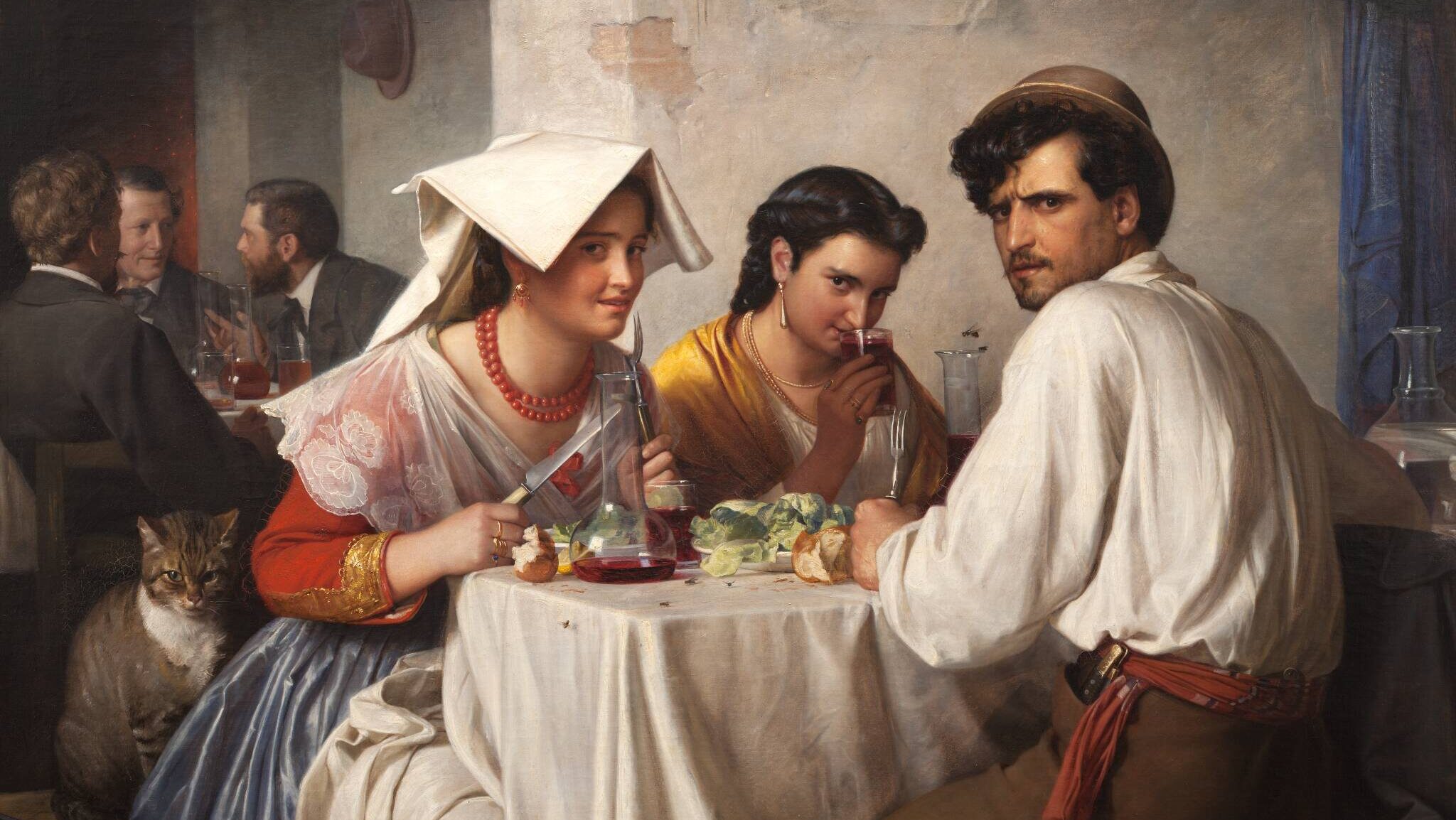
“It’s probably a bit bland,” my friend said tentatively in the first week of living in our out-of-college house, just after they had put down a delicious plate of fish and rice. Without us even having tried a bite, the review had already been spoken into existence. My friend seemed far more conscious of their imagined shortcomings, anticipating a judgement that hadn’t even crossed our minds. Somehow, they seemed determined to make us aware of the meal’s imperfections before we’d even picked up our forks. This led me to realise that cooks and diners are rarely eating the same meal.
In second year – and for those of you who were better than I was in first year and took advantage of the student kitchens, rather than tunnelling through your UPay in the first three weeks of term – the opportunity to cook for your friends is not only a bonding experience, but also a revealing exercise in how we judge ourselves. It can demonstrate just how differently we judge our own efforts compared to those of people around us, and how easily our hypercritical expectations can overshadow what we’ve actually achieved.
When you cook for your friends, you are not simply tasting the end result of the bolognese in front of you, but also inevitably comparing it to the slow-cooked beef ragù tagliatelle you had imagined making: the version promised by an ambitious recipe, slightly silkier, properly al dente, requiring the niche type of Parmesan you discovered too late. Your guest has the considerable advantage of never expecting this imaginary version, but we often forget this. Perhaps that’s why, somewhere between hob and table, another course gets added to the meal: the apology.
“It’s nothing”, “ignore the burnt bits”, “sorry, it’s a bit dry”, “I don’t know if it’s any good”, “it looked better in the recipe”. Most of us will have heard these phrases from hosts, whether friends or family, often before they have even finished handing out the plates, and certainly before anyone has even eaten anything. At university, when we’re stressed about deadlines, buried under reading lists, or recovering from a night out, the act of buying ingredients, chopping, cooking, and dishing out an entire meal requires an enormous amount of physical and mental effort. And yet so many of us are determined to immediately insist that the thing we spent an hour making is “nothing”. But why are we so intent on diminishing the gift at precisely the moment we give it?
For much of our time at Oxford, the food we eat doesn’t necessarily demand this kind of vulnerability because it isn’t really ours. In first year especially, meals can feel remarkably institutionalised. Hall decides what we eat and when we eat it, formals turn dinner into ceremony, cafés are excused as study venues, and even a humble meal deal gets crammed between a tutorial and the next thing on the calendar. Eating simply became another activity Oxford timetabled for us.
Of course, this isn’t everyone’s experience. Some arrive capable of producing dinner without consulting Google, cooking from their first week. But, for me, second year marked a change in my own, and many of my friends’, relationship with eating. Going out for dinner with friends has increasingly turned into “do you want to come over for dinner?” instead. And I found that feeding your friends, rather than simply eating alongside them, felt like a surprisingly significant change.
Unlike cooking, few creative pursuits have such immediate audience participation. Nobody hands five housemates an essay and then watches their faces as they read it, anxiously interrupting after the first sentence to explain why it could have been better, had they not run out of time. The pre-emptive apology, therefore, offers useful insurance. We anticipate the flaws in our own efforts before others can, reassuring ourselves that, on the off chance our guest does find the pasta slightly overcooked, at least we got there to point it out first! What we believe is modesty can often look suspiciously like self-defence.
Student kitchens should really cure us of culinary perfectionism. I remember attempting a new-and-improved version of a teriyaki salmon dish I had made countless times at home. This time, however, I was faced with a hob that had only one tentatively working ring, and armed with a blunt knife of uncertain provenance that my housemate assured me they had washed earlier – hadn’t they? If anything can teach us to abandon our expectations for restaurant-quality results, it’s the experience of trying to cook something vaguely edible under these circumstances.
Oxford can also make us particularly attuned to evaluation, just as we expect the acceptance or rejection that our tutors frequently fire at us. It’s unsurprising, then, that we treat dinner the same way: something is laboured at, produced, presented, and then awaits judgement. This pressure-cooker environment quite literally extends to the kitchen, and it’s easy to forget that your friend coming over for pasta isn’t a world-renowned chef in disguise. Looking at our own attitude to serving food to friends can be really valuable. I suspect that when others cook for you, the effort they put in after a long day is worth a lot more than the food itself.
So, the cook and the diner may never truly eat the same meal. The cook tastes every shortcut and imperfection; the diner experiences only what arrives on their plate. Beyond the simplicity of food-to-fork is the experience: the diner receives a serving of care and effort, and the cook engages in a labour of love.
The next time a friend tells you that the dinner you made is delicious, resist the urge to explain why they’re wrong. And the next time you put down a plate and feel an apology bubbling up, try suppressing the “sorry” and just stop at “I made you dinner”.