

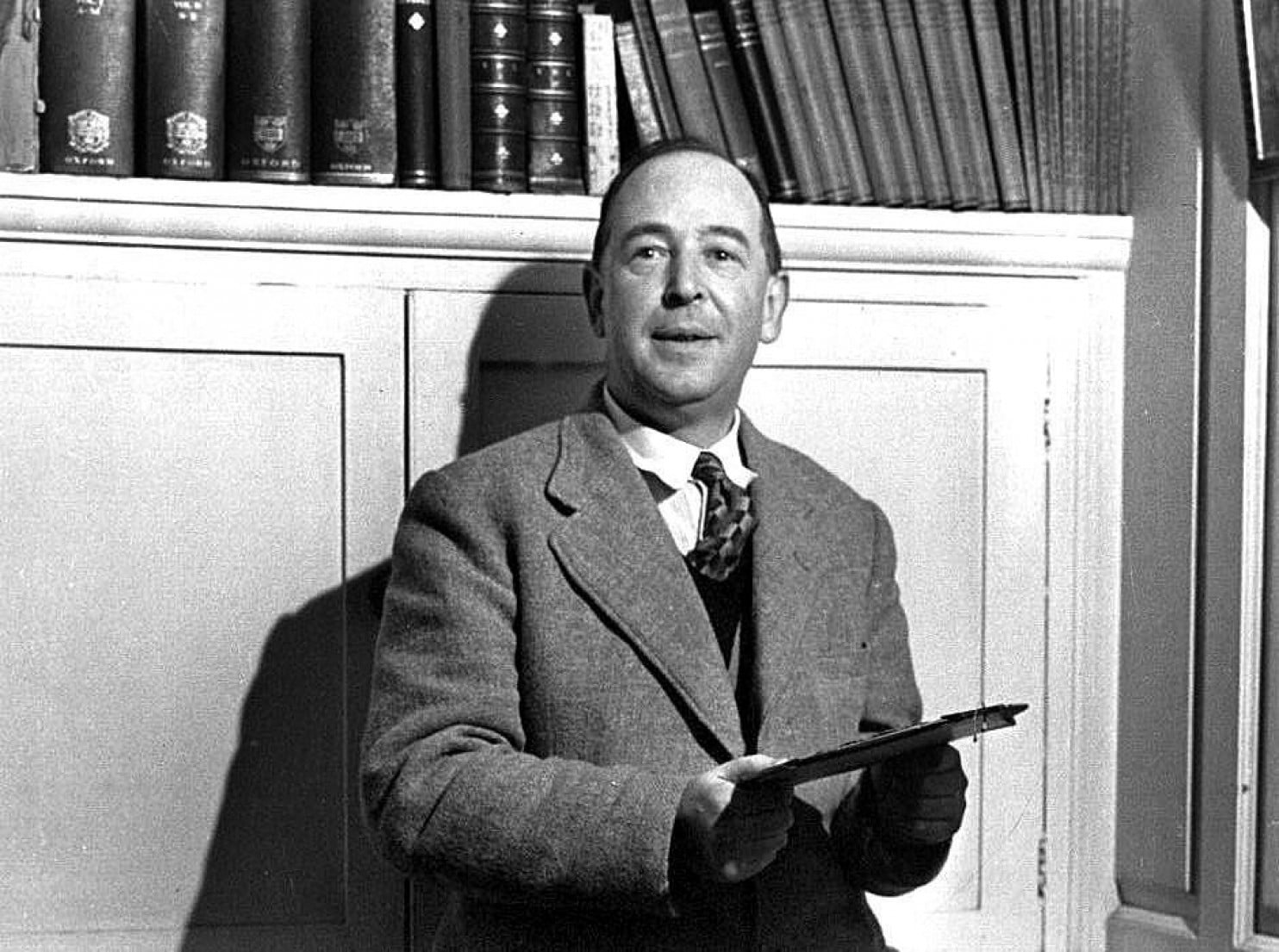
As a young tutor at Magdalen College, CS Lewis had a famously strained relationship with one of his students: John Betjeman, the future poet laureate. “I wish I could get rid of this idle prig”, Lewis wrote of the student, who had turned up to a tutorial in “eccentric bedroom slippers”. Betjeman’s dislike of Lewis was mutual. In the preface of his 1937 collection Continual Dew: A Little Book of Bourgeois Verse, he thanked his former tutor, “Mr C.S. Lewis for the fact on page 265”. The book is only 45 pages long.
It’s an extreme case, but a revealing one: Lewis’s contempt was recorded in a diary; Betjeman’s resentment outlasted his time at Oxford. That such emotions form part of their respective biographies is simply explained: the relationship between student and tutor was the key relationship at Oxford, and, when it failed, it was a big deal. Very frequently, as can be gleaned from the memoirs and biographies of scores of Oxford graduates, it was formative for the student and enriching for the tutor. But that relationship – its intellectual and social complicities, its sometimes awkward or downright inappropriate intimacies – is now close to extinction. This much is clear from the grousing of my friends about our much-vaunted ‘tutorial system’, and from my own experience with a fixed-term tutor whose indifference to us was all too apparent.
So how did a relationship that is meant to be at the heart of Oxford fall so far? And what, if anything, can be done to rehabilitate it?
Let us start with the causes of decline. One is casualisation: the shift from permanent posts to temporary, fixed-term and hourly paid work. In a 2024 Cherwell article, it was revealed that 61% of tutorials were taught by non-permanent academics, with 20% taught by hourly-paid tutors. The University and College Union (UCU) say that many staff spend years, even decades, on fixed-term contracts. “Usually,” they say, “this is not through personal choice, despite the law which means any employee who has 4+ years of continuous employment should… become a permanent member of staff.” One current stipendiary lecturer told Cherwell that even after five years on a fixed-term contract, he was wary of asking his college to make him permanent, for fear of giving them an excuse to let him go. “Oxford is supposed to be a place of open inquiry,” he said, “and yet when it comes to these kinds of questions, it’s absolutely not.”
The UCU’s general secretary has called the arrangement “Deliveroo-style”. Like a delivery rider, an hourly-paid tutor is paid for the time in front of the customer rather than the work that makes the tutorial possible. In theory, the basic rate already covers college-based teaching, preparation, and marking. In practice, the UCU says, the “allocated time is laughably small and remunerated at Grade 5 on the University’s salary and pay structure, which is not an academic grade. Apparently, Oxford students do not deserve to be taught by academics”. The lecturer I spoke to described having to move back home and commute during his year of hourly-paid tutorials. “The only reason I could still keep my foot in the door is because my parents lived nearby. If you’re doing hourly teaching, you can’t afford to pay bills.” He describes noticing a big difference in his current relationship with his own students now that he’s in a permanent position: “Tutorials are intellectually intimate spaces, and when you’re teaching a set of three to four on hourly pay, you drop in on the cohort and have no chance to establish a rapport. The whole thing can get quite cagey in a way.”
This is the gig economy imported into the tutorial room. Figures are stark too; according to a 2023 UCU report, the real hourly wage of a college tutor falls between £8.42 and £12.63, below the Oxford Living Wage of £14.06. It is little wonder that a tutor who is underpaid and works term-by-term has little incentive, and even less time, to get to know the students in front of them. Tutorials and the mythology behind them rest on continuity: a tutor who knows you across three years and is invested in your long-term development. While this investment was historically built into the job – with Oxford dons being required to be unmarried and live in college – that attitude is now a dwindling ideal: it is hard to resent, or to be fond of, someone you meet for an hour a week, and who may be gone by next Michaelmas.
Another factor to take into consideration is ‘elitist Oxford’. For much of their history, the Oxbridge students and tutors were drawn, overwhelmingly, from the same, narrow slice of British society. The nine ‘Clarendon Schools’ – a group of elite schools including Eton and Harrow – often functioned as a direct feeder pipeline into Oxford. This was more than a matter of informal preference; as The Oxford Student writes: “Eton was created as a feeder school for King’s College, Cambridge, and so was built to mirror the college. The same applies to Westminster School and New College.”
Tutors and students would have sat at the same rung of society, sharing both a social and gendered world: women were only admitted as full members of the University in 1920. Perhaps you’d even have been linked by a web of acquaintance – as is the case in Anthony Powell’s A Question of Upbringing. “How is your mother?”, the eccentric don Sillers asks his student, “Do you know, I have not seen her since the private view of the Royal Academy in 1914”. It is a comic exchange, but also demonstrates what David Palfreyman identifies as the system’s real foundation: “Oxbridge was a place where the intellectual elite could train the next generation of social elite, and so both tutors and students knew what was expected, why they were there, and what the rules of the game were.”
That shared grammar has significantly eroded. Oxford now draws its students from a far wider social map – despite the extent of that change still remaining contested. David Lammy, in 2018, called Oxford “a bastion of entrenched, wealthy, upper-class, white, southern privilege”. Nonetheless, the figures mark a dramatic shift: in 2025, 66.5% of UK students admitted came from the state sector, compared with just 9% in 1928. None of this is an argument for returning to the old Oxford, whose intimacy was bought with exclusion. Yet the tutorial was built for a world of shared codes and permanent dons, and while the first has rightly gone, the second has gone with it. What remains is a relationship asked to do the same work without those foundations – it is hardly surprising that it has curdled. Lewis and Betjeman, at least, cared enough to loathe each other.
What has replaced that informality is, depending on your view, either professionalism or distance. Pastoral care has become more formalised and arms-length, and the old mentorship has largely gone with it. One current tutor, who was herself an undergraduate here, recalled a tutor who would sometimes offer sherry at the end of a tutorial. “I remember discussing this a long time later with a colleague, but you couldn’t do that now because it would be deemed inappropriate. The boundary between teaching and informal sociability is much more rigid now than it used to be.”
Sexual harassment is hardly a new problem, but it’s one that the University can no longer leave unchecked. In the last year alone, an Oxford university chaplain was removed following a student sexual complaint; the former Dean of the Saïd Business School was found to have sexually harassed a female academic; and a Bloomberg investigation alleged a pattern of the University responding to complaints against senior male academics “slowly, quietly, or not at all.” This is unsurprising: in 2017, The Guardian found that, amongst all UK universities, Oxford had the highest number of student allegations of sexual misconduct by staff.
In an earlier Oxford, with no formal definition of harassment and no clear route for complaint, such behaviour would rarely have been reported – or even noticed. A current modern languages tutor, himself an undergraduate here, agreed: “In the 1990s, there was no such thing as a code of sexual harassment which defined things. That is the biggest difference. You can point to something in writing and say it is clearly appropriate or not.”
“Boundaries haven’t changed,” he claims, “but the clarity with which they have been expressed has.” He recalls there being several instances from his own undergraduate years when “things were said which would nowadays be absolutely under question, at the least inappropriate, or almost certainly sexual harassment”. So, when Powell’s tutor character – Sillery – in A Dance to the Music of Time is described as “playfully pinching the nape of [his student Mark] Members’s neck”, the moment, to the contemporary eye, can be read less like affectionate eccentricity and more like the kind of casual physical liberty that today’s safeguarding frameworks exist to prevent. Movements like It Happens Here and The 1752 Group have rightly pushed the University towards a culture of formal safeguarding, mandatory training, and risk assessment that Sillery’s day would have lacked.
Clearer boundaries have made Oxford safer, yet they carry a price: a tutor who knows where the line sits is a tutor who keeps well back from it. Felipe Fernandez-Armesto puts it bluntly – if not harshly – in The Spectator: “Undergraduates and their tutors were poised to be friends when they met. Now the diversity of backgrounds is better, but, in consequence, the old system no longer works… Social and generational gaps yawn in the tutorial, making it tedious and unrewarding. Unlubricated by sherry, which underpaid tutors can no longer afford to splash around, the relationship never takes off. Friendly overtures are likely to be mistaken for sexual harassment.”
Underneath all this sits the more mundane pressure of academic work. Oxford students are tested by exams and burdened with unmanageable reading lists, and we – like many others – fall back on AI to fill the gaps. Cherwell reported on a 2025 survey by the Higher Education Policy Institute, which found that 92% of students had used AI in some form at university, up from 53% in 2024. Rather than resisting the tide, Oxford has chosen to ride it: in September 2025, it became the first university to offer ChatGPT Edu to all students. Tutors, understandably, are wary. The modern languages tutor I spoke to understands why students use AI as an aid, but admits it does erode his trust: “It raises genuine problems relating to originality of thought and victimless plagiarism, as you’re not stealing items from an identifiable authority, you’re plucking them out of thin air.” That erosion matters because trust is the currency of the tutorial. It asks a student to arrive with a half-formed argument of their own, to be dismantled and rebuilt in conversation. That exercise is fruitless if tutors are fielding essays that are polished and hollow.
CS Lewis tutored at an Oxford barely recognisable today, one whose intimacy was both real and unregulated. Today’s safeguards, while making the relationship safer, have also made it more guarded.
At its best, the tutorial system offers both intensity and mutual benefit: students get an expert’s undivided attention while tutors can see how young people think and be granted a fresh perspective on their own subject. It gives university life a texture impossible to imagine in a large lecture hall. It is time for the University to recognise what has been lost and end the uberisation of the tutorial system, while wary students need to acknowledge that the most rewarding relationships are never risk-free and that by navigating unfamiliar social terrain we learn and mature. So bring back the old system without the groping – and the sherry, too.