

Amidst recent political tension provoked by the government’s refusal of slavery reparations to the Caribbean, this year Black History Month is celebrated uniquely in Oxford. The inaugural exhibition at the newly opened African Caribbean centre, The Island, honours the thousands of Caribbean constituents the government invited to the UK in post-war efforts to rebuild the country. The exhibition at 16 Park End Street offers an Oxonian perspective on the historical transit of the Windrush generation.
The path to opening Oxford’s African Caribbean centre has been lengthy, as Euton Daley, a curator and community researcher of the exhibition, shared: “The idea of The Island concept has come about over many years with us as a community not having a place.” Spearheaded by a group of organisers for the last four years, the passion project A Place for We sources and shares the history of the Black community in Oxford. The main objective is not only to share the suffering endured across the Oxford community, but also to immortalise it in an archive, as the organisation aims to map spaces no longer available to the community and to advocate for a permanent cultural centre.
As The Island launched, it was with the support of an Oxford college that allowed for its historical presence. Owned by Nuffield College, the Park End Street location was previously a Staples. However, having been vacant for over a decade, the stationery store space has been transformed into a realm of Caribbean culture for community use. With a two-and-a-half year lease, the aspiration is that the exhibition’s success will guarantee the permanence of a global cultural centre there, serving as a communal workspace and public forum.
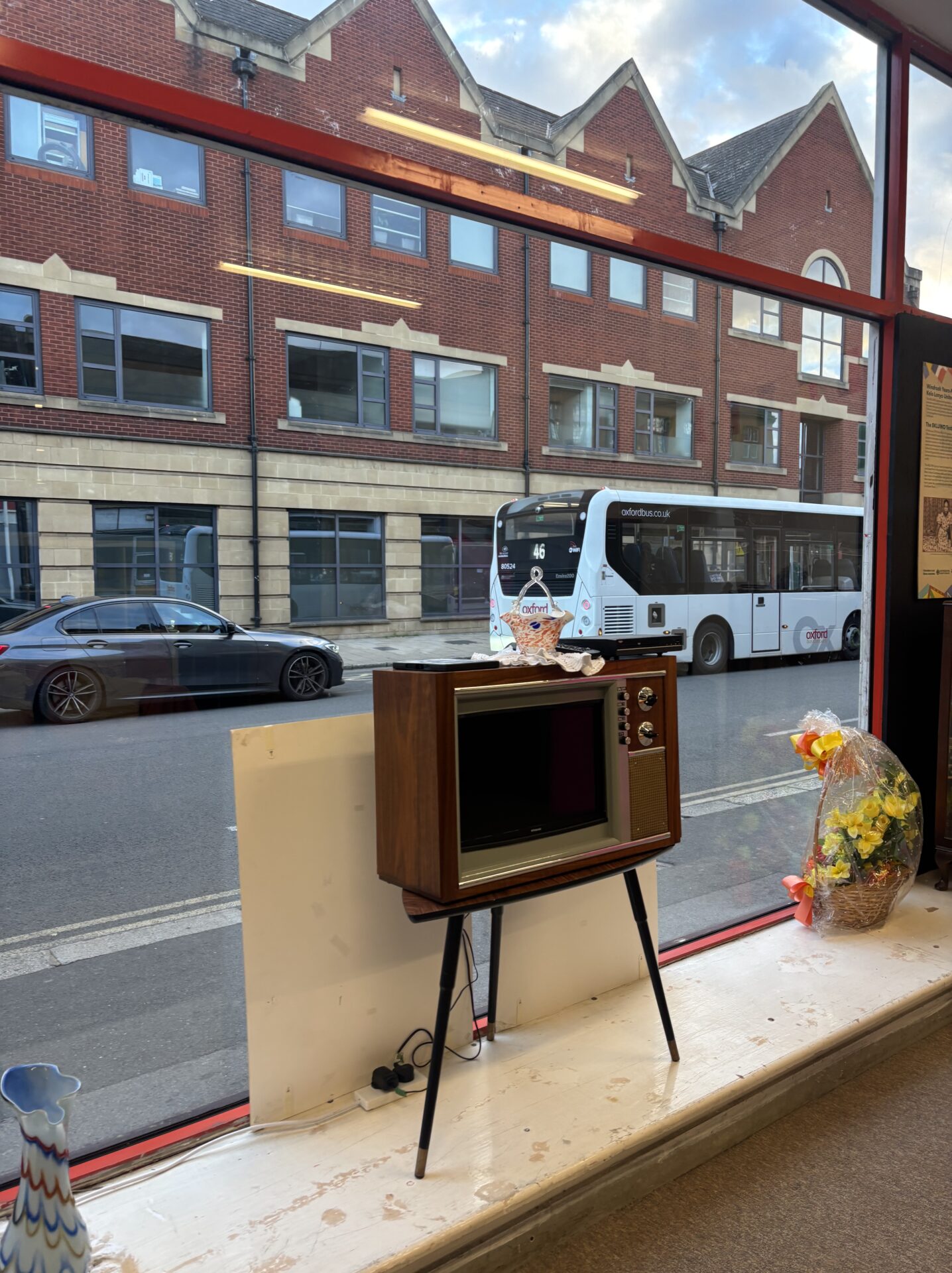
Now serving as an archive of Caribbean-Oxford history crafted by descendants of the historically oppressed, rather than a story woven by colonial enslavers, the community space provides an opportunity for communal fun and historical engagement. The exhibition serves as an anthropological backdrop of West Indies living, staged as the interior of a 1960s Caribbean home. Throughout the space, informative posters educate viewers about Oxford’s Black history, such as the Windrush generation nurses who served for the NHS in Oxford, staffing local hospitals and GP surgeries. Displayed on the chestnut living room table is a community collection of artefacts, photographs, and stories donated by Windrush-descended families and cultivated by researchers at Oxford Brookes University. Interactive activities are also available, including a passport postbox and map where Caribbean community members can pin their local neighbourhoods across Oxford. “We’ve made it such that people can actually sit here and relax. We’ve got a selection of books that people can read and browse through. Some people even come in here to work during the day. They volunteer [or] work up doing their own admin work. Rather than sit at home on their own or go to a cafe, they come here. We’ve got Wi-Fi so people can sit and work and do things,” Daley adds, highlighting the importance of community building he hopes will stem from the space.
The first weekend of The Island’s opening launched with a social gathering featuring a talk led by Michael La Rose, the director of New Beacon Books. The North-London-based bookshop is one of England’s first Black publishing houses and specialist bookshops, with longstanding community activism across the Black Parents Movement, Black Youth Movement, and Supplementary Movement, as well as advocating against communally-believed racially-motivated atrocities such as the New Cross Massacre. Alongside the talk, New Beacon Books held a bookstand selling a selection of Caribbean novels. Acknowledging the recent hostility between the government and Caribbean islands regarding the debate surrounding reparations, La Rose said: “Britain is a special place in Europe, and that is because Black people have struggled here in Europe, in Britain, and has changed the society. But it is a constant struggle because we know Prince Charles don’t want to say nothing [sic]. Andy Burnham wants to keep things the same, so we got to have a constant struggle. We got to reinvent ourselves and use the tools we have nowadays to battle for the new battles ahead [sic].”
In a similar tone, Daley, whose parents are members of the Windrush generation, calls for progress through unity within and beyond the Caribbean diaspora: “If there’s one thing I’d like us to be a bit more united together, we’re all doing lots of different things in our own patch and for different people. But as a group, as one community, we don’t always come together. And that’s hopefully by having a space, I think that will make a big difference. Oxford students should visit to be informed, to help support it, to help advocate for a permanent space and a permanent building for the community.”
The community space, open to the public free of charge, featured events including workshops, community talks, and performances until the end of October. It is a collaboration also involving Oxford-based arts and social justice charity Fusion Arts, African community-led group African Caribbean Cultural Heritage Initiative, UK charity Oxfordshire Community Education Group, and theatre and cultural arts collective Unlock the Chains Collective.