


Blog Page 1000

My town and my gown: “the world has slowed down around me”

0

I’m bored. Extremely bored. This is not a feeling that I have had to grapple with much during my life at university so far. The plunge deep into the whirlpool of essays from first week to eighth, punctuated by frequent nights out, and with the potential for everyday social interaction with friends and neighbours constantly bubbling beneath the surface, I have at times experienced feelings of stress, fatigue and even despair — but never boredom.

In the high-intensity life of an Oxford student, there is no time for the feeling that now washes over me, as inevitably as the rising of the sun on my first morning back home, that there is nothing for me to do here. Do I have an essay to finish off today? No, I actually survived another term’s workload. Could I make a start on my next reading list? Afraid not, and anyway I’m now hundreds of miles away from the Bod. Well, surely I must have a lecture to get up for? Wrong again, what little structure my life as a historian usually has is on hiatus for the next few weeks. Perhaps I could start early on revising for collections? Let’s not get ahead of ourselves now.

Of course, nobody in their right mind would really want the Oxford workload to continue into the Vac, but I must admit that after hurtling through the last eight weeks at a thousand miles an hour, slamming on the brakes so suddenly has left me feeling rather strange. Sure enough, the world has slowed down around me, but I find myself struggling to adapt to the change of pace. Somehow I awake from a long overdue night’s sleep with more lethargy than I ever experienced getting up for a Friday morning tute after the inevitable Thursday night at Bridge.

Far worse than the absence of work, though, is the absence of play. Now, instead of being a few minutes, or even seconds, away from my friends in college, we are now separated by up to hundreds, or even thousands, of miles. On top of this, it is now that I remember part of the reason why Oxford’s terms seems so intense: they are actually relatively short. Of all my friends from home, the vast majority will not return for another two or three weeks, and I can hardly spend my student loan on a national tour to visit them all in the meantime.

For me, I should mention, home is the town of Stockport, which might as well be Manchester for anyone who lives outside the northwest of England (despite the reservations of real Mancunians, it is easier to say ‘Manchester’ rather than explain the location of somewhere people have never heard of, sorry). For someone who has lived here all my life, Stockport doesn’t really have a great deal to offer, and recently my main social activity has involved a Wetherspoon’s, and a night out in Manchester city centre. As great it is (no local bias here), Manchester nightlife is not an activity best undertaken solo, so after weeks of Park End and PT, I suddenly have to go cold turkey until enough of my friends get back from university for the makings of a decent night out.

So in the meantime I remain stuck in a kind of limbo, knowing I should be glad of a rest, but confused as to why I’m not. I suppose I should use the opportunity to save up for impending taxi rides home (Stockport doesn’t seem like ‘basically Manchester’ when you’re facing a £20 fare), but enviously flicking through Snapchat stories of friends enjoying St Patrick’s Day at their respective universities– the novelty of watching telly and talking to my family having long since worn off—I realise that I’m not looking forward to the nights out at home as much as I am looking back on the ones in Oxford. That’s what I want to get back to, that’s where I want to get back to. Everything else just seems second best now. Even when my friends are back home, none of them are living just down the hall.

I love the exhausting, intoxicating, maddening intensity of my life in Oxford. Without it, I feel isolated, clinging desperately to the Oxford meme community to maintain a sense of attachment to my home away from home. At least the endless stream of Oxlove posts can help me avoid revision.
‘Pretworking’: A Spotter’s Guide

0

Oxford has historically been seen as a training ground for the British political, journalistic, and professional elite. Gone are the days of the famous “tap on the shoulder” from a man in a long coat, and the status of an Oxford degree (of any classification) as a guarantee of a top-tier graduate job is not so solid as it once was. Yet this institution remains one in which students not only receive a formal education, but also pick up the practices and techniques that become essential skills out in the Real World. Those “transferable skills” — never listed on CVs — which distinguish the career-climbing, high achievers, from the average graduate, are still learnt and refined at Oxford.

Before this all becomes too self-congratulatory, I should point out that I am not committed to a view of absolute Oxford exceptionalism. And I don’t mean that Cambridge also exists. The university experience — wherever it is had — is a mixture of an academic education and a training in the exercise of key interpersonal skills. But the exact phenomenon which I wish to examine seems to be a particularly prominent part of life here. As a steady stream of Guardian articles will attest, the notion of an Oxford degree as a launching pad for a top-flight career is still commonplace.

Those students who invest most heavily in the secondary Oxford education are often those most involved with the familiar extra-curricular activities on offer. Whether they are involved in the Union, journalism, theatre, or the multitude of other groups and societies, most of us will be aware of, and regularly come into contact with, the “hack”. You might have gone for coffee with one. Maybe you’re not incredibly close to them, but they were keen for you to be involved with their next play, or wanted to know if they could rely on your support in an upcoming election, or just wanted to “catch up”.

It’s this maintenance of a web of contacts, collaborators, and (usually) friends — so often taking place in Oxfords numerous coffee shops — which I call Pretworking. It’s one of the key tools in the arsenal of the hack. An innocuous coffee with the Pretworker is always, either explicitly or implicitly, a means as well as an end in itself. It never hurts to keep those people that the Pretworker may well need to solicit help from in the future familiar and sweet.

Am I guilty of Pretworking myself? Yes, probably. My point is not to call out these people for doing something wrong. It is clear that this is simply the way the world works. We rely on our friends and acquaintances to aid us in our own personal projects, whatever they are. Nor do I mean to suggest that the Pretworker sees their friendships simply as avenues for advancing their own goals. I’m sure that even the hackiest of hacks occasionally goes for coffee just for the sake of going for coffee.

But it is interesting that — through this phenomenon — we can more properly understand what it is that makes and Oxford education continue to be valued so highly. Not only will the Pretworker go on to use this skill throughout her career, but often it is the very same contacts she has made here at university, with whom she will continue to do so. So next time you’re in Missing Bean, or Handlebar Café, have a listen. Amongst the chatter, you might just make out the incessant hum of the Pretworkers.

Lola Lo’s closes down and is replaced by new retro bar

0

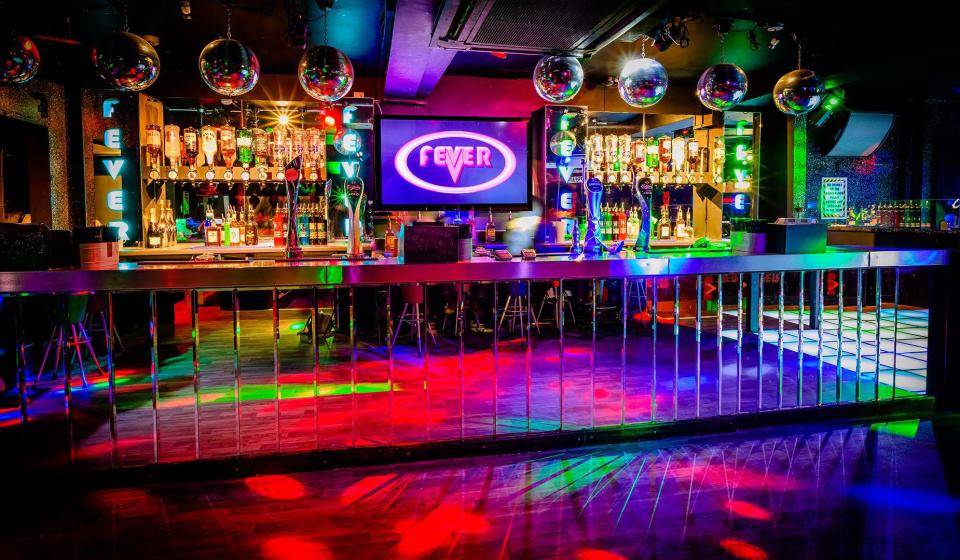
Lola Lo Oxford closed its doors for the final time on Friday night and is to reopen on April 13 under the new name Fever, Cherwell can exclusively reveal.

Eclectic Bars, who own the Lola Lo brand, have sold the site to Fever, who run retro-themed clubs with light-up dance floors in Lincoln and Cheltenham.

Fever Bar’s Cheltenham site

The venue was popular on Tuesday nights, with organisers Encore Events hosting ‘Rumble Tuesday’. Encore told Cherwell that they will continue working with the newly-opened Fever, and submitted a poem encouraging students to try the new bar.

“Lola Lo’s was lots of fun,” it reads, “on Tuesdays we drank lots of rum”.

“Fever’s here, it’s a ten out of ten”.

One student said: “I saw them moving pretend trees out last Friday and I wondered if something was going on”.

Lola Lo Oxford was once voted the third-worst club in the country in a poll conducted by The Tab. 

Eclectic Bars have been contacted for comment. 

Atheists among the least afraid of death—Oxford study

0

A study conducted by Oxford anthropologists has revealed that although the very religious are among the least afraid of death, so too are atheists.

The paper was published in the journal Religion, Brain and Behaviour, and challenges the view that religious believers are those who fear death the least.

The paper examined the relationship between death anxiety and religious belief. It involved a systematic review of 100 relevant studies, from between 1961 and 2014 around the world. examining the relationship between death anxiety and religious belief.

They found that the more religious, in terms of those who believed in God and an afterlife, were not necessarily less anxious about death.

However, some of the relevant studies they used made a distinction between extrinsic religiosity and intrinsic religiosity, with ‘true belief’ being driven by intrinsic religiosity. Their analysis showed that those who were intrinsically religious were among the least afraid, whilst the extrinsically religious had the highest levels of death anxiety.

The range of different studies examined showed variation. Over half the research showed no link between religiosity and fear of death, whilst 18 per cent of the studies found that religious people were more afraid of death than atheists.

This indicates that the relationship between religiosity and death anxiety may vary depending on the context. The majority of the studies involves took place in the United States, with just a small number from Asia or the Middle East.

Researcher Dr Jonathan Jong of the Institute of Cognitive and Evolutionary Anthropology said: “This definitely complicates the old view, that religious people are less afraid of death than non-religious people. It may well be that atheism also provides comfort from death, or that people who are just not afraid of death aren’t compelled to seek religion.”

The ageing face of fashion

0

Earlier this year at London Fashion Week, a group of models aged 47 and above took to the streets to protest the lack of age diversity represented on the catwalks. Bearing signs reading “Fashion Has No Age Limit” and “Fight For Real Age Models,” these women vehemently opposed the idea that fashion should be targeted at those under 25, as part of their #GrowUpLFW initiative. The concept does seems absurd when numerous surveys provide evidence that older women make up as much as fifty per cent of consumer spending. 63-year-old campaigner Jilly Johnson said, “People seem to think that once you reach 40, you’re not interested in clothes and you don’t buy anything but that’s simply not true. A huge percentage of clothes are bought by older women so fashion is making a huge mistake by ignoring that grey pound.”

However, in recent weeks the industry does seem to have paid more attention to the so-called “grey pound”. The Simone Rocha catwalk at London Fashion Week featured four models over the age of 50. One model, Jan de Villeneuve, 72 years old, said to the Telegraph, “Life doesn’t end when you start getting a pension. Older women love fashion too. I’ve always thought it would be nice if people of all ages, shapes and sizes were included because that’s more relevant to day-to-day life.”

Moreover, to mark Dries Van Noten’s 100th show, three supermodels who had walked in his first catwalk in 1993 were welcomed back alongside the usual fresh-faced teens, and 43-year-old Amber Valetta was the star of Isabel Marant’s Paris show.

The older woman has made an appearance in lesser-known labels, too. Lonely Lingerie’s latest campaign features 57-year-old model Mercy Brewer, photographed in a variety of sumptuous lingerie pieces and underwear sets. This is an important campaign, not just because it recognises the need for age diversity among models and acknowledges the older woman’s presence as a consumer, but also because it allows someone classed as ‘middle aged’ to be powerful, sensual, and sexy. Lonely Lingerie—a brand also known for promoting body and ethnic diversity—is a world away from the typically drab collections aimed at the “grey pound”. What’s important about this campaign is not just the fact that it includes older women, but also the way in which it demonstrates that older and younger women do not need to be viewed as separate consumer markets at all.

Of course, these age-blind movements are niche. As the #GrowUpLFW campaign illustrated, older women still feel shut out from the industry, and there is a long way to go before full diversity—in terms of age, ethnicity, and body types—is recognised in the fashion world. That said, it is undeniable that progress is starting to be made; older women are becoming increasingly accepted and moreover, represented, in the fashion world. Better late than never.

Marvel’s Netflix universe is going badly wrong, and it’s the writing that’s to blame

0

When the first season of Daredevil launched in April 2015, it seemed to signal a fresh beginning for superheroes on television. Following the explosive success of the Marvel Cinematic Universe, various shows had attempted to cash in on the superhero craze. The CW was laying the groundwork for its own interconnected universe with shows such as Arrow and The Flash; Gotham, Fox’s Batman prequel, had debuted the previous September; and even Marvel were getting involved, expanding their universe to the small screen with Marvel’s Agents of SHIELD and Agent Carter on ABC.

But Netflix’s Daredevil was the first show to truly capture the magic of the superhero genre and bring it to life on television. It was an uncompromising take on one of Marvel’s most famous heroes, brutal, violent, and unrelenting. This was a superhero show for the Golden Age of Television, marrying an exciting premise to killer visuals and consistently impressive writing, respecting its source material while creating something accessible for a wider audience. It was far from flawless: it was slightly too long, and its writing could be too obvious at times. Nonetheless, there was real potential there, and the prospect of an interconnected set of Netflix productions running alongside Marvel’s big screen offerings seemed tantalising.

And now we are here. Iron Fist, the latest instalment in the Netflix Marvel saga, sits at an abject, dismal 17% on Rotten Tomatoes while Luke Cage – last September’s offering – attracted a torrent of criticism despite its promising start. How has the Netflixverse – an endeavour with so much promise – ended up in such a sorry state?

The problems afflicting Marvel’s Netflix Universe are manifold, but some issues seem to recur across its catalogue of shows. Most notably, each series seems significantly too long, incapable of sustaining its thirteen episode run. Designed for binge-watching, this bloat undermines the fundamental appeal of the show, stretching out what should be high-octane superhero action to unnecessary lengths. No show seems to have escaped this problem entirely: even Jessica Jones and Daredevil’s first season fall into a rut in the middle before regaining momentum in the last couple of episodes.

Both Daredevil and Luke Cage attempt to resolve this issue through a mid-season shift of plotline: in each series, the arc of the first half is put on the backburner in order to make room for a new, greater threat; in each series, this device results in a catastrophic failure. Daredevil’s four-episode Punisher arc, replete as it is with violence and difficult questions about the role of the vigilante, stands head and tails above the first season. However, as soon as the Punisher has been dispatched, the show deflates, desperately piling on new plotlines and threats and twists in an attempt to regain some semblance of the magic it previously had. The result? An exhausting, limp, borderline nonsensical run of episodes concluding in a finale which inspires nothing but a sense of relief at having made it to the end.

Luke Cage, meanwhile, descends into an even larger mess: its introductory episodes position the show as one which wants to discuss the black experience in modern America, linking Luke’s struggles to those faced by young black men in general, and connecting the battle between Luke and Cottonmouth to the battle for the soul of Harlem. This novel take on the superhero genre – enriched by an amazing soundtrack and by stunning performances from Mahershala Ali and Alfre Woodard – is promptly discarded in favour of an increasingly ridiculous, generic superhero story.

Instead of the unpredictable, challenging villain Cottonmouth, the viewer is saddled with the ludicrous Diamondback, Luke’s Bible-quoting, rage-filled half-brother. This change in direction did not have to be such a failure: the discussions of Diamondback in the first few episodes paint him as a powerful, successful, merciless crime lord. Such a villain would have been a brilliant foil for Luke and a welcome change from Cottonmouth’s visceral emotionality. Instead, he turns out to be a man driven by inexplicably petty emotions, whose conflict with Luke can be linked to the black experience in only the most agonisingly contrived ways. When, in its finale, the show attempts to backtrack and claim that the second storyline has maintained a profound discussion of Harlem’s role in black culture, it is difficult to do anything but laugh.

Setting aside the failures of the individual shows, one might hope that they at least contribute to the Marvel Cinematic Universe, expanding its horizons while introducing new characters of which the movies can make use. Damningly, the shows do not even work as complements to the wider project. Rather, the movies seem to want to ignore them, to shrug them off: the Netflix series are not a meaningful expansion of this beloved franchise, but parasitical entities leeching off its popularity to plaster over their own increasingly apparent flaws.

These devastating problems hint at the fundamental flaw of these productions: the more content that Netflix produces, the more it seems utterly inessential. The shows run thirteen episodes because they have to, not because they have thirteen episodes of story to tell; the shows exist not because they ought to, but because Netflix’s plan demands it; this section of the MCU keeps going because it has started, and not because it has anywhere to head. Four seasons in, it is hard to see how this Netflix Universe is shaping into anything cohesive, or how The Defenders – the upcoming crossover series – can be anything other than a mechanical conclusion to an inessential story. Each series feels increasingly disposable, one piece of a story which seems to perpetually defer gratification without ever delivering it. This criticism – often unfairly levelled at the filmic components of the MCU – is utterly justified when it comes to these shows.

This is not to say that the Netflixverse is unsalvageable or without redeeming qualities. Both Daredevil Season 2 and Luke Cage have incredibly good beginnings, beginnings which demonstrate that their showrunners are capable of producing excellent television.

Jessica Jones has been largely absent from this discussion because it largely manages to sidestep these pitfalls. Despite being a couple of episodes too long, the show is an impressive example of quite how good female-led superhero shows can be, with Krysten Ritter’s sensitive portrayal of Jessica as a hardened, damaged rape survivor making for powerful viewing. David Tennant’s Purple Man, meanwhile, is simultaneously despicable and compelling, a repulsive, captivating presence onscreen. Unlike the series which followed it, Jessica Jones feels unmissable, feels essential, not just in order to keep up with a rapidly expanding universe, but on its own merits as a television show.

The Defenders may very well succeed, imbued with new energy by having such a diverse set of characters interact for the first time. I truly hope that it does. I write this not as someone revelling in the Netflix Universe’s failures, but as a huge fan and lover of superhero stories. If the creative teams manage to get their series back on track, they have the opportunity to create an essential bastion of superhero shows, the prime example of how to create an interconnected universe on television. All they have to do is not squander such a golden opportunity.

Six Nations hints at future Lions XV

0

This year’s Six Nations was a mixed bag of fortune for its contestants. England, who were dominant throughout the tournament, succumbed to the drive of Ireland last weekend, while Scotland have enjoyed success over the last few weeks. Italy had yet another disappointing tournament, whereas Rob Howley’s Welsh squad will be wondering why they didn’t perform in 2017.

For some, the Six Nations was an opportunity to see who would make the cut for the British and Irish Lions squad, and even who would be included in the starting line-up for the tour to New Zealand. It is a difficult XV to pick, and Warren Gatland will find it tough to choose a team that can topple the New Zealanders, who are arguably the best sporting team on the planet. Nonetheless, fans, players and coaches are excited: Lions forwards coach Graham Rowntree, for example, said this year’s squad would be “the best squad for the last 30 years.”

With the Six Nations over, here’s a likely Lions XV:

15 – Stuart Hogg (Scotland)

The Scottish fullback has been a match winner for his country this tournament, thoroughly deserving the player of the tournament award. With agility and pace, the Scot will be useful in challenging the strong New Zealand defence. Gatland may side with Leigh Halfpenny – if he is selected – on occasion during the series, and while his defensive and kicking game is stronger than Hogg’s, the Scot’s attacking prowess will surely see the Toulon man left out of the squad.

14 – George North (Wales)

While there are many contenders for this position, it is difficult not to start with North in the backline. He has regained form in this year’s championship, and has immense international experience. 110kg North will go up against fellow heavyweight Julian Savea in a battle which may decide who scores the most tries in a few test matches.

13 – Jonathan Joseph (England)

Another athlete hard to ignore in the middle of the pitch, Joseph was an impressive figure in England’s championship win and can forge a strong relationship with Farrell in New Zealand. He may have been absent in the defeat to Ireland, but the 25-year-old’s performances against the likes of Scotland in the championship show how lethal he can be on the park.

12 – Owen Farrell (England)

Almost a certainty in the starting line-up for club and country, Owen Farrell will be a key player in this year’s tour. Good pace, defensive skills, a kicking game – what more do you want from a centre? He can also perform his duties as fly-half if needs be, showing how crucial Farrell may be in the summer of 2017.

11 – Elliot Daly (England)

Perhaps one of the highlights of the 2017 tournament, Daly is an agile and dangerous winger. His pace was clear in the dying moments of the Welsh game, and may be why he is chosen over other similar players such as Liam Williams for the starting line-up.

10 – Jonny Sexton (Ireland)

All you have to do is read the back pages of any newspaper and look for what journalists are saying about Sexton chances in this year’s squad. Almost every rugby pundit favours Sexton at stand-off, and they are right to do so. Despite being targeted by English forwards in the emotional victory earlier this month, Sexton was relatively unscathed. However, the biggest issue for Gatland is whether he decides to play Sexton in the warm-up games of the tour, as he may be a target for some teams.

9 – Conor Murray (Ireland)

While it is likely that Rhys Webb and Ben Youngs will also be included in the Lions squad, and perhaps play more minutes than Murray before the test matches, Gatland would be wise to favour an-all Irish partnership at half-back. Arguably the greatest scrum-half in world rugby, Murray will likely play a key role in his second Lions tour after his selection for the 2013 squad.

1 – Mako Vunipola (England)

Despite being placed behind teammate Joe Marler at times during the Six Nations, the pace and skill set of Vunipola is badly needed against the New Zealand pack. Strength at the breakdown and ability in open play will be a huge asset to the side, but some pundits suggest he would be brought on as an impact sub.

2 – Dylan Hartley (Captain, England)

Jamie George and Ken Owens may be on the plane to New Zealand, but Gatland should opt with the experience and aggression of Hartley to face the New Zealanders. While the England captain’s form has been up and down recently, he is Eddie Jones’ main man for a reason. Alun Wyn Jones may rival him for tour captain, but if the Welshman does not start, Hartley may be the man to captain the team against the ferocious New Zealanders.

3 – Tadhg Furlong (Ireland)

Another favourite of the pundits, the 24-year-old is almost guaranteed a starting position for the Lions. Dominant against every front three he played against in the Six Nations, and thoroughly deserves the honour of being given a seat on the plane and starting in the test matches.

4 – Joe Launchbury (England)

Launchbury is a workhorse. He does not stop, ever. He is needed against a New Zealand side which has props that can finish off tries. His pace, stamina and strength will be vital to contain the All Blacks.

5 – Maro Itoje (England)

Perhaps a controversial decision to select Itoje in front of the omnipresent and experienced Jones, but his all-round qualities may make the difference in the summer. He could probably kick for goal if we needed him too. Alongside Launchbury, the lock’s in the side may be a young and exciting pair ready to challenge the might of the All Black pack.

6 – CJ Stander (Ireland)

Is there even doubt that the Irishman will start? Described by The Telegraph as a “wrecking ball”, and that’s exactly what he is; he can break tackles, stay on his feet, and get over the gameline. He can play No. 8 too, so is a versatile player that will add value to the squad.

7 – Sam Warburton (Wales)

Since the Welsh captaincy was taken from him, he has recovered his old form. Moreover, he has Gatland’s respect and support after overseeing him captain Wales and the Lions previously. He is an option at six or seven, but he needs to start.

8 – Billy Vunipola (England)

While his impact in this year’s tournament was restricted due to an injury, it will be hard for Gatland not to start with one of the most destructive forwards in world rugby. Vunipola’s potential match-up against Kieran Read is would also be a spectacle in itself.

The Lions will begin their tour in early June, and have a 10-game schedule which will see them play at grounds in Whangarei, Auckland, Christchurch, Dunedin, Rotorua, Hamilton and Wellington. The Lions will be hoping for their first victory against New Zealand since the 1993 tour in Wellington, and to better their overall record against New Zealand – which shows six victories, three draws and 29 defeats.


From another Bridge: On the Westminster attack in London

0

You can smell the dirt and the blackness as you descend into the depths of London’s underground. Banjo drums and saxophone notes shake in the air as you move with the crowds that bring life and sound to these endless tunnels. There are some who cannot face the heat, the lurching, and the narrow spaces but for me, like many others, this is nothing but routine. There have been moments when the train stops in the dark, or as a you sit alone late at night with just one other lone figure at the end of your carriage, that an unheeded burst of adrenaline forces up your guard. And yet, those small bursts of angst would usually fade within moments. It was only on Wednesday—as the details surrounding the Westminster terror attack were rapidly released—that, for the first time, I had to rationalise the thoughts which were urging me against taking the escalator ever-deeper to catch my train.

Looking at me, you would not have known it, but my heart was beating fast. I was too aware of the screeching of the tracks—I hated the sound and I wanted to be above ground before the train had even begun to move. At that point, all I’d known about the attack in Westminster was that a man wielding a knife had been shot dead. I’d seen the police stringing up barriers at Trafalgar Square, men hauling massive cameras running back towards the bridge, and the standstill traffic. It was all made clearer as the texts asking if we’d seen what had happened in Westminster, ‘where are you,’ and a missed call from home came through. The reality was that I was fine. I didn’t particularly want to stop moving as I crossed another bridge to Waterloo, but I was safe. Just like the people who occasionally looked out from the passing buses, I took futile glances across the river to where we knew people had been mauled, to people were lying dead… But you couldn’t see a thing. For all the chaos those mere few hundred metres away, the steady stream of people kept moving, with the usual intermittent group stopped here and there to take a picture of the view.

Despite a few more policeman in their yellow high-vis jackets at the station, nothing had really changed. The horror of the car and the attack was reserved for the next day’s news: it was Emma Watson who smiled from the front pages of the free papers. And then I was on my train, quickly moving away. Westbound to home, and to dinner. Despite my initial fear, I was in the vast majority who really had nothing to worry about. Alive, well, and undisturbed in our comings and goings throughout our city—we were, and are, the lucky ones. But it is evident even from our position of great fortune, that terror and its victims are the realities which we cannot ignore. These are realities which we must all face, even if this time it was not us. That fear of ‘who next,’ of ‘when next’, is like the fear of the dark which we all harbour suppressed somewhere deep within. It is easy for us to ignore until we find ourselves faced with flickering lights and the creeping sensation that we will soon find ourselves cowering, engulfed in blackness. For others, there is no warning, and the world goes dark in seconds. They are not afforded the luxury of having their fears invalidated and disproved.

And yet, this fear and this terror seems to be a periodic reality. I remember 7/7: being told–as we sat in my favourite bagel shop after the last day of school that there had been bombs on the tube. My mum was stuck in traffic and, though I know I didn’t understand, I remember wanting her there in that moment. I remember running down and hugging her incredibly tightly as she walked in. There was another moment a few years ago as I was sitting with a friend in Costa that, a few seats away, a deserted phone started ringing. Somewhat naively but purely instinctively, I had said I’d wanted to leave. The phone eventually stopped ringing, was picked up by its owner 20 minutes later. Nothing happened. There was no explosion, and yet this seemingly “irrational” fear is part of our modern conditioning.

Behind any fear is the reality: the victims of Wednesday’s attack were brutally and abhorrently murdered. An eyewitness described seeing a pair of Chelsea boots hit the windows on the top floor of a double decker bus, of then seeing the bare feet of a woman crushed, chest-upwards, beneath the bus wheel. He described seeing a man in shock sitting slumped and unable to speak for minutes, before it was discovered that his girlfriend had been thrown over the side of the bridge and into the Thames in the attack.

Hearing these reports from the back seat of my car, I feel torn. At times, I have felt like a fraud—banging on through watering eyes and frustration at the maxims of peace and the sanctity of life which I add to a long virtual list of hashtags, Instagram captions and Facebook posts from the comfort of my room. Yes, I believe in the power of the virtual world. The messages we share form a very real, very powerful, and incredibly strong wall of solidarity which surpasses borders and strengthens nations. Yet, when the images of the London skyline fade back into memes, the devastation still remains. It only fades from our screens.

We do not forget these events. I believe there are few who are not pained by Wednesday’s events or go unshaken by scenes of similar horror throughout the world. And yet, for many, these events can seem removed from our own reality. They are forever present in our subconscious, but are relegated to a past time as we heed the calls for life to go on as ‘normal’. Our memories of these events will resurface as the lone phone rings and, though life must go on and we must not allow the terror to define us, we must not acclimatise ourselves to these macabre attacks. We must fight against terror by all means possible. The solidarity and unity which came in the aftermath of the attack at Westminster on Wednesday is the sentiment that must persist and prevail. For all that is uncontrollable in the world, this is an ideal that we can all work to achieve and for which we are all responsible.

London is my home, and that darkness and heat on the tube is ‘mine,’ and we will not buckle. I mourn those who lost their lives here on Wednesday, and I mourn the victims in Syria, Paris, Turkey, Belgium, and throughout the world. It pains me–all the blackness in the world. Yet, despite this darkness, we cannot ignore all the light.


Martin McGuinness is dead, but Northern Irish politics must go on

0

The death of Martin McGuinness in the early hours of Tuesday morning has left Northern Ireland in shock. In our increasingly uncertain political landscape, he was the enduring factor.

He summed up his contribution to the peace process himself when he said he brought a “steadying influence” to Stormont. In less humble terms, his undeterred commitment to the future of Northern Ireland gave hope to a government that seems always on the brink of collapse. His belief that a better future lay ahead for Northern Ireland seemed for some like a guarantee that there would be.

McGuinness was born in Derry’s Bogside, where poverty, underemployment, Gerrymandering and every day discrimination were the consequences of being an Irish Catholic. When the civil rights movement turned to the violence of the Provisional IRA McGuinness rose quickly through their ranks. On Bloody Sunday he was the second in command of the IRA in Derry, aged just 22. From 1978 to 1982 he was believed to be the IRA chief of staff, committed totally to the campaign of violence. Even on being elected in 1982 he promised that only “the cutting edge of the IRA” could bring freedom to Ireland.

There’s been much talk of ensuring we don’t ‘whitewash’ history in the last 24 hours. It’s important to recognise that whilst to Gerry Adams McGuinness’s death meant ‘Ireland lost a hero’, to many victims of IRA violence we lost a terrorist who took the truth of murdered relatives to his grave. Despite coming from a Nationalist background, I could never ask the family of Patrick Gillespie—the man who was forced to act as a ‘human bomb’ by driving explosives into a British Army checkpoint—to pay tribute to McGuinness as an architect of the peace process.

Yet extraordinarily the relatives of some victims have. Jo Berry, whose father was killed by an IRA bomb in Brighton’s Grand Hotel, yesterday said “Martin McGuinness’s work was absolutely essential in securing peace. It’s because people like him have sat down with their enemies that we have peace today.”

Perhaps to ensure that we don’t underestimate the contribution that Martin McGuinness made to peace in Northern Ireland we have to accept that for some it is a contradiction in terms.

To my parents who lived through the troubles, at one point in time it would have been inconceivable that Martin McGuinness would describe himself as an “unapologetic republican” who “values very much the contribution Queen Elizabeth made to the peace process.” They certainly never thought they would be watching him shake the Queen’s hand on television or act as Deputy First Minister alongside Sir Ian Paisley in a partnership so successful they were known as ‘the chuckle brothers’.

However it is this transition between what is for some two irreconcilable roles in Irish politics—IRA leader to peacemaker—that made McGuinness a personification of the peace process itself. Perhaps that’s why it feels so surreal that he is gone, and that Stormont will go on without him.

I was born in February 1998, the same year that Martin McGuinness signed the Good Friday agreement. I experienced none of the violence that makes him, for some, unforgivable. However to use the eloquent words of Tony Blair, his “quiet insistence that the past should not define the future” meant that I could live Derry’s Bogside without the conflict that dominated the lives of my parent’s generation.

For me his legacy consists mainly of what he did when he was in government: scrapping the Eleven Plus, opposing the gay blood ban, calling for same-sex marriage, opposing welfare cuts and collapsing the government over the RHI scandal and the DUP campaign against the Irish language. These are the actions that have affected me, not bomb attacks. Perhaps then Ian Paisley Jr.’s sentiment that “it’s not how you start your life but how you finish it that matters” holds true.

Moral judgement on the life of Martin McGuinness isn’t mine to make, and in the coming weeks that shouldn’t be the focus of Northern Ireland’s politicians either. The parties of Stormont have a few more weeks left to negotiate a new government, and what we need in the negotiating room is the kind of leadership and capacity for reconciliation that makes up so much of Martin McGuinness’s legacy.

Though his death will have undoubtedly shaken the politicians of Stormont, there’s an important job to be done, and McGuinness would have been focused on getting on with it.


Oxford tops student survey for academic experience

0

Oxford has risen to the top of mainstream universities in the academic experience category of the 2017 Times Higher Education Student Experience Survey.

The University is seventh in terms of overall student experience, dropping three places from last year.

Harper Adams University, located in Shropshire, specialises in the agricultural sector and tops both the academic experience and overall student experience rankings. However, Oxford is the highest ranking mainstream university for academic experience.

After Harper Adams, Loughborough University comes top for overall student experience, whilst the University of St Andrews is second to Oxford for academic experience.

Cambridge dropped 10 places to 29th in the overall student experience rankings, and comes sixth in terms of academic experience.

More than 15, 000 undergraduates took part in the survey, which involved rating their university across 21 measures, giving a ranking on a seven-point scale from “strongly agree” to “strongly disagree”.

Oxford came seventh for student social life and 13th for student facilities. Out of all the categories, it ranked lowest in student welfare, coming in at 19th.

A representative from the Oxford branch of Student Minds told Cherwell: “This reinforces our concern that structural welfare care at Oxford is sorely lacking. Students are largely unaware of where to turn during times of welfare crisis, or of the resources at their disposal. There is also very little focus on ways of maintaining student day-to-day mental health and welfare during term time.”

This reflects some student opinion, as fears persist that Oxford pursues academic excellence at the expense of pastoral care. A second-year St Catherine’s law undergraduate told Cherwell: “Academically, Oxford is really great with attentive tutors and well-known lecturers. But that doesn’t make up for the high-pressure environment that lacks a serious support system.”

Another St Catherine’s law undergraduate criticized the teaching system itself, stating: “Oxford’s lectures are good, but for some subjects badly planned in correspondence with the material studied by students.”

A second-year St Hugh’s history undergraduate commented in a similar vein, telling Cherwell: “I’ve been very fortunate with tutors here who are top of their game and genuinely so interested in their specialist areas, but I do often feel that they’re more invested in their own research than you.” However, she did note that Oxford students often forget how lucky they are seeing tutors almost one-on-one each week.

The University of Oxford has been contacted for comment.