Sunday 26th April 2026
Blog Page 694

This year’s NUS conference – how your delegates voted

0

The National Union of Student’s annual conference took place between Tuesday and Friday of this week. Five of Oxford’s seven elected delegates were present and voting in Glasgow, with two not voting on any motions.

The voting records of all delegates are available for viewing online, whilst a list of the motions discussed over the three day event can be found here.

This conference saw the election of Zamzam Ibrahim as NUS President. Ibrahim, the former president of the Salford University students’ union, vowed in her manifesto to hold a National Student Strike, calling for free education, an improved student maintenance allowance and the return of the post-study work visa for overseas students.

Among the motions discussed, Oxford SU delegates voted to support the Mental Health Charter. This would seek to improve standards of mental health provision and funding across universities, acknowledging alarming rates of student suicide and the ongoing “mental health crisis”.

All Oxford delegates voted against the motion to revoke gender quotas within the SU. The proposer highlighted the now-increased presence of women in the organisation, since the rule’s creation in 2014, as well as the potential harm to non- binary individuals that a 50% female quota poses. The last 5 NUS presidents have identified as female, with racial discrimination featuring more often than gender inequality in this year’s manifestoes.

The conference itself was marked from the outset by sitting president Shakira Martin’s admission of the NUS’s financial trouble. Telling the conference that “we should have run out of cash”, Martin stated: “We are having problems that we need to sort out”.

This follows the November announcement that the NUS was unable to pay off a £3m deficit, cutting half of its jobs as a result. However, all Oxford delegates voted against a review of the NUS’s finances.

Closer to home, Oxford SU is continuing the hunt for a VP for Charities and Community, a position unfilled by Hilary term’s election. President Joe Inwood also penned a letter this month, calling for the university to revoke the honorary degree given to the Sultan of Brunei.

Oxford SU has been contacted for comment on the proceedings.

Homesick

0

Content warning: this article contains discussion of anxiety and panic attacks which some readers may find distressing.

It’s the Easter vacation of 2018. I am standing in my sister’s bedroom. I am exhausted, trying to decipher whether the bags of glass pebbles under her bed are the product of hoarding or if they had some invisible sentimental value. I stare at them for five minutes. I sigh and throw them away. I move on to the next bizarre item, a broken ukulele she once talked about turning into a bird house. 

My family were evicted from our house part-way through my first year at Oxford. I was trying to balance revising for collections and packing all of our possessions into a storage unit. One of the more unexpected lessons I learned from the process was that “Home”, a place with so many meaningful connotations of family, security, love, is also a practical term for “place where you can leave all of the stuff that you’re not ready to make hard decisions about keeping or discarding”. I threw away so much the week we moved out. Toys, knick-knacks, old notebooks full of my fourteen-year-old angst, childish books I knew I would never read again. I was brutal, unflinching, ruthless, staring unfeelingly into the pleading plastic eyes of every one of my stuffed toy victims. I knew that, if I didn’t take them, I would have to take up precious space in our one and only storage unit, or take them with me to Oxford, unpacking and repacking them every eight weeks.

“Home” had always been a somewhat fraught term for me. It meant, at various points, arguing parents, love, telling friends at primary school that today was the day I was going to run away from home in a melodramatic preteen whisper, comfort, divorced parents, safety, frayed mental health, the familiar warmth of tradition, teen angst and an intense desire to be that wonderful and elusive thing, independent. I spent a long time running away, a long time hiding. Then, all of a sudden, it was gone. The oppressive security evaporated. The walls that I had fought so long to escape suddenly disappeared, and I was free-falling. I began living out of suitcases. 

A year on, my family have been happily resettled. Their council house is spacious enough, and homey, but, despite all of my mother’s best efforts, I don’t have a bedroom there. My younger sister, finishing her A-Levels, and younger brother, only ten, needed the available rooms far more than I did, and I am exceptionally grateful for the large, blue pull-out sofa that allows me to visit, allows us to all be together. It is a struggle, sleeping in the middle of everyone else’s space, being acutely aware every time I pack my suitcase at the end of term that I will be living out of it until Uni recommences, but we make it work as best we can. My mother bought me curtains to help me make the space my own, which made it much easier to change clothes and find moments of privacy, but still made the hyperventilation common to my panic attacks hard to disguise. 

My college has allowed me to stay this vacation, and it has made a huge difference. Yes, I still had to move my worldly possessions, but only across a quad. I can close my door when the world seems hostile, I can sleep late when my body is tired, I can try to tackle my lengthy vacation reading list in relative quiet, close to a million libraries. It gives me control. It gives me focus. It gives me a place to keep all my weird stuff; the four baby-dolls, the lamp that says “PARTY”, the giant plastic Marmite jar, the slow-cooker that my aunt gave me for Christmas. 

Ultimately, home means so many things, but it seems to me to be, in essence, more of a feeling or state of being than a place. I feel at home having a familiar meal with my family, or singing the same twelve songs we’ve karaoke-d since I was 10 on New Year’s Eve, or watching a terrible rom-com with my mom and sister. I feel at home watching vine compilations with my friends, or studying opposite them for several silent hours in a Costa in Scunthorpe, or eating a surprise Carbonara they’ve made me for my birthday. I am an improvisor and a stand-up comedian, and I feel at home on stage, inventing and imagining and generating laughter from a gathering of strangers who have decided to trust me and have fun with me. I feel at home anywhere there is an Oxford Imp. I feel at home watching TV with my boyfriend, or cooking together, or when he books me a doctor’s appointment because I am too anxious to make a phone call. 

Home is a feeling of control and safety, a sense of contentment and quiet, peaceful joy. I lost a physical space, a place touched and filled by people that I love and a stable base that gave me security, but I did not lose home. I have experienced home in ancient libraries, doctor’s waiting rooms, in college, in Slough, on Oriel 3rd Quad lawn at the height of summer, in Scunthorpe, at a Toby Carvery, on a helter-skelter slide, in Portugal, at the Globe theatre, mid-essay crisis, in the dining hall, in Edinburgh, at the movies, in Christ Church Meadows, in the middle of a panic attack, in Portugal, in Nandos…behind the closed door of my quiet, dark bedroom, listening to a rain hitting the window. 

In the UK, the charity YoungMinds offers help and further support with some of the issues raised in this article. In the UK and Irish Republic, contact Samaritans on 116 123 or email [email protected].

Review: Edward II – ‘fantastic at handling themes of homosexuality and power’

0

The simultaneous running of Shakespeare’s Richard II and Marlowe’s Edward II, both at the Globe’s Sam Wanamaker Playhouse, throws up some interesting comparisons. Written within a year of one another, both plays tell the tale of unfit kings who are overthrown, sending all into terrifying chaos. Yet, whilst Shakespeare’s Richard is a king whose arrogance and arbitrary behaviour bring about his downfall, Marlowe’s Edward is undone by his steadfast commitment to his lover, the incompetent and widely despised Piers Gaveston.

Indeed, Nick Bagnall’s production does a fantastic job of casting Edward in a sympathetic light. Much like the real-life Edward II, Marlowe’s Edward – here played with terrific vulnerability and melancholy by Tom Stuart – is a man whose only crimes seem to be being born into the wrong role and in an age where his sexuality was neither understood nor tolerated. In a striking opening scene, amidst booming music and unsettling funeral chants from hooded monks as the corpse of his father is carried out, Edward anxiously searches the audience for anyone to alleviate his burden or take his place, yet finds no one.

One of the production’s greatest successes is in highlighting just how alone Edward is: alienated from his wife by his sexuality and suspicions of her fidelity, and from his lords by his inept rule. There’s also a wonderful ambivalence to Beru Tessema’s performance as Gaveston, between cynical exploitation and committed passion, that leaves the audience in doubt as to his motives. Later on, when kissed by Edward in a moment of passion, the king’s new favourite, the Young Spencer, is simply frozen, the love seemingly unrequited.

The rebellious lords are played with a wonderful pomp and impatience, especially Richard Cant as the Earl of Lancaster and Colin Ryan’s brief – but hilarious – performance as an aloof bishop, which provides some well-timed comic relief but never crosses the line into farce. Yet there’s a physicality and menace to their collective mass, in particular the brooding but combustible energy that Jonathan Livingstone brings to Mortimer, as opposed to the diminishing presence of Stuart’s Edward that heightens the tension and conflict here. 

One of the pleasures of seeing any production at the Sam Wanamaker will always be the physicality and intimacy of the space and Bagnall does a great job at exploiting it. Magnificent set-pieces like the opening funeral scene or the coronation of the young and insecure Edward III overawe the audience, who are also kept looking over their shoulders by sudden entrances from the characters through their midst. The musical backing is used sparingly to colour the tone of the scenes yet never distracts from the action. The eerie sound of waves as Edward is lulled to sleep by his assassin then gives way to a stark silence as the deposed king is brutally murdered: naked on a stage lit by a single flickering candle.

Inevitably, in attempting to condense more than twenty years of event-filled history into two hours, there are points where Marlowe hurries through moments of real dramatic power. The offstage execution of Lancaster, hereto the main rival of Edward II, is so discreetly handled that the audience could be forgiven for thinking that Marlowe and the director have simply forgotten about him. There’s also some multi-roling which proves confusing for any who drift off: Colin Ryan plays three parts, two of whom, the Young Spencer and Edward III (hardly insignificant characters), appear on stage almost immediately after one another.

The defections of Edward’s queen and his brother, the Earl of Kent, are given little explanation or space for the audience to absorb their enormity. Similarly, the epilogue after Edward’s death, with Edward III ordering the execution of Mortimer and the imprisonment of his mother, simply overburdens a play already over-loaded with plot. Either that or something about modern attention spans…

Yet these are minor quibbles in a production that otherwise does a fantastic job at handling sixteenth century themes of homosexuality and power, in ways that still move and don’t feel out of place in the twenty-first.

‘What it means to be a cornerstone’: life at an all girls’ school

0

“May our daughters be the polished cornerstones of the temple” was the motto of my all-girls day school, situated in ‘Made in Chelsea’ country and frequently featured in Tatler magazine. It’s a funny motto, old fashioned and seemingly bearing very little relation to the education of young women in the 1880s but having read it more carefully I think I see what our founder was getting at. Cornerstones are the foundations of the building; the first stone laid down, breaking into previously unmarked earth. And I think this was in the spirit of a school which came out of the Victorian push for women’s education; feminism was even on our curriculum.

Surprisingly, we latched onto this motto and on our last day of school – fondly known in much of the Independent school sector as “muck-up” day, where the girls wreak well intended havoc on the school – a particularly creative student created badges for all of us reading “Once a Cornerstone, Always a Cornerstone”. It’s an obvious symbol of the privilege that we had to trash the school for fun, when many schools around the country are struggling for basic supplies and teaching staff, and the trust that the school had in 50 or so school girls not to blow the place up. In fact, it did go rather wrong as the school had foolishly scheduled multiple tours for prospective parents on that day, and they were rather surprised to see our “art installation” on the main stairs as they came into the building, which included silly string, bunting, and a selection of our finest lacy underwear adorning the entrance hall. 

Going to an all-girls school did present a number of unique issues not faced by our co-ed counterparts. The question I get asked most by people who went to mixed schools is “how did I meet boys?”, and to be fair it’s a very good question. Unless you got lucky and had a brother who could conjure up some friends, the main way of meeting boys were at the sterile and heavily supervised school socials. 

In my first two years of secondary school we had the universal girls school experience of school discos with a neighbouring boys’ school. For much of the night it was girls on one side of the room and boys on the other, but once some brave souls crossed no-mans-land, the rest of the night constituted a competition over who could achieve the most BBM names (the coolest phone to have was a BlackBerry). I was small for a Year 7 girl, being a year ahead of my age group, and not as physically developed as some of the others (this seems like nature’s little joke, as I’m now 6’0”), so I never won, but gossiping in the locker room at the late hour of 9pm, which smelled of Victoria’s Secret body spray, was fun nonetheless. 

When I got to be 13, the school had a radical shakeup of the socials format and adopted a practice from the boys’ Public Schools; reeling. Reeling is a type of Scottish Ceilidh dancing, but we danced the posh Anglicanised version; it’s much less rowdy and raucous that its actual Scottish counterpart. Much more English. The practice is often carried into the adult lives of those who learn it at school; this is the reason that Caledonian Balls tend to have a larger population of red trouser wearers and people who bank with Coutts than you know… Scottish people. 

When it came to Year 11, many of the girls decided to leave for boarding school or to go to a mixed school for sixth form. I was one of the ones who decided to stay on and complete the full seven years at a single-sex school. I did so partly because at this point I knew I wanted to study science. At the mixed schools near me I realised I would be the only girl in the further maths class, and I didn’t feel prepared enough to be sure of standing my ground against louder, more confident boys. Physics at Oxford is one of the most male-dominated subjects, with under 20% women, and in fact I had only one female lecturer last term. What my all-girls school gave me was a safe environment within which I could flourish, building my self-confidence and providing important mentoring and encouragement to pursue STEM, despite the massive gender imbalance in further education. It makes sense that girls school alumni are 6 times more likely to consider applying for STEM courses compared to girls who attend co-ed schools.

One anonymous review described the school as a “holding pen for ridiculously wealthy and perennially stupid future “it” girls”. While I’m feeling a bit perennially stupid at the moment, facing exams, I wholeheartedly disagree. My school imparted in us the spirit of the cornerstone, of those original 14 young women who crossed the threshold in 1881, those pioneers of girls’ education. What that little school produced was hard-working and conscientious girls with a fiercely feminist dialectic, aware of their significant privilege, and a certain ability to weather the storms to come. 

And you thought it’s bad over here…

0

Hello England, it’s Northern Ireland. I’m just dropping you a line because I’ve noticed that a lot of people seem to be very angry about your education system. After an (admittedly cursory) inspection of the evidence, I would say that this anger is justified (why do your posh people get different schools? Do you know it’s not normal to play lacrosse?). You seem to be aware that your bit of the country divides children by wealth and that it’s a bit weird. So I thought you might like to know that my bit divides children by religion, and it’s even weirder. Basically, we decided that it was a really good idea to have separate schools for Catholics and Protestants – and I hope that raises some questions for you, because let me tell you, I have some answers:

Q. How does that work?

A. The three most common types of school in Northern Ireland are: controlled, catholic maintained and integrated. All of them are funded by the state, all of them are free to attend, and all of them exist at both primary (might as well start ’em young) and secondary level. Catholic maintained schools were founded by the Catholic church amid (pretty reasonable) fears that the then Protestant-Unionist government would discriminate against Catholic pupils. Controlled schools are government run state schools, originally controlled by the Church of Ireland, Presbyterian or Methodist churches, who transferred them to the government in exchange for church representatives being allowed to sit on their Boards. They are technically non-denominational but in practice are mostly attended by Protestants. Integrated schools actually are non-denominational but aren’t very widely attended, partly because they are non-selective, unlike the controlled and maintained sectors which still run on a grammar/secondary system. Got it? Good.

Q. But it’s not like the government’s forcing people to go to separate schools?

A. No, fair enough, they aren’t – and a lot of money does go into integrated education. But at the last election only one of the main parties said they wanted a single education system; the rest were content with the staus-quo. This is where I have to be careful because (spoiler alert) I’m Protestant, so can’t really get high and mighty about an education system set up to protect Catholics from discrimination. What I would quite like, however, is for the government to put a bit of effort into creating a society where Protestants and Catholics discriminating against each other is a little less likely – but unfortunately they collapsed over a row about woodchips in 2016 and we are apparently meant to…. talk amongst ourselves (?) until they decide to reconvene.

Q. So, did you go to one of these schools?

A. I did indeed – controlled grammar in a rural market-town; teaching staff ranging from outstanding to slightly unhinged; within easy walking distance of a Lidl (35p cookies, can’t recommend highly enough).

Q. So how did it aid religious intolerance?

A. The split school system doesn’t cause intolerance so much as not do anything to prevent it. So, while your average controlled school may not go round extolling the virtues of the Reformation, in creating a space containing only Protestants it: 1) perpetuates the idea that they are somehow different from Catholics. 2) allows its pupils to express whatever prejudices they may be picking up at home with relative impunity.

Q. These Catholics, did you ever….. see any of them?

A. Yes, I did – indeed towards the end of my school career I was even allowed to go among them, in order to receive lessons in A Level Government and Politics which my school could not, apparently, give themselves. Findings as a result of this daring experiment were: 1) The Catholic school had a graveyard in the middle of it, which was officially decreed. Weird. 2) On paper, I sound like I’m going to be “very orange” but I am, in fact, “alright”. 3) The Catholic pupils could excuse themselves from being late to class by saying that they were in the chapel praying, which remains the best excuse I have ever heard.

Q. What single incident best sums up how… unique… your school experience was?

A. That would probably be when, aged seven, I was assigned a Catholic pen-pal. Not a French Catholic pen-pal or an Italian Catholic pen-pal but a Northern Irish Catholic pen-pal who went to a school ten minutes down the road, who I was instructed to write to in order to facilitate cross-community relations. The fact that most seven year olds do not know whether they are Catholic or Protestant or what that might mean had, apparently, not occurred to anyone.

Q. So, are we supposed to believe that this whole experience has left you terribly scarred?

A. Not really, no; I get a bit jumpy when I have to talk about Catholicism in case I offend someone by accident, but I don’t know that Freud could get much mileage out of that. For the effect on our national consciousness, however, I would point you towards a child in my primary school who did not wish to meet any Catholics in case they were “witches”. Perpetuating historic prejudice, is perhaps the most concise description.

Q. Have you finished?

A. Yes, I think I have. But please remember: part of the country most of you live in essentially segregates four year olds by religion. And it’s a bit messed up.

Van Gogh and Britain

“I often felt low in England…but the Black and White and Dickens, are things that make up for it all,” wrote Vincent van Gogh in 1883. The ‘Van Gogh and Britain’ exhibition at the Tate Britain contains many of Van Gogh’s earlier paintings and sketches, which do feel rather Dickensian in their stern monochromatic tones, miserable without the addition of his famous colour.

Van Gogh lived in London on and off between the spring of 1873 and the winter of 1876. Only three small sketches survive from this time. For this reason, the ‘Van Gogh and Britain’ title seems strange, after all, he had not yet started painting when he lived here. However, the central premise of the exhibition remains his influence on and by British art.

The positioning of the paintings is structured to illustrate this: a Van Gogh might be followed by paintings it influenced – like his Shoes and William Nicholson’s Miss Jekyll’s Gardening Boots – or preceded by paintings Van Gogh knew and loved, and which later inspired him. For example, one painting which caught his eye is James Whistler’s Nocturne: Grey and Gold Westminster Bridge (1871-1872), as well as Gustave Doré’s Evening on the Thames (1872). Both are presented alongside Van Gogh’s 1888 Starry Night Over the Rhone. The compositional influence is clear, as is the shared atmosphere of twilight above a still, quiet city river. The two earlier paintings are darker, colder images of Van Gogh’s – photo negatives, almost. By comparison, Starry Night is shot through with colour and romance.

The Van Gogh originals could probably fit into just two or three of the rooms here. The ticket is certainly worth it to be in the same room as Shoes, Starry Night, Sunflowers – if you can push past the crowds enough to properly see, these are as astounding as anyone might expect – but there are far more Van Gogh rip-offs and dark sketches than the huge canvases of swirling colour one might naively hope for. But what the exhibition does provide is a brilliant unfolding narrative: there is scarcely a decade between his early chalk drawings and the bright, giddying brush-marks of his later, most renowned paintings – the majority of which were produced in the two years before he – allegedly – killed himself, aged thirty-seven.

One could perhaps argue that viewing Van Gogh through his relationship with Britain is a little blinkered or reductive, but as the Guardian points out, different exhibitions have already explored his more obvious influences: “Other shows have argued the case for French Impressionism, Japanese prints, the paintings of Rembrandt or Jean-Francois Millet with considerably more success, for the simple reason that these influences are plain to see.” British influence might be smaller, less plain to see, but if it exists then there is no reason not to explore it – the exhibition doesn’t try to deny alternate influences, but simply applies a new, surprising lens to the accepted index of Van Gogh’s inspiration.

Van Gogh loved Dickens, and immediately the exhibition points out his admiration for what he called the “reality more real than reality” of Victorian novels. A row of leather-bound old books that he might have read sits opposite his first painting. “My whole life is aimed at making the things from everyday life that Dickens describes.” That realness of reality seems to be what we see developed here: from the reality of his sad, darkly coloured portraits or avenues or landscapes, to the same subjects multiplied by the colour and the swirling, living brushstrokes he is so well-known for – the added, more real reality of emotion and spirit. Prisoners Exercising, from the Pushkin State Museum of Fine Arts, Moscow, is described by curators as Van Gogh’s only painting of London, made after a print of Newgate Prison by Dore. His feelings of physical and mental entrapment are clear, but the painting is astoundingly bright: ‘a redemptive vision of hell.’

One quotation, highlighted and blown up large on the wall of the exhibition, is by Oskar Kokoschka in Van Gogh’s Influence on Modern Painting: “This artist did face the reality of existence, however disconcerting, rather than close his eyes before the tragic futility of inhuman life!” In the exhibition gift shop, a tin box of card Van Gogh quotes is on sale. The one displayed: “And still to feel the stars and the infinite, clearly, up there. Then life is almost magical, after all.”

The two quotations, though similar in tone, seem almost to oppose each other: one demands a harsh and brave acceptance of reality, and the other resolutely rejects the earthy for the magical, the celestial. It reminds me of Wilde’s Lord Darlington: “We are all in the gutter, but some of us are looking at the stars.” And I think it is this collided contrast that the Van Gogh and Britain exhibition sees develop: acceptance of a very real reality – no matter how harsh and futile – but one that never once loses its sense of life and magic.

Flexitarians: Weird but OK?

0

Eating meat is harming our planet. This is a shame, as I love meat; however, with the UN branding it as the ‘world’s most urgent problem,’ it looks like we could all do with a change of diet.

Meat the ‘world’s most urgent problem’ Image Credit:  https://carnivorestyle.com/

Evidence for the UN’s claim is overwhelming. Humans eat approximately 230 million tonnes of meat a year, which is double the amount we consumed 30 years earlier. Intensive breeding of livestock places an enormous stress on ecological systems. In 2006 the UN calculated that livestock farming contributed to approximately 18% of greenhouse emissions worldwide. In context, this means that the demand for meat places more pressure on the environment than the combined contributions of planes, cars and all forms of transport.

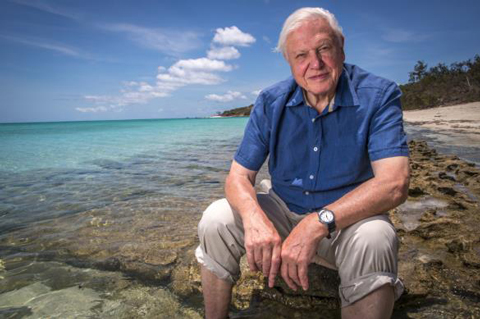
David Attenborough: A prominent flexitarian

It is for this reason that David Attenborough expresses such a growing reluctance to consume meat. While undoubtedly sharing an affinity with the animals he has dedicated his life to, Attenborough claimed that it was the ‘state of the planet’ that motivated him to cut-back on the amount of meat he eats:

“I haven’t been a doctrinaire vegetarian or vegan, but I no longer have the same appetite for meat. Why? I’m not sure. I think subconsciously maybe it’s because of the state of the planet.”

Attenborough’s evasion of the labels ‘vegetarian or vegan,’ while still consciously cutting-back on his meat consumption fits him into the category of a ‘flexitarian.’ Also known less-memorably as ‘reducetarians’ or ‘lessertarians,’ the flexitarian diet is mainly plant-based, while allowing a degree of flexibility for the occasional incorporation of meat.

The appeal of such a diet is obvious. Many consider the complete eradication of steaks, hamburgers and Christmas turkey from their lives as too drastic a change, totally incompatible with their existing lifestyle. However, in offering a flexible approach to meat consumption, flexitarianism provides a manageable middle-ground between carnivorous gorging and a total reliance on plants. Rather than a ‘cold turkey’ elimination of meat altogether, the flexitarian diet offers a more encouraging and sustainable path towards vegetarianism, while acknowledging the gnawing withdrawal symptoms that often come with a radical change of diet.

Of course a big concern of anyone seeking to cut-back on their meat consumption lies in the question of where their protein will come from. The Dietary Reference Intake encourages consuming 0.8g of protein for every kilogram of body weight. This amounts to roughly 46g of protein per day for women, while men are encouraged to eat slightly more at 56g per day. Interestingly, research from Oxford University in 2010 found that meat eaters on average eat well above the recommended level of protein. As such, cutting back on meat is unlikely to trigger severe protein deficiencies, but rather regulate intake down to the recommended level.

Part of the reason for this over-consumption of protein may lie in its existence within foods that are not meat. For example, eggs and dairy products contain high levels of protein, with a single hard-boiled egg containing approximately 7g of protein, and 100g of cheddar cheese containing around 25g of protein. Greek yoghurt is another excellent source, with about 6g of protein contained within each 100g of yoghurt. As such, it takes less meat than many people believe for the human body to reach its recommended protein intake, which is reasonably attainable through a variety of alternative vegetarian foods.  

Eggs and Dairy: alternative sources of protein

For those seeking to remove all animal-sourced products from their diets, excellent plant-based proteins include grains such as oats, barley, rice and quinoa, all of which can be used to bulk out a meal and leave you feeling full. Similarly lentils, pulses and beans offer another hearty alternative to meat, with just 100g of boiled lentils containing around 9g of protein. Soy proteins such as tofu and soya beans also offer a low-calorie, high-protein alternative to meat, with 100g of tofu providing 8g of protein, and 100g of soy beans offering 15g. Proteins can also be easily incorporated into snacking, with nuts and seeds providing a healthy source of amino acids in between meals. Almonds, cashews, chia seeds and flax seeds are all popular snacks for maintaining protein levels throughout the day.

Alternatives to these natural sources of protein are the newly developed mycoprotein, an ingredient common to all Quorn products. While not vegan, mycoprotein offers a synthetically produced source of protein made through a process of fermentation of the fungus ‘fusarium venetatum.’ While this may not sound particularly appealing, the absence of cholesterol and trans fats that Quorn claim for their products makes them a healthier alternative to processed meats such as bacon, sausages, salamis and ham, all of which contain high levels of saturated fat and salt. Indeed, research from the World Health Organisation found that eating 50g of processed meat per day can increase the risk of colorectal cancer, adding individual health benefits to the wider environmental improvements that would be achieved by a reduction in meat consumption.

Ultimately, like any significant lifestyle change, the flexitarian approach advocates a gradual and consistent lessening of meat within one’s diet. The label acknowledges those aspiring towards vegetarianism or veganism, without alienating individuals from the all-or-nothing mentality often associated with vegetarians. Consequently in seeking to create a more sustainable world, flexitarianism offers the individual a more sustainable mentality in seeking to eliminate meat from their diet. That in itself cannot be a bad thing.

Image Credit:  https://carnivorestyle.com/

Oxford University Hospital privatisation row referred to Secretary for Health

0

The Secretary of State for Health and Social Care has been asked to solve a dispute over the privatisation of key scanning facilities in Oxford hospitals.

The plans to privatise a vital part of the cancer treatment process in Oxford University Hospitals have been described as “opaque and murky”. NHS England proposed that the PET-CT scanning service be taken over by InHealth, a private medical company.

The decision was called into question when Doctors raised concerns for patient welfare, stating that the new deal would “damage patients’ health.” On the 4th of April, a 10,000 signature petition was also handed to the Health Overview Scrutiny Committee, opposing the plan.

Subsequently, the matter was referred to Health Secretary, Matt Hancock, by the Health Overview Scrutiny Committee. This followed a meeting last Thursday, held by the Oxfordshire Joint Health Committee, at which
Oxford University Hospitals gave evidence.

Speaking to The Guardian, NHS England announced that “Oxford Universities foundation trust and InHealth agreed to work together to deliver Pet-CT services across Thames Valley[…]”

“[…] which for NHS patients would mean services continuing to be provided from the Churchill Hospital in Oxford but also new local services for people in Swindon and Milton Keynes, providing more convenient scans as part of the NHS long term plan to improve care and save more lives.”

Professor of Medical Oncology at the University of Oxford, Adrian Harris, warned in a letter to Local MPs that “Patients … will have a two-tier system, one in hospital car parks with poor access machines – the Oxford patients [will get better scans] at the Churchill. The new scanners at Oxford are 10 times more sensitive than mobile ones”.

Nick Maynard, head of the cancer team at the OUH trust stated that “the patients of Oxfordshire will get inferior quality scans and what we believe will be a less safe service”.

The referral followed threats of legal action by NHS England against Oxford University Hospitals for libel. NHS heads threated to sue the trust if a legal case was mounted against the awarding of the PET-CT contract to InHealth.

As revealed in The Guardian, Sir Malcolm Grant, the then chairman of NHS England personally warned OUH’s Chief Executive of potential legal action in a telephone conversation. The move has been described by OUH as indicative of a recurring pattern of ‘bullying and intimidation’.

Cherwell believes this to be a unique event, with no other NHS trust having been threated with libel by their national overseers.

In response to the original plan to fully privatise the service, Layla Moran, the Liberal Democrat MP for Oxford West and Abingdon, told press “everything about this process has been murky and opaque, and that’s why I’m glad, after so much pressure, that the government is finally taking notice.

“I, alongside other Oxfordshire MPs, have stood strongly against this shambles of a process since some light was shed on it. Local residents, patients and doctors absolutely deserve to be in the know on such an important issue.

“With the secretary of state now getting a chance to step in, I fear it is too little too late, but I will be keeping up the pressure and writing to him as a matter of urgency.”

This article was updated on the 10th April to correct factual inaccuracies.

Police accused of “lying” about confiscation of boat race protesters’ banner

0

Oxford Climate Justice Campaign (OCJC) and Zero Carbon (ZC) have presented evidence which contradicts statements made by the Metropolitan Police in the aftermath of the incidents during Sunday’s Boat Race.

OCJC and ZC campaign for fossil fuel divestment at Oxford and Cambridge, respectively.

During the Boat Race on Sunday, an event which attracted a viewership in the millions, the organisations planned on dropping a twenty-metre banner reading “Oxbridge Come Clean” over Hammersmith Bridge as the men’s boats passed underneath. These plans were thwarted by police intervention.

In a statement to Oxford Mail, the Metropolitan Police said: “Officers became concerned about people in the crowded area potentially being in possession of fireworks and causing a safety hazard to those in the vicinity. A number of other individuals were also seen acting suspiciously.

“As a result, three men and four women were stop and searched under Section 1 of the Police and Criminal Evidence Act. No items were seized and no arrests were made.”

Despite the police’s claims, video evidence seen by Cherwell shows one of the near 20 police officers present on the bridge saying: “I just confiscated a very large number of zip ties.” The zip ties were not returned after the search.

Police filmed holding zip-ties, and threatening to seize an activist’s camera

In a joint statement, OCJC and ZC wrote: “Cambridge Zero Carbon Society and Oxford Climate Justice Campaign strongly condemn the lies about seized property issued by an official spokesperson of the Met Police. This messy attempt to hide the truth about police heavy-handedness demonstrates that even the Met’s own representatives are aware that officers were entirely unjustified in their repression of our peaceful, legal protest.

“Our intention was not to disrupt or to damage, and in fact our protest was meticulously planned not to disturb the racers. Rather, our goal was to use a public platform to call upon our universities to remove their untenable investments in fossil fuel companies.

“In impeding the free expression of this message, the police are complicit in upholding the damaging status quo. These revelations are deeply embarrassing for the police – who we call on to make a full apology for their actions, and subsequent misrepresentations.”


Police take the protesters’ banner

Though the Metropolitan Police have chosen not to comment on protester’s allegations, one video shows an officer explaining their reasons for intervening. The officer expressed worry that flares may hurt innocent bystanders, referring to their use at a similar protest during last year’s Boat Race. He also said: “Our concern is that the banner could drop down and hurt someone who is part of the race, and also that it could be used to do criminal damage to the bridge.”

That an item is made or adapted for doing criminal damage is one of the grounds on which it can be legally seized. The police did not formally confiscate the banner itself, with one clip showing an officer saying: “We can’t seize [the banner] from you, based on its size.”

However, one clip shows an officer searching the bag containing it and carrying it away from the owner. When asked on why he was taking it, he responded: “I am not taking it, I am just taking it off the bridge.”

The events described transpired around 3:15pm, just when the banner drop was scheduled. Protesters said that two members of the activist groups were searched, whilst three others were apprehended and brought onto the road in between crowds of onlookers. The protesters claim they were “aggressively separated from each other and surrounded on all sides”.

After what protesters describe as “20 minutes of intense questioning, including threats of charges and intimidating tactic”, any reasonable chance of protest was gone and they were allowed to leave the bridge. None of the activists was arrested.

The two organisations claim that this was not the first time climate activists were stopped that day. A spokesperson for Zero Carbon confirmed that at 11.30am, a police officer stopped them to ask questions and demand ID. The student claimed to have seen that the police officer had “Cambridge Zero Carbon Society, Hammersmith Bridge, Climate Protest” written in their notebook.

Protesters said that police presence on Hammersmith Bridge was concentrated in the 20m stretch where they had planned to drop the banner.

Two members who were stopped and questioned at 2pm were threatened with what protesters describe as ‘serious discipline’ if they did not provide their names, addresses, and a commitment to not being involved in any form of protest on the bridge.

The Metropolitan Police were contacted for comment.

Hybridity and gendered versatility are the way forward in fashion

0

I think it’s uncontroversial to claim that gender has been integral to fashion since it’s very creation. Garments have historically been essential expressions of ‘masculinity’ and ‘femininity’ in order to fit contemporary standards of a ‘man’ or ‘woman’. In fact, the semiotic language of clothing has become so ingrained in society, a stick figure in a triangle skirt is enough to tell us which toilet to use. Yet, in a time where such binary categories of gender have come under intense scrutiny, why should clothes on a stick figure have the authority to dictate who can enter a bathroom?

If we were to take Judith Butler’s assertion that gender is a social performance, high fashion takes this performance to the catwalk and turns it into a fine art.

Femininity and masculinity are effectively determined by society (fashion perhaps being one of the most ritualistic means by which rigid gendered norms are constructed). Though often limiting the scope for gender expression, the backlog of gendered clothing makes for an interesting material history to play with. Fashion has the potential to disrupt all norms that have preceded directly because it also has the power to enforce them.

Charles Jeffrey is a pioneer of this innately rebellious attitude towards gender and its relationship to fashion. His brand ‘Loverboy’ (named after a night he hosted to fund his MA) pulses at its core with a high dose of queer culture and the freedom of unbridled nightlife–taking the playful gender dialogue from the club to the catwalk. Loverboy’s first collection propelled Jeffrey into the list of young British designers to watch (voted emerging Menswear Designer of the Year at the 2017 British Fashion Awards) and saw him swiftly absorbed into the plethora of cult brands featured at Dover street market. Last year, Topshop acknowledged the designer’s potential by inviting him to design a series of T-Shirts to celebrate LGBTQ+ month. The high-street giant even embraced the brands agendered vision and marketed the collection as a unisex. The T-shirts featured provocative artworks by contemporary artists with dialogues on the back including Jeffery’s musings on the ‘right to Gender recognition’. They sold out within weeks.

Evocative of early Westwood, Jeffrey’s creative voice distinctively reflects a generation unwilling to accept a characterless dress code of pink skirts for girls and blue trousers for boys. Despite being listed as a menswear brand, Jeffrey fully embraces the ‘co-ed’ runway–casting calls being put out to any ‘queer’ Londoner with a story. The eclectic nature of the clothes (ranging from oversized knitwear to Elizabethan pantaloons) in their costume like decadence are able to escape the constraints of normative and traditionally gendered fashion. The surrealism of proportion and shape creates the figure of a new sort of body which no longer serves the distinction of ‘male’ or ‘female’. The almost immediate success and popularity of Loverboy illustrates the thirst of both the industry and the consumer for designers who will toy with fashion through a playful disregard of conventional gender norms.

Yes, ‘Femininity’ and ‘masculinity’ as codified aesthetics are still integral to the fashion industry as a whole, but the intersections and cross overs between the two are becoming ever more apparent in high fashion. Under Jeremy Scott, Moschino is increasingly bringing this questioning attitude towards gender aesthetics onto the catwalk. Because of this, Moschino’s Fall 2018 runway was a triumph. Part of the novelty of Scott’s vision was its hybridity and gendered versatility–a feat successfully executed without resorting to minimalistic or agendered cuts. Debonair women strode alongside coquettish men and vice-versa.

The collection maximised the erotic power of hyper-masculinity and hyper-femininity, elevating gender beyond the conventional sex of the wearer and propelling it into a conceptual exploration of sexual and gendered tropes. With pinstripes, PVC, and leather–Scott cut up clothing’s gendered stereotypes and pieced them back together in the form of a suspender belt-cum-jacket to be worn effortlessly by both men and women. The powerfully erotic charm of the collection reflected how a combination of masculine and feminine aesthetics could result in something you just can’t envision by relying on the image of a single gender. The finale ‘tandem tux’ is the material realisation of this gender displacement: together a drag queen and trans non-binary activist prowl sultrily in their black stilettoes down the catwalk against societies binary gaze.

Yes, the intense homoeroticism of the collection added an overtly sexual tone to the show, but the gendered innovativeness of the collection partially lay in the presentation of sex on equal terms. Here, the female and male models are equally sexed subjects–latex dolls concealed under executive pinstripes. Each model casts a knowing gaze into the audience as if heading to a gathering we all wish we were invited to. It is incredibly refreshing to see sex and gender presented as something which becomes all the more sensual and powerful for combining the extremes of both feminine and masculine charm.

I find this the most exciting way in which fashion is currently exploring gender, through the assimilation and celebration of both masculinity and femininity. Yes, Calvin Klein’s clean and agendered runways radiate in their minimalistic attitude to gender, but isn’t it so much more interesting to revel in intense masculine and feminine fashion in a slick PVC power suit?