

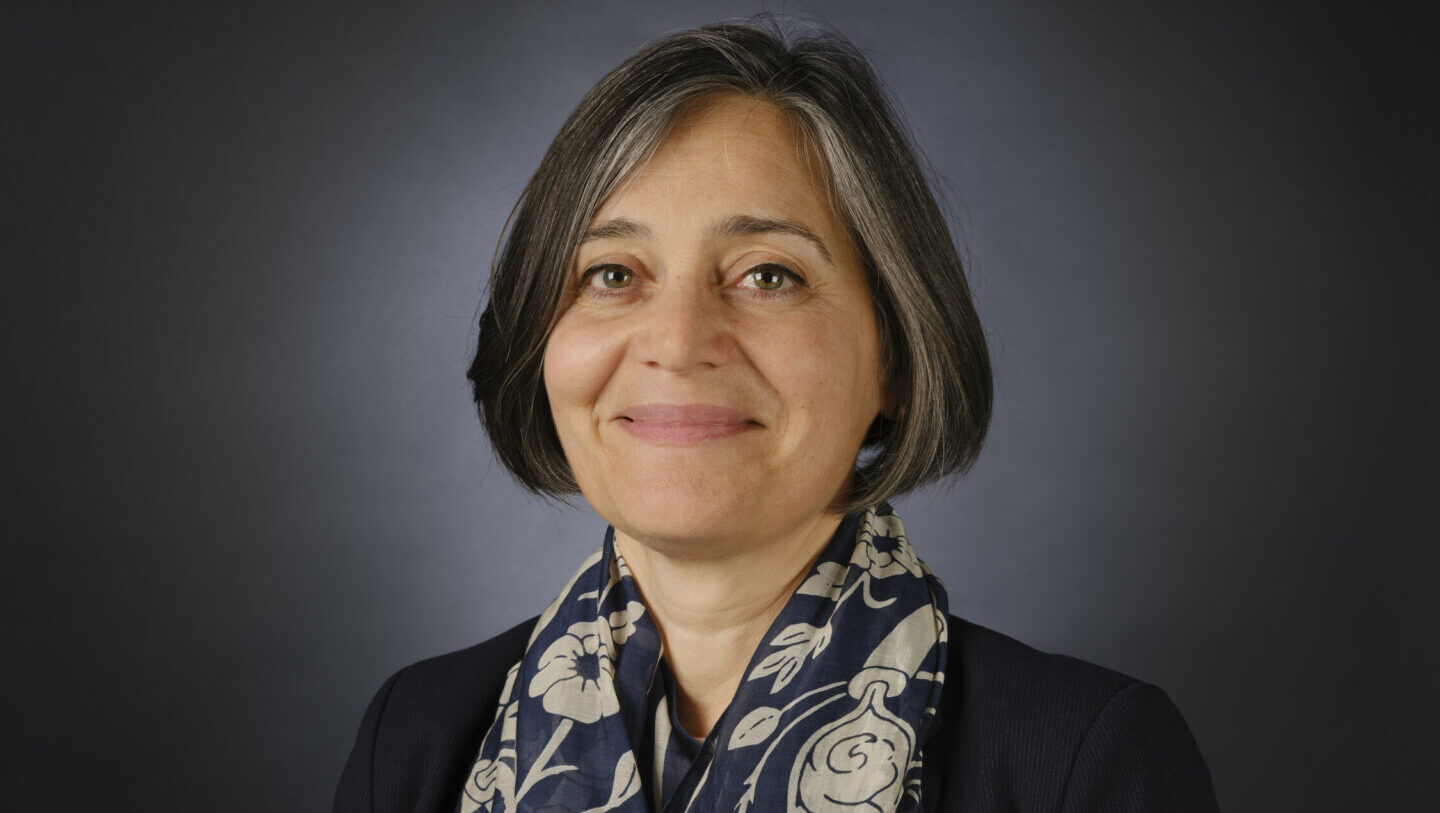
Two years into her role at the Ashmolean Museum, Dr Frédérique Duyrat looks right at home in her office, just down the corridor from the museum’s Japan from 1850 gallery. The first person to hold the title of Director of Collections at the museum, Duyrat is the curatorial and operational manager of the six departments of collections, which range from curatorial departments like Antiquites, to operational ones such as Conservation. Previously managed individually, Duyrat speaks proudly of her role in enabling these departments to “be heard like one voice”. “It’s not the most exciting thing” that she’s done here, but “still, I am very proud of what we are achieving”.
Duyrat makes clear that her role represents something much bigger than herself. “It would be a shame to hide the Ashmolean behind a personal story. It’s not necessarily what students see first [when they come to Oxford]. They don’t really notice that the Ashmolean is their museum…Even our colleagues tend to consider it as a public museum, not realising that…it’s a university museum”.
As part of this, the Ashmolean plays an active role in the educational function of the university, and one unique when compared with other museums. “What is achieved here, especially for hands-on teachers, with generations of students coming and working with the objects themselves. That direct contact…is not normal.” As Britain’s first public museum, the Ashmolean has an astounding number of primary sources. For Duyrat, the opportunity that the Ashmolean offers students to physically interact with historical objects “is not the same as studying from a screen”.
Duyrat makes clear to me her deep desire for students to connect with the museum, both within their studies, and as part of their leisure time. In conversation, she tells me she’s heard a lot of people say that the Ashmolean has become a place “to refresh, to find peace, to find beauty. I’d like to say to any student who is not particularly involved in art history or archaeology, or even history in general, just come for a walk here. Have a stroll across the galleries, take a picture of things you like, put that online.”
Duyrat is also Keeper of the Heberden Coin Room at the museum, one of the world’s leading coin collections. At the mention of coins, her face instantly lights up. Duyrat started her career as an ancient historian, and focused specifically on numismatics, the study of coinage, for her master’s thesis at Sorbonne University.
I ask her what it is about coins that is so fascinating to her, she is quick to correct me: “It is not coins in general, it is Greek coins. They are beautiful”. She speaks with the joy that only an academic can have when speaking about something typically considered as mundane: “For me, it is so exciting to be able to embrace a civilization through one tiny object that you can handle.”
Duyrat describes them as “holistic objects”, through which one can study “their materiality … the iconography of the society from which they came… It was quite addictive from the beginning”. Duyrat tells me that she began when she was my age, “and now I am 55 … I am never bored by them”.
Having curated collections in her previous work at the Bibliotheque nationale de France, Duyrat understands the nuance needed when presenting artefacts to the public. “It is a difficult art…to transform academic knowledge, with its vocabulary, with its intricacies, into something that is not just education, but something that is exciting. We do that beautifully here.” For Duyrat, a good exhibition must start with a good idea and, she adds with a laugh, “a very nice layout. It requires a little bit of design, it’s a show”.
Duyrat makes clear that quality and popularity do not always go hand in hand: “You can have a fantastic show that is completely overlooked by the public…it is much easier to catch the public when you say ‘Marie Antoinette’, than when you say ‘Colour Revolution’.” Duyrat refers here to an exhibition the Ashmolean held two years ago, about the change from natural pigment to industrial dyes in the 19th century, which received less footfall than the museum expected. It’s a difficult balance for museums to find: whilst there are many rich histories to explore, exhibits are often still “a commercial venture…if people don’t walk through the door, we are in trouble, financially”.
One of the core debates around modern museums and collections is decolonisation. As global awareness of the atrocities of the colonial era have increased, so too has the demand for these complex histories to be addressed in museums. It has also brought with it questions of cultural ownership and repatriation: who is the “owner” of a historical artefact, and what right have other countries/communities to display it?
“Decolonising is a tricky matter, because first it has created a sort of rift in society, between people who think it is super important and people who think we are unnecessarily ‘self-flagellating’.” In her mind, no single individual can be responsible for decolonising: “because we are born in a certain place, and we are educated in a certain way… we will all be biased because we are just one person”.
It is not surprising that Duyrat argues against the attacks on museums as institutions: “Let’s try to imagine a world without museums…would that help?.” Still, she recognises the importance of changing the way we as societies collect and display artefacts, with the Ashmolean working often with local communities to repatriate items and ensure that all items have a complete object biography which guarantees both the legal and moral security of the item.
A barrier to this, however, is that of funds. “If you want to change a map on the wall of the museum, that is £500. If you want to change the labels in a gallery, it will be several thousands of pounds.” She describes the process of change as “block by block”: “we don’t have unlimited money…you need to talk to people, you need to find the money.”
This brings us onto a worrying trend: the defunding of the arts and humanities.
Duyrat argues that the arts and humanities play a vital role in modern society, one often overlooked by legislators and treasuries across the world: “You need the humanities to understand each other, to live as a community, to respect the differences in others. Where else can you meet other cultures, other civilisations like that: freely, in a completely open environment.”
Museums are cornerstones of our society, helping us “to understand what makes us human, and why that matters.”
At a time when Britain feels more polarised than ever, Duyrat’s creed offers a guiding hand to a kinder, more empathetic way of engaging with material culture, art, and the world more broadly.


