

Blog Page 531

A literary holiday – JL Carr’s A Month in the Country

0

I’d like to think I’m not the only person who’s spent lockdown with my cheek pressed to a window and my nose in a book, longing to be anywhere – literally anywhere! – which isn’t my parents’ house. During the malaise of lockdown, I’ve been gravitating towards shorter fiction, and one of my recent Waterstones sprees took in Jean Rhys and Albert Camus before leading me to a title and author I didn’t recognise, JL Carr’s A Month in the Country. It might be that I’d never heard of it because I’m not an English student, but I’m not so sure. The novella is a volume as subtle and slender as its plot happens to be. It’s easy to bypass the thin classic with its dated cover for meatier books, searching for something with ostensibly more substance, tension, excitement.

Maybe, in normal times, I’d do the same – but since the start of March, the world itself has not been lacking in substance or tension. If I wanted to read a dystopian novel, I could just pick up the papers. During lockdown, literary escapism no longer has to mean retreating to fantasy worlds or sweeping dramas. The word has returned to its core meaning; seeking distraction and relief from unpleasant realities, essentially, seeking a means of escape.

The protagonist of JL Carr’s A Month in the Country is also looking to escape. Tom Birkin is a traumatised First World War veteran, with the characteristic twitch and stammer of shellshock, and a stoic unwillingness to discuss the horrors he has been forced to witness. Engaged to restore a medieval church painting in the tiny Yorkshire village of Oxgodby, Birkin experiences a sense of renewal which reflects his work reviving the mural.

The titular ‘Month in the Country’ acts in the same way a good book can. It transports the novel’s troubled protagonist away from the traumatic outside world, though at times, the pain of the War still intrudes – such as when Birkin sees a photo of a dead fellow soldier and shouts ‘There is no God!’ into the evening air. Nature does not respond. A scene in which the secular Birkin is forced to step in as preacher further dramatises the turn of the century’s crisis of faith and the existentialist anguish prevailing in the face of an apparently meaningless world.

Carr creates a vivid, soothing sense of the nature of Oxgodby’s quiet community which ultimately helps Birkin heal. Rimmed by “hills heaving up like the back of some great sea-creature”, the secluded valley glitters with dew, its silence only broken by birdsong and bees, which “foraging from flower to flower seemed to deepen the stillness”. All this stillness and calm is implicitly contrasted to the chaos of war which still seethes through the communal memory even four years after its end.

Alongside this sense of healing, an undercurrent of wistful sadness runs throughout the novel, created in part by its narrative structure. Birkin is now an old man, looking back at his youth – the novel is signed off “September 1978”, after another World War has passed. He regularly muses on the lost happiness of that summer, wondering if he “would have always been happy” if he’d stayed in Oxgodby. The years after are unaddressed, save in these mournful questions which are interjected into the narrative, leaving the reader with a lingering sense of dissatisfaction and of promises yet unfulfilled.

That the story is told as a memory adds another layer to its almost elegiac quality. Birkin is not only looking back at a long-gone time of happiness but at a vanished world of pristine countryside and tight-knit rural communities congregating around church parishes, of paraffin stoves and pedal organs. Even the rose favoured by the beautiful Alice Keach is “an old variety”. The centrepiece of the novel is the uncovering of the medieval church painting and the glimpses into the past it reveals. Similarly, reminiscing about post-WWI Britain provides a glimpse into a bygone era, one not quite as buried as the Middle Ages, but still being quickly swept away by the forces of modernisation and globalisation.

Ultimately the happiness contained in these pages is ephemeral, the transitory space between one’s foot leaving the ground and meeting it again. Jobs are finished, countryside spoiled, books reach their last page. We are pulled back to reality, with its mundanities and its horrors. I underlined a passage in the book which seemed pertinent to today’s situation: “It is now or never; we must snatch at happiness as it flies.”

Yet unlike cherished memories, books can be revisited. So, while I can’t turn back the time on the coronavirus lockdown, I know I’ll be returning to the wistful idyll of JL Carr’s A Month in the Country again.

In defence of minimalism

0

‘But it goes on for so long!’; ‘it keeps repeating itself – are there no new ideas?’; ‘how can one listen to it without getting bored!’. All of the above are favourite quips and queries of both musicians and non-musicians who hate minimalism. All of the above are, on the whole, true. And all of the above can easily be applied to all other forms of music. For example, Anton Bruckner’s symphonies last hours, often repeat the same thematic material three or four times too many, and have been known to drive many a listener into the relative safety of sleep. The same could be said of ELO, Euro synth-pop compilations, or Mozart, though Bruckner serves as a perfect example in defence of minimalism because in all aspects of his music, he was a maximalist. Full throttle Bruckner – five French horns playing the same thing for sixteen bars as loud as they can, to take an illustration from Symphony no. 4 – can be criticised in exactly the same way as any minimalist piece.

Western music is built on recursion, reiteration, repetition, theme and variation. Its effects rely on familiarity. Take a typical night out in Oxford. After a few VKs in the bowels of Fever, it is not surprising that so many people cannot remember the location of the toilets, let alone where they left their jacket. But whilst the route to the stairs (for a whiff of fresh air and a taste of true freedom) may be blurred, it seems that everyone knows when the chorus of a song is going to return, or when the beat is going to drop. Whilst many may be already familiar with these songs, the worryingly large number of Oxonians who pride themselves on ignorance of current popular culture can easily take part as well. It is obvious to them that the chorus will be repeated after the next verse, and not midway through it; it is common sense that the beat will drop after 8 bars of incessant ‘hype’ noise, not 5, or 55, or 0.5. The critical theorist Theodor Adorno would call this regressive listening – the music becomes so predictable that almost anyone could guess what’s going to happen next. And by anyone, that includes someone who has never listened to popular music and has just downed 10 Jägerbombs.

So if repetition is so engrained into our subconscious conception and cognition of music, then why is minimalism scorned so much, and so often? Aside from the arguments mentioned above, the usual complaints centre around its bareness; the lack of change in texture, instrumentation, melody, rhythm, dynamic, harmony – just about every musical variable. At risk of pointing out the obvious, it is clear to me that, well, this is obviously the point. For aesthetic appreciation of music to occur, minimalism is the bare minimum. Yes, it is recursive, and yes, it can last a very long time, but really, minimalist music is all we need to be musically fulfilled.

Imagine listening to a piece of Mozart, and how the piece of Mozart makes you feel. It most likely feels familiar, like you have heard it before and thus know what’s coming next, even if you haven’t and don’t. People like being right about things – they like being in control. Listening to a piece of Mozart gives people the feeling of control that comes with having predictions of the future vindicated, and thus a sense of pleasure. It is for this reason that easy listening radio stations such as Classic FM exist and are popular with the elderly, who often seek comfort in routine.

Minimalism affords this same feeling of control and pleasure, yet dispels all unnecessary ornaments, be they musical or contextual. Take out the trills, the key changes, the contrast of loud and soft passages, and the ideology of imperial Austro-Hungary from Mozart’s music, and what is left is universal music. Michael Nyman achieved this with his album Mozart 252 in 2008, with refreshing results for both the classical music industry and the listener.

Musical minimalism, then, is instinctively human music, at least to Western ears and increasingly to all. Whilst not much might change, the time spent on each passage may drag on a little, and lethargy may overtake attentiveness a few times too often, any more variation would be to put an ideological brand on the music, and any less would be objectively boring. This is not to say, however, that composers and artists can not put their individual stamp on the genre: here are my top ten pieces which all share a minimalist core.

1) Michael Nyman – ‘In Re Don Giovanni’

2) Steve Reich – ‘Tehilim’

3) Julius Eastman – ‘The Holy Presence of Joan D’Arc’

4) Meredith Monk – ‘Earth Seen From Above’

5) Michael Torke – ‘The Yellow Pages’

6) Louis Andriessen – ‘Hoketus’

7) Alexandre Rabinovitch-Barakovsky – ‘Existence’

8) Michael Gordon – ‘Trance’

9) Arvo Pärt – ‘Spiegel im Spiegel’

10) Jocelyn Pook – ‘Hallelujah’

(Disclaimer: for those who read my deeply negative review of Ludovico Einaudi’s recent album, he may be minimalist, but he is also shit.)

Photo editorial: the essence of memories in fashion and melodies

0

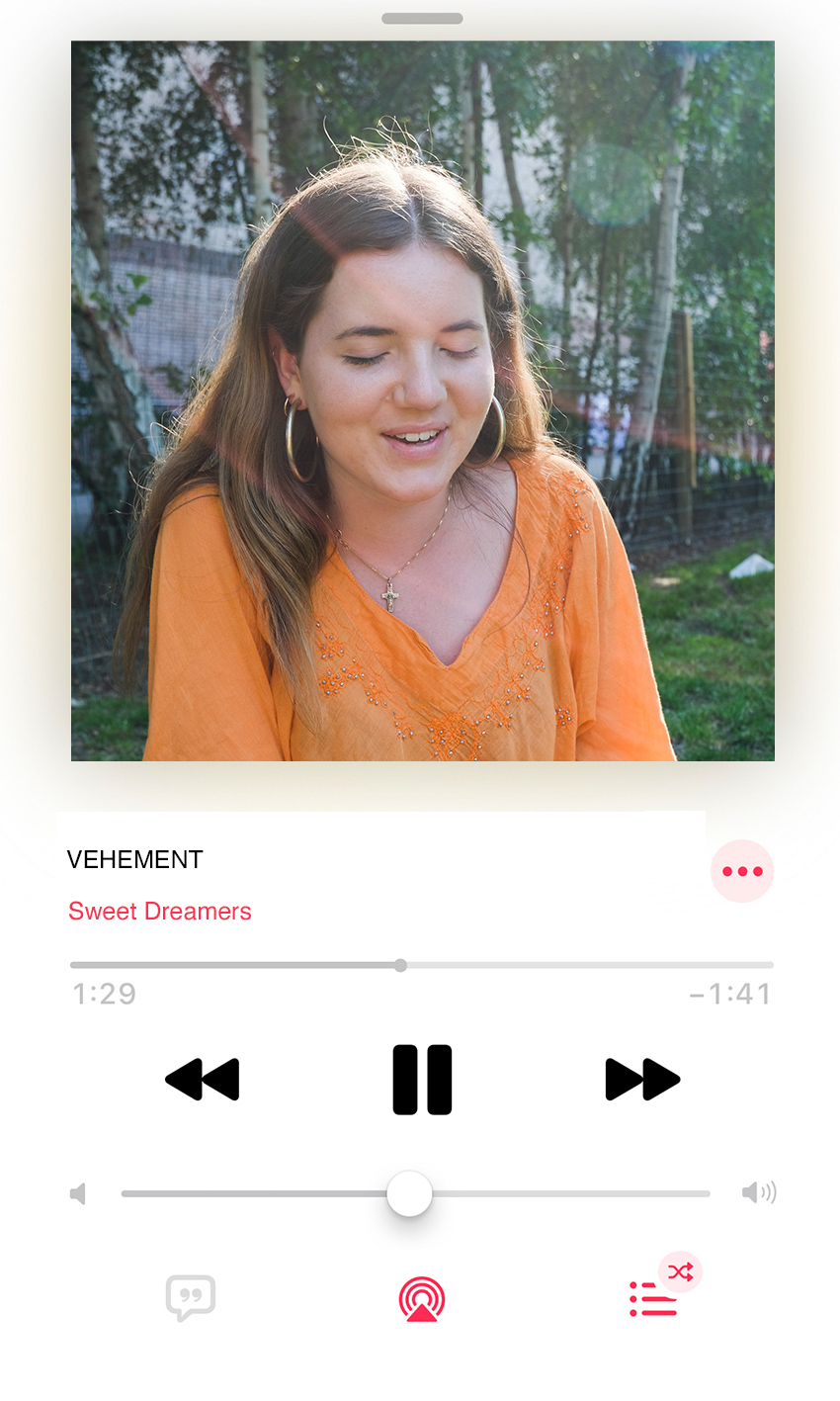
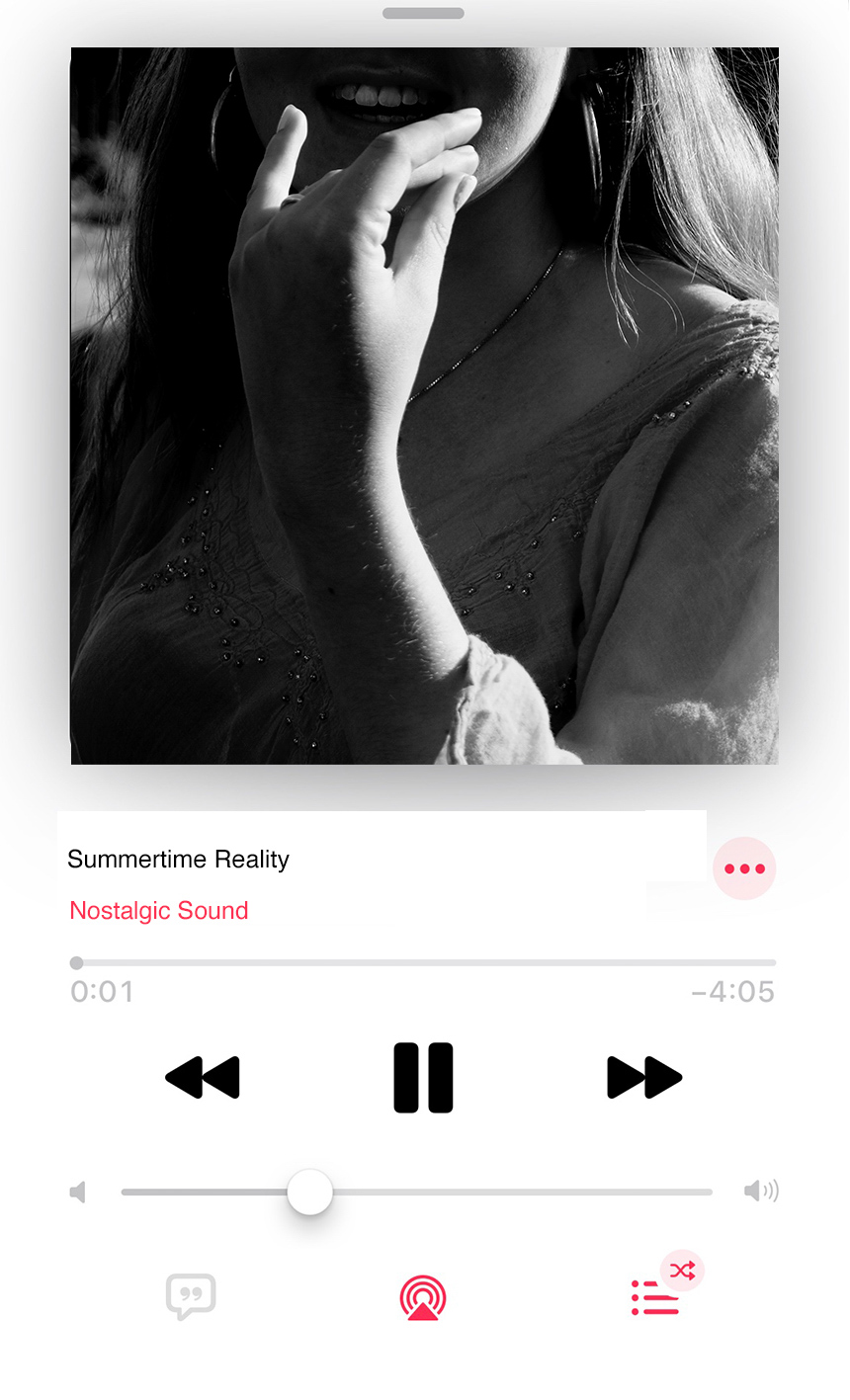
Fashion and music are intertwined by the powerful ability to evoke even the most deeply obscured memories. Such sensory stimuli yearn to remind us of the fleeting joys and passing sorrows that, respectively, glitter and plague our pasts. In years to come, the warm orange top worn in the photos will remind me of the sweltering heat that engulfed us as lockdown rules were relaxed and the trepidation that partial freedom induced; the hanging sleeves like wings of a butterfly, emerging from our temporary chrysalis to a world decidedly different from anything we had ever known.

Model: Flora Davies

Description and photography: Agata Gwincinska

Musicals in movies: The interplay between reality and fantasy

0

*Spoilers for Moulin Rouge and La La Land*

I don’t particularly like musicals. I just find them weird and uncomfortable – even aged six seeing the musical Cats at the Sunderland Empire made me really quite bored. Movie musicals don’t grab me much either. So, when a musical movie does impress me, it always lands itself high on my top films of all-time lists. The movies that interest me are those that are self-conscious about their musical features, and use this to enhance the emotions of the movie. They are using musicals to compare the fantasy fairy tale world of our imagination – the world of happy musical endings – with cold, hard reality. La La Land (2016) and Moulin Rouge! (2001) are two of my favourite movies, and the use of this idea in both movies is what makes them so successful.

I can understand why La La Land is controversial; particularly problematic is the plot of a white man who believes he needs to save jazz, taking the centre stage away from black artists. Personally, I connect with Mia’s storyline more. The speech in which she finally voices her crippling self-doubt hits home. However, structurally the film is super interesting. It obviously harks back to classic musicals such as Singing in the Rain, but they don’t do it just for the waves of nostalgia you get as you watch it.

You may or may not have noticed that the musical numbers are very much weighted to the first half of the movie. As Mia and Sebastian’s love and relationship deteriorates, the musical numbers fade. As the realism of life, relationships and ‘making it’ sets in, the fantasy that musicals present vanishes, leaving the heart-breaking truth about love: it doesn’t always work. The old-fashioned musicals present this ideal world. They give you this feeling of joy, hope, and perfection. The musical aspects of La La Land draw us into the false hope and naivety the main characters have at the start about life, so that when we are confronted with Mia and Sebastian’s argument over dinner, with no music, reality hits harder. This is what ‘La La Land’ means as a title: it’s L.A., but also a place of dreamlike possibilities and perfections that won’t come true.

The movie shifts back into musical, however, for Mia’s audition scene. Musical idealism returns when her dreams are coming true, emphasising the joyful conclusion to her struggle. However, we quickly find out this came with a catch: losing her relationship with Seb. Her life doesn’t attain musical perfection after all. Many people were frustrated with the end, but for me it made the movie. It was realistic and subverted the original genre of the film, with the musical genre having been slowly dropped as the L.A. façade fell through their fingertips.

I particularly loved the Epilogue music scene – heart-wrenching, but expertly crafted on many levels. Seb spends the whole movie looking back to the jazz age, so it makes sense he would be looking back at their relationship through jazz. However, it is also music, all of its joyous naivety, presuming that if Mia and Seb had stayed together, they would have made it. Mia walking away at the end, and the shared smile between the two, shows an awareness that they were an ideal, not reality. In that smile, it showed their story, their hopes, and reality. It showed that they were grateful for the instrumental role each other had in making their dreams come true, but that they were not part of each other’s dream.

Moulin Rouge! is the third part of Baz Luhrmann’s Red Curtain Trilogy, following Strictly Ballroom (1992) and Romeo and Juliet (1996). I just love Luhrmann’s work and style, but never more so than in Moulin Rouge!. Theatre and musicals are in the very blood of this movie’s plot and direction. A retelling of Giuseppe Verdi’s famous opera La Traviata, the courtesan Satine and the penniless writer Christian fall in love as they rehearse and perform a musical. The movie knowingly follows the same plot as the musical, as Christian and Satine try to hide their love from the Duke, who wants Satine for himself.

The musical numbers make sense, they are rehearsing a musical after all, yet it directly relates to the characters ‘real-life’ trials and tribulations as well. Easy and effective. However, this changes in the final scenes. As Christian and Satine reunite and end their musical with their love song, as the crowd goes wild and the red curtain falls and ends the musical, Satine falls to the floor. Kept hidden from Christian, Satine was dying from tuberculosis throughout the movie. As the rose petals of the set fall around them, the sobbing Christian watches Satine die.

It is at this point, for the first time in the movie, that the plot of the musical and the plot of the movie split. There is no happy ending, no love conquering all, as the bohemian crew always reiterated in the movie. Though the Duke fails and leaves because of the strength of Satine and Christian’s love, reality hits where loving someone doesn’t mean anything to fatal disease. You can’t love someone back to life, and it doesn’t possess any magic of musical proportions. Nothing is more realistic than in 1899 dying young of some disease.

The sad ending is made more tragic by the false hope the musical gives. It makes it seem that everything will turn out with a happy ending and, to make matters even more painful, we saw the perfect ending acted out in front of our very eyes as the musical’s ending. When she is told she is dying, Satine sings to herself: “I was a fool to believe, a fool to believe. It all ends today, yes it all ends today”. The movie points out the foolishness of believing in the perfect musical ending. Yet, that doesn’t mean that the musical, the naivety and joyfulness, was not important or a brilliant thing to have, instead it just isn’t our reality. Christian tells us that the story is about love and it is: it is about the reality of love, made up of both the perfect, musical-like moments, and moments of harsher reality.

I now realise I can’t really get enough of this, this conflict and harmony between stereotypical happy genres and realism. The almost meta nature of it just hooks me in; I know I’m a sucker for it. If I think about what I want to get out of movies, it’s obviously enjoyment in some shape or form. However, I feel that my enjoyment often stems from intense emotional connection in some way. If a movie can deeply movie me or make me feel something, I like that. Simply put, I think these musical movies, juxtaposed with and exposed by realism, make me feel more. They make everything hurt more when you watch them fall apart, but they make the highs even higher.

Oxford Expands Coronavirus Trial to Brazil and South Africa

Having already undergone Phase I/II of clinical trials that began in April, Oxford’s experimental vaccine is set to be trialled in Brazil and South Africa. Phase III of the trial requires a larger population of at least ten thousand volunteers. The aim of Phase III is to assess and met safety expectations of a marketable vaccine.

Professor Adrian Hill, director of the Jenner Institute, explained that due to the decrease in transmission in the UK, UK-based trials threatened to return “no result”. He says: “We are in the bizarre position of wanting COVID to stay, at least for a little while. But cases are declining.” The decision to expand the trial was not a surprising or unexpected one. Professor Hill had addressed this as a possible pitfall when it came to carrying out the clinical trial at Phase III, in a talk hosted by the Oxford Personalised Medicine Society earlier this term.

Last week, the University announced that the Brazilian Health Regulatory Agency approved the clinical trial, which is already on its way. The unprecedented transmission and spread of COVID-19 in the Brazilian population made the expansion of the trial to Brazil a logical choice. About five thousand volunteers, mainly front-line health workers, are expected to be vaccinated in Sao Paulo, Rio de Janeiro, and in North Brazil. The Federal University of Sao Paulo (UNIFESP) is collaborating with the University of Oxford to coordinate the trial which is being sponsored by Brazilian entrepreneurs. The agreement between the universities and investors includes a commitment to make the vaccine available on a not-for-profit basis.

In South Africa, the University of the Witwatersrand, Johannesburg (Wits) is coming together with the University of Oxford to complete another aspect of the trial. South Africa has seen a rise of more than eighty thousand cases since the President declared a national lockdown. One of the worst-hit countries in the African continent, South Africa contributes to approximately 30% of all COVID-19 cases seen on the African continent. Professor Shabir Madhi, who is leading the trial at Wits University and is the Director of the South Africa Medical Research Council (SAMRC) Vaccines and Infectious Diseases Analytics Research Unit (VIDA) believes that South Africa is still about eight weeks away from its peak.

Professor Andrew Pollard, Chief investigator of the Oxford Vaccine Trial says of the collaboration: “The global coronavirus pandemic still presents an unprecedented threat to human health worldwide, but equally unprecedented is the impressive way researchers and scientists around the world have been able to collaborate on the clinical development work to combat this threat.”

While implementing an international clinical trial can result in providing efficient and more generalised information for scientific communities, a number of challenges can be expected. Concerns have been raised over the regulatory burden, personnel training and reduced data collection variability. Most of these concerns have already been addressed by the trial researchers.

The Oxford team has already partnered with manufacturers in several countries to scale up vaccine production and if the trial proves successful, up to two billion doses could be available by early next year.

Artwork by Arpita Chatterjee

Tuning in: Podcasts in lockdown

I tuned into my first podcast about 5 years ago, due to a celebrity appearance of someone I was a fan of; it was like nothing I’d heard before. The auditory nature of the medium obviously draws comparisons to radio but in reality, radio is a far cry from podcasts. Radio programs are the mainstream: broadcast to millions, highly produced, and designed to appeal to as many people as possible. Podcasts, on the other hand, are niche, born from the desire of the showrunner to share passions, entertain others, build communities and pass on stories. Without the glamour and gleam of the large media companies, it allowed a truly unique entertainment medium to form. 

One of the more defining features is that podcasts have virtually no limitations or restrictions – as long as they are auditory, they can take any form. There are podcasts about solving murders, podcasts to self-improve, podcasts to review films and books, countless comedy shows, informational shows, news, journalism, and interviews. Realising the potential of the communities these podcasts create, media giants have become involved, and flooded the scene with many new shows. If you’re a fan of a certain comedian or personality, chances are that they have their own podcast. 

However, I regret to say that there are only so many hours in a day. So, even during the lockdown, I haven’t branched out into many of the exciting new avenues that the medium is moving towards. But I have cultivated a small group of shows over the years that I couldn’t do without and have been very helpful in these troubling times. If you’re wanting something new to listen to over the summer, I have chosen a few of my favourites in a variety of genres, all of which I would highly recommend.  

The Weekly Planet is the flagship program of the Planet Broadcasting network and covers all things popular culture. From discussing fan theories and assessing director cuts to their annihilating Caravan of Garbage series (which, despite the name, discusses both good and bad shows), it’s truly a delight to listen to the rants and ramblings of the charismatic Australian hosts as they stumble their way through – perfect for the morning commute. 

If video games are more your thing, you should check out Pitch Please. In this podcast, a group of game developers pitch each other games and then either rip the idea to shreds or run away with it entirely. With many special guests from developers to journalists to YouTubers giving their pitch – does Eddie Stobart’s Global Domination sound feasible? – this podcast is both hilarious and a fascinating insight into the game development process. 

I lied by saying I hadn’t found anything new during the quarantine. Actors and married couple Paul F. Tompkins and Janie Haddad Tompkins started the lockdown podcast Stay F. Homekins, which is very sweet, charming and whimsical. They discuss the events in America, their lives and experiences in Hollywood and also go slightly crazy as they remain indoors for weeks on end. Both a light-hearted and serious look at the global crises occurring at the moment, it is one thing that I will look back on fondly. 

On the opposite end of the spectrum, The Aunty Donna Podcast may be one to binge. It has just passed 200 episodes, but you may need to understand the characters and jokes and stupidity on this improvisation podcast. Normally, the word ‘improv’ makes me cautious, but this eponymous trio – well-known for their sketches online – work so well that I always look forward to whatever is going on in each episode. 

Finally, the show that started it all. It was episode 400 with comedians Jason Manzoukas (the aforementioned celebrity) and Andy Daly that I first listened to; the rest is history. Comedy Bang! Bang! is another improvisational podcast, taking the form of an interview show with comedians and performers playing these characters. One of the largest comedy podcasts and with guests such as Thomas Middleditch, Ben Schwartz, Judd Apatow and Lauren Lapkus, it has nearly 700 episodes, with plenty of memorable moments and literally laugh-out-loud stuff. It is no surprise that it is a juggernaut in the comedy podcast scene. 

I enjoy all the shows above, and the medium in general, because I believe their format is much more intimate than media like television, film and radio. Through this, an illusion is created: you most likely listen alone and so the only people within this room are you and the hosts of the show. There may be some high production values but, in the end, a more personal experience is had. Jokes and references feel as though you’re in on them, discussions feel more private and intense, and stories feel more focused and built personally for you. In my experience at least, these qualities help podcasts to stand out from other media in their ability to make you feel a part of the community, and I believe that this is really what helps to combat loneliness. It’s no wonder then that in times of hardship and isolation, such as these, podcasts are more popular than ever.

The NBA’s return in the time of Black Lives Matter and COVID-19

0

The NBA’s back. Over three months since the 2019-20 season was suspended in March, the NBA’s board of governors has approved a plan for the season to resume in Disney’s ESPN Wide World of Sports Complex near Orlando, Florida on 31st July. 22 teams will return to play, 13 from the Western Conference and 9 from the Eastern Conference, with each team at least six games from clinching a playoff spot. Each team will play eight games to determine seeding, with a possible play-in tournament should the ninth seed finish within four games of the eighth seed.

However, the excitement from fans and players alike has been met with equal concern from several prominent players. Two key issues have been raised that the NBA’s governing body will need to address if it hopes to resume the season safely and with regard to the current political climate: the role NBA players should be playing in the Black Lives Matter movement and the rising cases of coronavirus in the country and in Florida in particular.

The first issue that was raised after the plan’s reveal is that restarting the season in the midst of a monumental civil rights movement may draw attention away from the current discussion around racial equality. Brooklyn Nets guard Kyrie Irving was the first to express these concerns, reportedly saying on a conference call with other players: “I’m not with the systematic racism and the bulls**t. … Something smells a little fishy. Whether we want to admit it or not, we are targeted as black men every day we wake up.” Los Angeles Lakers centre Dwight Howard voiced support for Irving, arguing that basketball “isn’t needed right now” in a statement to CNN. Irving makes a compelling point: the country stands at the precipice of historic change and NBA players enjoy the status and resources to help bring it about. Whether playing basketball would provide a better platform for players than protesting and actively raising awareness is doubtful and is something that must be addressed if the NBA wants to convince its players that it is appropriate to resume the season at such a vital moment for social justice.

Another group of players, including Nets superstar Kevin Durant and Lakers guard Avery Bradley, have argued that the recent rise in coronavirus cases in the country could put players in danger, and the current “bubble” arrangements are not sufficient to prevent players from contracting the disease. Florida has seen thousands of new cases in just the last few days, resulting in the state implementing new lockdown measures to fight the surge. Combined with the revelation last Friday that 16 out of the 302 players have tested positive for the virus (at time of writing), players may not be as safe in the “bubble” as the NBA has promised.

In response to these concerns, the NBA has implemented a number of policies. Echoing the English Premier League’s support of players wearing jerseys reading ‘Black Lives Matter’, the NBA will allow players to decide what will be written on the back of their jerseys from an approved list of 29 social justice messages bringing attention to the issues of systematic racism and police brutality. The league has further decided to allow players to opt out from playing the rest of the season. Avery Bradley was one of the first to do so, citing concerns about his son Liam who has a history of struggling to recover from respiratory illness.

With teams facing the possibility of losing their players to the league’s opt-out policy, the title race has been greatly impacted, with affected teams actively looking for replacements among the shrinking pool of available free agents, bringing familiar faces back into the league. The Lakers recently acquired veteran guard J.R. Smith, who was notable for playing with Lakers star player Lebron James during his time with the Cleveland Cavaliers.

This season’s title race is arguably one of the most competitive in recent memory, with no one team clearly dominating over the rest like the Golden State Warriors of the last five seasons. The season’s suspension may also impact each team’s road to the championship, providing some much needed rest for players who have a history of struggling in the postseason like the Houston Rockets’ Russell Westbrook and James Harden, and potentially disrupting the rhythm of teams like the Milwaukee Bucks who were predicted by many to dominate the Eastern conference on route to the Finals prior to the suspension.

BREAKING: Union decides against new poll, votes from hacked election will be counted

0

In a decision against the Election Tribunal’s recommendation that the Union hold a re-poll after the second poll for President was hacked, the Union Standing Committee has decided instead to count the “unsullied” votes from the second poll.

This would discount the 507 ‘block votes’ that were all sent from one of seven IP addresses and all ranked candidates in the same order. The remaining 1071 legitimate votes will comprise the electoral count. The results will be declared by Thursday.

The President of the Union has confirmed to Cherwell: “Having been given the opportunity to do so by the Election Tribunal, Standing Committee chose to reject a July Re-Poll in favour of a declared result based on non-compromised ballots. I hope that this is concluded swiftly, so we can get back to work.”

Cherwell was told that members of the Standing Committee worried about the security and public relations concerns should a third poll be held.

The Tribunal, consisting of ex-Officers and a qualified lawyer, proposed that the invalid election on June 19th be resolved by carrying out an electronic re-poll in July. All 1,783 members who registered in June would have been asked to cast their votes again.

The Tribunal had “accepted the advice of [the voting service] Mi-Voice that they could not safely assume that a tally of those votes would produce a result free from the overall taint of the improper interference which had produced the 507 block votes (and possibly others).”

The report of the Election Tribunal, which was published on July 4th, further notes that “some of the 507 block votes, if genuinely cast, might have supported different candidates in different proportions. The Tribunal further concluded that a count of the probably unsullied votes might possibly disenfranchise a third of those voting…”

The Tribunal said, in the event that the Standing Committee did not accept a re-poll, the next best option was to remove the 507 block votes and use the remaining results. It notes that “the four Candidates would be prepared to accept” this option.

On the morning of the Second Election, which was called after Union members voted to Re-Open Nominations for the Union presidency, members who had registered to vote online using their Union Card Number were sent an email containing a unique link and voting number. 

After polls had closed, the Oxford Union Returning Officer decided not to count votes after some members were unable to vote using the voting service Mi-Voice. Some members who attempted to use their link were reportedly directed to a page informing them that their “Unique Voter Code…has already been used”. Under the Union’s Standing Order D5(f), the issue was referred to an Election Tribunal.

Failure to elect an Oxford Union President is unprecedented in the society’s history.

Oxford launches new COVID-19 hotspot tool

0

The University of Oxford’s Leverhulme Centre for Demographic Science has developed a tool which uses demographic data to identify areas of England and Wales which could disproportionately suffer from COVID-19 infections. The tool will supplement track and trace technology.

The Isle of Wight and Lincolnshire are predicted to have some of the highest risk factors due to their aged populations and comparatively high levels of social deprivation. It also considers other potential vulnerabilities like age, social deprivation, population density, ethnicity, and hospital resources.

The article published in BMC Medicine in conjunction with this tool argues that “as countries across the globe exit strict lockdown and enter the ‘new normal’ of co-existence with COVID-19, monitoring new infection hotspots will be crucial” before concluding that “as this pandemic continues to unfold across the world, we urgently need to consider how emerging socio-demographic risks such as social deprivation, ethnicity and population density structure spatial differences in COVID-19 severity and health care demand.”

The tool had previously indicated that Harrow, in London, was likely to have an extremely high rate of hospitalisations due to COVID-19. Harrow’s Northwick Park Hospital was the first hospital in the UK to call for a national emergency due to a lack of capacity early in the pandemic.

The lead author of the study, Mark Verhagen, claims that “by using our online tool, policymakers would immediately have identified Harrow as a potential hotspot of hospital demand. Ensuring that local decision-makers have this type of fine-grained information available was a key goal of this study.”

Researchers say that the dashboard is accurate on a very local level, giving policymakers the knowledge to target resources towards the most at-risk areas. Online maps have been produced through the tool which can be viewed at the levels of administrative region, ceremonial county, clinical commissioning group, and lower layer super output area.

Professor Melinda Mills, author and Director of the Leverhulme Centre for Demographic Science, said that “with additional outbreaks and second waves, thinking not only regionally, but at much smaller scale at the neighbourhood level will be the most effective approach to stifle and contain outbreaks, particularly when a lack of track and trace is in place.”

Image credit to Unsplash.

Oxford University holds virtual open days

0

Oxford University’s two summer open days have taken place online for the first time this year as a result of Covid-19. Oxford usually welcomes thousands of prospective students every summer, but this year they have had to navigate their way around Oxford via virtual college tours and social media.

While there were events put on by student service teams, such as the Disability Advisory Service and Fees and Funding, the bulk of the activities were organised by individual colleges and departments. Colleges put together virtual tours and held meet the tutor Q&As, while departments put together videos on both the course structure and application tips, including how to prepare for the admissions exams and examples of practice interviews.

As is the case every year, current Oxford students were key to the success of these virtual open days, participating in student Q&As, but also engaging with prospective students through society and JCR social media sites.

Class Act, a society for people from under-represented socioeconomic groups at Oxford, was one of many student societies who tried to reach out to students on the open days. Their communications officer, Ella Street, told Cherwell that one positive of a virtual open day was that it gave “students exposure to not just the different colleges and departments, but also to different extra-curricular activities and campaigns, which normally they might not have been aware of.”

Street also said: “An online Open Day is more accessible for many prospective students than an in person Open Day, especially for applicants who do not live in the South East.”

Prospective applicants did not seem to be put off by this new virtual process, with over 3,000 questions being asked on Brasenose’s ask-the-students chat room. Moreover, the online format does have the added advantage of allowing for continued engagement, with most events staying online after the 1st and 2nd of July.

A spokesperson from the University told Cherwell that they welcomed over 35,000 visitors across the two days and answered over 24,000 questions. They said: “This was more people than we would expect to attend a physical Open Day in Oxford.”

The open days are just one of a series of admissions events which will need to be held online this year. UNIQ, the University’s flagship state school access programme which supports 1,350 students annually, will also run exclusively online this year.

Samina Khan, Director of Undergraduate Admissions and Outreach at Oxford University said: “Expanding our digital resources has been a major priority for the University in recent weeks. Many young people are in the process of making important decisions about their higher education future in the midst of a crisis, and I think it would be deeply unfair for talented students of all backgrounds to lose sight of their ambitions because of the education disruption caused during this time. Particularly those experiencing socio-economic disadvantage.”

“We want to support these students wherever possible and we hope our online resources arm them with the details they need to make an informed decision around whether Oxford is the right choice for them and make competitive applications for entry.”

It was announced last week that Oxford’s December interviews will be conducted remotely, and it has also been confirmed that the Open Day in September will be virtual. A spokesperson from the University told Cherwell: “We will be taking on board the feedback we receive from visitors and staff and student volunteers from July to make sure these are as positive, useful and engaging as possible.”

Article updated at 09.55 on 08/07/2020 to include comment from the University of Oxford.

Image credit to Tetiana Shyshkina/ Unsplash.