Sunday 17th May 2026
Blog Page 896

Brasenose put twenty goals past Univ

0

After a 5-2 win in their first game of the season against Oriel, Brasenose’s Men’s Firsts went into their JCR Third Division clash against Univ quietly optimistic.

Their opponents had lost their previous game to Corpus/Linacre in the first round of Cuppers, and were facing an availability crisis, with a number of first and second team players missing due to academic commitments.

However, the scale of the mismatch between the sides could not have been foreseen.

“We thought it might be our day,” Brasenose’s Tom Steer told Cherwell, “when we scored with our seventeenth attack.”

Indeed, the visitors were dominant from the first whistle to the last, battering Univ’s limited team and playing a free-flowing brand of attacking football.

Going into half-time, BNC were ten goals to the good, and it would have been easy for them to take their foot off the gas somewhat.

But the 2016 Cuppers winners did not ease off their opponents. Indeed, with one eye on their goal difference at the end of the season, Brasenose were just as ruthless in the second half, bagging another ten goals to seal a 20-0 win.

Steer and captain Calum Flintoff both hit the back of the net four times, with Oli Hanson, Johannes Fuest, Sunny Huang, and Tom Hurleston all grabbing braces. Nimrod Nehushtan, Ed Shorland, Sean Cuddihy, and Joey Fisher rounded off the scoring.

Univ skipper Misha Jones cited the scheduling of the game as a major reason for his side’s defeat. “It was good to give several members of our team their debuts for Univ football,” he told Cherwell. “But also a shame that their first match had to be such a heavy loss.”

As if to prove the old adage that a week is a long time in football, Univ bounced back to hold Trinity to a 2-2 draw in their next league game, but still languish at the foot of the bottom JCR division.

Brasenose, meanwhile, won their next fixture, beating St. Anne’s 6-3 in Cuppers, but have failed to turn their goal glut into any meaningful momentum, and are now three games without a win following Saturday’s Cuppers defeat at Wadham.

Fresher Will Stone was hardly glowing in his assessment of Brasenose’s performance in their victory: “we were fairly clinical,” he told Cherwell.

Flintoff, however, was more optimistic, suggesting that the winning margin proved Brasenose were on their way back “to the highest echelons of the college game.”

“Sights have now transitioned to Cuppers. Next year’s Cuppers.”

Varsity start would be “an honour”, says ex-pro Talotti

2

“It was the right decision to make.”

After five seasons in the Italian top flight, three in the European Challenge Cup and one in the Heineken Cup, Roberto Talotti called time on professional rugby career at the age of just 23. The flanker had struggled for game time in the 2008/9 season at the club he had joined as a fresh-faced 18-year-old, and made the “very tough” call to return to full-time education in South Africa. A rugby fanatic, Talotti did not take the decision likely, but his affinity for management and business outweighed his desperation for another chance to play at the top level.

Eight years on, Talotti has the opportunity to play in the second oldest regular fixture in the game – only England vs Scotland has been played for longer – after beginning his study for an MBA. “The term ‘excited’ is an understatement,” he told Cherwell. “I can remember watching the Varsity Match as a youngster and being in complete awe of the occasion. To be a part of such a historic fixture would be an honour and a privilege.”

While the South African-born flanker admits that he wonders what might have happened if he had continued playing professionally, he is clearly delighted with how things have turned out for him.

“I was fortunate enough to have played professionally for five years, learnt Italian, and travelled all over Europe,” he continued.

Indeed, in a five-year career, Talotti played in the U19 and U21 World Cups and Six Nations, winning the Coppa Italia and challenged himself against European giants Saracens, Harlequins and Biarritz – where he faced his “toughest opponent” in French back row Imanol Harinordoquy – in knockout competitions: for a man scouted at school and thrown into the first-team set-up one month into his trial, it was a dream foray into the professional game.

Furthermore, his working career is by no means a backup. His enthusiasm for business is clear, and he describes his Oxford experience to date as “intense, diverse [and] inspiring.”

“I have always wanted to study for an MBA,” he told Cherwell, “and Oxford was on top of my list. An MBA is important in advancing one’s career within an organisation… [it] will provide me with invaluable skills, allowing me to develop my business acumen. I am loving every minute, and I cannot believe that I have been here two months already.”

Moreover, Talotti’s Blues career has got off to a flying start. After coming off the bench to score the decisive try against Bucs Super Rugby champions Hartpury College, the flanker made his full debut two weeks ago in the clash against Trinity College, Dublin. Again Talotti impressed, making himself a nuisance at the breakdown and thwarting the Dubliners with some crunching tackles, before his second-half try in the corner sealed a 21-17 win for the Blues.

“It was massively important to get off to a good start,” he said. “It was a brilliant team effort by the boys, and we showed great determination and tenacity to get the wins.”

On a personal level, it was vital for the 31-year-old to come through his first couple of games for Oxford unscathed. After all, only seven months previously, he had undergone a serious operation to his shoulder, and these were his first appearances since: “I was quite relieved to get through them intact,” he admitted.

After those two wins, and a 41-24 thrashing of Championship side Bristol’s Academy, Oxford have won three home games on the spin, and look well placed ahead of December’s clash with the Light Blues at Twickenham, with Cambridge currently three games without a win. And if they are to come out victorious in the season’s biggest fixture, you can bet that Roberto Talotti will have more than something to do with it.

International animal rights protest comes to Oxford

0

The south end of Cornmarket was taken over by a radical animal rights protest today.

The group, Anonymous for the Voiceless, gathered back-to-back on Cornmarket, outside the McDonald’s fast food restaurant.

The protesters, who wore signature ‘Guy Fawkes’ masks, played videos of animal cruelty on their tablets and laptops. The footage included livestock slaughter, batch fishing, and the milking of cows. They were momentarily interrupted by a fire engine passing through Cornmarket.

The back-to-back protest was nicknamed a ‘cube of truth’ by organisers. The Oxford branch is one of 29 UK based ‘cubes’ expected to rally today for the cause of animal rights.

Though the protest took place outside McDonald’s, organisers denied that it was aimed at the fast food chain alone. They aimed to persuade passersby to swear off meat and dairy products.

Veteran animal rights activist, ‘Jane’, told Cherwell: “It is important to bring awareness to more people who don’t realise the cruelty included in meat and dairy production. The idea of humane killing is a total myth.

“Everyone has a responsibility to know what they’re buying. You’re paying murderers.”

‘Maze’, one of the ‘cube of truth’ organisers, said: “Today is the fifth of November, and we’re using anonymous masks in cubes of truth all over the world at the same time.

“This all comes from an international non-profit organisation started in Australia, Anonymous for the Voiceless.”

Today’s protest was the second ‘cube of truth’ attended by an Oxford Brookes University student, who chose to remain anonymous. He told Cherwell: “It’s a really good way to reach people because we’re not going up to people. They have to show the interest first.”

Cashew to be bought by ticketing giant FIXR

1

FIXR is set to purchase the Oxford founded app Cashew – and end its peer-to-peer (P2P) payment service.

Students are encouraged to withdraw their funds immediately, as the service will cease on 6 November. Users will then have six months to withdraw any money remaining on the app.

Cashew had already refocused its activity away from P2P payment and towards student ticketing, a move that will likely be accelerated by FIXR – the UK’s fastest growing events platform.

Cashew, which launched last year, at one point boasted over 60% of Oxford students as users. It later expanded to several other UK universities. FIXR will be buying the Cashew app, along with its ball ticketing business and associated technology. They plan to focus exclusively on ticketing.

The cost of the purchase has not been disclosed. Cashew former co-founder Jamie Cox, a third year at St Hugh’s, denied the purchase was related to previous rumours of financial difficulty.

Speaking to Cherwell about the motivation behind the sale, Cox said: “Cashew has made the decision to sell because the app was already beginning to move towards the ticketing market which proved to be a more sustainable model.

“Rather than going head-to-head with FIXR, the Cashew Team decided that it would be best to work alongside them to build something which benefits everyone.”

Light boxes will combat depression, says Hilda’s

0

St Hilda’s is set to buy £160 worth of medically certified light boxes to help combat seasonal affective disorder (SAD).

The motion was passed at a JCR meeting on Sunday. It stated that “SAD is a type of major depressive disorder that disproportionally affects people living in areas further from the equator, such as England.”

The JCR resolved to buy “medically certified light boxes” in order to make light therapy more accessible to those students suffering from the symptoms of SAD, including “depression, lethargy, anxiety, trouble waking up in the mornings, and withdrawal from social situations”.

The motion was passed unanimously, with one amendment made. Originally, the proposal requested four boxes with a budget of up to £300, but the JCR settled on buying two boxes worth £160 altogether, with the possibility of buying more boxes if demand increases. No timeline has yet been set for the introduction of the light boxes.

Bora Guloglu, the student who proposed the motion, told Cherwell: “Unfortunately, SAD is often not recognised as a big problem, since many people suffer from mild symptoms. Only for a smaller subset of people do the symptoms become unmanageable, and so many people tend to think that it is just ‘winter blues’.”

Bora has recently been diagnosed with SAD herself, and hopes the investment in light boxes will “make life for students dealing with SAD easier”.

The new light boxes would allow for an extra tier of support for students in addition to the light therapy already provided by the Disability Advisory Service (DAS). Many of the students who voted in favour of the motion felt the waiting period during registration to the disabilities service justified the proposal.

Antara Jaidev, who seconded the motion, said: “It seemed counterintuitive to spend the whole of Michaelmas term, the time when symptoms are likely heightened, attempting to cut through the red tape of the university’s service.”

This sentiment was shared by Mikey Ahearn, one of the welfare officers at St Hilda’s: “This will simply ensure that students can continue to function as fully as possible between the fi rst steps of diagnosis, right up until, and following, the DAS’s choice to grant individual support.”

Ahearn also raised the issue of “the profile of SAD as a mental disorder”. He hopes that the proposal will help raise awareness of this form of depression, which is often not taken seriously due to the seasonality of its symptoms.

Other measures are already being put in place at St Hilda’s to further increase the support for students with a mental illness. Jaidev described one such development: “The officers of the JCR in charge of such policies are in the process of changing their official titles from Disability and Health Conditions Officers to Disability, Health Conditions, and Neurodiversity Officers.”

In this way St Hilda’s hopes to make their health services as inclusive as possible for a variety of health issues, including SAD.

Lavish ceremonies and a £37k lunch – the cost of Oxford’s honorary degrees revealed

0

The university has spent thousands of pounds conferring honorary degrees on the wealthy and famous, new figures obtained by Cherwell reveal.

Following last week’s revelations over the vice chancellor’s expenses, Cherwell can reveal Oxford spent £143,562 on exclusive events for university VIPs and the university’s chief benefactors – a fee significantly higher than other UK universities. It includes £37,701 spent on a single lunch for the Myanmar leader Aung San Suu Kyi at St Hugh’s after she collected her honorary degree in 2012.

Overall, £4,000 has been spent on trumpeters, £6,950 on choirs and £2,662 on gown hire since 2012. £41,844 has been spent paying for international flights and travel expenses for the honorands.

Last year, the University spent £23,846 organising the events, the highest amount in three years. The price included £5,387 on an honorands’ lunch and £9,795 on honorands’ travel expenses.

The figures were obtained by a freedom of information request.

The expenditure was criticised by Oxford SU president Kate Cole, who told Cherwell: “In a time of increasing pressures on budgets of student services we would want to see as much money as possible being spent on developing the student experience and the quality of education.

“We would question whether spending the equivalent of four undergraduates’ tuition fees for the year on a single lunch was value for money”

The Encaenia celebrations involve a number of lunches and garden parties. Photo: Karen Carey/Twitter.

The Encaenia ceremony, which was first held in the eighteenth century, occurs in ninth week of Trinity term each year. It involves closing off the Bodleian Library for a ceremony in which the chancellor confers honours on distinguished figures.

After the ceremony, the honorands are invited to a lavish lunch held in All Souls College, before finishing their day at the annual garden party for benefactors and VIPs. In recent years the ceremony has been viewed by some as a publicity stunt, with mounting costs spent on security barriers.

Attendance is limited to senior university figures, including the proctors, the professor of poetry and the public orator.

The figures come at a time of increasing attention on extravagant spending by senior university figures. Last week, Cherwell revealed that vice chancellor Louise Richardson spent £38,339 on expenses last year alone, with £56,522 spent on air travel since she took her position in January 2016.

Figures awarded honorary degrees in recent years include Shirley Williams, Hillary Mantel, and Tom Stoppard.


Speaking to Cherwell, president of the Oxford University and Colleges Union (UCU), Garrick Taylor, said: “Oxford UCU recognises the importance of Encaenia and understands that, like any international event with highly distinguished individuals, the cost will run into thousands.

“We do have concerns about how much money was spent on a single lunch in 2012 and feel that the University should further explain and justify this, especially at a time when pay was being restrained and pension benefits cut.”

A University spokesperson told Cherwell: “Oxford and many other universities around the world believe honorary degrees are an important and appropriate way to publicly recognise and celebrate excellence and achievement across all walks of life.”

Corpus seconds finally triumph

0

Whilst Corpus Christi continues its quincentenary celebrations, a piece of sporting history was made. The 2nd XI side, led by captains Jack Counsell and Maxi Brook-Gandy, won their first game in over two years, with an emphatic 7-1 victory over local rivals Christ Church.

An ominous start to the season saw Corpus defeated by Benet’s 8-4, as the monks from the suburbs competed in their first ever game in college football. This was followed by an early Cuppers exit after only eight Corpus players were available.

Fresher James Dempsey, known around college as ‘Sports Guy’, was man of the match having signed for the side in a drunken deal the night before at Ahmed’s kebab van. Two goals and an assist, including a delightful near-post twenty-yard curler that somehow managed to bounce over the keeper’s head on its way in, marked an astounding debut.

Tactics and endeavour proved critical in a game of little skill. Christ Church tactics composed of sending up hopeful long balls to two tall strikers. However, despite constant chat, they provided no threat to the Corpus Christi back line.

The 4-5-1 formation, however, allowed Corpus to dominate the midfield. The Merton Street college seemed to want it more and this dedication was exemplified by fifth goal.

Counsell, chasing an over-hit through ball, clattered into the keeper, and knocked the ball out of his hands.

Showing the predatory instinct for which he is now famed, the skipper slotted the loose ball into the net, and then jogged towards the centre circle with such confidence that the referee – who happened to be from Corpus – had no choice but to award the goal.

To truly understand the importance of this result, consider the historical relations between the two colleges.

Encircled by their larger neighbour for many centuries, exacerbated by the annexation of the garden in the 19th century, Corpus has often felt like an underdog in size, if not in spirit.

Even though they lack the resources of Christ Church, with two Corpus players in basketball tops juxtaposed with the matching socks of their opposition, Corpus won the battle between the worst two teams in college football.

It was a fixture steeped in history, but a fixture that gives hope for a new generation of sub-par Corpuscle footballers.

Protesters rally for decolonisation outside Rad Cam

0

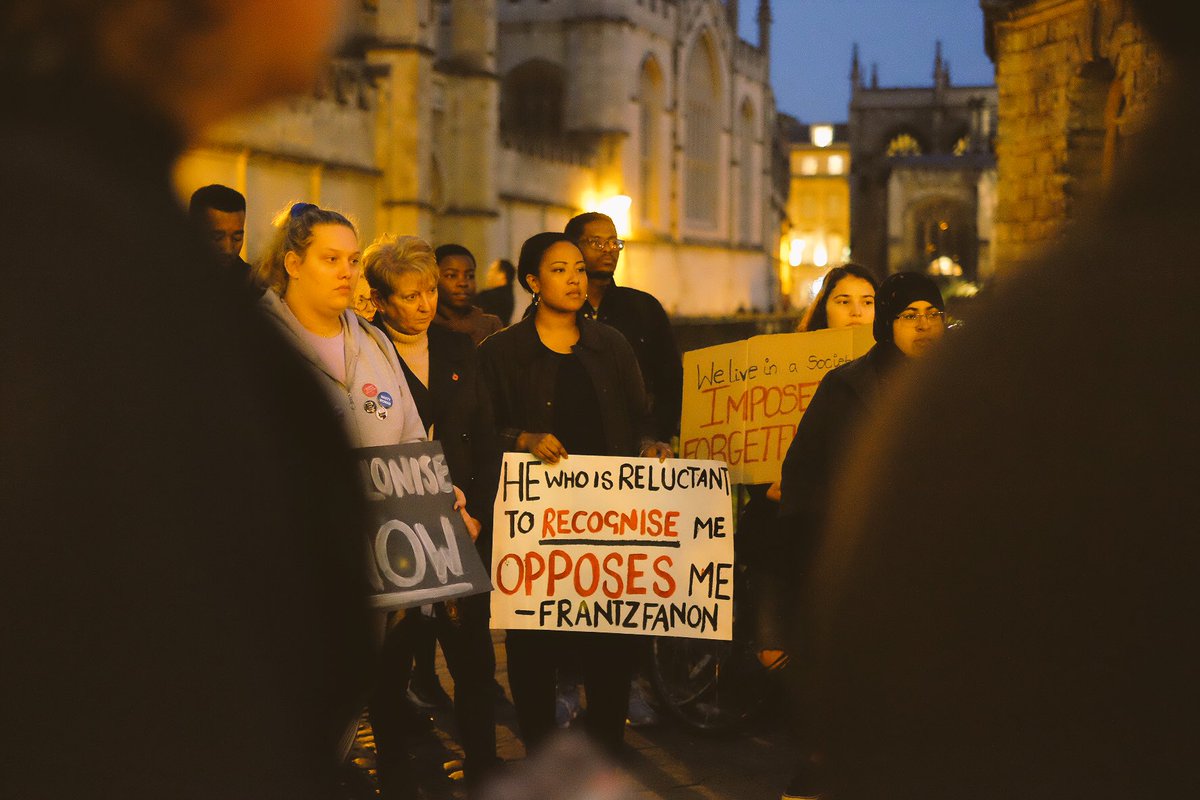
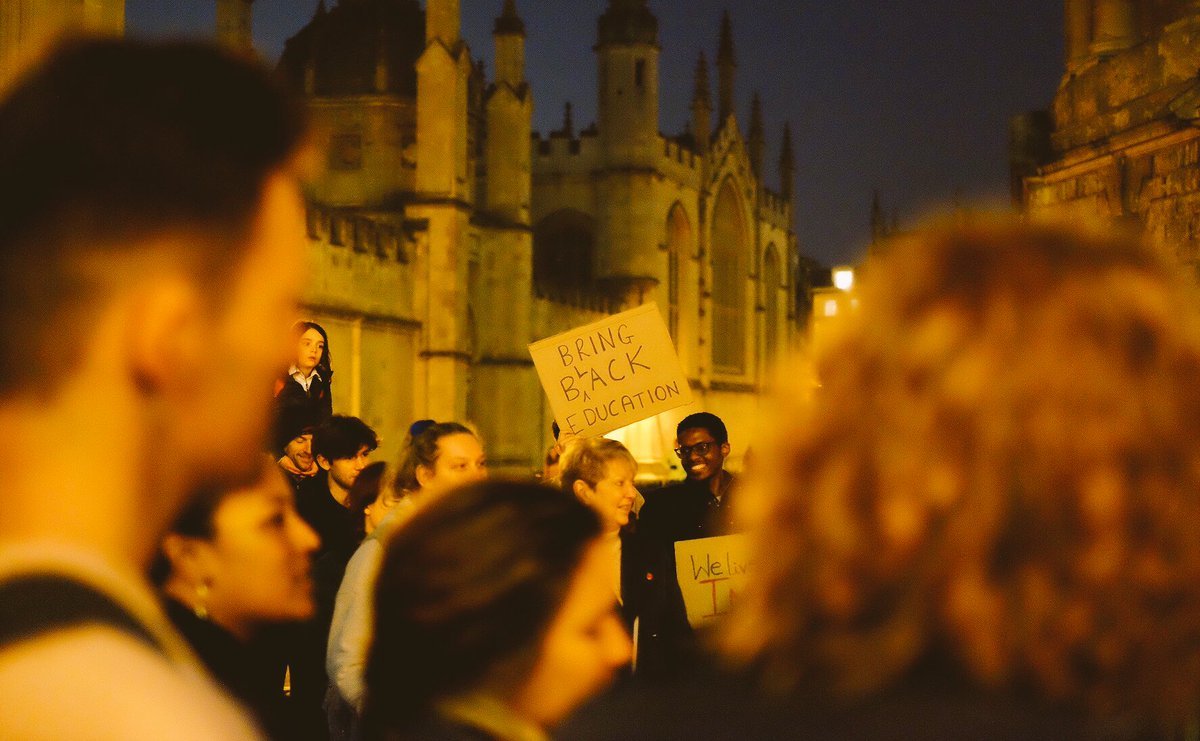
Around 100 demonstrators gathered outside the Rad Cam on Friday night to call on Oxford University to commit to a “long-term project of decolonisation at all levels”.

The rally, organised by Oxford SU campaign groups, Common Ground and others, intended “students and staff to come together in public declaration of their support for the goal of decolonising Oxford university.”

Representatives from Oxford SU Campaign for Racial Awareness and Equality, Class Act, Rhodes Must Fall (RMF) and Common Ground all delivered speeches, interspersed with chants of “De-, de-, decolonise!” – the shout popularised in Oxford by the RMF movement.

Protesters displayed banners reading: ‘Decolonise Now’ and ‘The white curriculum thinks for us so we don’t have to’.

“Liberating the university… is about putting an end to establishment ideology – an ideology that has done irreversible harm,” Labour councillor and DPhil student Dan Iley-Williamson told the crowd. “Oxford is the training ground of the establishment. But the University doesn’t have to take this role – we can demand real action on access, and we can demand that our curricula are reformed.”

Julia Hamilton.

The protest was largely focused on reforming Oxford’s access and curricula, with many speakers citing statistics obtained by Labour MP David Lammy which showed almost one in three colleges did not admit a black British A-Level student in 2015. It was claimed the figures “expose how Oxbridge systematically fails BME and socio-economically disadvantaged students in its admissions process and throughout their time at university.”

However demonstrators also continued to call for the removal of the statue of British imperialist Cecil Rhodes outside Oriel College.

Blue Weiss, a member of the Common Ground campaign group, told Cherwell: “(The aim is) to challenge the representation of students, to decolonise the curriculum and ensure that it is representative, to challenge iconography around the city, and to educate students within Oxford about what colonialism is and what it means to challenge that.”

He added: “What we’re trying to do is demand real action by the University, rather than allow them to do one tokenistic thing to buy off the whole movement.”

Photo: Julia Hamilton.

The rally followed similar initiatives at Cambridge where students have recently launched a working group to discuss possible changes to the English curriculum.

An Oxford University spokesperson has previously stated: “Oxford University is a welcoming, tolerant and diverse community. More than 25 per cent of our undergraduates and postgraduates are black and minority ethnic students. We are continually working with students on many initiatives towards greater inclusion and representation for all ethnic groups.”

A beautiful, entrancing mess of an album – with a piercing social critique

0

Benjamin Clementine’s most recent album I Tell A Fly was released at the end of last month and listening to it is quite an unprecedented experience. This is the artist’s second album, following his mercury prize winning debut album At Least For Now. In an interview with Kate Mossman for The Guardian, Clementine claimed that he knew this album would not sell as many copies as the first one. This is perhaps due to the challenge it poses to the listener’s ears, but if you stick with it I guarantee it will be worth it. I Tell A Fly is possibly the furthest from easy – listening music as one could imagine – it is a fully immersive experience, full of unexpected twists and turns, a ball of energy that does not fit into any defined genre.

The album somewhat confusingly opens on a ‘Farewell Sonata’, which introduces his psychedelic spin on classical music, with piano layered on harpsichord phrases. This makes I Tell A Fly something of a rock opera, slightly reminiscent of Queen in its theatricality but with a pinch of subtlety and a message about global politics. Clementine drew his inspiration for this album from a line on his American visa that described him as an “alien of extraordinary abilities”. We hear this clearly on ‘God Save the Jungle’, the dark and slightly ominous second track, as well as in ‘Jupiter’, a song that stands out from the rest of the album through its soul influences and comparative simplicity, and has the line “Man’s an alien passing by… Back home in Jupiter things are getting harder”. Contrasting attitudes towards immigration in general stands out as a theme Clem- entine wants to communicate, clearly expressed in ‘(Everyone Said Come In) By the Ports of Europe’, as well as the line “the barbarians are coming” on the closing track ‘Ave Dreamer’.

Bullying and discrimination is also a clear theme of this album, seen in possibly the most unique and jarring track ‘Phantom of Aleppoville’, which tells the story of “Billy the bully” and contains one of my favourite lines: “For me the difference between love and hate/Weighs the same difference between risotto and rice pudding”. This song is a poignant poetic experience, mixing eerie harpsichord phrases, bursts of shrieks, and lyrics akin to slam poetry.

Snippets of Clementine’s life also become apparent throughout this album. At times the poetry of the lyrics become a little lost under the layers of soaring choruses and harpsichord, we hear French in ‘Better Sorry Than safe’, referencing the time he spent nearly homeless in Paris. His strict religious upbringing also seems to have an influence, seen in the rhythmic and repetitive chanting that makes these songs so hypnotising. He was forbidden from listening to popular music as a child, and we see the importance of classical music in this album especially in ‘Paris Cor Blimey’, where he borrows and plays on a phrase from Debussy’s Clair de Lune.

Ultimately, the word ‘pandemonium’ that Clementine repeats on the track ‘Paris Cor Blimey’ quite accurately characterizes this album: it is a beautiful, entrancing mess.

Caring about O’Mara’s past is not pedantic – it’s our duty

0

At one time or another, everyone performs a role. At school, our teachers lead us out into the streets and told us that we represent the school and should be on our best behaviour. As we grow up, that situation is replayed.

The characters may change, but the principle remains the same. When we represent people, they have expectations of us. As long as we wear their badge, our behaviour has consequences for them.

The position of politicians, with their private lives under scrutiny, is only as unusual as the responsibility they have undertaken. An MP’s jersey is multicoloured: it carries their constituents’ stripes and their party’s. If they reach the cabinet, they get 65 million tiny chevrons on their sleeves – one for every citizen.

What then could indicate ineptitude or infidelity? With that question in mind, it’s a little easier to see through the media’s attempts to pry into politicians’ pasts and private lives.

For example, it may seem distinctly unfair for journalists to trawl through the detritus of a politician’s historical online activity.

But in the case of politicians, nuances of character can make or break credibility.

The case of Jared O’Mara is a good example of the constructive contribution that the news media can make by revealing the relevant elements of politicians’ private lives.

His misogynistic online comments cast doubt on his sense of equal responsibility for all voters regardless of gender, and on his commitment to the Women and Equalities Committee.

The interests of certain sections of the electorate rest on the requirement that politicians should not hold the attitudes he displayed, and that requirement can only be imposed through the removal of politicians who fall short. Only by such means can the public interest be maximised.

There is a kind of prying that does seem unfair. The news media faces no greater incentive to unearth and publish the role-relevant misdemeanours of politicians’ pasts than to reveal irrelevantly shocking or sensational stories from their private lives.

To act to achieve the latter is problematic, but we can usually identify the line at which public interest and media influence be- come problematically merged.

The social role of the media in this case was to fill the gaps left by the normal party vetting process. That’s a part which will be useful in other cases too, and one it will naturally play as it avidly seeks stories. It will serve the public good as far as it does so. When it oversteps the boundary of political relevance, however, it will treat politicians unfairly and muddy the waters of electoral freedom.