I write in genuine fear. I have discovered that C has read my diary and the results were not pretty – and now I’m super lost as to whether I’m to blame?! GDPR would certainly be on my side. Regardless, if anyone is reading this now that shouldn’t be, please don’t for your sake and that of your oh-so-delicate ego. In these pages, I speak only bare-faced truth of what I see, and in the cold, bright light of my photograph flash its subjects often do not look pretty. My mother did warn me not to write anything in my diary that I didn’t want other people on the trip to read. I guess I just hoped it would be one of the guys from the brass band…
Oh did I not mention? We’re sharing our Slovenian hostel room with a literal 10-piece brass band. It’s exactly like you’d imagine. Watching from the outside, when they all leave, it’s like a clown car. You think it’s over, there can’t be any more of them, but it turns out you’ve only just reached the cornet section.
As this is the second hostel we’ve stayed in, I’d summarise my current thoughts on hostels as a whole as very much like living in a localised uni Freshers’ week: meeting people, smiling, sharing bathrooms, asking where ‘the party’ is (the brass band dudes seem quite keen to bond, all I know is they can keep their trombones to themselves), seeing naked ladies in the shower room. Classic Freshers’ activities. Speaking of which, the Slovenian drinking scene is a strange one. You cannot find a frosty pint anywhere. It’s all hot chocolate, mulled wine, gin toddies, and even a hot mojito – which just feels straight-up unnatural. Basically, the logic seems to follow:
Goal: To be warm.
Outside = cold
Inside = warm
British solution: Stay inside until the beer jacket kicks in when you need to wander home on a frozen 2am morning
Slovenian solution: Make outside warm too a.k.a. fire, heaters and warm drinks are a must!
Back to the day, as we walked around Ljubljana, it dissolved from ex-Eastern bloc chic to slightly saccharine loveliness. The landscape read far more as a watercolour painted-set of some Nutcracker ballet performance than reality. We’re talking snowy peaks, blues/pink sky of sunrise, candy floss clouds lazing in a haze of azul. It certainly gave the drama on stage in our group some much needed gravitas. I think the lack of sleep is getting to us. Slight jabs have turned to full-out blows, eventually leading to me mediating over the phone with C’s boyfriend because she was feeling left out of the group(!) My first question: How? There are literally only 4 people on this trip? Plus due to our hostelling situation we basically live like those petri-dish bacterial colonies grown where it’s impossible to distinguish the individual microbes from the green smudge of the whole without a really really good microscope – but I guess C must have really good eyesight.
The conversation with the boyf was basically a parent-teacher conference, in which I was the already over-worked primary school teacher being told by a patronising parent that the child’s finger-painting skill inadequacy showed a fundamental failure in my ability to educate. Oh, and of course while this all went down, the other child in the class left unsupervised found a friendly looking man in a van who offered her candy in exchange for her credit card details (a.k.a. A just got phished with one of those text message bank account scams). So I look forward to spending the rest of the evening sorting that out too, can’t wait to see my phone bill at the end of this trip.
I wonder if the brass band has an extra spot on in their group? I can probably manage the triangle…
£15.7 billion. This was the University’s net contribution to the UK economy in 2018-19, according to the economic research consultancy London Economics. Initially it seems shockingly large how one single institution can contribute so much in one year. I could never imagine this amount of money, so much so that I had to double check the number of zeros you add on to a billion. It’s nine.
The University’s total operational costs in 2018-19 were £2.6 billion, making the net economic contribution £13.1 billion and the benefit to cost ratio of 6.1:1. To put this into perspective, Frontier Economics found that the economic impact generated by all English universities, including the international students and visitors they attract, was over £95 billion of gross output in 2018-19. To compare this with other universities across the country, the economic impact of the University of Birmingham was £3.5 billion in 2014-15, the University of Nottingham contributes £1.1 billion each year, and Durham £1.1 billion.
So where, then, does Oxford’s £15.7 billion come from? The London Economics report splits the economic impact of Oxford University into 5 groups. Research and knowledge transfers account for £7.9 billion, unsurprisingly the largest amount of the groups. At Oxford, every £1 invested into university research and knowledge exchange activities generates £10.3 in return for the UK economy.
Research impact was calculated using information about research grants and contracts. At £771 million, the University’s recurrent funding from Research England was the largest research income received by any university in the UK that year. By using an economic multiplier, a factor which is applied to the measures in all 5 groups to account for the estimated direct, indirect, and induced impacts, LE estimated that the direct impact attributable to Oxford’s research was £4.5 billion.
Knowledge exchange refers to income from intellectual property licencing, the turnover from the 168 spinout companies that are partly owned by Oxford University, and the turnover form the 32 companies in the Begbroke and Oxford Science Parks (excluding 27 Oxford spin-outs to avoid double counting). These activities generated an estimated £3.4 billion of economic impact across the UK in 2018/19.
Teaching and learning activities account for £422 million. These financial benefits are explained by the enhanced earnings that graduates benefit from, and as a result the additional tax received by the Exchequer. In August 2021 Ezra reported that graduates from the University of Oxford have the highest average graduate salary, of £34,802, 45% more than the national average. Students’ enhanced earnings and consequential increase in tax payment each make up about 50% of the £422 million.
Educational exports are the third group, making up £732 million. London Economics only considered the impacts generated by the tuition and non-tuition fees of international students, because fees paid by domestic students contribute to the UK economy, regardless of the chosen university.
The operating and capital costs of the University (80% of the total) and its colleges (the remaining 20%) account for £6 billion of the £15.7 billion. Tourism accounts for £611 million of the University’s input into the UK economy. Considering only overnight stays from overseas visitors, they estimate about 407,000 out of the 577,000 visitors to Oxford were associated with the University’s activities.
Since the academic year 2018-2019, Oxford has been world leading in COVID-19 research, creating the AstraZeneca vaccine, which aims to have delivered 3 billion doses across the globe by the end of 2021. What we now need is another report on Oxford’s economic impact. I imagine its contribution to the UK Economy will be a lot higher for the year 2020- 21, and the split between the 5 groups of impact may be quite different.
At this point I took a moment to indulge myself, feeling grateful for studying in such a beautiful city, full of rich history and incredible people. The £15.7 billion is starting to make sense now; maybe it isn’t so surprising. After all, the University of Oxford has been a research and learning hub for over 900 years, always pushing academic boundaries. Its staff, students, and alumni have transformed lives in the UK and globally. To contextualise, the seemingly large £15.7 billion is dwarfed in comparison to the UK’s GDP in 2018 —£2.1 trillion. The University, as lauded as it is, only made up about 0.007% of the UK economy.
A team of political and environmental researchers, including Oxford’s Professor Connie McDermott, came together on October 19th to issue an urgent warning: more inclusive and coherent global action is desperately needed to save forests and avert severe social, economic, and environmental disruption.
Since 1990, 420 million hectares of forest have been lost through conversion to other land uses. According to data from the University of Maryland and the online monitoring group Global Forest Watch, tree cover loss in 2020 was well above the average for the last twenty years—making it the third worst year for forest destruction since 2002, when serious monitoring began.
Data from the Intergovernmental Panel on Climate Change, the United Nations’ climate wing, estimates that, between 2007 and 2016, 23% of CO2 emissions globally stemmed from deforestation and forest degradation.
The panel discussed the three-tiered problem plaguing deforestation policy: complexity, regulatory gaps, and implementation gaps. Today, deforestation policy is comprised of a dizzying patchwork of transnational, national, state, and municipal regulations that leave farmers, businesses, and policymakers alike confused. The result, according to the team of researchers, has been feet-dragging and implementation gaps, which have accelerated the pace of deforestation
In a press release, the team of researchers explained the idea of “imported deforestation,” the phenomenon where deforestation in the Global South is driven by a combination of domestic factors and the broader international market and demand for agricultural commodities, bioenergy, and other bio-economic needs in the Global North. A key focus of the panel was highlighting how the narrow focus of modern deforestation policy, which emphasises curbing illegal timber use, obscures more pressing drivers of deforestation, such as agricultural expansion for cattle breeding and the cultivation of soy and palm oil.
Developing countries, such as Ghana, face an impending one-two punch from the laggard state of deforestation policy: tree loss continues to bite into the revenues of people desperately reliant on agribusiness revenues, and rising sea levels and natural disasters from climate change risk ravaging seaside communities.
Yet, Oxford’s Connie McDermott warns that a Western-imposed, one-size-fits-all approach to stopping deforestation also carries considerable risks. “Future change needs to come from all sides,” she said, “research and interventions need to focus on the power dynamics of land use and supply chain governance, and who benefits and who loses.”
Although the UK and EU have introduced policies to curb illegal timber production, these strategies, according to McDermott, often ignore the complex dynamics at play on-the-ground, which alienates local populations and handicaps the effectiveness of the policies.
“There is certainly a democratic deficit with a lot of these policies,” she added, “and there are ethical inconsistencies here: these regulations sometimes say that Western priorities should come first and that local people should not have access to their own resources.”
The path forward, according to the researchers, will require striking a delicate balance between shifting incentives in the global economy and protecting those directly affected by deforestation and the policies that are introduced to tackle it. “The crucial role of states,” according to Dr. Sarah Lilian Burns of the Universidad Nacional de La Plata in Argentina, is to “correct ecologically or socially unacceptable market failures.”
At the same time, the panel encourages the EU and the UK to support local stakeholders, such as smallholder farmers in sub-Saharan Africa or southeast Asia, in conversations about deforestation policy. “There is a lot of work and effort already happening on the ground, with support from local people, such as approaches to smart cocoa in Ghana, said McDermott, “why don’t we support that process rather than impatiently and unilaterally announcing more demands from the international community?”
The meeting comes just a week ahead of COP26, an upcoming summit in Glasgow bringing together world leaders to reassess global progress on meeting the goals laid out in the 2016 Paris Climate Accord. According to reports, the UK government is pushing for an ambitious agreement to halt and reverse forest loss. Those initiatives will include demands that big producers of soya, coffee, cocoa, and palm oil halt clearances—the second largest source of anthropogenic greenhouse gas emissions.
Linacre College has announced they will approach the Privy Council to change its name to Thao College following the signing of a memorandum of understanding with SOVICO Group. The College will be named after the company’s President, Madam Nguyen Thi Phuong Thao, who is the first woman in Vietnam to become a self-made billionaire.
The College intends to change their name after receiving the first £50 million of a donation which will total £155 million.
The College says that the donation will have a “transformative effect”, since it has one of the smallest endowments in the University. In 2018, the College’s endowments came to £17.7 million. The donation will go towards the construction of a new graduate centre, and fund graduate access scholarships. A significant part of the donation will go towards the College’s general endowment fund to support the daily running of the College.
SOVICO Group founded the first private airline in Vietnam – VietJet Air. They also founded HD Bank, which is one of the largest banks in the country. As part of the memorandum of understanding, the company has committed to making all of their subsidiaries reach net-zero carbon emissions by 2050 with the support of academics from Oxford University.
Linacre College was founded in 1962 as a graduate society for men and women. It was named after Thomas Linacre, an English physician and humanist scholar. It became an independent college of the University in 1986 via Royal Charter.
Nguyen Thi Phuong Thao has an estimated net worth of $2.7 billion. Alongside her position as President of SOVICO Group, she has investments in HD Bank and real estate, including three beach resorts. She is ranked in 1111th place onForbes’ list of the world’s richest billionaires.
Two Oxford University professors are members of the advisory board of a company which operates a power station which has been described as the largest source of greenhouse emissions in the UK.
Professor Sir John Beddington and Lord John Krebs sit on the Independent Advisory Board on Sustainable Biomass of Drax, who describe themselves as a “UK-based renewable energy company”. Professor Beddington acted as Chief Scientific Advisor to the Government between 2008-2013, and is currently a Senior Fellow at the Oxford Martin School, and Professor of Natural Resource Management at Oxford University. Lord Krebs is Emeritus Professor of Zoology at Oxford University, and a cross-bench peer in the House of Lords.
Drax operates the largest power station in the UK near Selby in North Yorkshire. The Drax plant was one of the largest coal-powered generators in Europe before four of its six generating units were converted to burn biomass. The company received £800m in subsidies from the government to support this transition in 2020.
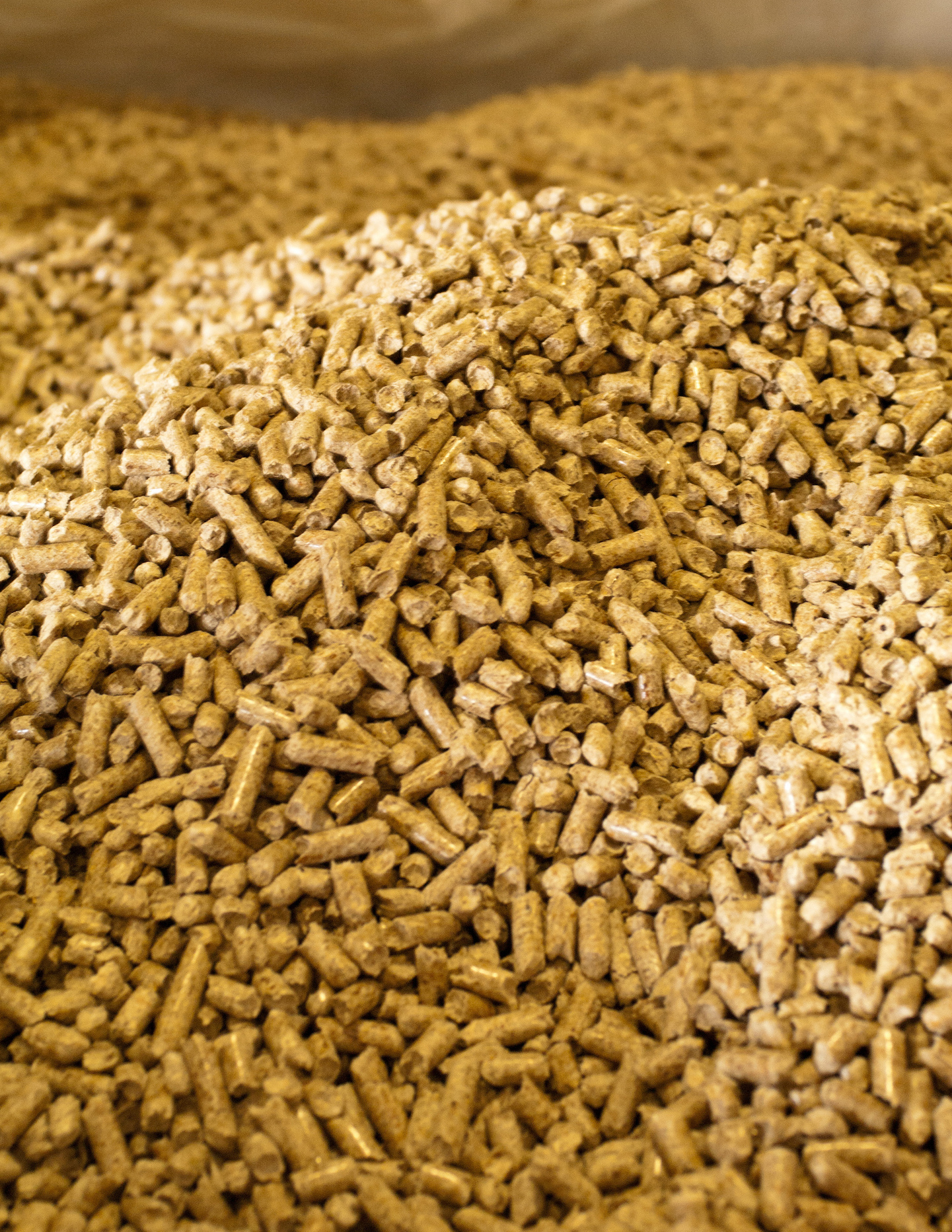
Compressed wood pellets like those used by Drax. Image: Oregon Department of Forestry/CC BY 2.0 via flickr.com
Biomass consists of organic material, such as compressed wood pellets, which is burned for electricity generation. It is considered a renewable energy source because, unlike fossil fuels such as coal, more biomass feedstock can be produced once it is burned. Drax says that biomass is a low carbon and renewable source, and can become carbon negative when combined with carbon capture.
However, some scientists and campaigners have disputed biomass’ classification as a renewable energy source alongside solar and wind power. Central to this is a supposed loophole in counting the emissions from biomass, where emissions from the supply chain are not counted towards the total emissions of the country in which the fuel is burned. Draxsources its biomass from “sustainably managed” forests in Canada, the USA and EU, Brazil, Russia and Belarus. According to an analysis by Chatham House, none of the emissions from the harvesting of trees and their transportation are included in the total emissions of the UK.
Scientists have also questioned whether the energy from biomass can be absorbed by replanting trees or other feedstock. Chatham House say that the growth in biomass consumption, which is predicted to rise by 17-20 million tonnes of CO2 a year by 2025, will outstrip the absorption of CO2 by replanted feedstock. “Although the CO2 should eventually be reabsorbed, the elevated levels in the interim are likely to be incompatible with the 2015 Paris Agreement on climate change. They also increase the risk of reaching a climate tipping point,” they said.
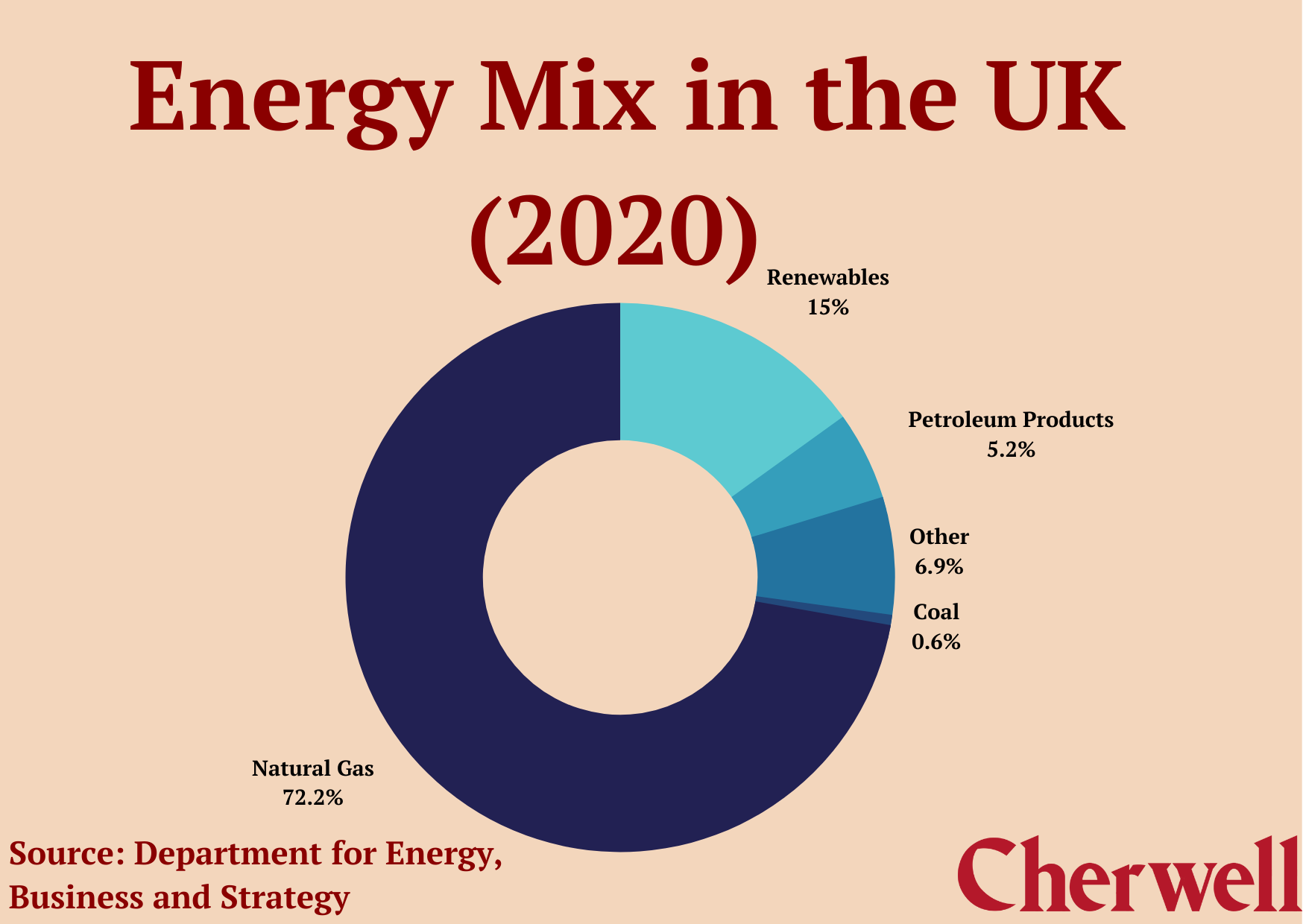
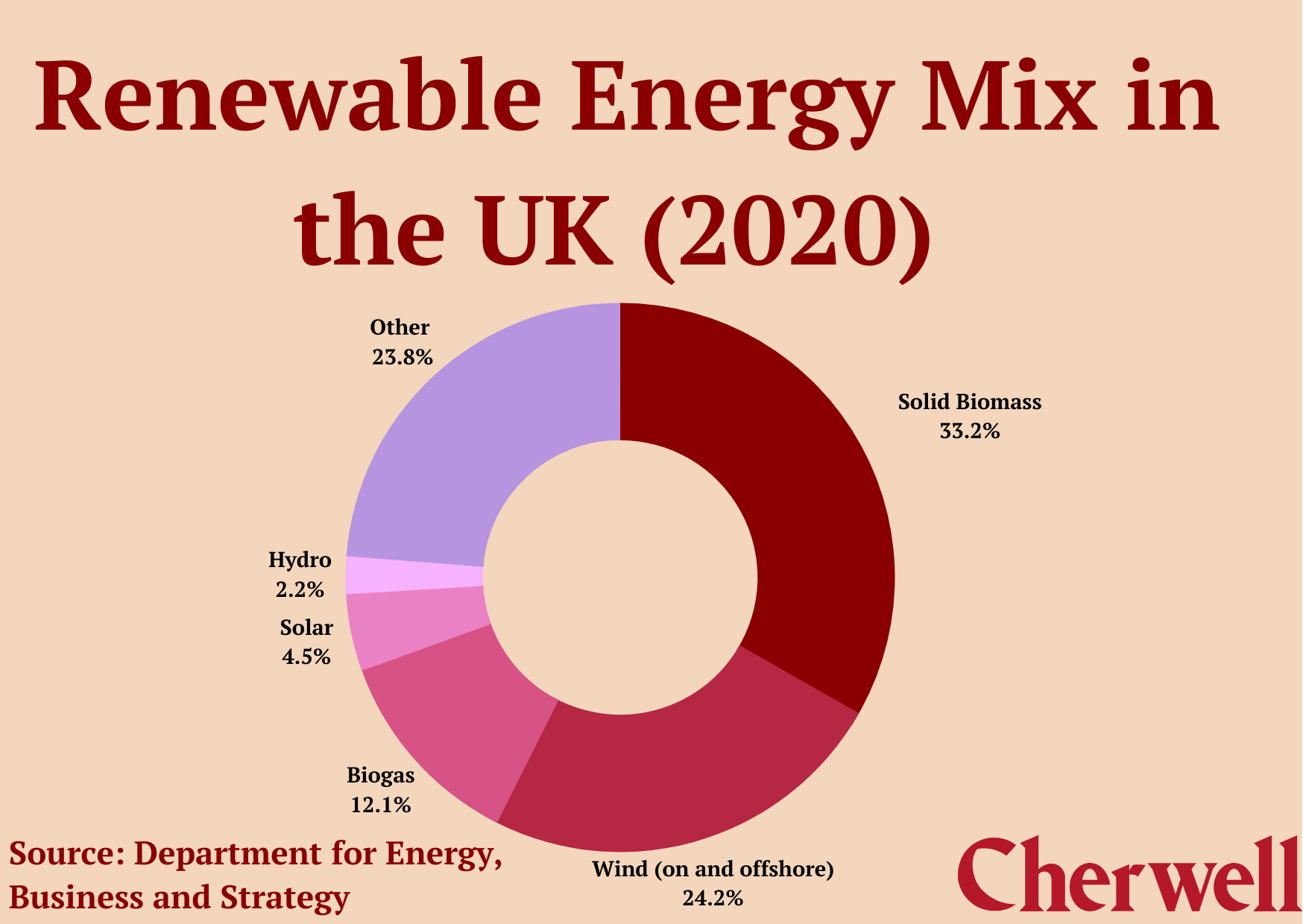
Generating energy from biomass is a tentpole of plans countries have made to transition away from fossil fuels. Almost 60% of renewable energy generated across the EU in 2019 came biomass. In 2020, solid biomass produced a third of all renewable energy generated in the UK. Tom Harrison, an energy transition analyst at the climate think-tank Ember told Cherwell: “If the renewable or carbon-neutral status of biomass were to be removed tomorrow it would have enormous repercussions for UK and EU renewable energy targets.” Chatham House say that if emissions from the supply chain were included in the UK’s inventory of greenhouse gas emissions, it would increase its total by 22-27%, which is the equivalent of the emissions from 6-7 million passenger vehicles.
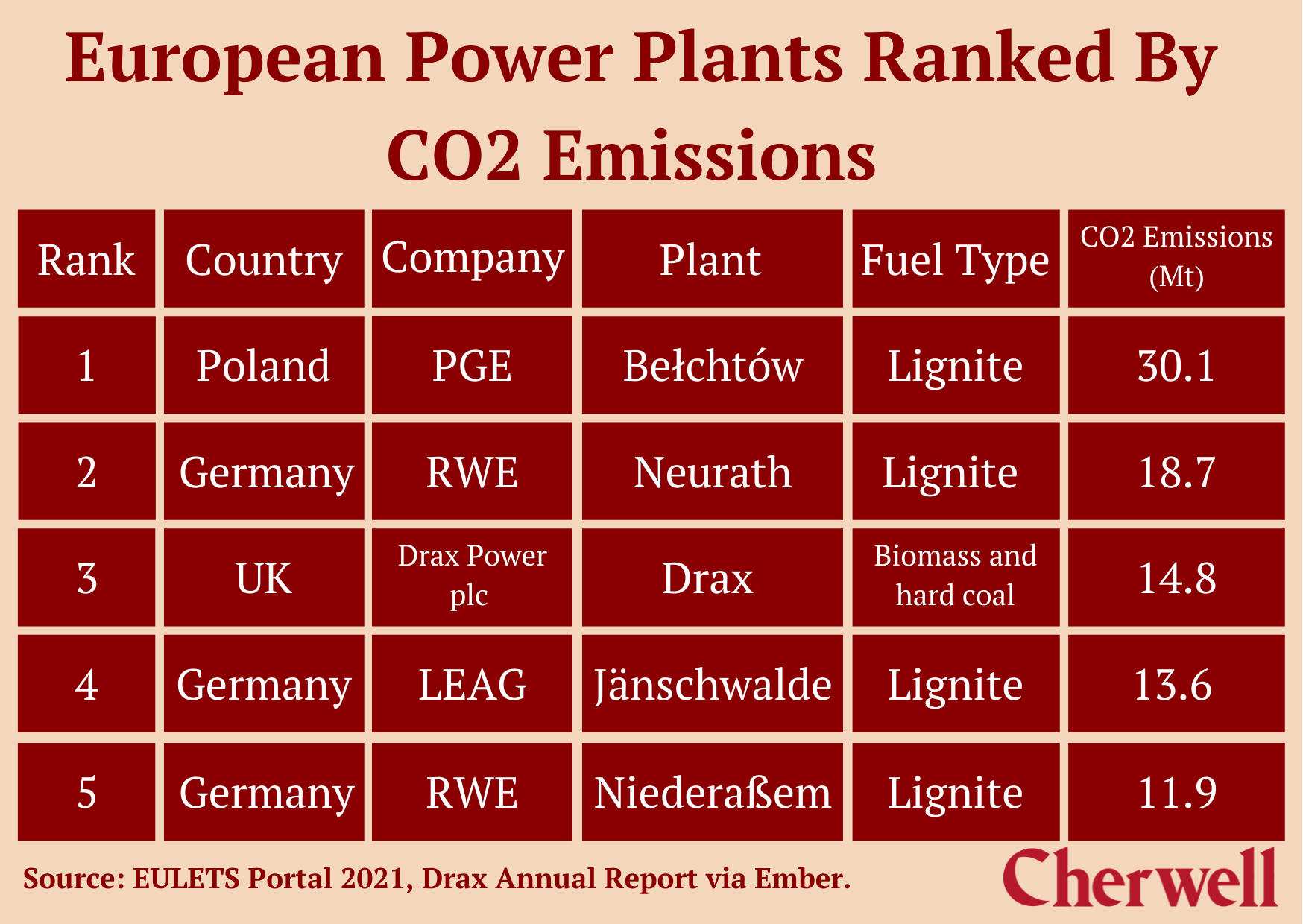
A report from Ember has found that once emissions from the full supply chain of the Drax plant have been counted, the plant becomes the biggest single source of carbon dioxide in the UK and the third largest in Europe, producing 14.8 Mt of CO2 a year. A spokesperson from Drax disputed this, telling Sky News that Ember’s interpretation of these figures was “completely at odds with what the world’s leading climate scientists at the UN IPCC say about sustainable biomass being crucial to delivering global climate targets”.
Drax was recently dropped from an investment index of the world’s most environmentally-friendly energy companies after S&P Dow Jones changed their methodology.
Image: Cherwell
Professor Beddington has historically been critical of governments’ reliance on biomass for achieving renewable energy goals. In 2018, he was among hundreds of scientists who co-signed a letter to the EU Parliament, urging them to “avoid expansive harm to the world’s forests and the acceleration of climate change”. He also signed a letter to The Guardian in 2017, which warned that the EU’s plans to expand the ambition of its renewable energy directive could lead to an increasing number of trees being felled for use as a biomass feedstock. The letter said that this would lead to more carbon being released into the atmosphere from the process of forestry, and would have a “large” effect on the world’s biodiversity. It also cautioned that proposed “safeguards” in the legislation such as managing forests “sustainably” would not stop the negative effects of large-scale biomass cultivation and use.
However in 2021, as Chair of the IAB, Professor Beddington signed a series of “findings and recommendations” to the CEO of the Drax group which said: “There are no simple conclusions such as ‘biomass is always bad’ or ‘biomass is good’ for greenhouse gas mitigation.”
A quote from Professor Beddington carried on Drax’s website says: “The IPCC and Committee on Climate Change both recognise that sustainably sourced biomass will play an important role in meeting climate change targets. I decided to chair the IAB because it’s vital that biomass is sourced sustainably and takes the latest scientific thinking into account.
“As the science evolves, we will make recommendations to ensure that the biomass used at Drax makes a positive contribution to our climate and the environment.”
Professor Sir John Beddington (right) as Chief Scientific Officer in 2011. Credit: Foreign, Commonwealth and Development Office/CC BY 2.0 via flickr.com
Lord Krebs’ position on the IAB is listed on his House of Lords register of interests as a “renumerated” position. During a debate on Biomass Electricity Subsidies in May 2021, he described the debate over the impact of biomass feedstock cultivation on biodiversity as “a contested topic with opposing views”. He also pointed to a 2021 literature review from Resources for the Future which showed that an increase in demand for forest products (including biomass) in the South-Eastern United States was associated with an increase in the forested area of the region.
The Southern Environmental Law Centre (SELC) , a non-partisan legal advocacy organization focused on the southern Untied States, is calling on the UK and EU to end subsidies for the biomass industry. They say that mature forests and wetlands are being cleared to produce wood pellets for export.
The SELC also says that the production of wood pellets is negatively impacting communities who live near production plants. Drax Group is a customer of Enviva, a Virginia-based producer of industrial wood pellets which it exports primarily to Europe and Japan. CNN reported that residents who live near Enviva’s plant in Northampton Country, North Carolina, have suffered from the effects of disturbed sleep and the inhalation of dust from the plant. Enviva told CNN the company takes “environmental justice concerns raised with respect to our operations very seriously. And, we work closely in our communities and community leaders to ensure our operations bring both positive economic and environmental impact.” They also said they had not received noise complaints beyond “generic complaints” from “the same activists we’ve heard before” at a hearing.
Drax says that the IAB was established to “provide advice on sustainable biomass and its role in Drax’s transition to net-zero emissions”. Cherwell has seen a letter from Drax to a campaign group, where they referenced the IAB and Professor Beddington’s qualifications after the group criticised their policy for sourcing biomass. Drax said: “Our sourcing policy was vetted by Drax’s Independent Advisory Board led by former UK Government Chief Scientist Sir John Beddington.”
A spokesperson from Drax told Cherwell: ““Drax has world-leading sustainability standards for its biomass and we make no apology for engaging with leading scientists in the field of sustainable bioenergy and biodiversity in our efforts to ensure the biomass we use makes a positive contribution to the environment. We aim to follow the latest science and ensure good governance and transparency continually drives up standards both at Drax and across the industry globally.”
Regarding the Chatham House report, they said: “We completely reject Chatham House’s analysis, which is based on a series of incorrect assumptions around biogenic carbon and emissions and demonstrates a real lack of understanding of Drax’s business and the biomass industry. The science underpinning carbon accounting for bioenergy is crystal clear: it was set out by the world’s leading authority on climate science – the IPCC – and was reaffirmed in 2019 following review by thousands of the world’s leading climate scientists.
“The UN’s IPCC is also absolutely clear that sustainable biomass is crucial to achieving global climate targets, both as a provider of renewable power and through its potential to deliver negative emissions with carbon capture and storage.
“Drax’s biomass meets the highest sustainability standards and these ensure that we do not use biomass that causes deforestation, forest decline or carbon debt. This is a fundamental commitment in our sustainable biomass sourcing policy.
“All of our emissions are fully reported in our Annual Report which is independently audited. Any claims to the contrary should be backed up by evidence, not based on outdated research and incorrect assumptions.”
Responding to Ember’s analysis which declared the Drax powerplant to be the largest source of carbon emissions in the UK, the spokesperson said: “Ember’s interpretation of the figures for Drax’s CO2 emissions is inaccurate and completely at odds with what the world’s leading climate scientists at the UN IPCC say about sustainable biomass being crucial to delivering global climate targets.
“Drax Power Station produces 12% of the UK’s renewable electricity, keeping the lights on for millions of homes and businesses.
“Converting Drax Power Station to use sustainable biomass instead of coal transformed the business into Europe’s biggest decarbonisation project and has helped Britain decarbonise its electricity system at a faster rate than any other major economy. We have reduced our emissions by more than 90% in the last decade and Drax is now one of Europe’s lowest carbon energy generators.”
Oxford University, Professor Sir John Beddington and Lord John Krebs have been approached for comment.
Correction: an earlier version of this article in our print edition said “Proponents of biomass, including Drax, also argue that it has the potential to be a carbon neutral or negative energy source, since the carbon emissions from burning the fuel may be offset by planting new trees or crops, which absorb CO2 for photosynthesis.” This has been amended to read: “Drax says that biomass is a low carbon and renewable source, and can become carbon negative when combined with carbon capture.”
The print version of this article said that 14% of energy in the UK in 2020 was produced by biomass. That figure did not reflect the total amount of energy generated. This error has been corrected to include the correct figure of 33%. This article has also been updated to clarify that 60% of renewable energy in the EU is generated by biomass.
Update: Although the original article stated that Lord Krebs and Sir John Beddington had been contacted for comment, they had not been given sufficient time to respond. We apologise for the error.
Featured Image Credit: John Grey Turner/CC BY-NC-ND 2.0 via flickr.com
Dehydrated, dazed, and confused, but thankful to have survived the deadly journey. Thankful to have reached the country of opportunity in which they just might have a better life. Thankful to have briefly escaped the clutch of criminal gangs, whose expensive, illicit and inhumane smuggling is often the only lifeline to ‘freedom’ in Europe. Such a description may represent only a modicum of the range of emotions felt by refugees and asylum seekers, arriving upon unfamiliar shores, having left their worlds behind out of fear for their lives, cultures and families.
Such emotions were visible from the footage plastered across major British media outlets throughout August 2021, as it was reported that ‘record’ daily numbers of migrants had made the crossing over the English Channel and landed on Kent’s southern shores. Notable was the 6th August, where a ‘record’ 482 migrants were recorded upon arrival, as monitored by the Home Office. Record’. Describing migration to Britain’s southern coasts as if it was some sort of competition. A forbidden gladiator-esque sport at the pleasure of the Home Office, who keep tabs and make bets on a treacherous crossing.
Any sane, rational, and moral person would think that scenes of such abject human suffering and despair would inspire an outpouring of sympathy from every stratumof Britain’s society. Government and citizens united in our post-Brexit utopia of a ‘Global Britain’, where an accepting attitude to multiculturalism and diversity lies at its very core? Where we have discarded the ‘shackles’ of the Strasbourg dictatorship’s restrictive immigration rules, to create a society in which you are welcomed with open arms not on the basis of your nationality, but on the strength of your character and your willingness to contribute to the nation? Where those suffering economic, social and political despair are given the irrefutable chance to create a better, safe and happy life in the ‘best’ country in the world?
Well, like me, you would be wrong. As noted by MP for Coventry North West Taiwo Owatemi, in response to Boris Johnson’s failure to persuade Joe Biden to extend the deadline of withdrawal of US troops from Kabul, this is not the Global Britain we were promised. Flicking between the news and social media provides a wealth of evidence that the Conservative vision for a ‘Global Britain’ is a land that remains as isolationist, disconnected, and intolerant as ever. Frighteningly, this vision has consumed this country from both top-down and bottom-up.
Take, for example, a recent tweet by the Royal National Lifeboat Institution (RNLI), posted on the 28th July. Attached was a video explaining that the charity’s volunteers had received masses of online and real-life abuse for adhering to its policy of rescuing migrants in danger of drowning off of Britain’s shores. The video also showed footage from November 2019 of volunteers rescuing a dingy of twelve people, one of whom was a baby. Yet the near-death of a baby forced to flee persecution and poverty was not enough for many to drive the point home: the comment section was full of people complaining about the ‘migrant taxi service’, echoing the accusations of failed politician-turned-Cameo-star Nigel Farage. Accompanying these were accusations that the RNLI was complicit in immigration crimes and inciting terrorism, as well as much confusion as to why they simply couldn’t just be discarded along the French coast, for the autoritéslà-bas to deal with if they were so desperate. Confusion, anger in fact, as to why the humanitarian charity whose purpose is to save life at sea without rigorously questioning them over their country of origin. A damning indictment indeed of a population gripped by an anti-immigrant and refugee sentiment, who would rather subject migrants fleeing from persecution and poverty to a painful, watery death, than have them move in next door.
Britain’s entrenched problem with immigration has been explained in many ways, it’s a fire which has roared in Britain’s sick belly for centuries now. Such sentiment has exploded since the country voted for Brexit, off the back of an incendiary Vote Leave campaign fuelled by xenophobia, racism and Islamophobia, wrapped in the illogical yet effective promise to ‘TAKE BACK CONTROL’. It must be noted however that it has always existed, entrenched and intertwined in Britain’s culture, politics, institutions and media. And in one institution in particular: the Home Office.
Even in the haze of New Labour’s ‘post-racial’ utopia in the late 1990s and early 2000s, anti-terror legislation spearheaded by the department disproportionately (and later ruled, ‘unconstitutionally’) targeted foreign nationals. Yet it is the incumbent Home Office, and its glorious leader Priti Patel, that has written the textbook on propagating authoritarian, anti-immigration policies that serve to undermine not only decency and compassion within our laws, but the principles of good governance and the rule of law at large.
Patel has been an outspoken advocate for stricter immigration controls since her days starting out in the referendum party. As much as it pains me to say this, one thing I’ll give her is her consistency. Now, as Home Secretary, she’s proposed a points-based immigration system which she herself admitted would not allow her own parents entry, and in response to the rising number of migrants arriving at England’s south coast, threw out the diplomatic textbook with her French counterpart in a vow to make the route ‘unviable’. It’s a shame that her conviction and commitment to turning away victims of war, persecution and genocide isn’t matched by her ability to make logical policy. You can’t render an entire stretch of water ‘unviable’ to migration: it’s a simple fact that people desperate to seek safety will take increasingly dangerous routes, because the slim chance of success will be better than the certainty of death or persecution from which they are fleeing. Even if you placed the navy on speedboats along the Channel holding guns with the order to shoot down any dinghy they saw, that would not stop migration to Britain. Given the government’s somewhat complacent attitude towards international law, I’m surprised that this hasn’t found its way to the Home Office’s policy discussions quite yet. Nevertheless, the facts are simple: Patel’s policies are not going to deter those desperate, or even those choosing to come to Britain for a better life, from coming. The same amount of bodies will arrive on Kent’s southern shores, it’s just that under Patel’s policies, more of them will arrive dead.
This brings me to my final thoughts. It is clear that anti-immigrant and refugee sentiment thus beam as proudly on the mantlepiece of quintessential Britishness as Mary Berry and the Union flag itself, fanned by the flames of insensitive Home Office policy. But one key thing seems to be consistently missing from the debates surrounding immigration in this country: compassion. Britain’s bloodthirsty colonialist past, which has inadvertently and directly contributed to many of the circumstances that drive people from their home countries, means that we, citizens and government alike, have a moral obligation to create a safe, welcoming and just country for immigrants, refugees and asylum seekers. Regardless of that, these are people we are talking about: many of whom are fleeing things most Britons could not imagine having to contend with in their lives. Erasing the language of economic contributions, or quotas, or points, this is the message that the Home Office must promote. Otherwise they, Priti Patel in particular, are complicit in creating, propagating and growing anti-immigrant sentiment in Britain that has unnecessarily claimed too many innocent lives.
Fresh off the plane from Tokyo, Paralympic gold medallist, two-time World Champion, European Champion, and current World Record Holder coxswain Erin Kennedy took some time out of her busy schedule to talk to me.
Erin, alongside her teammates Ellen Buttrick, Giedre Rakauskaite, James Fox and Oliver Stanhope, took home gold for Team GB in the PR3 Mixed Coxed Four at the Tokyo 2020 Paralympic Games, extending GB’s 11-year unbeaten record in this boat class.
Erin’s first introduction to the art of coxing began whilst studying at Oxford. Having participated in drama and theatre studies whilst at school, Erin decided to give coxing a go for the first time as a fresher at Pembroke College.
“In freshers’ week I went down to the boathouse, as everyone does. I knew about coxing as a concept and was interested in trying it out.”
Very quickly Erin became “hooked on coxing” and soon got her first exposure to more professional, serious training.
Erin’s hard work and dedication to the sport was rewarded by being selected as coxswain for the Oxford boat in the 2014 Women’s Boat Race. Erin and her team won in a record- breaking time, and it is an experience that she considers very valuable in preparing her for the Paralympic games.
“The boat race set me up really well for the [Paralympic] games. Ultimately, for both the boat race and the Paralympics, its one event, and whatever you do, what you’ll be remembered for and judged on is this one race.”
Particularly, Erin credits her experience of the Boat Race in helping her to prepare mentally for the rigour of elite sport, citing that it taught her to “not to sweat the small stuff until it really matters” and to be able to have “tunnel vision” as the race approaches.
Both learnings would have proved incredibly valuable as she and her team navigated preparing for a Paralympic Games that at times didn’t look likely to go ahead at all.
It appeared on the water that the delaying of the Tokyo 2020 games had no impact on this Team GB boat, securing the nation’s third successive gold medal in the PR3 Mixed Coxed Four. However, the run up to Tokyo 2020, as Erin Kennedy explains, was far from straightforward for the team.
The boat’s 2020 training schedule was severely altered because of the ongoing COVID-19 pandemic. Like the rest of elite sport in the UK, Erin and her team had to stop training in March 2020.
Five months of at-home training followed, with daily Zoom workouts and drop-in sessions replacing conventional in-person gym sessions until the team was allowed back out onto the water in August 2020. That said, virtual training was not without memorable moments for Erin.
“Tanni Grey Thompson joined us for a training session which was really cool!” she recalled.
However, preparations did not get any easier for the Team GB boat as the world began to open up in Spring 2021. Although the team were back together and out on the water, Erin and her teammates had to remain as COVID-cautious as ever, desperate to prevent a COVID outbreak amongst their boat.
During this period, Erin’s perception of risk “went through the roof”.
“We knew, because we are a team sport, if one of us was to test positive [for COVID] from June onwards, we wouldn’t be able to go to the games,” Erin explained.
As a result, she made the tough decision to ask her husband, who is in the army, to move back in with his parents for three weeks before their training camp.
“One of my teammates moved in instead and we isolated together up until training camp,” she recalled.
Naturally, given the sacrifices she made just to get to Tokyo, Erin could not wait to be reunited with and celebrate her gold medal achievements with her family and friends.
Not being able to have family and friends cheering her on in Tokyo made being reunited with them even more special and has given Erin a renewed appreciation of the role of her family in helping her to achieve her dreams…
“You realise how much it means to [your family] too. They have made all these sacrifices for you, it’s not just a case of you as the individual working really hard,” Erin reflected.
Being able to have her family and friends by her side is one of the factors motivating Erin as she looks ahead to Paris 2024.
“I still love the sport and I don’t want to stop. This has not been the games or build-up that I expected, and Paris is basically a home [Paralympic] games for me anyway!” Erin noted as she explained her motivators for the next Paralympic cycle.
Regardless of the unique games she has been a part of, Erin Kennedy has cemented herself as gold-medal winning Paralympian, and she will no doubt be looking to replicate her success at Paris in just three years’ time.
Poetry as a digital experience is how I first came to know verse. I pored through the endless bank of videos on Button Poetry’s Youtube channel, each three-minute piece after another. Listening to teenagers recite slam poetry with impassioned expressions and colourful gestures while articulating profound thoughts on race, immigration, and womanhood made me want to immerse myself in their world. The words of young slam poets such as Sarah Kay, Melissa Lozada-Oliva, and Elizabeth Acevedo resonated with me as they tenderly spoke of their lives. The topics in their poetry ranged from first loves to depression disorder, friendship to the power of names; these poets had me snapping my fingers to myself when I heard their words for the first time.
Sarah Kay’s poem, The Type, starts as follows: “If you grow up the type of woman men want to look at / You can let them look at you. / But do not mistake eyes for hands or windows or mirrors / Let them see what a woman looks like. / They may have not ever seen one before.”
Take a breath. She continues, “If you grow up the type of woman men want to touch / You can let them touch you. / Sometimes, it is not you they are reaching for. / Sometimes it is a bottle, a door, a sandwich, a Pulitzer — another woman. / But their hands found you first. / Do not mistake yourself for a guardian or a muse or a promise or a victim or a snack / You are a woman — skin and bones, veins and nerves, hair and sweat / You are not made out of metaphors, not apologies, not excuses.”
I would come back to Kay’s words, uttered with softness and a gentle melancholy, after breakups and frustrations and being filled with the desire to be more than I was or could be. Poetry, even when listened to in the darkness of my room with only my shadow reflected against the walls by the light of my laptop, was always a solace. Though I never succeeded as an amateur slam poet, the nuances possible in poetry — especially poetry written, performed, and given as a gift by other women of colour — have left a lasting impact on how I view the literary world.
I am constantly in awe of women of colour who write raw, heartbreaking, and ultimately beautiful poems about their lived experiences; about occupying spaces that do not fit us, nor were ever built for us. The desire for whiteness, for its ease and appeasement, is a sentiment experienced by people of colour at some point in our lives and one I continue to wrestle with as an immigrant woman of colour, especially since I arrived in Oxford. Melissa Lozada-Oliva’s poem titled “Yosra Strings Off My Mustache” paints this internal struggle:
“We have done all the worrying for them / Our entire lives / Because our mothers have taught us to bring cleaning supplies / Because we have learned to forgive every space we enter / Because Yosra keeps a roll of string in her purse with her at all times.”
Take a breath. We keep going: “For emergencies / And the emergency this time is I’m about to see a white boy / The emergency is I want him to like me / And my mustache looks like the subtitles for a foreign movie starring an actress I’ll never look like / Or a stock ticker for money I’ll never have. / Maybe one day I can be chill / Like the white girls / The ones who don’t shave for political reasons.”
The emotional labour held in the bodies of women of colour is illuminated through poetry, allowing us to navigate colonial spaces and attitudes outside of our control. By situating poetry as an intersectional act, it is another avenue for women of colour to dive into ourselves through new mediums. Slam poetry in particular is a powerful means of advocacy and self-protection. The autonomy to decide emphasis, pauses, and silences in performance are exemplified by Afro-Latina poet Elizabeth Acevedo’s works, such as her poem “Unforgettable”, co-written and co-performed by Pages Matam and G. Yamazawa:
“I always wanted a name that set the bar high /That tumbled out of mouths / Somersaulted into a room and split the air / A name like Xochi, or Anacaona / But although I must have punched inside the placenta / My parents decided on something placid / Elizabeth.”
Take a breath. In unison, “A name for princesses, pampered women, and perfume. / A name full of grace / A name easily washed down with milk / […] / I wanted a name of Dominican hills rising, and campesinos uprising / Instead of ‘Long live the Queen’ / But shortened my name to Liz / so colonizers had less to hold onto.”
Poetry offers opportunities for collective breaths and sighs, something often lost in our high-speed academic environments. It is through the likes of Button Poetry and other accessible digital platforms that these emerging poets have come to publish their anthologies and full-fledged novels, such as Kay’s 2014 poetry collection No Matter the Wreckage, Acevedo’s successful novels With the Fire on High (2019), The Poet X (2020) and Clap When You Land (2020), and Lozada-Oliva’s upcoming novel-in-verse Dreaming of You (2021). I do not associate poetry with constraints nor its traditional white canon; for me, poetry is a wholly liberating experience.
I am sure I will write a poem about my time at Oxford, whether it be about how removed I feel from the East Asian diaspora whenever I enter any higher education space; on feeling immense gratitude for being in this city and simultaneous discomfort when reckoning with its histories; for wanting to be taught and interact with more faculty of colour; or simply on wanting the academy to be better and knowing that it is an inherently damaged space. In whatever space lies between, I take comfort in knowing that poetry in all its messy, emotional forms waits for me somewhere.
Recommended authors & works:
Peluda (2017) – Melissa Lozada-Oliva
Life of the Party (2019) – Olivia Gatwood
All Our Wild Wonder (2018) – Sarah Kay, illustrated by Sophia Janowitz
Teaching My Mother How to Give Birth (2011) – Warsan Shire
Citizen: An American Lyric (2014) – Claudia Rankine
[8] Sarah Kay, No Matter the Wreckage, (Write Bloody Publishing, 2014); Elizabeth Acevedo, With the Fire on High, (Quill Tree Books, 2019); Elizabeth Acevedo, The Poet X (Harper Collins, 2020); Elizabeth Acevedo, Clap When You Land (Quill Tree Books, 2020); Melissa Lozada-Oliva, Dreaming of You: A Novel in Verse (Astra House, 2021)
Oxford University have renamed a prestigious philosophy professorship following a £2.8 million donation from the Sekyra Foundation.
The professorship, originally titled The White’s Chair of Moral Philosophy, is now known as The Sekyra and White’s Professorship of Moral Philosophy. The donors, the Sekyra Foundation, revealed in a statement that they made the gift to “uncover deeper levels of reality” by utilising philosophy.
The professorship is the oldest university chair in philosophy at Oxford, having been first endowed in 1621. Originally named after Thomas White, Canon of Christ Church, those who hold the role lead the study of moral philosophy at the University from an attached fellowship at Corpus Christi College. The support from the Foundation will ensure the long-term viability of the professorship, as there has been no stable source of funding for the role prior to the Sekyra Organisation’s support.
The chairman and founder of the organisation, Luděk Sekyra, is a member of the governing board at Harris Manchester College. In a statement, he described the “challenges” of “how to live a good life, what constitutes moral progress, and what our responsibility is toward future generations” as having spurred him to make the donation.
The current holder of the Professorship, Professor Jeff McMahan, expressed delight towards the donation. In a statement, he praised the actions taken to make the professorship “secure for the future”. McMahan specialises in the moral questions at the forefront of public consciousness: exploring the topics of war, abortion, and humanity’s treatment of animals.
Previous holders of the professorship have considered climate change, drug abuse, gambling, and the censorship of film. They continue to conduct philosophical debate to this day, and have been described by Professor Chris Timpson, Chair of the Philosophy Faculty Board, as having “stoked revolutions in our philosophical and moral understanding”.
The Sekyra Organisation have a long history of supporting the study of philosophy, both at Oxford and in their home region of Prague. The organisation also supports a travel bursary for Oxford students to visit Prague and study there. They also support the study of philosophy worldwide: cooperating with Harvard University, the Athens Democracy Forum, and various Czech libraries, research organisations, and human rights prizes. The organisation seeks to advance the development of critical and philosophical thought internationally, in particular by promoting intergenerational dialogue to do so.
Six early-career academics from Oxford University have been awarded £100 000 each in prize money from the Leverhulme Trust after being named amongst the recipients of the 2021 Philip Leverhulme Prizes.
Now in its twentieth year, the annual Philip Leverhulme prize seeks to “recognise and celebrate the achievement of exceptional researchers whose work has already attracted international recognition and whose future careers are exceptionally promising.”
This year, the prize pot was at its biggest yet, with a total of £30 million handed out by the charity to thirty winners. Among them were six Oxford academics, the largest number awarded to any singular university.
The Oxford winners were spread amongst three categories; Humanities; Mathematical, Physical and Life Sciences (MPLS); and Social Sciences. They were Teresa Bejan, Jayne Birkby, Janina Dill, Giuseppe Pezzini, Erin Saupe, and Kathryn Stevens.
Researchers Birkby and Saupe both took away awards from the MPLS category, with the head of that division, Prof. Sam Howinson, saying “This is a well-deserved recognition to both Prof Birkby and Prof Saupe of the leading role they are playing in their exciting research areas.” Birkby said she was “thrilled” to win the prize and that she will use the money to further her research of rocky planets. Her colleague Erin Saupe said that the funding will enable her to continue “examining how phytoplankton respond to future climate change”.
Elsewhere, Bejan and Dill were selected as victors in the Social Sciences division. Dill remarked that she was “honoured and thrilled” and will put the money towards her study of the moral psychology of war. Meanwhile, Teresa Bejan is currently editing the two-volume Clarendon edition of John Locke’s Letters on Toleration and said she was “immensely grateful”.
Stevens and Pezzini were recognised in the Humanities division. Pezzini focusses his work on Latin language and literature and Stevens is about to start work on a new intellectual history of Greek history. He said he is “very grateful to the Leverhulme Trust, and to colleagues in Oxford and elsewhere for their collaboration and support.” Chair of the Board of the Faculty of Classics, Prof. Neil McLynn, reflected, “Kathryn’s work on the role of intellectuals in the Hellenistic kingdoms, … and Giuseppe’s engagement with the comedies of Terence, … illustrate powerfully the quality and diversity of research being undertaken in the Classics faculty.”
The Director of the Leverhulme Trusts, Anna Vignoles, said that “This round was more competitive than ever” and that the winners were a “stunningly talented group of academics”.