

Sunday 26th April 2026
Blog Page 342

These boots are made for livin’: Queer footwear at Oxford’s sparkliest ball

0

When I showed my friend the dress I was going to wear for the Glitterball (a floor length beige dress covered in rainbow sequins that I bought from a charity shop for £15 for the Year 13 prom that never happened), he said it was gorgeous. His first question, naturally, was: ‘What shoes are you going to wear with it?’. I pointed down at my feet and mumbled something about how I thought I’d just wear these: my clunky platform Chelsea boot docs that I drag along with me in my day-to-day life. His response? ‘Ciara… as your friend, I am not going to let you wear that dress with those shoes.’ I was taken aback. The Glitterball dress code was to wear formal clothes but that feeling ‘most comfortable’ overrides this. My docs couldn’t be more comfortable – so, surely that would be ok?

I have a real problem with heels. I can count the number of times I’ve worn them on one hand and the last time was a Winter Ball in sixth form. I refuse. I say it’s out of principle when asked: heels are designed to alter a woman’s posture; they make it more difficult to run away in danger; they’re meant to make our legs look longer and make us look taller and so more desirable to the male gaze. All of this is true, of course, but it doesn’t change the fact that, if I’m being really honest, I really love the way they look and wish I could just chant ‘beauty is pain’ and get through it. And what I find even more exciting about heels, as with most queer fashion, is they are no longer limited to female-identifying people by any means, and so reclaiming heels as something just simply pretty to look at becomes a whole lot easier because so many people have recently shown how all-inclusive they can be. Not that Elton John and Prince didn’t already make wearing heels so effortlessly cool. I still don’t understand how they, or anyone else, danced in them, though.

So, my reason for not wearing heels (I had to protest this issue to other friends, too) didn’t really stand up. Especially when I got my mum to bring me a selection of her heels from home to try on. My mum, who probably has a decade-spanning record-breaking shoe collection, responded to my message asking this favour with ‘I like a challenge’ and a selection of shoe emojis. I think I made her day. I subsequently spent a whole day in a pair of beautiful silver boots, with the teeniest tiniest heel you’ve ever seen, and I’ve never received more compliments on a pair of shoes, while my toes felt pinched and I toppled a little bit at every step.

The point is: what made the Glitterball so exciting to me was that it wasn’t a stuffy, binary formal attire gig. It wasn’t black tuxedos and patent brogues, ball gowns and staggering shoes and mini bags that literally cannot fit more than a tissue inside (what actually is the point of these?). I am lucky to feel very easily accepted by the external world in my gender expression and in what I wear, but for many people this is not the case because, well, people are very quick to judge, and non-binary conceptions of gender and style are still relatively ‘controversial’, for want of a better word. I really loved that, at Glitterball, you could wear pretty much anything and you wouldn’t have stood out. And there was glitter. Everywhere.

A college ball must be so intimidating to those who feel that a pre-requisite to attendance is to choose the ‘male’ or ‘female’ manifestation of black tie and perfect it. There is really no need for this stress, whatever traditions we’re trying to maintain. Why shouldn’t we wear whatever we want?

I wore my docs. Of course I wore my docs. And, actually, so did half of the people there. Who knew I was being such a queer stereotype? I wore my docs and danced the night away to Sisters of Funk (who are unbearably cool and could form the basis of an article themselves); I danced the night away to the ABBA tribute band; I even danced the night away in Plush, in my docs and my full-length dress (dress: I’m so sorry for putting you through this horrifying experience). I also left the charity shop tag in my dress the whole night – not knowingly, but anything goes at Glitterball, right?

Image: Madi Hopper

New habits die fast: Tales from the gym

0

Yes, I recently started going to the gym. No, I did not start going on a ‘new year, new me’ whim. No, I would not recommend it, or at least not for its intended purpose. In very typical fashion I started going to the gym as a means of procrastination, and as a result of slight coercion. The start of this term meant the deadline for my coursework, and the realisation that I might actually have to start doing something for my dissertation. So, as a means of combatting this ‘stress’, or lack of academic motivation, I decided that the gym was the place for me.

For years I have heard people singing its praise. ‘Working out just clears my mind’, ‘you feel so good afterwards’, and my person favourite (if only for the wilful self-deception it must take to say), ‘running is actually really fun when you get into it’, are all examples of the lies I have been told. Nevertheless, I did manage my first trip, and then my second, and even my third – as I write this I am delaying the proposed fourth. I have not learnt that I enjoy the treadmill, I have not learnt that I enjoy the static bike, and  I  have not learnt to enjoy communal showers (too many school flashbacks with that one). What I have learnt – or more accurately confirmed as this is not a new hobby – is that I do enjoy people-watching.

The gym has been added to my people-watching hotspots. For context, also featured on this list is King’s Cross Station (for that matter any station, I just happen to frequent this most regularly), the airport (literally any airport is a place to witness chaos), and a foreign beach. The latter one only applies to those beaches outside of the UK – the comparison of Brit abroad and local resident is something that cannot but be explored. Since I can’t be on a foreign beach on a Tuesday night, going to the gym will have to suffice and I have noticed the gym provides me with all of my favourite people-watching features. The treadmill is prime for this. While I take my gentle stroll – don’t worry no actual exercise is going on –  I have the opportunity to observe those around me. Following my three sessions I have split those who frequent the gym into 4 groups.

  1. The ‘Gym Lad’ – Ok, I know this label has been discussed on many occasions, but I felt it was worth mentioning both as our standard for the gyming populous, and because as I had never been to the gym before, I did not really believe people like this existed. They’re big, they’re bulky, and they wear a surprising amount of clothes. This latter point is worth mentioning when you are in part surrounded by sports bras and leggings, and in part surrounded by men in trackies and jumpers. But, I suppose doing 4 rounds of circuits breaks rather more of a sweat then 5 bench press reps. Overall though the gym lad is not to be feared.
  2. The ‘Gym Hog’ – a subsect of the ‘gym lad’, the ‘gym hog’ is a more fear-inducing presence. In many respects they look and behave like the gym lad; they do minimal reps with big weights and while making an unreasonable amount of noise. The difference between these first two categories is that the ‘gym hog’ is really annoying. They sit hogging a machine, surrounded by dumbbells they aren’t using, and get annoyed whenever someone asks how many sets they have left. Half their time seems to be spent scrolling through gym TikToks on their phones. In short, they are the ultimate selfish gymer.
  3. The ‘Primper’ – These are the people who seem to spend more time checking themselves (or supposedly their ‘form’) out in the mirror. These people live for the floor to ceiling mirrors that encompass the gym, they thrive on the machines stationed in front of the treadmills thus giving them a captive audience, and they excel in the glass ‘studio’ where the world can see them. Apparently, more mincing occurs in the gym than on a runaway, and more fake tan than on ‘TOWIE’.
  4. The ‘Gyming Duo’ – our final category, as I realise my gym musing is possibly less interesting to you than me. This is a duo of which one is super into it, and the other … not so much. Yes, I fall into this latter bracket. This pair are generally together, are generally having a chat, and are generally not doing very much. These are the only people ‘enjoying’ their time in the windowless box of sweaty angst.

I understand that these are pretty broad categories, and of course not everyone will fit into them; you may be the unobnoxious, non Gymshark two piece wearing, solitary gym goer who is just there to work out and vibe. If you are, I am happy for you. I wish I could be motivated to go to the gym alone and actually enjoy it. But unfortunately, I have not found this to be the case. The gym is a new habit I don’t hate – but I’m not sure if I can be anymore complimentary. Saying that, catch me in 5 weeks’ time when I have become addicted, and I might have changed my mind.

A Glimpse at the Poonawalla Family’s Oxford Investments

0

In 1966, a prize thoroughbred horse, owned by the Poonawalla family, was bitten by a venomous snake. They sent the horse to the Haffkine Institute, a government funded biomedical laboratory to whom they normally donated their horses once they retired. But due to the scarcity of antivenom, they needed government permission to administer it. It took nearly four days to receive permission but by then the horse succumbed to the venom. 

Frustrated with India’s then-cumbersome bureaucracy, Cyrus Poonawalla, the family patriarch, decided to start developing serums from his own horses rather than donate them. With his son, Adar, he founded the Serum Institute of India. Initially, they worked on serums to treat snake bites and tetanus. Soon, however, the company branched out into vaccines. 

SII’s current business model is to be a platform company that does not manufacture products of its own. In one direction, it works with pharmaceuticals to help them mass produce their formula, with economies of scale. In another direction it mass produces low-cost and high-efficacy vaccines whose patent protections have already expired.

Today, India is the world’s largest vaccine manufacturer and SII is its driving force. Even before the pandemic the SII had already manufactured more vaccine doses than any other company in the world. As of 2021, SII produces generic versions of vaccines for measles, hepatitis, and tetanus along with other diseases.  Approximately 1.5 billion doses annually (excluding COVID-19 vaccines) are exported to over 150 countries worldwide. It is estimated that two out of three children worldwide are vaccinated with SII’s shots. 

In May 2020, SII took a gamble to mass produce the Oxford-AstraZeneca adenoviral vector vaccine in human embryonic kidney cells when there was still no clinical data available on its performance. Seven months later, when countries began approving emergency use authorizations for this vaccine, now branded as COVISHIELD, SII had already millions of doses ready to ship. Although this co-developed vaccine has been suspended for use in Europe due to reported side-effects of blood clot formation, the World Health Organization (WHO) still recommends its use, claiming that “benefits of the AstraZeneca vaccine outweigh the risks”. SII currently manufactures COVISHIELD for distribution in low-income countries and India, where it accounts for roughly 90% of the inoculations. As of December 2021, SII has produced 1.3 billion doses of COVISHIELD. 

In May 2021 SII partnered with the university to produce the vaccine, R21/Matrix-M, which was “the world’s second malaria vaccine candidate to enter a phase III licensure trial” in four Sub-Saharan countries following reports of 77% efficacy in a Phase II trial with no adverse events reported. SII is committed to producing more than 200 million doses per year after licensure, which is sufficient supply for inoculating at-risk children in the region.

In September 2021 SII purchased of a 3.9% stake in Oxford Biomedica, a company specializing in developing gene-based therapies, for $68 million. Oxford Biomedica was a supplier of viral vectors for the Oxford-AstraZeneca vaccine and is also a contract manufacturer of the recent WHO-approved Novavax COVID-19 vaccine candidate. This investment enables Oxford Biomedica to expand its current 45,000 sq ft of GMP manufacturing facilities at its Oxbox site by another 39,000 sq ft dedicated to producing COVID-19 vaccines. 

Serum Life Sciences, in December last year, also pledged $66 million to fund the construction of the Poonawalla Vaccines Research Building for Oxford University’s Jenner Institute, which will house over 300 scientists. A university press release described this human capital investment as the “largest ever single gift for vaccines research”.


The Serum Institute of India does for vaccines and biologics what Gutenberg’s printing press did for books. SII’s presence and credibility could also nurture an ecosystem of suppliers and partners to grow with it.  We can expect its presence in Oxford to expand, especially given the many spinouts and researchers related to vaccine pipelines that can be its customers someday. Having access to this network could provide SII with a suite of vaccines for different diseases, as it sits ready to scale up for the medical challenges the world faces.  

Image Credit: The Asian Awards/CC Attribution 3.0 Unported License

Go get that bread: Tips for navigating the job market

0

Applying for jobs can be daunting and stressful. Below you can find some bearings, ideas and starting points to help you to navigate this uncertain time. This list is by no means comprehensive, but it includes some useful tips stemming from my experience of applying for scientific jobs in academia and industry.

The golden rule: personalize your application  

It is tempting to prepare one CV and cover letter and spam it across all job applications. I get it, there are loads of jobs you want to apply to and writing a different cover letter for each one might seem like a complete waste of time. If you don’t really care about the job, just sending a generic cover letter and CV is understandable. But if you think you might be a good fit for the position and want to increase your chances, the way to make an employer notice you is to personalize both your cover letter and your CV.

How? Let’s begin with your cover letter. To start with, it’s okay  to have a generic introduction about your background, but make sure to not repeat line by line what you described in your CV. Instead, address one by one all the job specifications. Most jobs (especially academic) will have a list of essential and desirable job specifications. These can vary from very specific competences like “having a biochemistry degree” or “advanced experience with MATLAB” to very generic statements about “team-working” or “interpersonal abilities”. Make sure you address them all, even the more basic ones, ideally with real world examples. For instance, avoid saying “I am a great team-worker” (that doesn’t prove anything!), but list the aspect of your previous experience that helped you to develop such abilities. An example would be: “during that project I have worked in a team of 5 students and we were successful in… ”, or “during my internship I interacted with hospital patients daily, which was instrumental for developing my communicating skills.”

Now, the tricky part is being able to provide concrete examples without writing a very lengthy cover letter, so be as concise as possible. Usually, one page should be enough to convey the message without boring your future employer, even if I must admit my cover letters always end up being longer than that. After you have written a few cover letters you will find that similar specifications keep coming up, so you don’t actually have to rewrite the entire application from scratch.

At the end of your cover letter insert a paragraph – or at least a sentence – about the company you’re applying to. This is the chance to show off that you have researched the position and institution. Try avoiding generic statements and explain with as much originality as possible why you think this company would be a good fit for you and your future career, and what you could bring to their organisation.

Personalizing your CV might be less straightforward, but the general idea is to highlight the skills and experience that are relevant for the job at hand. This is particularly relevant if you are applying for multiple jobs. For example, if you’re applying to be a research assistant in a wet lab, it makes sense to highlight all your practical experience with molecular biology techniques, but a biomedical writing company will have less interest in knowing that you are great at performing PCR analysis. Make sure your CV reflects that.

Applying at the right time

I wanted to find a job as soon as possible (don’t we all?) and had loads of jobs I was keen on. However, by applying in a random order you might end up sending applications for positions that won’t open for months, and instead miss deadlines that are closing soon. Hence every time you find a job that could be of interest, it is important to check how long they are accepting applications for. There are usually two options:

  1. There is no mention of deadline, or there is a deadline but rolling applications are in place. This is the case for many industry jobs. The employers will check applications only until a suitable candidate is found, so don’t postpone applying!
  2. There is a set expiration date and no mention of how they will be checking applications. This is the case for most jobs in academia. In this case, I would save the ad in a list of  “positions to apply later” and prioritize applications to other jobs first. There is no benefit in applying sooner and you won’t hear back until after the expiry date anyways, so no rush in applying. 

Brief Interview tips

The application aims to show you meet all the requirements, but the goal is to get an interview. At the interview stage, you need to show that you are the best candidate and highlight what sets you apart from the rest.

Typical questions to keep in mind:

Why should they pick you over the other candidates? Tricky, I know. Spend some time thinking about this in advance!

Why do you want the job? Again, avoid generic answers. For example, you can think about specific features of the positions and how they match your interests and experience. This will also show that you did your homework and that you are familiar with the company.

Random situational questions that start with “Tell me about a time when…” (e.g. a time when you worked in a team, made a mistake, disagreed with your superior, had to overcome a challenge…). Think about some of these situations beforehand as it can be challenging to come up with an answer on the spot. Be as specific as possible and tell a story that is realistic but makes you look good overall. You can think about a few examples from a recent project you worked on and come up with a few answers around it. It’s useful to practice these with a friend!

Lastly, think about some questions you can ask the interviewers. Usually at the end of the interview they will ask you if you have any questions. This is your chance to figure out if the company is a good fit for you (hence you can ask legit questions you might have), but it can also be yet another opportunity to show off your knowledge of the company. Make sure you do not ask something that you could have found out by reading their website.

Apply, apply, apply!

Don’t be afraid of rejection. You will be rejected many times, sometimes even for that one job that you really wanted. But that’s okay, because applications and interviews are a great experience, and after every interview you will be a bit more prepared than before. Also, don’t be scared to shoot high. You want this very ambitious job but you fear you might not be good enough? Let the employers decide, don’t make the decision for them. When doubting if you are qualified or not just apply anyway!

Bird Flu case confirmed in Oxford

0

It has been confirmed this week that an Oxford swan had bird flu.

A member of Swan Support, a charity helping sick and injured swans in the Thames Valley area, confirmed that the case was related to a swan at Iffley Lock.

There have been a number of suspected cases of avian flu after several birds, including three swans and a number of geese, were found dead in Port Meadow.

Swan Support added that the case of the dead birds at Port Meadow is still being investigated by the Department for Environment, Food & Rural Affairs (DEFRA).

This comes as Oxfordshire County Council has released advice to those living in the local area, warning them to keep away from wild birds and to avoid touching them. The council added that people should keep to footpaths, keep dogs on a lead, not feed wild waterfowl and not touch or pick up dead or sick wild birds.

A spokesperson for Oxfordshire County Council said: “People can also spread the disease on their clothes and shoes”.

Whilst some strains of bird flu can pass to humans, the UK Health Security Agency states that this is extremely rare and usually requires very close contact with the infected bird, therefore concluding that the risk of transmission to humans is a low.

Image: Robert Woeger

Puzzles Solutions HT22 Week 3

0
Medium Sudoku Solutions
Hard Sudoku Solutions
Micro Cryptic Crossword Solutions
Pencil Puzzle Solutions

New era of porn not welcome, says Union

CW: Sexual violence, rape

The Oxford Union voted against welcoming the new era of porn. The motion failed with 139 votes in favour and 171 votes against. 

The debate attracted a full house and a loud round of applause as the speakers entered the chamber, particularly for ex Love Island contestant Megan Barton-Hanson. 

The night’s proposition consisted of Liberty Osborne, a first year oriental studies student and guest liaison officer, Cindy Gallop, advertising consultant and the founder of MakeLoveNotPorn and IfWeRanTheWorld, and Megan Barton-Hanson, a former contestant on the hit reality TV show Love Island and advocate for body positivity and the end of patriarchal double standards surrounding sex. 

The opposition consisted of Matthew Dick, a first year History Student and member of the secretary’s Committee, Louise Perry, a UK based writer and campaigner whose works deal extensively with the modern feminist movement and society’s outlook on sex, and Sharon Chau, a second year PPE student and Chair of Consultative Committee. 

The debate kicked off with Union President Molly Mantle welcoming the first speaker, University College’s Liberty Osborne, to the floor. 

Osborne opened the proposition by condemning companies like MindGeek:  “Forget about big pharma, big tech: big porn’s what you lot should worry about.” She explained that in a world where porn does exist, the creation of platforms like OnlyFans provides an opportunity for pornstars to be in control of their own content. Liberty argued that the porn produced by this new era has “empowered porn performers”, since in the old era they were “paid for the day, then sent away”. 

Above all, Liberty argued that the new era of porn is creating ‘better’ porn: porn which is “more intimate, more personal, less scripted, less edited – porn which is far more like people’s actual experience of sex”. In other words, the return of reality to porn could change how people understand sex – in a world where most sex education “sucks”, the presentation of realistic sex should allow people to understand the process of sex in real life. 

Matthew Dick, whose name sparked laughter from the chamber, then took the floor for the opposition, stating: “The proposition and opposition are not debating the merits or evils of the porn industry…. The opposition believes that the new form of porn is still fundamentally exploitative… we are opposing the new era of porn, not a new era of porn.”

As he introduced the opposition member Megan Barton Hanson, Matthew Dick described how making a cheap joke about Love Islanders exaggerating themselves on social media, pulling people for a chat to make alliances, and pretending to be friends with someone for personal gain, hit a bit too close to home as an elected member of the Union. 

“The simple fact is that OnlyFans like other platforms… cannot offer content creators financial protection.” The proposition claims that the new era of porn will benefit small creators financially, but Dick argues that this does not align with the reality of the situation.

In his closing statement, Dick argued that the problems with the old era of porn have not been eradicated as we enter the new: “This blurring of the real and the fantasy makes the new era of porn as likely if not more so to influence users’ own sexual relations in a way that is detrimental to themselves and their partner,” as in mainstream pornography. He highlighted the exploitative aspects of pornography surrounding the financial freedoms of creators and the sexual actions of minors as reasons to vote against the new era of porn.

Matthew was followed by Cindy Gallop, whom he introduced as having inspired him in an interview where she removed an item of clothing for every question she answered, all the while removing his own coat jacket. 

Cindy Gallop’s platform, MakeLoveNotPorn, attracted attention following her notorious TEDTalk, where she “became the only TED speaker to say the words ‘cum on my face’ on the TED stage, six times in succession.” 

Gallop immediately addressed the chamber: “You …  are directly responsible for the new era of porn. We all watch porn. We don’t talk about it. Porn therefore exists in a parallel universe, a shadowy underworld… the landscape of porn needs curation, navigation, and celebration.”

Gallop summarised the arguments of the proposition as “pro sex, pro porn, pro knowing the difference”. Her open and honest discussion of her own sex life, in the debate as in her career and personal life, enabled her to highlight the conflict between the porn world and the real world and the possibility of aligning them. She described her platform, MakeLoveNotPorn, as “what Facebook would be if it allowed people to sexually self-express”, and accredited ‘new era’ porn sites with making safe-consensual sex “aspirational”. 

Gallop repurposed a quote from Wayne LaPierre, leader of the National Rifle Association’s National School Shield Emergency Response Program, saying in her own words that “the only thing that can stop a bad guy with a business is a good guy with a better business.”

Cindy Gallop wrapped up by advocating for the students of Oxford to become MakeLoveNotPorn creators themselves: “Video yourself shagging on the steps of the Bodleian. Represent and show the world what Oxford is capable of.”

Next up, in opposition, Louise Perry warned: “most pornstars enter the porn industry in their late teens and leave it in their thirties. Suicide rates are incredibly high… in an industry that has a way of destroying the people that work for it.”

She argued that the proposition’s argument was fundamentally flawed, since “no one cares about feminist porn. No one watches feminist porn… the market has told us what it wants and it doesnt look very feminist at all.”

Perry spoke at length of the dangers and regrets porn performers experience, both during but especially after their career, highlighting the story of Linda Lovelace, one of the most famous pornstars of her age, and former proponent of the industry. Her most famous video was a movie called ‘Deep Throat’. Perry said, “It was only years later that she said she was coerced into the industry. Everyone who watched Deap Throat was watching her getting raped.” 

She also said that the idea of consent in porn is not good enough, and is only the bare legal requirement: “Not everyone is an adult, not everyone is consenting… taking a woman at her word when she says ‘of course I’m consenting’ is appealing because it’s easy.”

In stark contrast to Cindy Gallop’s closing statement, Louise Perry implored Oxford students to turn their backs on PornHub: “it is so much easier to give up porn than it is to give up factory farmed meat… not a single person in this room ever needs to watch porn ever again”. She likened porn to the McDonalds of sex, and asserted that we can all do without it: “We talk as if access to porn is a fundamental human right. 20 years ago there was no internet porn.”

Megan Barton-Hanson then took the floor amidst rampant applause. She joked that having been invited to join a room full of university students, “It’s refreshing to be here tonight and not have to take my clothes off,” but added, “if this speech doesn’t go well, I haven’t ruled it out.”

Megan spoke about her own experiences in the porn industry, and the benefits that the changing content can bring: “the biggest problem is how sex is viewed, with open disgust and shame… as a sex worker myself I always carried shame… I am an academic myself, but I chose to do it because I felt empowered as a woman.”

She said that watching porn made by women producing porn by themselves is a healthier way of viewing porn, and is a welcome change from the typical experience of teens trying to learn about sex by watching outdated porn. Now, with the media becoming more ‘open-minded’ on the topic of porn, Megan shared “Sex workers feel more in control and respected. We’re all becoming a bit more open.”

Megan concluded by announcing her goal to become a more “empowered, confident, safe sex worker” amidst the new era of porn. 

Megan was followed by Sharon Chau, who discussed the misconceptions about the autonomy and power that OnlyFans is perceived to provide and the reality of these sites. She shared her personal experience of the sexualisation and alienation of women caused by boys at her school who had grown up with access to porn: “using porn is harmful to women and everyone in the world.”

Chau said that the freedom to produce whatever content OnlyFans creators want is an illusion: “the harsh reality is they get sucked into this and they have to tailor themselves to people who ask for increasingly explicit things. This is crucially harmful because OnlyFans is a paid subscription service.” 

She asked the question, why would anyone pay so much for an OnlyFans subscription when porn is readily available for free? Answering, “because they can get content that is curated to their own taste… the buyer is always right, they have the right to demand anything they want from the creator… This is a far cry from the empowerment we’ve heard from the proposition.”

Chau argued that, in any world including porn, teenage kids who are interested in sex, and google it, first find “step sister stuck in washing machine.” Therefore, the risks of porn ending up on the dark web do not outweigh the benefits from removing porn from mainstream sites. 

On the topic raised by Megan on porn made by women for women, Chau made the point that “a lot of people who watch this porn are feminists themselves. You don’t get misogynistic men going onto specific porn sites that produce feminist porn. You still get them watching a lot of mainstream porn. So a lot of these problems are not ameliorated even with this new era.”

Image: Tom Morris/CC BY-SA 3.0 via Wikimedia Commons

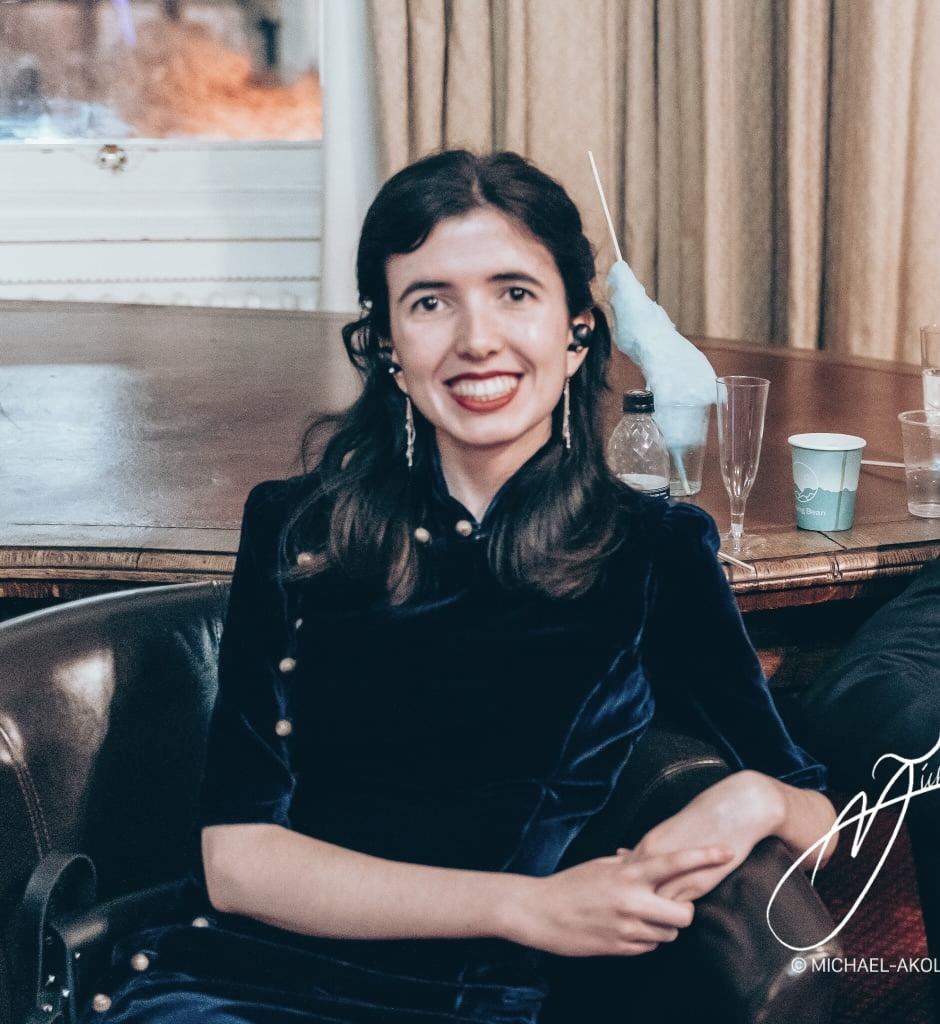
BREAKING: Michael-Akolade Ayodeji elected SU President 2022-23

Michael-Akolade Ayodeji has been elected as the President of the Oxford Student Union for the 2022-23 academic year. 

3704 people turned out to cast 29049 votes, a 32% increase over the last election for president, where 2506 voted. A plurality of voters came from Jesus College, whose JCR won £300 in pizza vouchers. 

The leadership contest also had relatively low numbers of candidates standing, with only five students running for the spot, compared with eleven last year. 

In the Cherwell Town Hall profile published on Monday, we described him as “no ordinary student”. He told Cherwell: “‘I live for being busy. That’s why I do photography, American football, the SU, the Union. I have to do things’.”

In his manifesto, Michael stated he is committed to combating SU apathy, working on holistic access and improving the student experience. He said that he aimed “to ensure that there are not just opportunities but also sufficient support for people from all walks of life to excel”. He also stated: “I am not afraid to speak up when necessary.”

Michael’s experience includes President Elect for the Oxford Union for Trinity term 2022, former Member of the West Midlands YCA, former JCR DisRep, Access & Equal Opportunities Officer, and member of Class Act and Disability Campaigns. 

Speaking after the results were announced, Michael said he was “incredibly honoured and privileged” to be elected SU President and described the campaign process as a “valuable learning experience”. 

Other students elected to positions include:

Vice President Access and Academic Affairs: Jade Calder

Vice President Charities and Community: Anna-Tima Jashapara

Vice President Graduates: Shreya Dua

Vice President Welfare and Equal Opportunities: Grace Olusola

Vice President Women: Ellie Greaves

Student Trustees: Uri Sharell, Serene Singh, and Daniele Cotton.

NUS Delegates: Aditi Premkumar, Anas Dayeh, Ciaron Tobin, Alexander Nowak, Sarah Akintunde, Mundhar Ba-Shammakh, and Serene Singh.

Oxford Pride and Oxford Poverty Action Trust have been voted as the SU’s local Raise and Give (RAG) charity, with Amnesty International and Donate for Refugees being voted RAG international charities.

Image Credit: Cyril Malik

Ethiopia sees ‘staggering increase in food insecurity,’ Oxford study warns

0

Ethiopia’s food insecurity crisis is rapidly worsening to alarming extents under severe drought and civil conflict, shows Oxford’s Young Lives study, which has tracked the effects of poverty on 12,000 young people in Ethiopia, India, Peru, and Vietnam over 20 years. 

41.7% of young people in Ethiopia surveyed reported their households running out of food in 2021, compared to 26.2% in 2020. 75.3% have been worried about running out of food in 2021, an almost 100% increase compared to 38.3% in 2020. One in three of those surveyed said they or their family went to sleep hungry. 

The findings emerge from Young Lives’ latest December 2021 survey involving 326 young people in Ethiopia’s southern regional state of Southern Nations, Nationalities, and People’s Region (SNNPR). Households in the region comprise 9.9 people on average, indicating that the survey results are potentially applicable to around 3,227 people. 

These alarming figures represent a staggering increase in food insecurity compared to when we contacted the same families at the end of 2020, before the drought set in,’ says Dr Catherine Porter, Director of Young Lives, who says civil conflict and COVID-19 have also exacerbated the hunger crisis.  Around 5.7 million people in Ethiopia affected by the ‘devastating’ drought currently require food assistance, and 6.8 million are projected to need urgent humanitarian assistance by mid-March. The lowland regional states of Afar, Oromia, SNNPR, and Somali, spanning south, southeastern, and northeastern Ethiopia, have felt the blow of the drought most keenly, while in northern Ethiopia, Tigray, Afar, and Amhara have also been ravaged by civil conflict. 

Map of Regions of Ethiopia. Source: Jfblanc, CC BY-SA 4.0, via Wikimedia Commons.

Ethiopia, Kenya, and Somalia are the three countries most impacted by the drought in the Horn of Africa. The East African peninsula is facing the driest conditions recorded in 40 years, caused by three consecutive failed rainy seasons, resulting in 13 million people facing severe hunger, said the UN on 8th February. 

In Ethiopia, the drought has led to mass crop failure and livestock deaths. Inflation rates and food costs have consequently skyrocketed, leading to increased displacement and soaring malnutrition rates. 

37% of children in Ethiopia under 5 are prone to acute malnutrition, according to Gianfranco Rotigliano, UNICEF Representative in Ethiopia. On a longer timescale, the ‘potential negative long-term impacts of severe malnutrition on children’s growing bodies and minds’ is a cause for deep concern, says Dr Alula Pankhurst, Young Lives Country Director in Ethiopia. 

Should the upcoming rainy season in March and April 2022 fail again, increased food insecurity and even famine could befall the country, warns UNICEF. 

In Ethiopia’s northernmost Tigray Region and neighbouring Afar and Amhara, food insecurity has also been triggered by the Tigray War, which has rocked the region with civil conflict between Ethiopian federal forces & Tigrayan forces since November 2020. All sides involved have since committed human rights violations including attacks on civilians, sexual violence, and targeting of ethnic minorities. 

Both UN Emergency Relief Chief Martin Griffths and Ethiopian WHO Director-General Tedros Adhanom Ghebreyesus have described the Ethiopian government’s withholding of food, medicine, and fuel from Tigray as a ‘blockade’. Yet Ethiopian Prime Minister Abiy Ahmed denied the existence of hunger in Tigray in June 2021, even as the UN and international aid groups announced around the same time that famine was hitting 300,000 in the region. 

The UN World Food Programme (WFP) estimated in January that 83% of people in Tigray were hungry, and 2 million, or almost 40%, of Tigrayans were suffering from ‘an extreme lack of food’. Across Tigray, Afar, and Amhara, a record-high 9 million people are in need of humanitarian food assistance. 

The conflict has also seen government-imposed bank shutdowns, store closures, and communication blackouts. For the Young Lives survey, researchers were unable to contact participants in Tigray and areas of Amhara due to communication hurdles. 

International agencies are making urgent appeals for funding in a race against the exacerbating hunger crisis in Ethiopia. The WFP has launched a Regional Drought Response Plan for the Horn of Africa that calls for US$327 million in donations as it risks running out of funds and supplies in Ethiopia. The UN Food and Agriculture Organization (FAO) requested US$130 million in January for its Horn of Africa Drought Response Plan. UNICEF is appealing for US$31.8 million for its Ethiopia Emergency Drought Appeal. 

Young Lives expects to deliver full findings on food security and its impacts on the education, employment and mental health of young people in March 2022. Based at Oxford’s Department of International Development, the international, longitudinal study of childhood poverty tracks the changing effects of poverty on 12,000 young people in Ethiopia, India, Peru, Vietnam, with 3,000 of them in Ethiopia. Its team provides research and evidence for national policy and programme makers to effect change. 

Originally launched at the start of the millennium and planned to last 15 years, in line with the timeframe of the UN’s Millennium Development Goals, the study is now entering its 20th year. Noted for its duration, diversity of contexts covered, high retention rates, and innovative research methods, Young Lives has provided insight into the complex interrelations between health, education, and poverty in the countries studied. 

Image: Torsten Martens

What’s happening in the chapel: The best chapels and churches in Oxford

There are churches and chapels of some description on nearly every street in Oxford, so it can be difficult to know which ones you might like to visit. If you are going to worship, there is of course the question of denominations, along with the practicalities of the times of the services. If you are going for a look around, what sort of thing are you looking for? Do you like modern architecture, or – in my case – something with a bit more history? I thought it might be a good idea to share some of my recommendations with you, so you can go and explore for yourself. I have decided not to rank these (don’t worry, Lincoln will always be at the top) because there are many chapels I still haven’t visited! The churches on this list will be a mixture of university/college affiliated churches and churches that are open to the general public (although, as you will see, there is a good deal of overlap), and they should be fairly easy to access, either through asking around at colleges or just turning up and visiting!

Lincoln College Chapel

It would be a crime for me to write about the chapels and churches and not include my own college! It could be argued that Lincoln has two chapel buildings, with the library once being All Saints Church (one of the dreaming spires!), and if you have a look through the railings around the library you can still see some gravestones from the churchyard. The ‘modern’ chapel was consecrated in 1631 and for fans of stained glass, we have gorgeous windows, but I will leave it to you to work out what all of the scenes correspond to (personal favourite is a very odd looking whale). The chapel roof and floor have also been recently restored, so the chapel is looking at its best at the moment, but to get the full experience of the gilding on the ceiling I would recommend coming to an evensong and seeing the candlelight reflecting off all the gold and stained glass.

University Church of St Mary the Virgin

Popular with school trips and coach tours, University church is arguably the best whistle stop tour of the history of Christianity and the University in Oxford. Everyone from John Wesley to John Henry Newman have preached at University Church and it still maintains the tradition of notable visiting preachers. University church was also the site of the trial of the Oxford Martyrs, with a memorial erected to them near the memorial to John Radcliffe, but to discover more about the history of the church and the role it plays in the university it is best to have a quick visit. Whilst you are there, you can go up the 13th century tower and have excellent views of the city (excellent photo opportunity), then have a cup of tea or some lunch in The Vaults. University Church is a lovely place to sit and reflect after a long day in the Bodleian, or during a sightseeing trip!

Oxford Oratory Church of St Aloysius Gonzaga

This is probably better known as the Catholic Oratory, and it has a fascinating history that I neither have the skill or the wordcount to go into, but the reason why it’s on my list is the beautiful art and icons. Before I came to Oxford, I had never been inside a Catholic church, so I was rather taken aback by the grandeur and the different chapels. Luckily, there was someone friendly in the gift shop who happily explained some of the important elements to me. I would really recommend going for a look around and in particular trying to spot the saints on the sanctuary (which is behind the altar). I remember finding St John Chrysostom after wandering in from a tutorial at John’s, which struck me as my tutorial was focused rather heavily on him. But, if saints aren’t your cup of tea, I would also recommend having a look at some of the lovely patterns on the ceilings, or just sitting at a pew and taking in the atmosphere.

Wadham College chapel

Ok, I admit it, I did sneak in here after a tutorial. It is worth a visit, with gorgeous stained glass (you may have noticed a theme, I love a bit of stained glass). I’m sure it’s lovely during a service, but I haven’t yet persuaded a Wadhamite to accompany me so I can visit in a more auspicious manner, rather than sticking my head round the door and creeping in and out.

St Mary the Virgin, Iffley

This admittedly is neither in central Oxford, nor is it in any way affiliated with the university. However, it is a beautiful Romanesque church and it would be a shame to leave it off this list, as it is one of my favourites. The journey would be manageable by bike or bus on the main road, but you can also walk to Iffley along the canal, and there is a pub and a small shop in the village if you fancy a snack. There is something lovely about walking from the main road, with all the noise of the traffic and into a peaceful churchyard. The physical distance from Oxford itself, probably plays a part in this, as it feels like a little holiday to be away from libraries, lectures and classes, just for a short few hours. The inside of the chapel is incredibly calming, with simple, modern decoration. I would recommend a visit to this church after a long walk, then followed by a nice warm meal, with no thought given to impending deadlines or essays.

This is certainly not an exhaustive list of my favourite chapels and churches, but these are a few that I would like to share with you. I do hope you visit them (everyone is welcome at Lincoln College Chapel), not just to worship or appreciate the architecture, but to find some stillness in what can be such a hectic town.

Image Credit: David Iliff, CC BY-SA 3.0